By Rani | Executive, Donor Relations
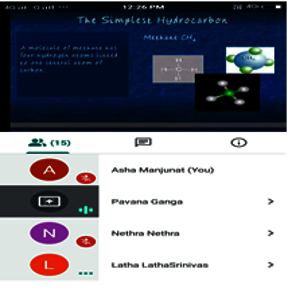
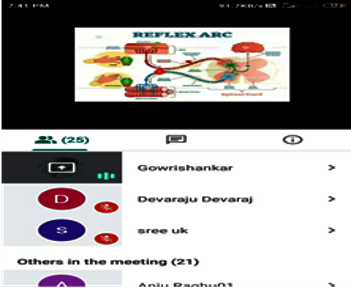
The Engagement for Learning Continues by virtual during the lockdown. Agastya suspended all its operations and asked employees to work from home and engage the students virtually. Agastya strongly believes that Teacher is a continuous learner and if self-study is triggered, learning takes its own momentum. With this we came up with “Shikshana – An online course for Instructors”. Shikshana Course Shikshana is a three weeks online course designed for the overall development of Instructors especially the subject understanding and creativity skills. The course is run on Google Classroom and consists of three sessions (Physics, Chemistry and Biology). Each session is subject-specific and runs for a week with specific task on each day. At the end of each session, there is an assignment that evaluates the learning.
Shikshana Course
Shikshana is a three weeks online course designed for the overall development of Instructors especially the subject understanding and creativity skills. The course is run on Google Classroom and consists of three sessions (Physics, Chemistry and Biology). Each session is subject specific and runs for a week with specific task on each day. At the end of each session, there is an assignment which evaluates the learning.
Structure of the course
Day 1 Topic Intro: Announcement of the topics and sharing the resource materials (literature, ABL handbooks, videos) on the topics.
Day 2 Training & Support: Training & Support – The Master trainers hold a discussion with the instructors on key terms, concepts and approach. About 15 instructors are attached to one IMT and the IMT facilitates all the training & support of Shikshana
Day 3 Mock Test: Prime reading day for instructors with a mock test at 3 pm.
Day 4 Expert Dial-in Session:This is unique feature of Shikshana course. While going through the resource materials and discussions, the instructors are expected to have doubts and questions. To clarify, Expert Dial in session is organized on day 4. Instructors can freely call the expert on given number and time slot and get their doubts clarified.
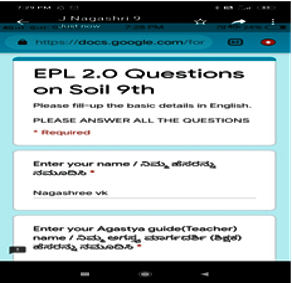
Day 5 Assignment day: AN assignment (online exam) is scheduled at 03:00 pm to 04:30 pm to evaluate the learnings of the topics. The assignment also has a section of quick feedback which takes suggestions on level of questions language, time etc for further improvement of next sessions.
Day 6 Training & Support Training & Support: The Master trainers again hold a discussion with the instructors on the assignment questions and the answers. This step further enhances the content and brings the uniform understanding.
Understanding Agastya better
With the grand success of Shikshana course, we had a session on “understanding Agastya better” and followed the above structure and had a series of discussions on vision, mission, values, and principles of Agastya. Different levels of line managers, regional heads and senior management & chairman involved in the discussions.
Creativity Challenge
To tap the potential of instructors and extract their hidden talents by providing a platform to showcase, Agastya is running Creativity Challenge along with Shikshana course. A central team is set-up which gives periodic challenges to the instructors to showcase their creativity. Some of the creativity challenges posted so far,
By Rani | Executive, Donor Relation
By Rani Opula Rajan | Execuitve- Donor Relation
Project reports on GlobalGiving are posted directly to globalgiving.org by Project Leaders as they are completed, generally every 3-4 months. To protect the integrity of these documents, GlobalGiving does not alter them; therefore you may find some language or formatting issues.
If you donate to this project or have donated to this project, you can receive an email when this project posts a report. You can also subscribe for reports without donating.



Support this important cause by creating a personalized fundraising page.
Start a Fundraiser