Project Report
| May 6, 2019
Thank you for your support
By Rani | Executive
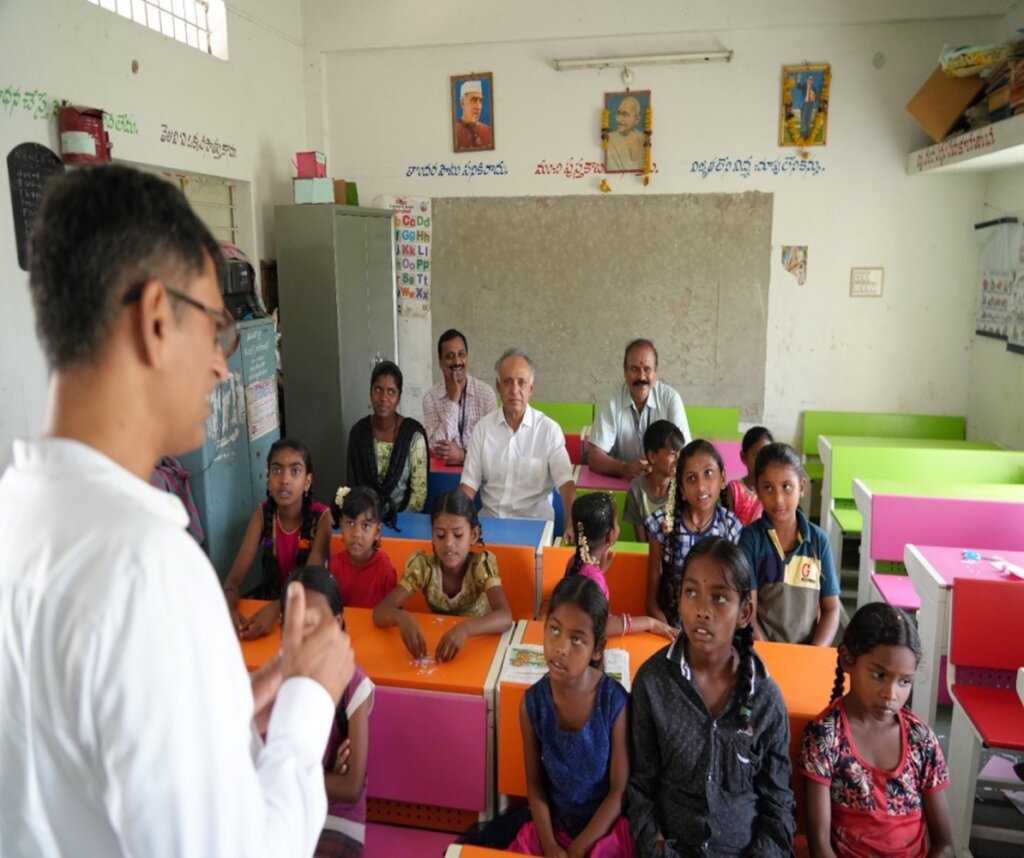
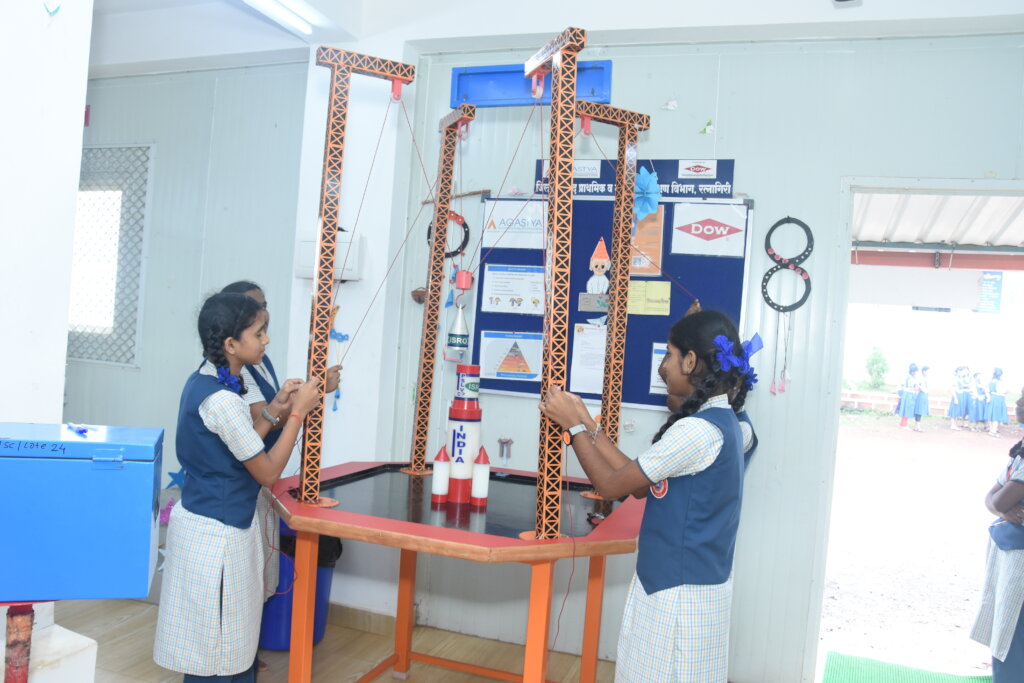
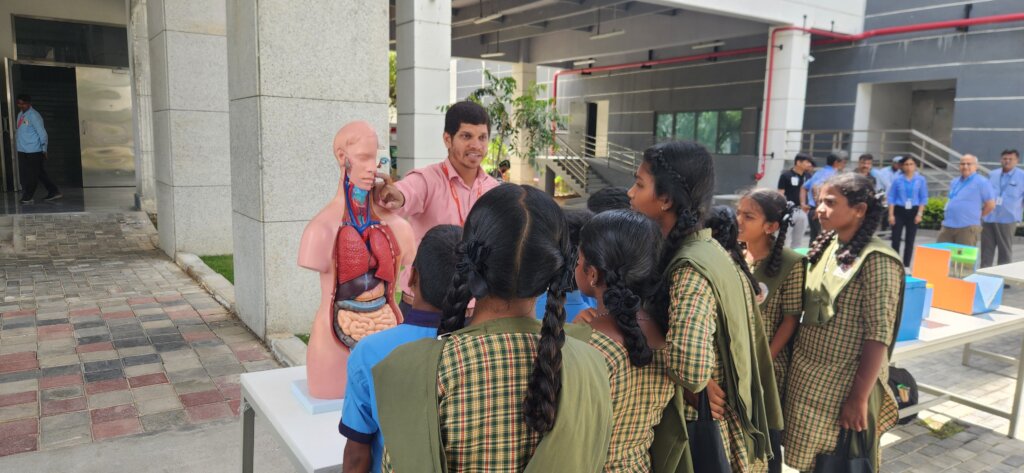
Mobile Science Lab (MSL) is a very powerful and innovative instrument to revolutionize rural education and make hands-on education increasingly accessible. It is a catalytic channel that is fun, engaging and interactive, aimed to raise awareness among disadvantaged children and teachers of the value of learning - with a focus on science. Each MSL travels to doorstep of remote schools with 100+ hands-on science models covering a wide range of topics in Physics, Chemistry and Biology for Class 5 through 9. The teaching approach is consistent with the National Curriculum Framework and the topics overlap the NCERT syllabus. There are also experiments not directly correlated to the state syllabus but are intended to spark curiosity and encourage questioning among the children. The demonstration sessions emphasize interaction and questioning. Children are able to relate better to concepts explained through interactive demonstrations rather than through rote learning. MSL’s are highly effective in delivering large science fairs, and reaching community members through night community visits too. Night community visits allow the child beneficiary’s parents, family and community members to participate in learning sessions about various beneficial topics.
The objectives are as:
- Increase access to practical, hands-on Science education for economically disadvantaged government school children.
- To Spark Curiosity, Creativity and build leadership among underprivileged children.
- To supplement Government School system with experiential science learning linked to school syllabus.
- Train teachers from government schools in hands-on pedagogy.
- Introduce peer to peer teaching/learning methodology.
Reach and benefits of the Mobile Science Lab
- Depending on the density of schools in the proposed catchment area, a single Mobile Science Lab can generate about 16,000 student exposures* per annum.
- Mobile Science Labs access schools and raise awareness on the importance of hands-on science at a mass level. They are highly effective in delivering large Science Fairs and reaching community members (at night for example).
- Mobile Science Labs help catalyse local schools and educators to improve the content and quality of education for rural children and teachers.
Links:
Feb 6, 2019
Thank you for your support
By RANI | Executive
![]()
Learning about N. Durgaprasad has been a reassuring experience that instills one’s faith in the power of innocence and hope. He is a young aspirant studying in the 7th grade and has been part of Agastya since a year ago. His hobbies include playing games, watching television and reading books, which is much in keeping with his inquisitiveness. He lives with his parents and an elder brother. Durgaprasad especially enjoys experimenting on various scientific concepts and believes that the experiential learning offered at Agastya helps in getting a better grasp of concepts.
N.Durgaprasad is well ahead of his times in terms of his ambition. He aspires to join Indian Police Services when he grows up to ensure that law and order remain maintained and so that he can help society better. He shows a great combination of maturity and responsibility at such a tender age.
N.Durgaprasad is proud of having helped his friends understand the concept of light better using an electric circuit. He is equally enthralled by the concept of chromatography and looks up to Sir C. V Raman as his inspiration and role model. Although he is yet to participate in his first science fair, he is enthralled by the topics of substance separation and crystallization.
N.Durgaprasad believes that the real essence of science rests in practical application. ‘Swach Bharat’ initiative has greatly inspired him to participate in environmental activities that he firmly believes in. He wants to find a sustainable solution for the bad condition of roads in his village and help the ones in need with his education. More importantly, he wants to put an end to the plastic menace that has plagued the world today. He is an enthusiastic young man to has ‘reuse and recycle’ as his motto. N.Durgaprasad is greatly inspired by Pandit Jawaharlal Nehru and understands the importance of political support for bringing any social change. He says that Agastya has greatly helped him feel much more secured and explore the world of science from a curious perspective that encourages him to look hard for answers. He strongly believes that ‘Being a good human means helping to change the society’. The sky is the limit for N.Durgaprasad with his mind full of ideas and a pocket full of dreams.
Links:
Nov 9, 2018
Help Children Access Hands-On Science Education
By Rani Opula Rajan | Executive- Donor Relation
![]()
iMobile
iMobile program addresses the lack of science and computer labs and focus on integrated learning through a science-digital linked curriculum. The program is intended for Class 7 students from 12-15 targeted government schools. At the end of one academic year, it is expected that majority of learners will improve literacy levels in several domains – science, digital, language and numeracy. Through its inclusive, participatory model, the program will also initiate an interest and appreciation for science, making classroom-learning fun. It targets Governent school children and teachers
Objectives of iMobile are:
- Increase access to practical, hands-on Science and Digital literacy for economically disadvantaged government school children.
- To Spark Curiosity, Creativity and build leadership among underprivileged children of India.
- Train teachers from government schools in hands on pedagogy.
- To supplement Government School system with experiential science learning.
- Introduce peer to peer teaching/learning methodology.
Reach and benefits of the iMobile Lab
- The iMobile Lab can generate 8,000exposures* through science sessions and 4,000digital literacy sessions per year with 12-15 schools impacted by the program.
- Mapping to science curriculum - Agastya has built a large repertoire of hands-on science models. Models will be mapped to school science syllabus and introduced in the classroom. iMobile lab curriculum will combine these hands-on science models, digital literacy sessions, science fairs and teacher participation to make science concepts appealing and engaging for the learner.
- Language neutral – The program will give plenty of opportunities for learners to improve both vernacular and English skills. Language skills will improve as a natural part from the learner needing to communicate (in communication-based assignments) rather than forced as “language-lessons” on the learner.
- Science Fairs by Young Instructors will be opportunities for iMobile Lab beneficiaries to impart their skills to the rest of the school building on their confidence, self-belief and communication.
- Orientation to IT Enabled Science and Community projects - In the last few sessions of the academic year, the program will engage learners to identify opportunities where the technology and science skills they have learnt can be leveraged to improve their everyday life (in-school or out-of school).
iMobile Labs will additionally conduct the following programs:
- Teacher Training: Teachers will be trained with an aim to disseminate knowledge and propagate creative-thinking and problem-solving skills among government school teachers.
- Science Fairs and Summer Camps in which Young Instructors will be identified and trained to demonstrate science concepts to their peers through peer-to-peer learning. This facilitates greater interaction and understanding of concepts, boosts confidence and improves communication skills.
- This program helps to catalyse local schools and educators and improve the quality of education for rural/ municipal children and teachers.
- Internalization and rapid dissemination of hands-on science into the school system and creation of a model for replication.
- Significantly improves the classroom learning environment – better and more productive student-teacher interaction, more hands-on learning opportunities with improved overall learning and understanding of concepts.
![]()
![]()
![]()
![]()
![]()
Links: