E2E Foundation Project Portfolio
January 2017
Introduction
This project portfolios contains all of E2E´s updated projects, activities and budgets. Due to the dynamic nature of social impact and our commitment to being a lean and flexible organization that adapts to the most high-impact activities, all project details are subject to change—yet the stakeholders and objectives remain the same.
These projects have been designed and built by the local community with the technical support of E2E staff in Colombia, and are ready for funding for 2017.
1. “Recuperando Vida”
A Community-Driven Waste Management, Recycling and Community Building Project
La Comuna 8, Medellín, Colombia
The main objective of the pilot project “Recuperando Vida" project is to create a system of sustainable waste management and recycling while establishing an environment of cooperation and solidarity among the six participating neighborhoods in La Comuna 8, Medellín. This project will impact an approximate population of 8,000 people-- the majority living at or below the national poverty level. The participating neighborhoods are: Los Charcos, Villa Liliam Alta, Villa Liliam Baja, San Antonio, Villa Turbay, La Sierra and Cerro de Los Valores.
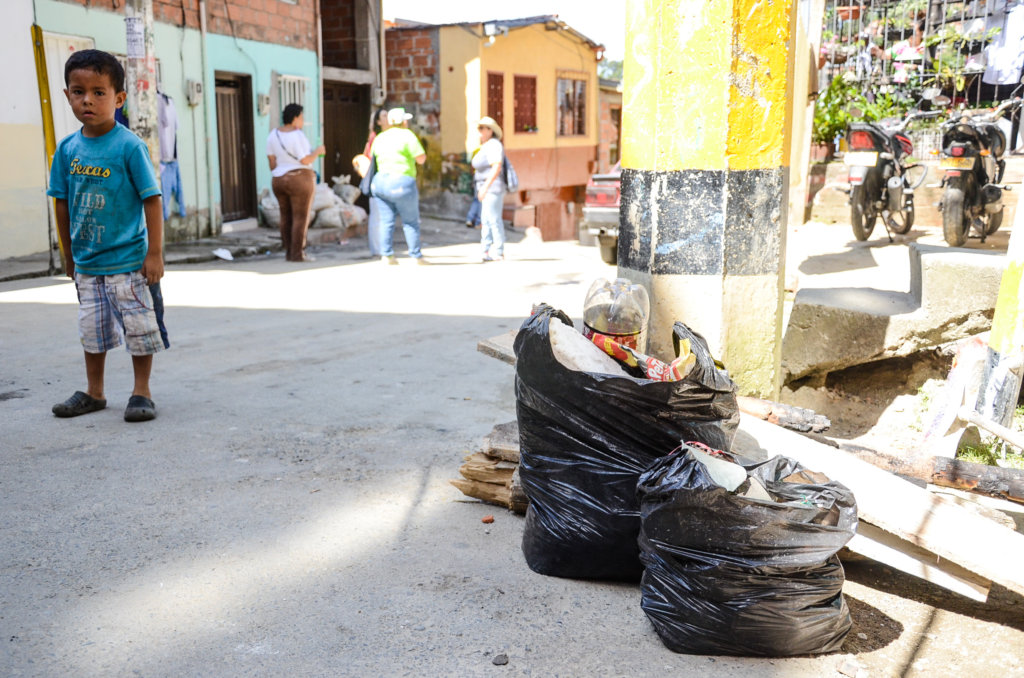
An elderly woman in the neighborhood “Villa Turbay” throws her trash on a heap of accumulated garbage—currently, a common sight in La Comuna 8.
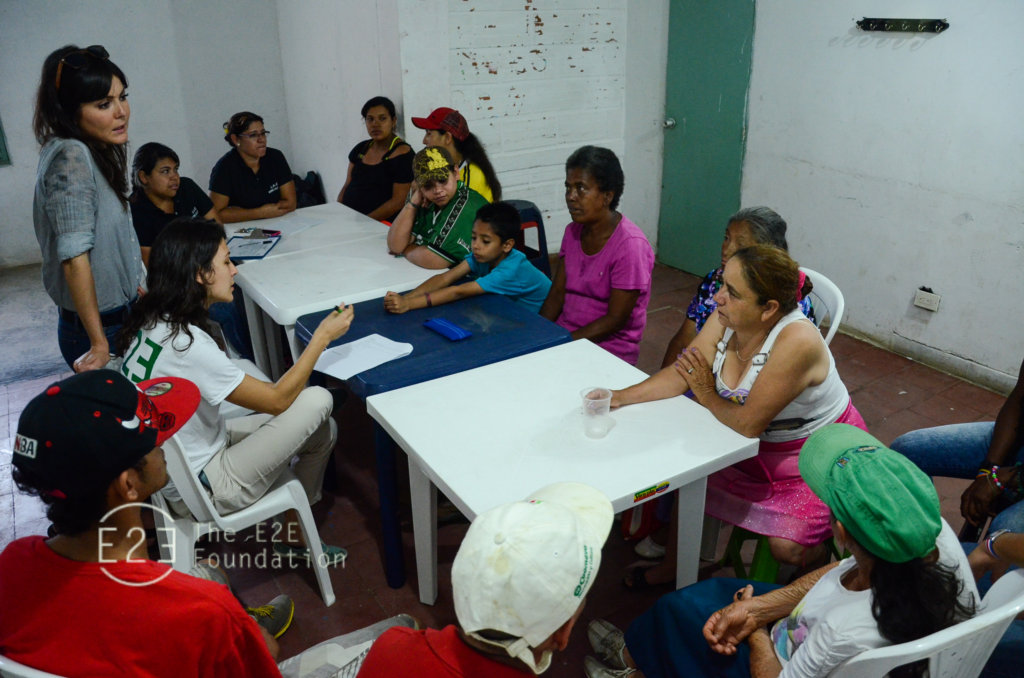
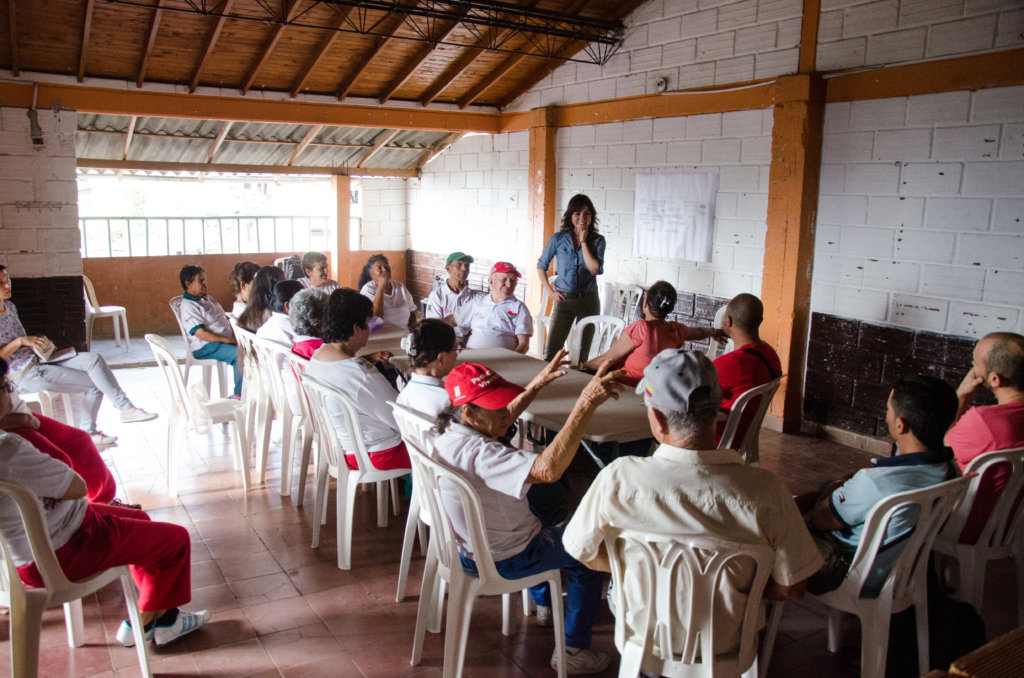
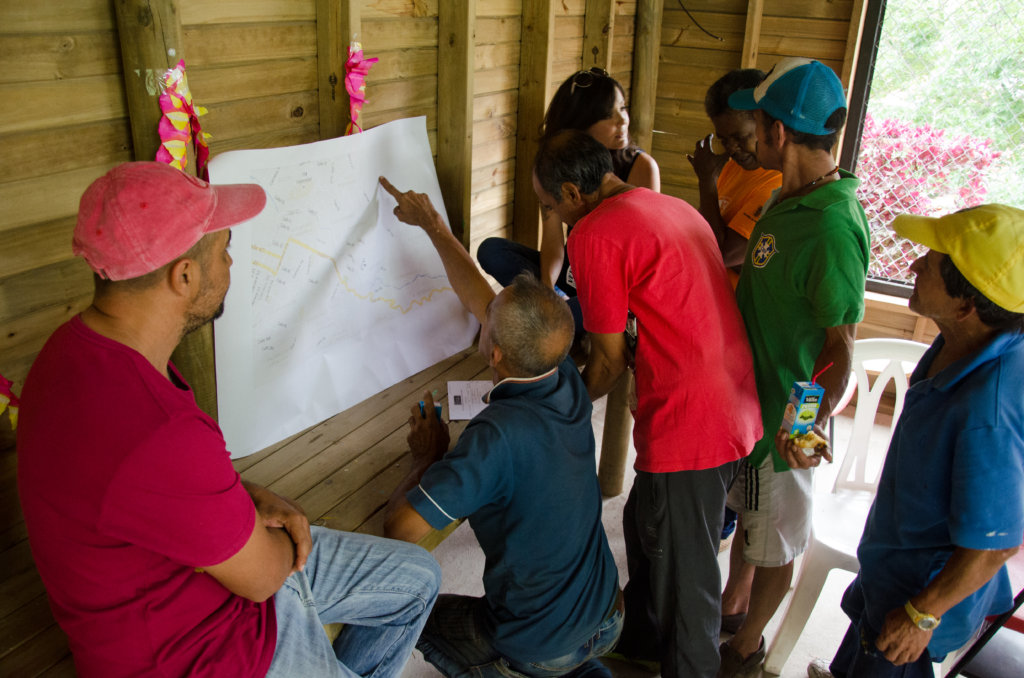
Through a community-driven process of data collection conducted by E2E in a partnership with the National University of Colombia and the California-based non-profit Ecocity Builders, community members have highlighted three main issues that they face in regards to waste management and recycling: social perception and well-being of recyclers, lack of community education on waste management and recycling, and lastly, Lack of infrastructure to support a sustainable recycling and waste management system.
3 Main problems to solve:
- Social perception and well-being of recyclers.In La Comuna 8, there are over 120, many of which historically have lived on the streets, face dangerous work conditions, low compensation for their hard work and suffer from social exclusion within their communities. During meetings and interviews with these recyclers, we learned that their main priority was to have decent work, be respected and be a part of the formal economy.
- Lack of community education on waste management and recycling. Data from community meetings and data collection through surveys and interviews revealed that over 50% of the community doesn’t know how to properly recycle. The lack of understanding of the benefits of recycling and appropriate waste management programs create indifference to recycling at a community level which makes the efforts of small groups of citizens less impactful without community support.
- Lack of infrastructure to support a sustainable recycling and waste management system. The community has few waste bins and trash collection areas where they can dispose of their trash and recycling. This causes community members to dispose of trash wherever is convenient, and trash begins to pile up in public spaces: in front of schools, restaurants and on sidewalks.
This project has 3 main components that solve the aforementioned problems identified by the community
First. . .
We work with a network of recyclers who make their living by searching out valuable recyclable materials on the street to organize and formalize their work. Approximately 40% of the recyclers are women, 50% of whom are single mothers, and the other 60% are men supporting entire households. They are subjected to long hours, little pay, health hazards, receive no social services, are stigmatized and marginalized by their local community. Working with a local recycling business, Corporación Campo Santo, we facilitate the integration of the informal recyclers into Campo Santos’s business activities, giving them training and decent work in a formal market. This will increase social protection and quality of life for the recyclers. Campo Santo will receive business development support from E2E to expand their recycling services in La Comuna 8 and ensure long-term financial sustainability and social impact.
Second…
We incorporate good recycling and waste management practices in the community through education events—specifically focusing on youth in 4 schools to promote environmental education, good recycling practices, community cooperation and peacebuilding. We will also provide the recyclers with the appropriate training and materials so that as they go door to door, they can effectively explain good recycling to community members.
Lastly…
We advocate for greater infrastructure investments with the local government and community leadership, and help to identify and construct the appropriate infrastructure for a well-functioning community recycling system.
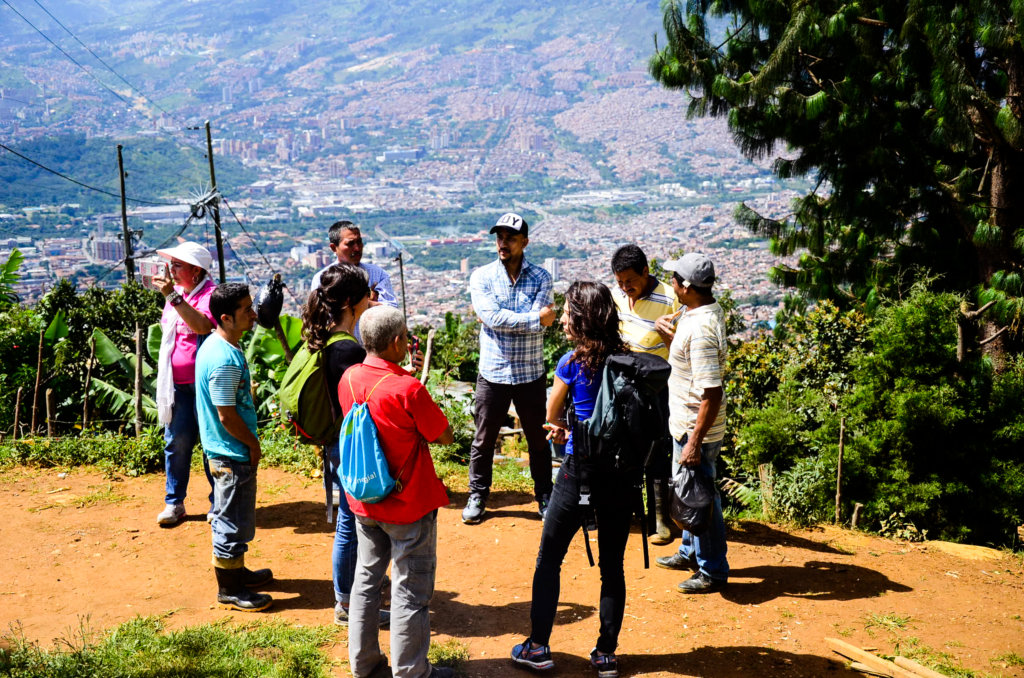
The view from el Cerro de los Valores in the Caicedo neighborhood La Comuna 8, where Coporación Campo Santo runs their operations, classifying recycling along with other activities like community gardening and environmental education courses.
Who do we work with?
Our main project partners are the JACs, Campo Santo, the recyclersand other community leaders.
Campo Santo is known throughout Medellín and surrounding areas for their contribution to sustainable environmental practices, peacebuilding and conflict resolution efforts. JACs have important administrative decision making authority at a local level, and influence important policy decision at a municipal level. The recyclers and community leaders are important stakeholders that inform important decision making processes for project management and evaluation.
We are currently seeking partnerships with the Alcaldía de Medellín and EPM to streamline our efforts with current pubic services. As of November, 2016, we are negotiating a collaboration with TetraPak® and Trashbag® to support maximization of materials and business productivity with Campo Santo.
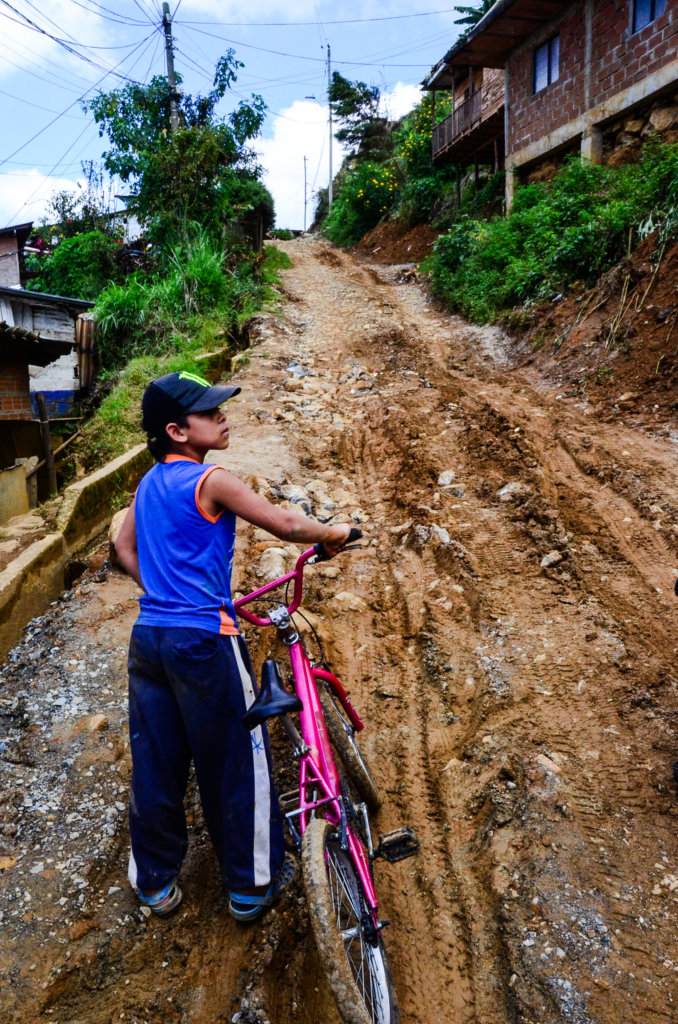
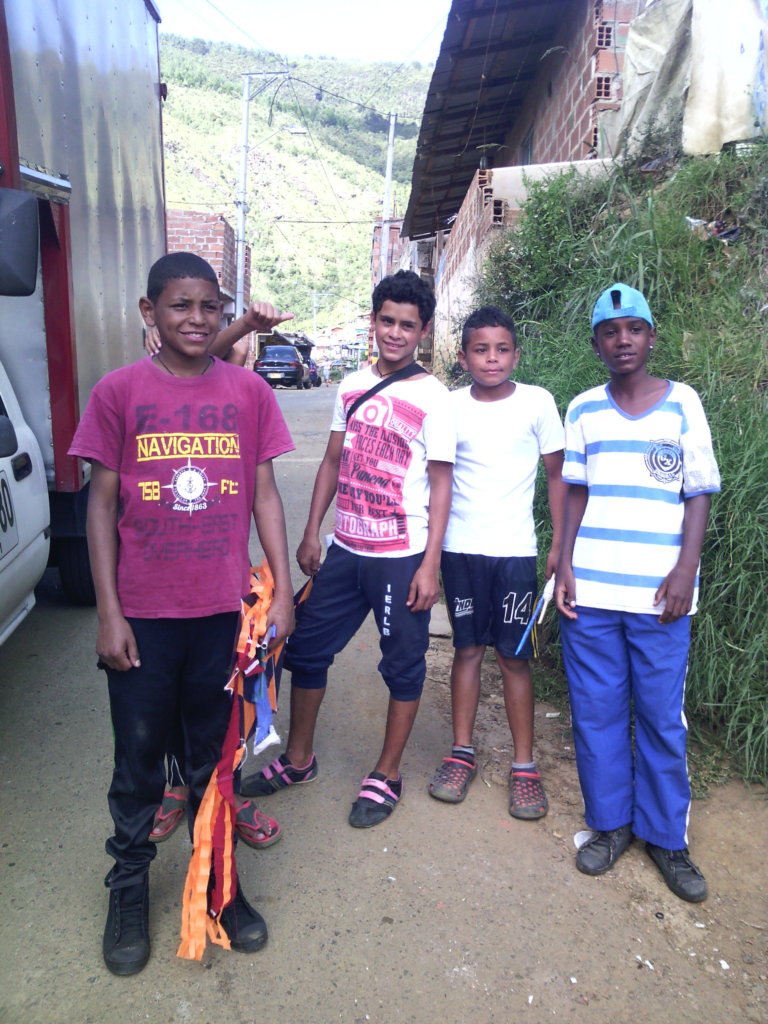
One of e2E´s young beneficiaries in the neighborhood of Villa Turbay, Comuna 8.
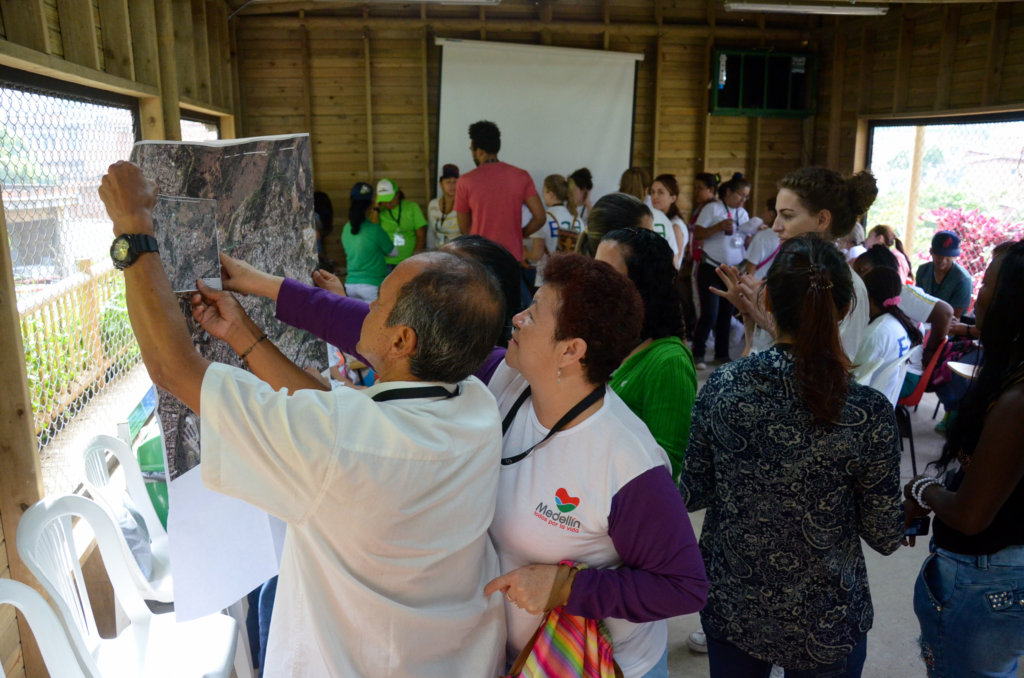
We measure the impact of the project through Social Return on Investment (SROI) methodologies and Global Reporting Initiative’s (GRI) framework to ensure we capture the most accurate and relevant data, while assessing the cost-benefit ration of our intervention. Additionally, we partner with Ecocity Builders’ URBINSIGHT initiative and Universidad Nacional de Colombia on a GIS data collection project to map and track the impact of the recycling trends and other social statistics in the seven neighborhoods associated with the project.
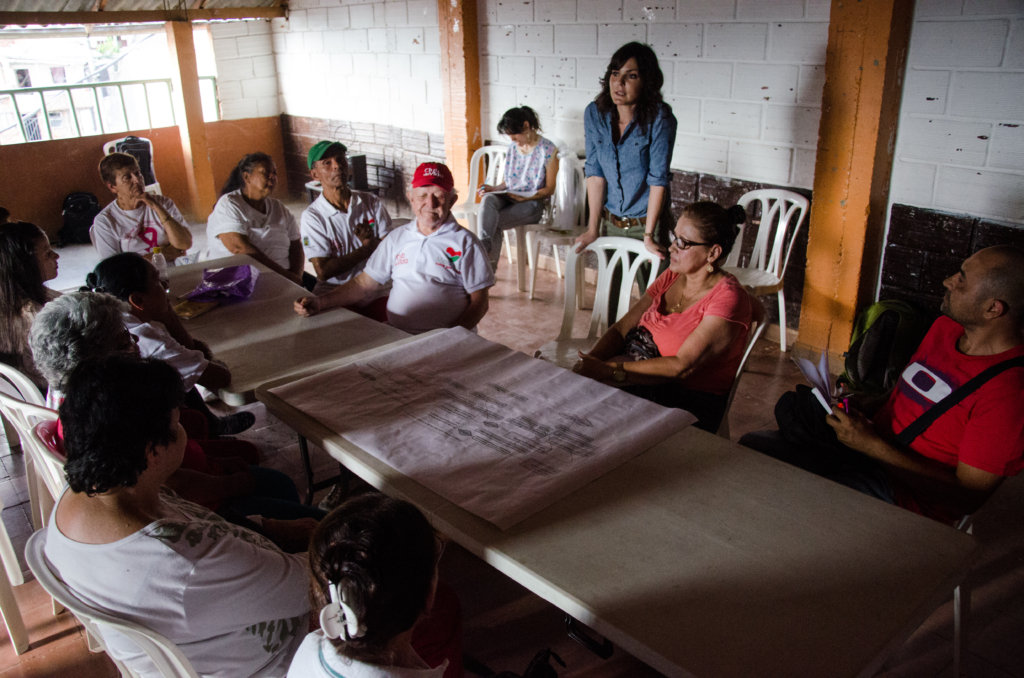
Local Community members work with E2E volunteers in December, 2016 to clean public spaces, learn about good recycling recycling practices and peaceful coexistence.
2. Animal Wellbeing, Public Health and Biodiversity Protection
An animal well-being and Environmental Protection Project
Santa Marta Region, Magdalena, Colombia
Large populations of stray dogs and cats create severe problems for public health, social harmony, community wellbeing and biodiversity. In the Santa Marta and the surrounding regions, an estimated 40,000 animals live on the streets, unprotected, with little investment from local authorities. This project aims to bridge the gap and provide integral services for stray animals and local communities through mass spay and neuter clinics and community education in three strategic areas: Ciudad Equidad, a neighborhood in Santa Marta constructed to provide housing for low-income populations from the Department of Magdalena; Taganga, a small beach village near Santa Marta and in Minca and surrounding veredas in the foothills of la Sierra Nevada de Santa Marta .
Context
Stray animals like this small puppy are often born on the streets and left to fend for themselves due to the lack of investment in caring for local animal populations.
Awareness of animal welfare issues in coastal regions of Colombia is generally, very low. This means that even residents with pets often do not vaccinate, deworm or sterilize their pets. Stray animals living on the streets are often sick, malnourished and pose a significant threat to public health as they can carry and transmit diseases to humans. Animals that are not properly cared for, both pets and stray animals alike, can often be a source of conflict between community members, causing noise, hygiene and safety issues in public spaces.
Furthermore, uncontrolled cat and dog populations pose a risk to regional biodiversity—an especially significant problem in the Sierra Nevada, which is a UNESCO Man and the Biosphere (Biosphere Reserve of Man and Humanity) site. Uncontrolled animal populations drastically impact ecosystem dynamics through hunting native-- and often endangered species, marking territories and introducing bacteria and diseases to which local ecosystems have no resistance. The aforementioned problems pose undermine efforts to grow local tourism industry, which is increasingly important for poverty reduction and further economic development in the region.
What is E2E doing about it?
To tackle the aforementioned problems, E2E works with our local partner, Misión Gaia, to conduct mass sterilization clinics, provide animal welfare services and community education to support community participation and project sustainability. Sterilization clinics, which are held throughout the populated areas around Minca, Taganga and Ciudad Equidad, offer veterinary assistance, deworming, vaccinations, and spaying and neutering services for pets and stray animals alike.
Although Colombian law requires regional governments to invest in managing local stray animal populations, limited investment and lack of action have resulted in a rapid increase in these animal populations and the associated risks within in the project area. Since 2011, Misión Gaia has organized 10 sessions of sterilization and castration, in which 354 dogs and cats have been sterilized and 600 have received deworming treatment.
Local volunteers help veterinarians during spay and neuter clinics in Taganga.
E2E and Misión Gaia
Community volunteers work together with veterinarians at mobile sterilization clinics.
By supporting Misión Gaia's activities through the provision of technical and financial support on a larger scale, the project goal is to control 70% of the local animal population through mobile spay/neuter clinics, which will instantly reduce the aforementioned problems and prevent their future recurrence. Other significant benefits include environmental protection in the regions of Santa Marta and the Sierra Nevada, which are both nationally recognized as areas of cultural and natural heritage. Furthermore, the project will provide public health protection and promote wellbeing through creating conditions for safe, harmonious coexistence. The proposed project is an initial 2-year investment, during which time we expect to see a significant social return on investment for local communities, the populations of stay animals living there, surrounding biodiversity and the growing tourism industry.
The logo for Misión Gaia, one of our Strategic Alliances in the Santa Marta Region
3. “Minca Limpia”
A Community-Driven Waste Management, Recycling and Community Building Project
Minca Region, Sierra Nevada de Santa Marta, Magdalena, Colombia
Uncontrolled expansion and migration due to the rapidly growing tourism industry in Minca Colombia has been one of the main drivers of pollution and risks to public health in the Minca area-- the gateway to the foothills of the Sierra Nevada de Santa Marta, one of the most biodiverse regions of Colombia. The Sierra Nevada de Santa Marta has also been declared a UNESCO Man and the Biosphere Site, a title which is a risk due to poor waste management and no recycling system which is contaminates this unique ecosystem.
The main objective of the pilot project “Minca Limpia" is to develop an effective solid waste management system through the involvement and education of the local community and tourists. This project will impact an approximate population of 1200 people who live in Minca and the surrounding areas, in addition to tourists and visitors to the region, through the reduction of waste in public spaces and tourist locations.
Context
The tourism industry in Minca has been steadily growing since 2010. Tourism is an important means of economic development for the town, however the corresponding increase in garbage generation has caused many problems. The current solid waste management system is inadequate as garbage accumulates at collection points and tourists litter in public places. These problems are exacerbated by abandoned animals that open plastic bags looking for food to eat. There is currently no system for sorting and recycling of waste.
The view from Pozo Azul, one of Minca´s main tourist destinations. Beautiful places like this to relax and enjoy nature are being contaminated due to a lack of infrastructure for waste management and recycling.
The accumulation of waste at tourist locations and along walking trails has negative impacts on tourism development, on public health and poses a threat to the regions biodiversity.
The community has identified three underlying problems which this projects purports to resolve:
- Environmental education. There is a lack of environmental education for the local population and tourists. It is clear that the culture for environmental care is low and there is little sense of belonging in the community.
3 Main Negative Impacts:
1. Negative impact on tourism development through loss of amenity in tourist locations.
2. Health impacts on the population of Minca, particularly with water accumulating in plastic containers aiding the propagation of mosquito-borne viruses such as dengue and Chikungunya
3. Threats to regional biodiversity, which arise as trash accumulates in critical ecosystems, disrupting habitats, water flows and contaminating important food and water sources which sustain regional biodiversity.
2. Infrastructure. A lack of adequate infrastructure for the classification, management and source-separated collection of garbage makes properly managing waste a challenge. This phenomenon is worsened by the presence of animals (dogs and donkeys) that open the bags of waste by scattering waste to eat organic material.
3. Institutional responsibility: No institution has clear responsibility for environmental planning and control, leading to a lack of continuity and follow-up of previous programs initiated to address these issues.
Attachments:
![Share on Twitter]()
![Share on Facebook]()