By Akanksha Singh | Sr Programme Officer
Free health camp brings relief and awareness to Moheskola Bazaar, South Garo Hills
South Garo Hills, Meghalaya, 30th July 2026: Limited access to healthcare facilities, coupled with low awareness of preventive healthcare, often results in the health needs of remote communities being inadequately addressed. Recognising this gap and to improve access to essential healthcare services, a free health camp was organised at Moheskola Bazaar through a collaborative effort involving the Wildlife Trust of India (WTI), Dr. Reddy’s Laboratories, the Garo Hills Autonomous Council, and a team of 45 medical professionals working alongside the District Medical and Health Officer (DMHO), South Garo Hills, Meghalaya.
The State Forest Department and the Moheskola Police Outpost extended valuable support, ensuring the smooth and efficient conduct of the camp. Expressing the community’s appreciation, Mr. Gilnesh Ch. Marak, Headman of Moheskola, thanked WTI and the medical department for organising the free medical check-up for the students and villagers.
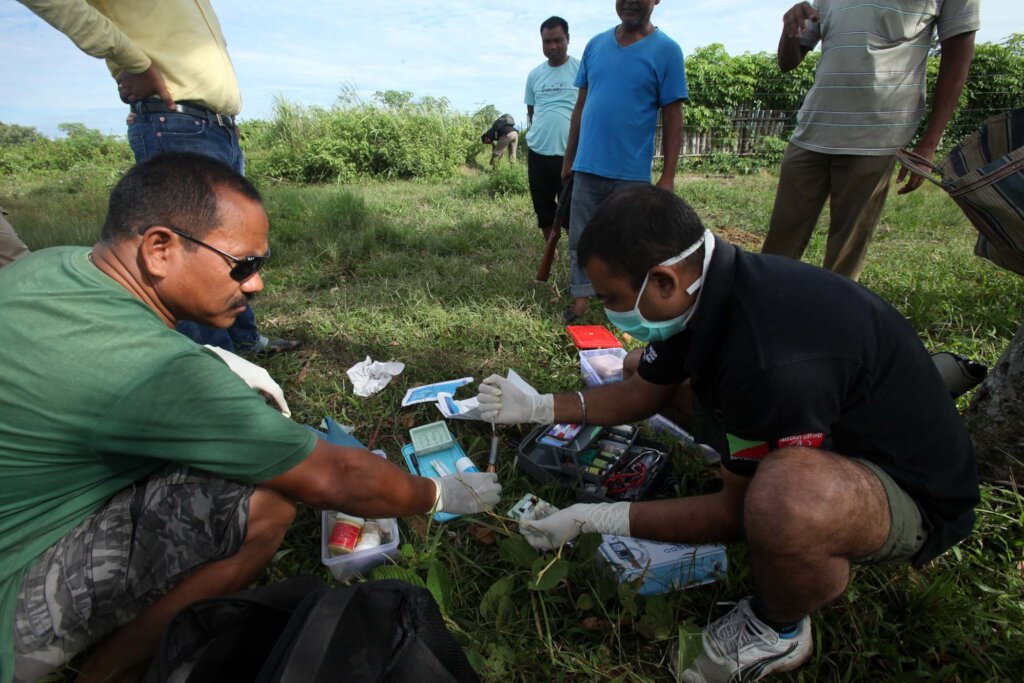
People of all age groups underwent a basic health check-up to diagnose any underlying health conditions | Photo © TeamWTI
A total of 230 villagers visited the camp, receiving health advice, check-ups, diagnostics, and treatment. For many families in and around Moheskola, it was the first medical consultation they had access to in months. Among them was Urmilla R. Sangma, who had been waiting all week for a day like this. She had brought her son to the camp after he had been suffering from a skin disease for the past week, hoping he would finally receive the treatment he needed.
The camp commenced with an interactive awareness session focusing on primary healthcare, personal hygiene, maternal and child health, women’s health, oral hygiene, and disease prevention. Designed to promote simple yet effective everyday health practices, the sessions equipped villagers and students with practical knowledge to improve their overall well-being. The programme reached approximately 120 students from two local schools and nearly 100 residents from Moheskola and neighbouring villages, many of whom gained valuable health information that had previously been inaccessible to them. Reflecting on the impact of the initiative, Mr. Midnightson Ch. Marak, a teacher at Moheskola Higher Secondary School, observed that the camp had significantly improved students’ understanding of hygiene and general health, topics about which many had previously been less aware. He also highlighted that the dedicated session on women’s health was an informative and enriching experience for the female students.
A dedicated session on female health and hygiene was also conducted for the students | Photo © TeamWTI
Dr. Beljusth K. Sangma, a member of the visiting medical team, noted that community participation in the awareness programme was encouraging, with many residents also visiting the OPD for check-ups and treatment of common illnesses.
The initiative also reflects WTI’s broader “One Health” approach, which recognises the intrinsic link between the health of people, animals, and the ecosystems they share. By integrating community well-being with conservation efforts, WTI seeks to ensure that the benefits of conservation are experienced by those who play a vital role in safeguarding biodiversity. Dr. Sandeep Kr. Tiwari, Chief of Conservation at WTI, emphasised that conservation cannot succeed without actively engaging local communities, addressing their socio-economic realities, and ensuring they share in the benefits of conservation. He noted that the health camp was an effort to provide much-needed health screening and essential healthcare services to communities whose continued support is fundamental to conserving the landscape.
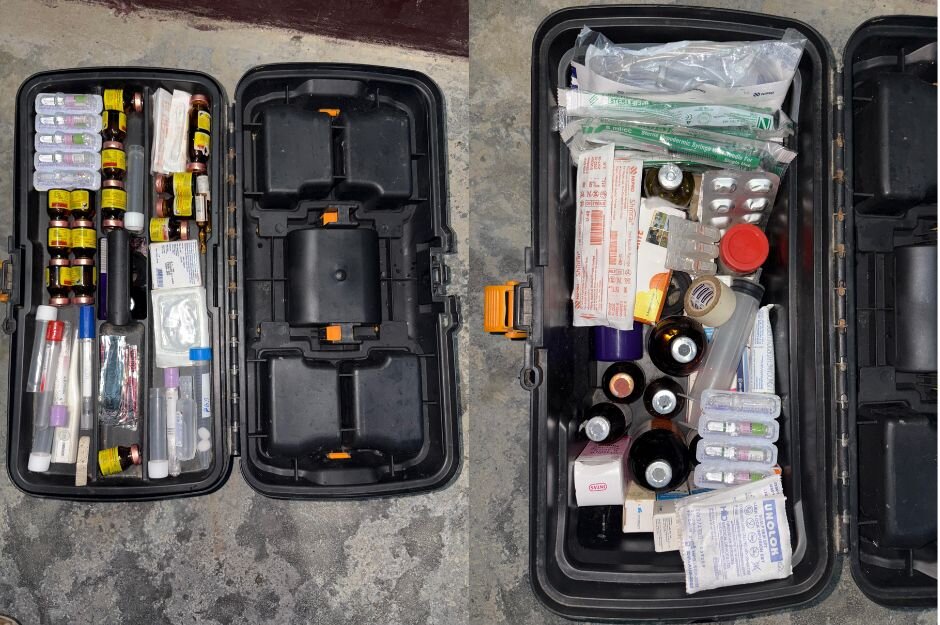
Medicines were also distributed during the health camp | Photo © TeamWTI
By evening, the numbers told their own story, but so did the queues that had formed since morning, the students taking notes during the hygiene session, and the quiet relief on the faces of parents finally getting their children and family members looked at by a doctor. For a village like Moheskola, that may be the more lasting outcome.
For over two decades, WTI has worked closely with the GHADC and the Meghalaya Forest Department to secure and restore critical forest patches between West Garo Hills and Nokrek National Park, aiming to establish a continuous wilderness corridor connecting to Balpakram National Park, a landscape collectively known as the Garo Green Spine. As a result of sustained conservation efforts, 41 Village Reserve Forests (VRFs), covering over 7,500 hectares, have been formally notified, creating a connected habitat ensuring safe passage for wild animals and strengthening the long-term ecological integrity of the landscape.
By Akanksha Singh | Sr Programme Officer
By Monica Verma | Manager
Project reports on GlobalGiving are posted directly to globalgiving.org by Project Leaders as they are completed, generally every 3-4 months. To protect the integrity of these documents, GlobalGiving does not alter them; therefore you may find some language or formatting issues.
If you donate to this project or have donated to this project, you can receive an email when this project posts a report. You can also subscribe for reports without donating.



Support this important cause by creating a personalized fundraising page.
Start a Fundraiser