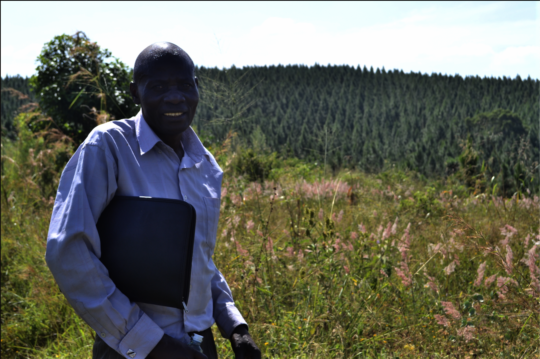
By Kaganga John | Director
Making sure rural communities won't be left behind in the response to COVID-19-16th December 2020
Whenever crisis strikes, it is invariably the poor and the vulnerable who suffer most. In many cases, they are affected directly by crisis; in other cases, their lives are made harder by the economic consequences. Often it is both. We have seen this time and time again. As the COVID-19 pandemic unfolds, we are obviously concerned about the impacts on the poor rural people we serve. It is not yet clear to what extent COVID-19 will spread to the rural communities and its effect, where more than three quarters of the poorest people live in rural areas, slums– but we already know that rural livelihoods are being deeply affected.
KEA has been on frontline to deeply taking steps so that rural women and men can continue to grow food and not fall into deeper poverty during this challenging time. And we call on our partners – especially governments, multilateral agencies, international financial institutions, the private sector, and civil society groups – to work with us for a coordinated global response. The effects that COVID-19 has on people fall into three general categories: economic effects, social effects, and the direct impact of the virus itself. The way these effects are translating into rural contexts needs particular consideration.
In rural communities, access to safe, clean water was often lacking. Rural people, like all people, need to be able to wash their hands to protect themselves from the virus. But without clean water, many could not afford-needed walk 3-5km. And small-scale farmers need to work according to the climate – they can’t or continue afford to stay inside. Nor can they afford to stop producing food – the food they grow is needed more than ever.
As another alarming effect, medicine and health care are less likely to be accessible to rural people who catch the virus. But with COVID-19, anyone who develops serious illness needs treatment within hours.
Restrictions on trade and movement are already making it difficult for small-scale farmers to access markets, both to obtain essential inputs such as seeds and to sell final products. In some places, the lack of availability of seasonal labour lees- production, especially for labour-intensive foods such as fruits and vegetables. In addition, the availability of non-farm work that many rural households rely on to diversify their incomes shrinked, as are incomes from remittances.
The most marginal and poor groups suffered the most – among them, rural women and young people. School closures and the need to care for sick family members will increased the workloads of many women. Many women continued suffer unemployment rises, as their current work was more likely to be under informal and precarious working conditions. Similarly, young people, who have greater difficulty than older adults in finding decent jobs, are even more likely to become excluded and disenfranchised.
Protecting and enabling the most vulnerable in a time of crisis
Through GlobalGiving response fund we respond to the crisis, we were driven by the principles ensuring that support is feasible, flexible and does no harm. We are reached out to our communities members to ensure coordinated actions to protect the lives and livelihoods of rural people. We provided immediate needs such as foods, soap, seeds and seedlings and linking farmers to buyers at a time when movement restrictions were closed down to some local markets.
We cannot allow the COVID-19 crisis to undo years of good work in reducing rural poverty. At this challenging time, we are reminded of the importance of international cooperation and of the need for a strong global multilateral system – one that responds to the immediate impacts of the crisis while also protecting the needs of the most vulnerable groups. In our collective global COVID-19 response, we need to make sure no one – and no community – is left behind
–Director KEA
COMMUNITY MEMBERS ATTENDING FARMER TRAINING DURING COVID 19 ON POST HARVERSTIN
Impacts of the COVID-19 crisis on rural communities of Kikandwa- Uganda
The COVID-19 crisis affected mostly women and Children. When measures to prevent the spread of the disease, restricting the movement of road and freight , farmers where no longer be able to buy and sell products at the market. The crisis increased illegal extraction of natural resources, for example charcoal burning takes advantage of reduced monitoring and law enforcement. Many had less alternative show that, in times of crisis, many people can’t survive-tend to rely on the environment themselves. The pandemic possessed a threat to food security for those who are specialized in non-food commodity production, as alternative to timber extraction “Until we could mobilise support end harvesting of timber limited cut down of trees”.
Markets, schools, bars, and churches as were closed, social gatherings are discouraged or prohibited, and the transportation of goods and people restricted. As yet, little is known about how these measures play out in remote rural locations, and how poor people are coping. As the organization, we therefore decided hold meetings, home visits ask members about the impacts of the measures on incomes, food security, and the way the lands and forests as being used.
Income earning opportunities
Clearly all members agreed, the pandemic taking a big toll on family incomes access to market was very difficult, and people were afraid to go out in public. As a consequence, farmers could no longer sell their produce or find themselves selling for very low prices. Moreover, bigger farms could no longer hire labourers, because working in large groups was prohibited. With the closing of businesses, offices, and schools, other income opportunities decreased too.
“Our products, like coffe, beans, banana, and vegetables, are rotting due to a lack of customers. Life is getting more and more difficult”
“Market women from cities and towns do no longer come regularly to buy harvested produce. This has led to the perishing of some of our crops”
“I used to supplement my farm income by sewing school uniforms, but currently there are no customers, as the schools have been closed”
“The offtake of my products has been reduced, since buyers are scared of possible infection. Demand for the honey I produce has decreased”
Costs of transportation and household needs
Many stressed that the crisis has caused transportation costs to rise. Very few people had their own means of transport, so they depend on public transportation. Due to the pandemic, buses and motorcycle taxis were not fully operating, or take fewer passengers and charge higher prices. This affects people in numerous ways making lesser profit.
“Food prices raised since the, because of the increase in transportation fares. Some foodstuffs become scarce because farmers are not able to go to markets .
Food availability
Overall, the availability of food has been affected, mostly because food products in stores have become more expensive while incomes have decreased, Also, some farmers are less willing to sell their foodstuffs, keeping it for their own consumption. It is getting increasingly difficult for villagers to sustain their households, as illustrated by the quotes below.
“We don't eat what we want, but what we find. There is no diversity of food”
“Food prices are high. People just buy the little food they can afford”
“The prices of food are rising every day, we are in trouble to feed ourselves and our families”
Agricultural production
We continued to encourage farmers prioritize agricultural production , because fewer people could go now working due to lockdown. Since many lived in rural areas families stayed together work in their fields due to social distancing regulations and fear of contracting the disease. As a result, farmers many families worked open upland, which is expected food future harvests. Further, COVID-19 has increased the frequency of farm visits by extension officers who provide technical support to farmers.
Pressure on the environment
The COVID-19 pandemic does not only have social and economic consequences in remote rural villages, but it may also take a toll on the ecosystems on which these communities depend. mention that the crisis forces community members to rely on extractive activities, like the production of charcoal, because there as viable alternatives to make a living. “There massive environmental degradation including clearance of trees for charcoal burning, reduced.”
“Due to the lack of income, my families focused on food growth and tree planting. We trained them on sustainable tree management practices polading and coppicing cut available trees branches, so that we can earn a little money, and continue affording the basic necessities”
The importance of local food production
The COVID-19 pandemic shows the importance of local food production to cover community basic needs in times of crisis. Most of the community members we spoke to indicated that, with the increasing prices of food in stores and their decreasing incomes, local food production was their safety net. Although the interviews made clear that the effects of the crisis are widespread, now appreciate agriculture more,” he said. “And I believe my children now also have a better understanding of the importance of food cultivation.
MAIZE FIELD READY TO HARVERST DURING COVID 19. AND SWEETPOTATOES
As a consequence, the people in these communities have come to rely on their own food production. Many have turned their attention to backyard gardening to maintain food supplies for their families. But there are also farmers who do not grow their own food. For them, switching to the cultivation of food crops takes time, resulting in immediate food insecurity. farmers set up programmes through which they can exchange their non-food products for basic food items, such as rice.
Supporting backyard food production and collection of forest foods. Was seen it as a new goal for sustainable living—not only during, but also after the pandemic. The current crisis has increased awareness of the importance of diverse livelihood portfolios and local food production, to increase people’s resilience, i.e., their ability to deal with shocks and stresses. COVID-19 has highlighted the importance and urgency of building resilience more than ever.
Hygiene
The projects include the distribution of food and hygiene kits and personal protective equipment (masks etc.), as well as awareness-raising programmes on hygiene and the prevention of COVID-19 infection. The programmes also include the distribution of clothes so that they can cope with the cold temperatures
Education
KEA also ensured that children in rural communities can continue their studies through distance learning programmes. Eighty -five percent of children never had access to the Internet. “We wanted to give the most vulnerable children a continuous learning to ensure that their to education rights are respected: the right to be protected, the right to have access to food and water, the right to shelter.
The COVID-19 pandemic showed us how interconnected and fragile we are. The fight against the spread of this virus was our collective responsibility this demonstrated our unconditional universal love, meet the needs of the most vulnerable and bring consolation which can break desolation and create hope when everything is dark.
Food
We ensured people did not go hungry by providing food so they stay strong enough fight the virus. 82% of venerable families eating a meal at the charity makes them feel part of the community, Fare Share food has improved the diet.
Awareness
We empowered people with information to protect themselves. We did this by visiting areas where families had no access to correct information to protect them.
With your help, we can feed families through GlobalGiving this Christmas. Withyour help we can put a meal on the table of thousands of families. Because no one should go hungry this Christmas. Please donate now. Thank you.https://www.globalgiving.org/projects/community-innovation-resource-centre/?
By Kaganga John | Executive -Director
By Kaganga John | Director
Project reports on GlobalGiving are posted directly to globalgiving.org by Project Leaders as they are completed, generally every 3-4 months. To protect the integrity of these documents, GlobalGiving does not alter them; therefore you may find some language or formatting issues.
If you donate to this project or have donated to this project, you can receive an email when this project posts a report. You can also subscribe for reports without donating.