By Clara Diago | Director
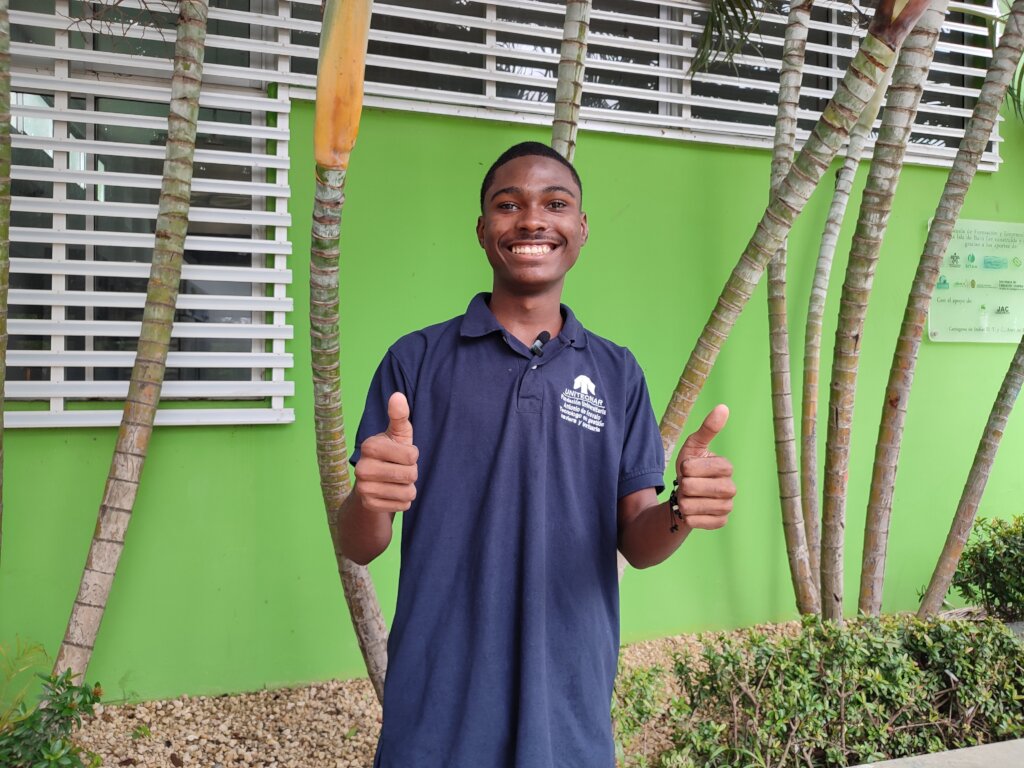
Juan Carlos Pava Castro, 23, is a young man from a rural community in Hatillo de Loba, southern Bolívar, whose life story has been shaped by forced displacement and a constant search for new opportunities. In 2012, at just eight years old, he arrived with his family on Barú Island, where they found a chance to rebuild their lives through work and education.
For 12 years, he lived with his family on a farm overlooking Barbacoas Bay. It was there that he grew up, attended school, and completed his training as a Tourism Technician at the Barbacoas School. Juan emphasizes that "education is the primary path to overcoming poverty and avoiding the risks associated with the violence and exclusion his family has experienced," which is why he pursued further professional training. He completed a technical program in Hotel Service Administration and is simultaneously pursuing a technical degree in Shipping and Port Management.
He is currently completing his professional internship at the Logistics Agency of the Colombian Military Forces, where he has strengthened his skills in document management, warehouse inventory, and Occupational Health and Safety (OHS). This process has also presented significant personal challenges: he had to relocate from Barú—a rural, island area—to the urban center of Cartagena to undertake the internship, take on new expenses, and adapt to a work environment alongside older individuals with military backgrounds. Throughout his life, Juan Carlos also faced bullying due to his background and accent—experiences that, far from holding him back, strengthened his determination to succeed. His parents and siblings have been his primary support network; together, they have come to understand that education is a tool for transforming their reality and building a different future.Currently, his family generates income primarily on weekends by selling tour packages at Playa Blanca. Juan Carlos receives only a stipend from the company where he is interning—due to the nature of his employment arrangement—so covering the costs of transportation and staying in Cartagena places a significant financial burden on him. The transportation subsidy is, therefore, crucial in enabling Juan Carlos to remain in the city, attend his internship regularly, and successfully complete his training as a Shipping and Port Management Technologist, thereby turning education into a genuine opportunity for social mobility for himself and his family.
By Clara Diago | Director
By Clara Diago | Regards, send Baru 2025
Project reports on GlobalGiving are posted directly to globalgiving.org by Project Leaders as they are completed, generally every 3-4 months. To protect the integrity of these documents, GlobalGiving does not alter them; therefore you may find some language or formatting issues.
If you donate to this project or have donated to this project, you can receive an email when this project posts a report. You can also subscribe for reports without donating.



Support this important cause by creating a personalized fundraising page.
Start a Fundraiser