By Camilo Thompson | AIDA Attorney
Parrotfish are vital to the health of coral reefs, and the Mexican State has an obligation to protect them. After a year of arduous work and collaboration with organizations and local actors, the letter sent to the government where AIDA outlined the international obligations Mexico has to preserve its coral reefs, requesting that ten species of parrotfish be included in the nation’s list of protected species, resulted in an official ruling to legally protect those species.
Using arguments based in international law and knowledge of environmental treaties, in October 2018, AIDA requested that the Mexican government include ten species of parrotfish in the national registry of protected species, under Official Mexican Law 059, which is currently being updated.
AIDA made the request through a letter to the National Advisory Committee for the Normalization of the Environment and Natural Resources, in support of a proposal the Healthy Reefs for Healthy People Initiative made in September in coordination with Casa Wayuu, the Kanan Kay Alliance and the Mexican Center for Environmental Law (CEMDA).
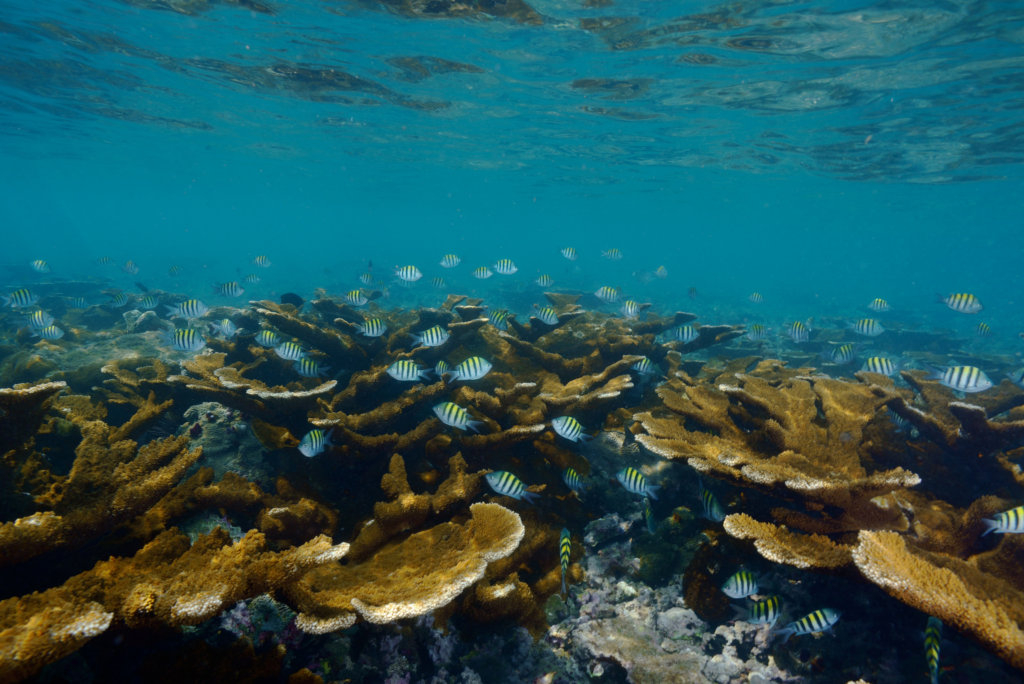
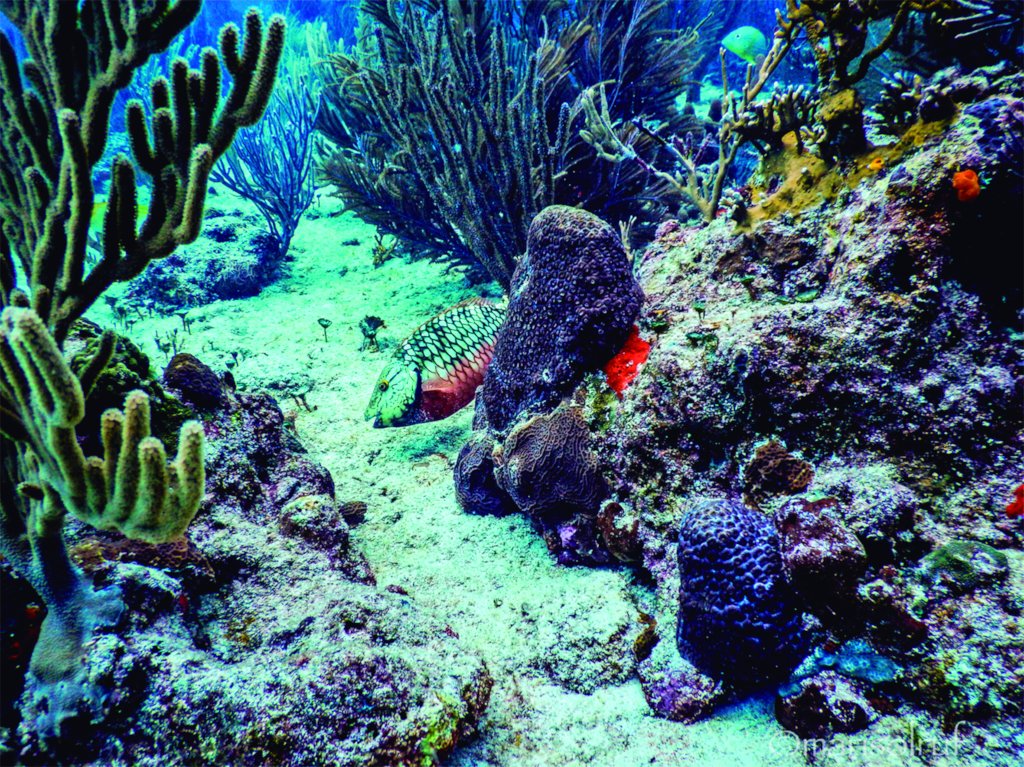
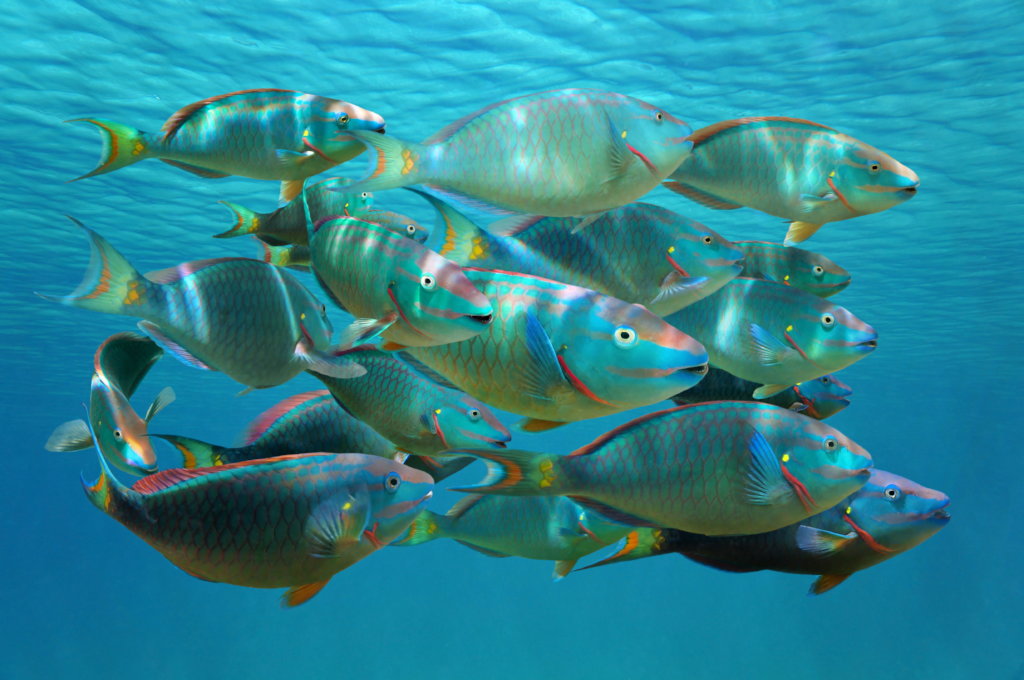
The species of parrotfish we are trying to protect play a vital role in the survival of coral reefs because they feed on algae which otherwise deprive the coral of light and oxygen. Populations of these fish have declined drastically due to habitat degradation, pollution and climate change. Studies done by the Health Reefs Initiative, among others, have shown that 60 percent of the coral reefs in the Mexican Caribbean are in either poor or critical condition.
The organizations called for the following species to be listed under some category of risk in Official Mexican Law 059: the stoplight parrotfish (Sparisoma viride), the rainbow parrotfish (Scarus guacamaia), the blue parrotfish (Scarus coeruleus), the midnight parrotfish (Scarus coelestinus), the queen parrotfish (Scarus vetula), the princess parrotfish (Scarus taeniopterus), the striped parrotfish (Scarus iseri), the redband parrotfish (Sparisoma aurofrenatum), the redtail parrotfish (Sparisoma rubipinne), and the yellowtail parrotfish (Sparisoma chrysopterum).
The letter outlined the treaties and conventions that oblige the Mexican State to adequately fight threats to species requiring special protection—species like herbivorous fish, which are vital for the health of Caribbean reefs and other marine ecosystems.
These agreements include the Convention for the Protection and Development of the Marine Environment in the Wider Caribbean Region (also known as the Cartagena Convention), the United Nations Convention on the Law of the Sea, the Convention on Biological Diversity, the Ramsar Convention, the Convention concerning the Protection of World Cultural and Natural Heritage, the Tulum Declaration, and the International Coral Reef Initiative.
The letter also mentioned the Advisory Opinion on human rights and the environment issued by the Inter-American Court of Human Rights. In that decision, the Court strengthens States’ obligations to protect human rights and acknowledges the close relationship that has with environmental protection.
Despite serving as fish hatcheries and natural barriers against hurricanes—among other key functions—coral reefs are very fragile and vulnerable to climate change, the consequences of which include ocean acidification, sea level rise and algal blooms. The latter are caused by untreated or inadequately treated wastewater being pumped into the Caribbean, and other forms of marine pollution.
“The most recent report from the Intergovernmental Panel on Climate Change (IPCC) warned that the warming of the planet’s average temperature by more than 1.5 degrees Celsius would result in the destruction of reefs,” explained Melina Soto, Mexico coordinator for the Healthy Reefs Initiative. “It is therefore urgent States adopt adequate measures to preserve coral reefs, and one way to do that is through the protection of herbivorous fish.”
Links:
By Maria Jose Gonzalez-Bernat | Scientific Advisor, Marine & Coastal Protection
By Camilo Thompson | Attorney, Marine and Coastal Protection
Project reports on GlobalGiving are posted directly to globalgiving.org by Project Leaders as they are completed, generally every 3-4 months. To protect the integrity of these documents, GlobalGiving does not alter them; therefore you may find some language or formatting issues.
If you donate to this project or have donated to this project, you can receive an email when this project posts a report. You can also subscribe for reports without donating.