By Jason Davis | Digital Editor
It's been a while since we checked in on LightSail 2, The Planetary Society's intrepid, solar sailing CubeSat. How is the project doing, and has anything changed in the wake of SpaceX's launch pad anomaly?
Delivery and Launch Dates
LightSail 2 and its Georgia Tech partner spacecraft, Prox-1, are still manifested to hitch a ride on the first operational flight of SpaceX’s Falcon Heavy rocket during the launch of a U.S. Air force payload named STP-2 (STP stands for "Space Test Program”). A demo flight of the rocket is expected before that.
The Falcon Heavy debut date, however, has been in question following the pad explosion of a Falcon 9 on September 1. Because the Falcon Heavy is essentially three Falcon 9 rockets strapped together, SpaceX must first focus on returning the Falcon 9 to flight. Also, the Falcon 9 represents the core of the company’s business; only six of SpaceX’s 71 publicly manifested missions call for the Falcon Heavy.
Last month, at the 67th International Astronautical Conference in Guadalajara, Mexico, CEO Elon Musk said the Falcon Heavy would probably debut "early next year." According to Space News, President and COO Gwynne Shotwell recently amended that date to mid-2017. LightSail’s STP-2 launch, then, would presumably occur sometime after that.
Right now, Prox-1 and LightSail 2 are scheduled to be delivered to the University Nanosat Program before the end of 2016. The two spacecraft will meet up for integration at the Air Force Research Laboratory in Albuquerque, New Mexico, and we’ll be sure to capture the big moment.
Testing
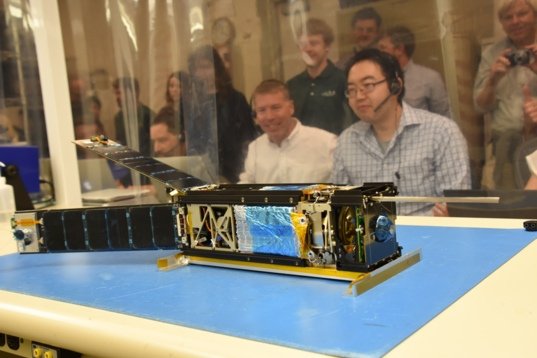
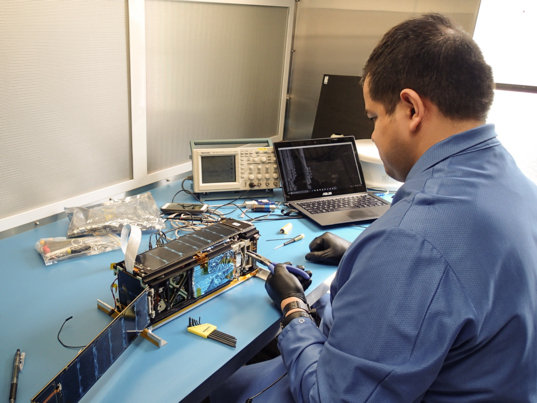
Speaking of screw-by-screw assembly, the LightSail 2 flight unit has been assembled for quite some time. It also passed its vibration and thermal vacuum chamber trials last month, which certify it can survive launch and the harsh space environment. One final end-to-end test of the spacecraft’s critical functions, including sail boom deployment (without the actual sails attached) is is still planned before delivery.
In the meantime, the LightSail team, led by engineers at Ecliptic Enterprises Corporation in Pasadena, has been putting the software system through its paces. In particular, there has been a lot of focus on the attitude control subsystem, which is responsible for tacking the spacecraft back and forth through the sun’s photon stream.
This extra testing continues to pay off. As an example, the team recently discovered a glitch on BenchSat, the flight unit’s acrylic-mounted test unit. Because BenchSat does not contain a full suite of flight sensors, some odd behavior was recently discovered when the flight software tried to access a sensor that wasn’t there.
No big deal, right? Actually, the glitch got the team thinking about how the software might behave if one of LightSail’s actual sensors failed during the mission. New code is being added to account for this potential scenario, and more tests will validate the changes.
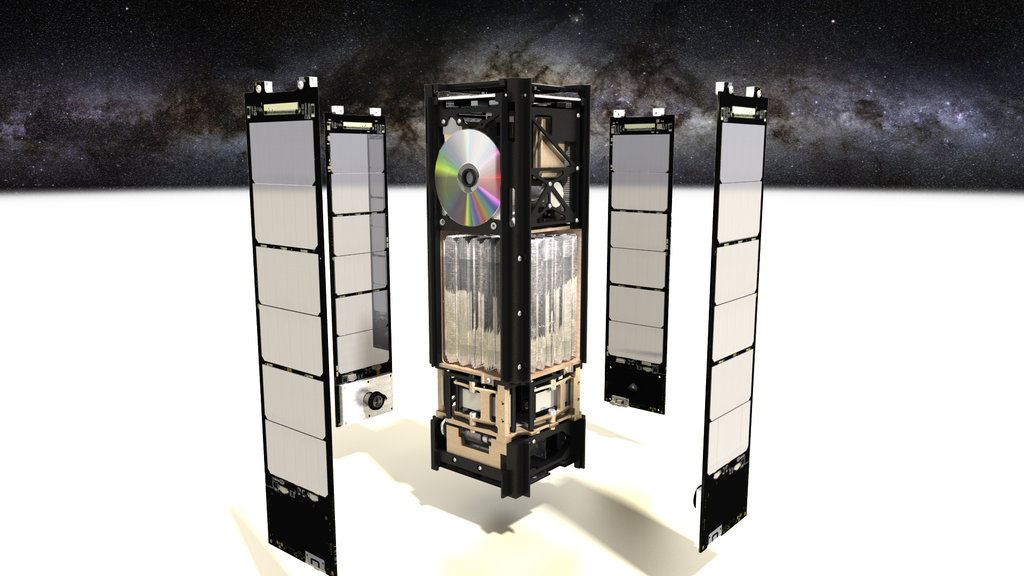
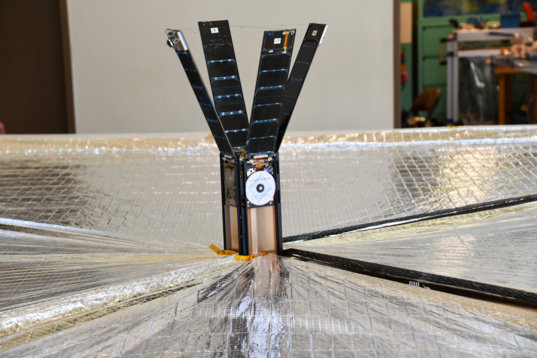
The photo shows LightSail 2 with a mini-DVD containing a roster of Planetary Society members, and list of Kickstarter contributers and names and images from the Society's "Selfies to Space" campaign.
By Jason Davis | Digital Editor
By Jason Davis | Digital Editor
Project reports on GlobalGiving are posted directly to globalgiving.org by Project Leaders as they are completed, generally every 3-4 months. To protect the integrity of these documents, GlobalGiving does not alter them; therefore you may find some language or formatting issues.
If you donate to this project or have donated to this project, you can receive an email when this project posts a report. You can also subscribe for reports without donating.