By Jason Davis | Digital Editor
It's been a busy two months of testing for The Planetary Society's LightSail 2 spacecraft.
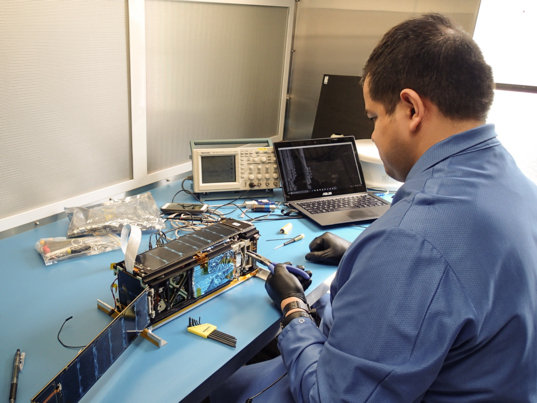
Engineers spun the CubeSat like a record and shined flashlights in its electronic eyes in order to make sure everything goes according to plan when the solar sail heads into space. More trials are on the horizon, including a trip to a special magnetic cage at Utah State University's Space Dynamics Laboratory.
Most of those tests were relatively straightforward: Does the momentum wheel spin at the commanded rate? Do the gyroscopes record the correct orientation of the spacecraft? Are the sun sensors able to track a light source?
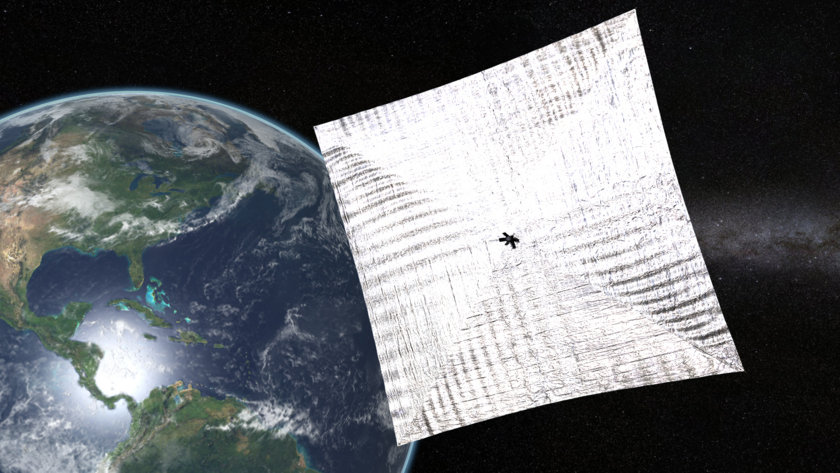
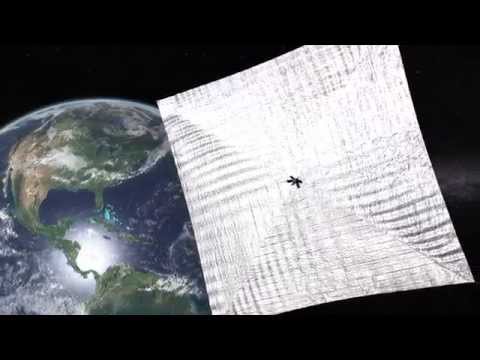
But now, an even bigger challenge awaits. In order for LightSail to raise its orbit by a kilometer each day, the spacecraft must "tack" its solar sails broadside against the sun's rays for half of each orbit. During the other half, LightSail must be rotated 90 degrees to face the solar photons edge-on.
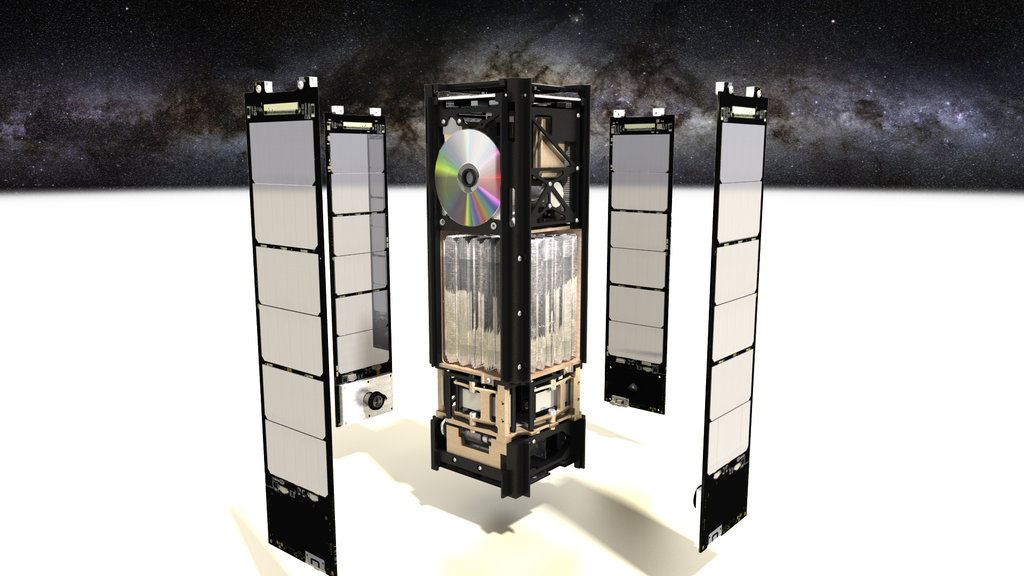
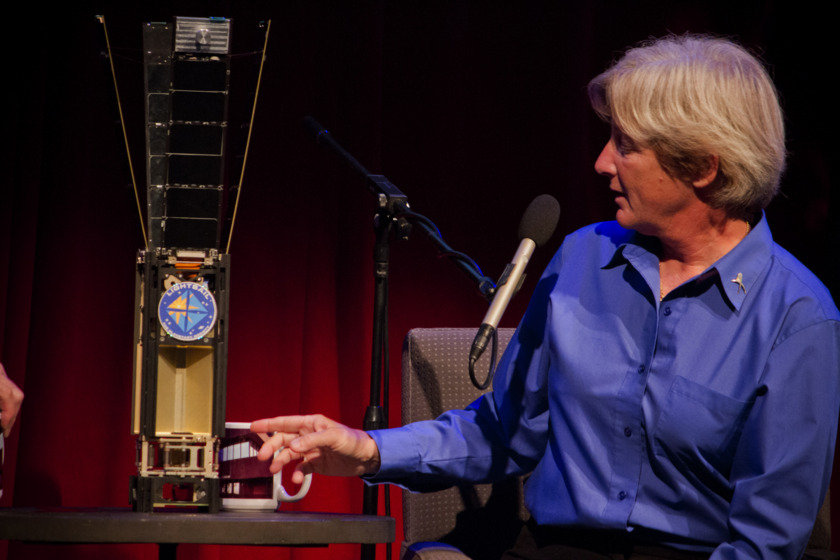
LightSail orients itself using an attitude control system, which consists of magnetometers, torque rods and a momentum wheel.
The magnetometers read the direction and strength of Earth's natural magnetic field as the spacecraft zips around the planet. The torque rods are three, golden cylinders (one each for the X, Y and Z axes) that electrically charge to generate a magnetic field, torquing against Earth's field to rotate the spacecraft. And the momentum wheel turns the spacecraft on a single axis (many spacecraft have three of these—one per axis).
So, in order to solar sail, we first stabilize the spacecraft using the torque rods. Then, the momentum wheel, which has more muscle, gives us the 90-degree swings into and out of the sun's rays each orbit.
But how do we make sure that's all going to work?
In early May, LightSail will travel to Utah State University's Space Dynamics Laboratory. There, the CubeSat will be placed into a Helmholtz cage (named after a German physicist).
It's difficult to calibrate a magnetometer on Earth because we are constantly being bombarded by magnetic interference from electronic devices. LightSail's own electronics, contribute to these distortions. A Helmholtz cage creates its own magnetic field, isolating its contents from outside interference. That means the team can simulate the same magnetic field profiles LightSail will see in orbit.
Ecliptic's Alex Diaz, as well as Barbara Plante of Boreal Space, will oversee the Utah trials. There are three main tests: First, Diaz and Plante will see if LightSail's magnetometers correctly read the fields generated by the Helmholtz cage. Next, they'll put LightSail on an air bearing—basically, a floating platform suspended by jets of air. The Helmholtz cage will generate a magnetic field, and LightSail will use its torque rods to swivel the way it will in space. Finally, Diaz and Plante will test LightSail's momentum wheel, commanding the spacecraft to make its 90-degree tacking maneuvers.
If all goes well, the tests shouldn't last more than a few days, paving the way for a day-in-the-life test back at Cal Poly San Luis Obispo, where the solar sails will be deployed for the last time before launch.
Project reports on GlobalGiving are posted directly to globalgiving.org by Project Leaders as they are completed, generally every 3-4 months. To protect the integrity of these documents, GlobalGiving does not alter them; therefore you may find some language or formatting issues.
If you donate to this project or have donated to this project, you can receive an email when this project posts a report. You can also subscribe for reports without donating.