By Jason Davis | Digital Editor
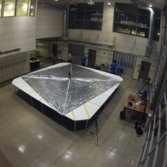
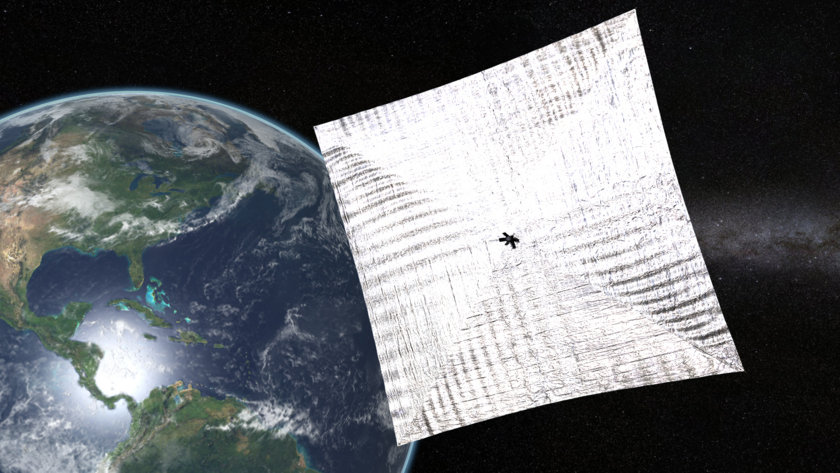
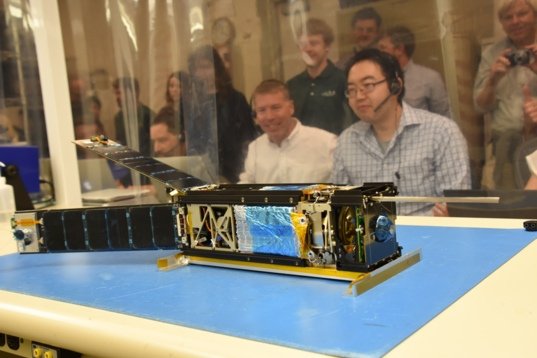
It's been a few weeks since LightSail 2 unfurled its Mylar solar sails during a day-in-the-life test at Cal Poly San Luis Obispo. What has the little CubeSat been up to? Here's a roundup of updates that were made in response to the test results, and a look at the project's next steps.
Did LightSail stop short?
The biggest anomaly during the day-in-the-life test was the booms stopping just a few motor counts shy of full deployment, as indicated by telemetry coming over the air to Cal Poly's ground station.
Telemetry also showed that the motor was still active, struggling to push the booms to their imaginary finish lines. This was a potentially dangerous situation—in a worst-case scenario, one might expect smoke to start rolling from the jammed motor—so the team commanded the motor to power down.
LightSail didn't respond, so Ecliptic Enterprises Corporation engineers Riki Munakata and Alex Diaz quickly unhooked one of the four triangular sail sections, opened an access panel in the deployment table and manually powered off the spacecraft.
It turns out the motor count required for a full deployment varies slightly from deployment to deployment. This is mostly based on environmental factors, including how the sail and booms are repackaged after a test. Additionally, all four sail quadrants pull on their adjacent quadrants, but because we aren't testing in zero-G, friction and gravity prevent the sail from working itself into a more relaxed state.
So despite the motor count, the sail was probably tight enough. The tension on the sails at the end of the deployment range—combined with boom flexure and deployment table friction—was enough to overpower the motor.
The mitigation? To be on the safe side, the team will lower future target deployment counts. We can always incrementally walk the booms out farther.
I can't hear you over this solar sail motor!
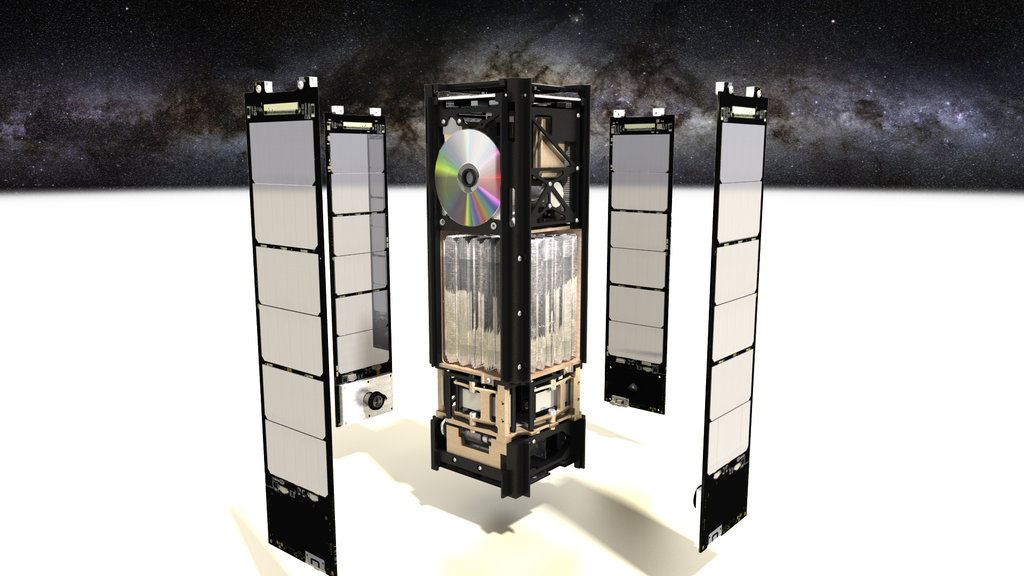
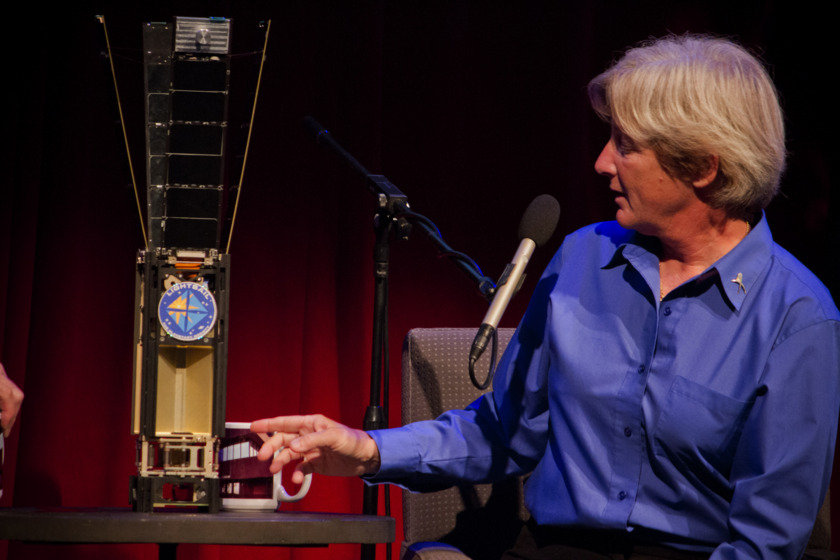
Regardless of why the motor stopped, LightSail didn't respond to commands in its stuck state. The likely reason? Electromagnetic interference around the spacecraft's aft compartment from the motor itself. LightSail's antenna is located right beneath the motor and boom spindle:
LightSail is able to send out telemetry chirps while the motor is running, but it apparently can't hear anything. This isn't usually a problem, since sail deployment is the biggest milestone of the mission, and a point in time where there's not much to do except sit back and watch.
Rather than solve the more difficult (and costly) problem of the interference itself, the easiest fix is adding a contingency timer to the flight software that powers off the motor after a few minutes, regardless of whether the target deployment count has been met.
Power problems
During the first phase of the day-in-the-life test, where LightSail sits in the clean room for antenna and solar panel deployment, there was some odd battery behavior.
LightSail has two battery boards holding four cells each—eight cells total. During DITL testing, not all of the cells were initially supplying power to the spacecraft. This was unexpected, but not necessarily a problem; it mostly resulted in a change in understanding about the spacecraft's power system.
However, this behavior also led to the discovery of an underlying hardware problem: one of the eight battery cells' protection circuit has failed.
When LightSail's solar panels receive sunlight, they charge the battery cells. When a battery is fully charged, its protection circuit stops more power from flowing into that particular cell. An overcharged cell can distend, or in the worst case, catch fire.
The safest fix here is to replace the battery board with the affected protection circuit. Ecliptic has already ordered the new components and expects to have them installed in the next week or so.
Project reports on GlobalGiving are posted directly to globalgiving.org by Project Leaders as they are completed, generally every 3-4 months. To protect the integrity of these documents, GlobalGiving does not alter them; therefore you may find some language or formatting issues.
If you donate to this project or have donated to this project, you can receive an email when this project posts a report. You can also subscribe for reports without donating.