By Rachele Rosati | Lead Scientist at Cure First
Dear Project Neuroblastoma Supporters,
I would like to extend to you my gratitude for your support of Project Neuroblastoma (NB). Your generous contributions have enabled the incredible improvements and outstanding results that the project has achieved in the past months. Thank you for believing in our mission and for your enduring support.
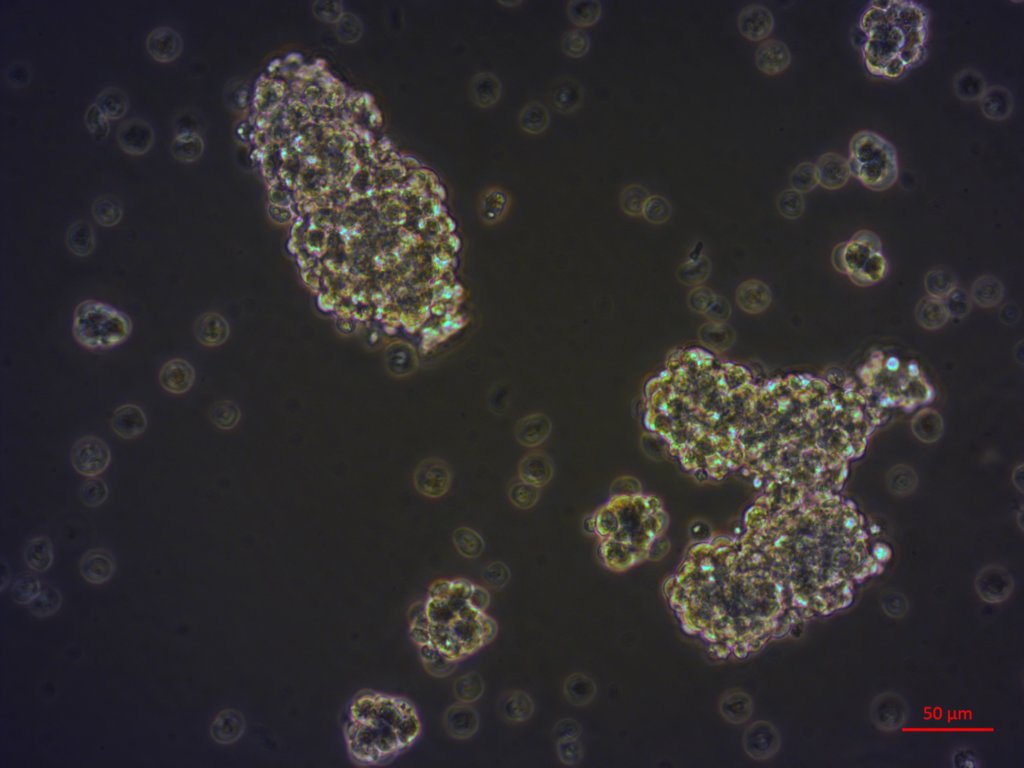
Despite a wide variety of treatment approaches for neuroblastoma, children with this high-risk disease have poor prognoses. Many children diagnosed with neuroblastoma are faced with a multifaceted, intense treatment approach including surgery in combination with several rounds of chemotherapy, radiation, stem cell transplantation and immunotherapy with isotretinoin. These standard-of-care treatment options are highly toxic and often yield little clinical benefit. Our mission is to find less-toxic drugs for high-risk neuroblastoma patients. By testing hundreds of drugs in patient-derived organoids ex vivo, we have avoided the harmful side effects and blind matching of drugs to patients inherent in traditional clinical trials.
We are excited to share that the Project Neuroblastoma team has identified the most effective in vitro drug combinations for three different neuroblastoma patient-derived organoid (PDO) models, each from a different patient with unique DNA alterations. One model has deficiency in a DNA repair pathway. Another has an ALK mutation, which has been associated with genomic predisposition to neuroblastoma. The third model has a KRAS gene alteration that is more common in other cancer types, such as colorectal and pancreatic cancers. Our discovery of these unique alterations has allowed us to propose a new combination of drugs to battle this devastating cancer.
While we believe that this new treatment options could prove to be the light at the end of the tunnel for at least some of the children with high-risk neuroblastoma, further in vivo testing in mouse models will need to confirm these results. Each organoid model was highly sensitive to the selected combination, indicating that patients with different genomic alterations could be potentially treated with the same drug combination.
The next step, in coordination with our collaborators at Children Hospital of Philadelphia, is the validation of our results in avatar mice.
We are thrilled to announce that the in vivo study for one of the patient-derived organoid models was begun at the end of February. While we hoped to begin the in vivo study for the other two models in March, we have had to postpone this work due to the spread of coronavirus. We look forward to sharing our results from the initial in vivo model in our next GlobalGiving report and hope to begin work on the second two models soon.
With warm thanks and best wishes,
By Rachele Rosati, MS | Lead Scientist and Team Member
By Rachele Rosati | Cure First Lead Scientist
Project reports on GlobalGiving are posted directly to globalgiving.org by Project Leaders as they are completed, generally every 3-4 months. To protect the integrity of these documents, GlobalGiving does not alter them; therefore you may find some language or formatting issues.
If you donate to this project or have donated to this project, you can receive an email when this project posts a report. You can also subscribe for reports without donating.