By Erick Bosire | Project Leader
1. Executive Summary
The first half of 2026 marked a major transition for the WE REACH WASH Programme from traditional service delivery towards a sustainability-focused model. The 2026 WASH Sustainability Pilot was designed to address recurring challenges including teacher transfers and retirements, limited school financing for WASH operation and maintenance, weak continuity mechanisms, and dependence on external support.
The pilot was implemented in 10 partner primary schools in Lurambi Sub-County, Kakamega County. It focused on strengthening school leadership, rebuilding WASH human capacity, establishing school-led Income Generating Activities (IGAs), strengthening stakeholder collaboration, and developing systems to sustain WASH interventions beyond external project support.
During the reporting period, WE REACH completed institutional assessments in all 10 schools, re-established Teacher Health Champions through the Two-Teacher Champion Model, oriented school leadership and Boards of Management, supported schools to establish IGAs, provided seed funding, developed draft School WASH Standard Operating Procedures (SOPs) and a School WASH Handover Log, and strengthened collaboration with health and education stakeholders.
By June, all 10 schools had initiated their selected enterprises, including poultry farming, vegetable production, school retail shops, soap making, and school feeding programmes. The enterprises are intended to generate resources for WASH operation and maintenance and reduce reliance on external funding.
2. Programme Background and Approach
WE REACH has implemented school WASH interventions in Kakamega County since 2020, working with schools, communities, the Ministries of Health and Education, and Public Health Officers. While previous interventions contributed to improvements in WASH practices and school health, monitoring identified sustainability challenges.
These included loss of institutional knowledge following teacher transfers and retirements, inadequate school budgets for WASH, weak Health Club continuity, limited operation and maintenance financing, and insufficient integration of WASH into school planning.
The 2026 Sustainability Pilot therefore shifted emphasis from direct implementation towards institutional strengthening, financial sustainability, knowledge continuity, stakeholder collaboration, and continuous learning. The overall goal is to enable schools to independently sustain WASH interventions beyond external project support.
3. Progress and Key AchievementsInstitutional Strengthening
WE REACH completed institutional assessments in all 10 pilot schools to examine WASH infrastructure, school leadership, Teacher Health Champions, Health Clubs, and readiness for the sustainability model.
The assessments revealed significant turnover of Head Teachers and Teacher Health Champions, demonstrating the need for stronger continuity mechanisms. In response, each school adopted the Two-Teacher Champion Model.
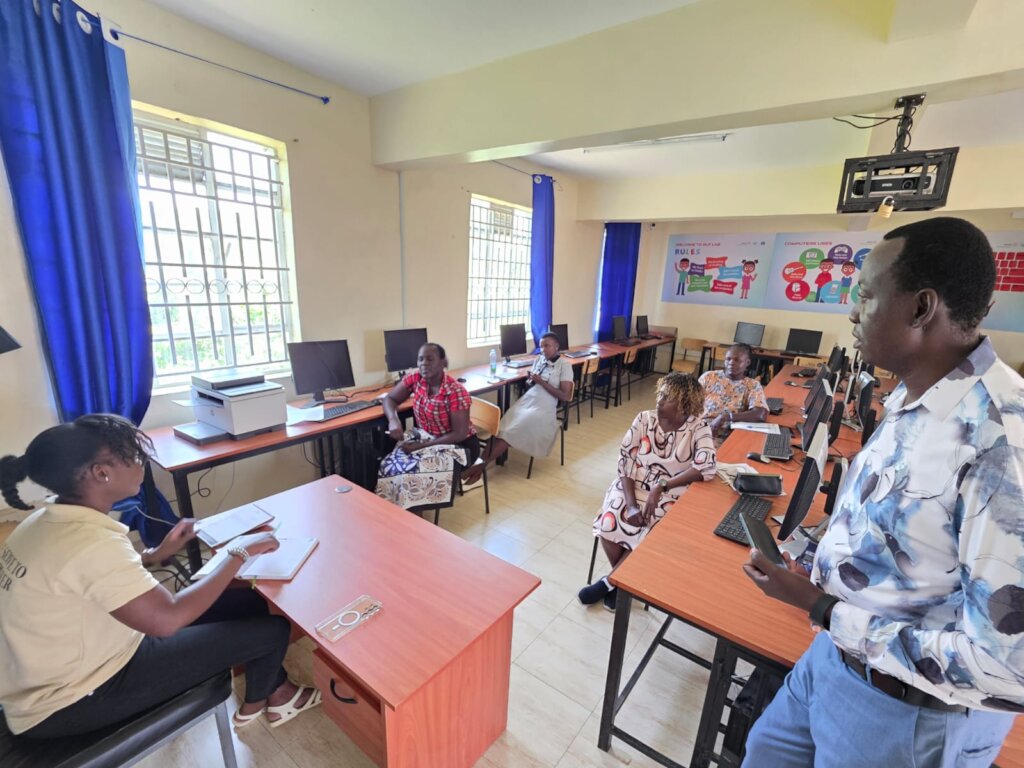
A total of 20 Teacher Health Champions were oriented on their roles, WASH leadership, Health Club coordination, and sustainability. School Health Club Activity Manuals were also developed and distributed to support structured learner engagement, hygiene promotion, WASH activities, and soap-making.
Financial Sustainability through School-led IGAs
To reduce dependence on external financing, WE REACH introduced school-led IGAs as a mechanism for financing WASH operation and maintenance.
Schools were supported to identify enterprises suited to their local context and develop proposals and budgets. Seed funding was provided to all 10 schools.
The enterprises established included:
Monitoring and mentorship visits were conducted to assess enterprise establishment, financial accountability, leadership involvement, and the ring-fencing of income for WASH activities.
The approach has strengthened school ownership, although schools identified the need for additional entrepreneurship and business management training.
Knowledge Continuity and Systems Development
Teacher transfers and retirements had previously resulted in loss of institutional knowledge. To address this, WE REACH developed draft School WASH SOPs and a School WASH Handover Log.
The SOPs provide guidance on WASH facility management, handwashing promotion, Health Clubs, menstrual hygiene management, cleanliness, record keeping, and responsibilities of key school actors.
The Handover Log is intended to ensure that WASH responsibilities, records, materials, and ongoing activities are formally transferred whenever school leadership or personnel change.
The draft SOPs were shared with Public Health Officers for technical review and feedback, representing an important step towards institutionalizing WASH management within schools.
Stakeholder Engagement and Monitoring
WE REACH strengthened collaboration with the Ministry of Health, Ministry of Education, Public Health Officers, and county WASH stakeholders.
The programme participated in the County Technical Working Group on Menstrual Hygiene Management and engaged stakeholders on school menstrual hygiene, attendance, dignity, and learning outcomes.
A Teacher Health Champions WhatsApp platform was also established to facilitate continuous communication, technical support, peer learning, and follow-up.
Monitoring and mentorship visits were conducted across all 10 schools following establishment of the IGAs, strengthening accountability and providing technical guidance on enterprise management and WASH sustainability.
4. School WASH Sustainability Plans
Although full implementation is planned for the second half of 2026, the programme laid the foundation for School WASH Sustainability Plans.
The plans will integrate WASH priorities into routine school planning and provide guidance on annual targets, Health Club activities, operation and maintenance, budgeting, IGA management, monitoring, roles and responsibilities, risk management, and continuity during staff transitions.
The programme also identified menstrual hygiene management as an important advocacy priority, particularly following reported inconsistencies in the supply of menstrual hygiene products to schools.
5. Key Challenges and Responses
Several challenges affected implementation. High teacher turnover threatened institutional memory and continuity. The programme responded through the Two-Teacher Champion Model and Handover Log.
Limited school resources for WASH operation and maintenance were addressed through school-led IGAs. Some schools also had limited entrepreneurship skills, leading to the planned introduction of Entrepreneurship and Business Management Training.
Delays in establishing some enterprises were addressed through continued mentorship and monitoring. Inconsistent access to menstrual hygiene products prompted plans for stronger county-level advocacy and coordination.
6. Lessons Learnt
The first six months generated several important lessons:
7. Priorities for July–December 2026
During the second half of 2026, WE REACH will focus on consolidating sustainability mechanisms within the 10 pilot schools. Key activities will include:
8. Conclusion
The first half of 2026 has laid a strong foundation for sustainable school WASH programming. Through institutional assessments, re-establishment of WASH leadership, school-led IGAs, development of continuity tools, stakeholder engagement, and supportive supervision, WE REACH has begun shifting WASH programming from external project dependence towards school ownership.
The experience from the 10 pilot schools will generate important evidence and lessons for strengthening and scaling the Sustainability Pilot across Kakamega County and beyond.
By Erick Bosire | Project Leader
By Nancy Itambo | Project Leader
Project reports on GlobalGiving are posted directly to globalgiving.org by Project Leaders as they are completed, generally every 3-4 months. To protect the integrity of these documents, GlobalGiving does not alter them; therefore you may find some language or formatting issues.
If you donate to this project or have donated to this project, you can receive an email when this project posts a report. You can also subscribe for reports without donating.



Support this important cause by creating a personalized fundraising page.
Start a Fundraiser