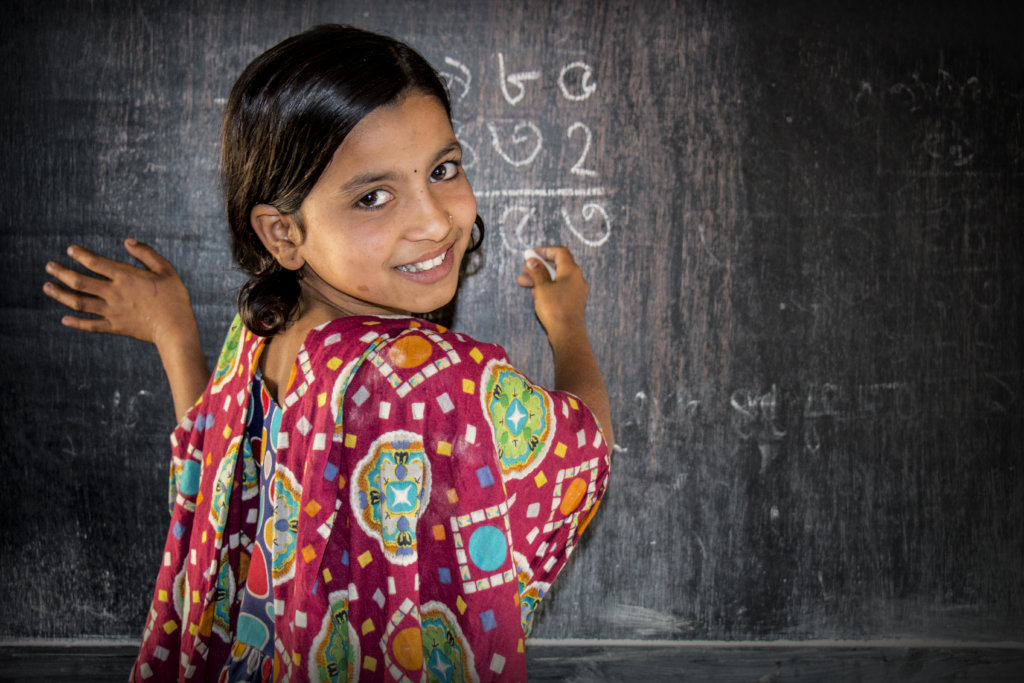
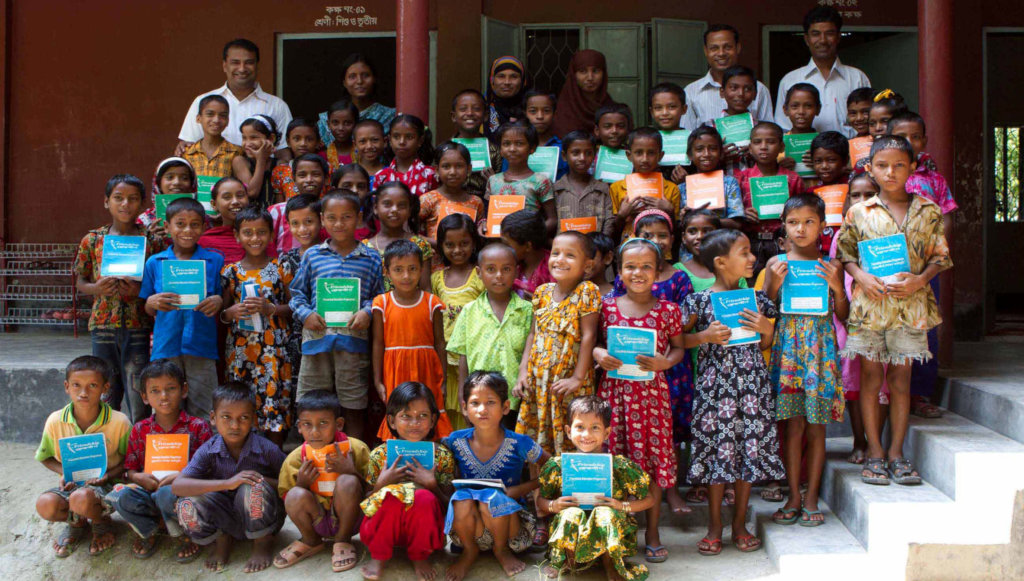
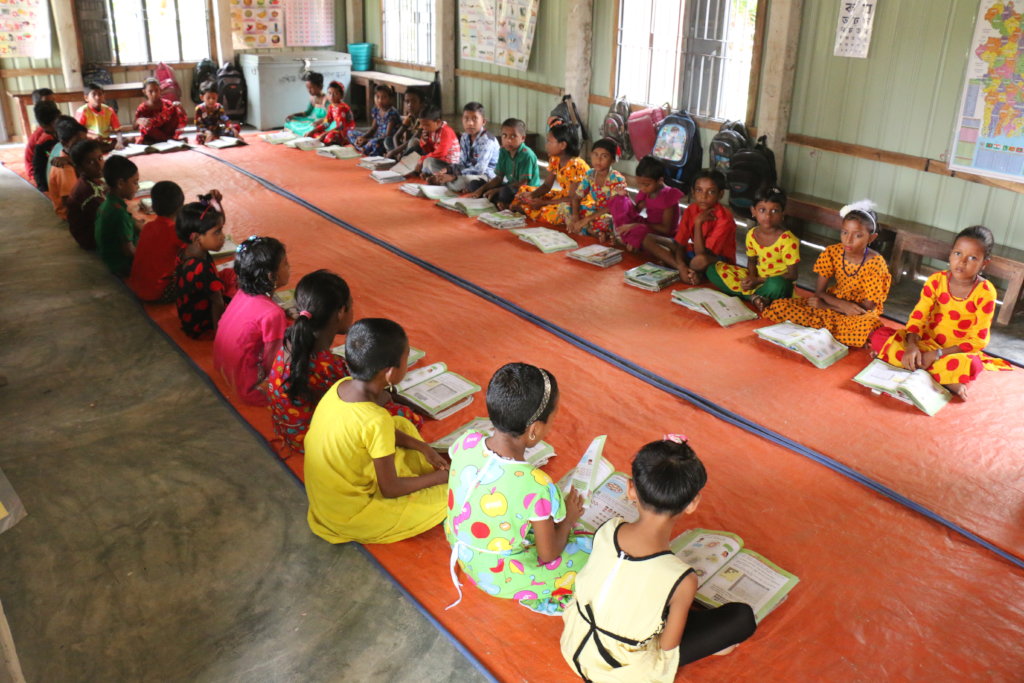
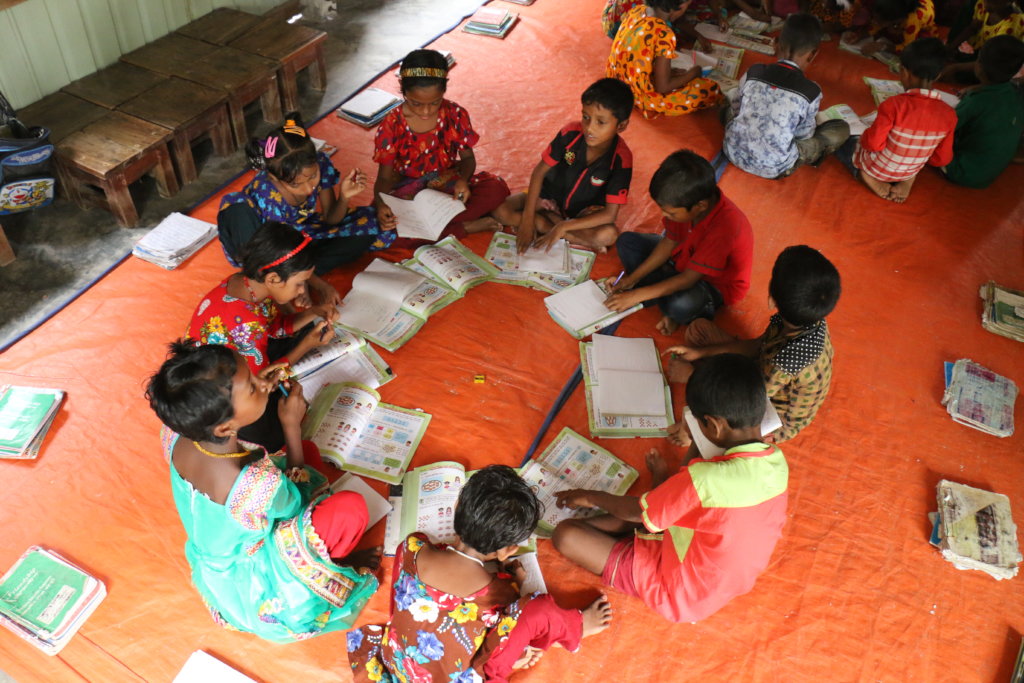
Friendship Primary Education Program
Selection of students
The major selection criteria for Friendship schools are:
- Friendship admits only those students who otherwise do not have access to any other schools.
- Female students are given higher priority since females find it difficult to travel to other chars or mainland for attending schools. Moreover, educated female members of the communities can work toward creating educated families as well as educated communities.
- Friendship wants to ensure that at least one of the kids in every family goes to school. Since our class size is limited, for families where there is more than one child eligible to go to the schools, sometimes only one child is given opportunity. This is done in order to touch lives of maximum number of households through education program and to give them the opportunity to change their fate.
Children with ‘special needs’ are normally always given the opportunity to get admitted. As such, most of our primary schools have one or more children with some form of disability.
National Curriculum Exam
The National Primary Examination is the target which is set for the Friendship schools. Thus the children need to take this National examination at the end of their 6th year of schooling, i.e. after grade 5.
Friendship students showed extraordinary performance in Primary Education Completion Examination 2017, the national examination conducted for students across the country. The students appear for this exam after six years of schooling, i.e. after the completion of grade V.
In 2017, most of the 543 appearing students showed extraordinary performance in the exam, with 89% receiving A+, A, and A- grades. The percent of students receiving A+ (around 21%) is higher than the national average of 11.15%. A+ is the highest possible grade for the students appearing in the national exam.
This itself is a big achievement and when this is coupled with the fact that the students are from some of the most underprivileged regions of the country - where pass rate in PEC exam is below 60%- the effectiveness of the program becomes quite apparent. In addition, around 9.8% of the appearing students have achieved government scholarship based on their merit, which is way higher than the national average of around 2%.
Code of Ethics
In the Friendship primary education program, building the sense of ethics and citizen rights and responsibilities among students is given highest importance.
Code of ethics plays an important role in the education curriculum of Friendship as Friendship believes that its practice in any field of work and personal life plays a vital role in making people, especially children, better human beings and better citizens. Under the code of ethics:
- One topic on ethics is selected every month and a visual is made by Friendship team to be shared among the teachers of the 78 schools. So far the topics included dignity, honesty, commitment, humility, etc.
- The teachers, after having the proper understanding of the topic, share it with their students during morning assemblies and then both the teachers and students discuss about the topic, their feelings, learning, and experience.
- Code of ethics has already had profound impact on the ethical level of the Friendship students who can be easily detected from a group of children because of their high moral standard and integrity.
- After successful introduction of code of ethics in Friendship schools, we were approached by District Primary Education office for implementing the same in government schools in Kurigram. So far, code of ethics has been implemented in 25 government schools, where students are staying back in classes for half an hour after school hour on every Thursday.
Listen to learn
Listen to Learn is an innovative method for strengthening students’ capability of listening and speaking better English.
- Under “Listen to Learn”, the English from class 1 to 5 is audio recorded by European speakers and students get to listen to a better English accent, thus helping them be better equipped to learn proper English.
- In the process, teachers practice in English pronunciation mentioned in the audio system and become more confident to conduct classes in English.
Thanks to Listen2Learn, most of our students speak better English than our own field staff- which itself is a significant achievement. In a country where knowing English itself ensures 25%-30% higher pay in jobs, knowing proper English is a huge boost for the students for getting employed in the future.
Child Rights
Friendship puts utmost importance on enabling the students to become good citizens. And in the way of doing so, the teachers teach them their basic rights, responsibilities, etc.
Healthcare for the students
Through the presence of Friendship field level health workers in the chars, the students always receive nutrition related information, behavioral change communication, dental and eye checkups, basic medication, etc. For requirement of advanced or secondary care, they are referred to the floating hospitals of Friendship where they can undergo surgeries, if required.
A mobile education system
When the chars face the threat of being disappearing due to erosion, the communities go to another char. The school structure can be disbanded in 2-3 hours only and then moved to the char where the community has moved. At the same time, the teachers also move with the community. Thus, the whole education system as a whole can move to a different char and start all over again.
Theory of Change
When Friendship first started the education program, there were chars where there was not one single person who could read or write. Many of those people were cheated while selling their produced goods or making a contract. They also did not know where to go for seeking help for availing different facilities/ citizen rights.
As of now, because of the intervention, in most of the chars, the basic literacy rate has crossed more than 60%. In every household, there is at least one person who can read and write. Therefore, s/he can help parents keep basic account, do basic calculation, and get in touch with the authorities with different complaints. This is something which was unthinkable even a few years back.
We are well-aware that many of those children will not be able to continue education much beyond primary schools. But we teach children in such a manner that they can grow with a disciplined mind with strong moral values. We ensure that the graduating students will have a fair chance of getting a modest employment when they grow up.
The success of education program lies in the fact that it has grown an immense self-confidence and dignity among the char population. Even if for some reason the program ceases after many years, the people will still be able to lead a dignified life on their own.
Clean home, clean school
In order to build a clean community, Friendship attempts to teach students ways to keep environment clean. Some of the key practices that are highlighted within the initiative are:
- A special effort ‘clean school clean home’ is part of routine school activities.
- Keep a bin inside the classroom and demonstrate children the use of it.
- Keep the sanitary latrines and the tube-well area clean regularly.
- Teach children to use sufficient amount of water after using the latrine every time.
- Encourage the children to keep their courtyard and the surrounding areas of their house clean.
Through “Clean home, clean school”, a clean community is created through the awareness being created among children first and then transferring the awareness to the guardians and the neighbors.
Environmental conservation during construction
Since we use only prefabricated materials for school construction, the environment is not harmed due to brick structure. In addition, most of the materials used, including bamboos, are quite eco-friendly in nature and thus promotes our commitment toward mother nature.
Gardening at schools and homes
Almost all of the schools have one flower garden within the school premises. Students, supervised by teachers, are encouraged to work in those gardens. Students are also given knowledge and are encouraged to start gardens in their households.
Friendship Secondary Education Program
Though Friendship initially started with primary education only, Secondary Education itself has those unique benefits which cannot be achieved through primary education only. Some of these are:
- Earning a living: Secondary schooling provides the learners of these remote areas with enhanced capacities, which in turn prepares them to gain vocational trainings from Friendship or other NGOs. In addition, the comparatively higher level education is offering the children access to knowledge and resources to look for other livelihood option in future.
- Reducing early marriages: In the char areas, girls normally get married at the age of 13 or 14 as they do not have anything to do other than household chores once they leave the primary schools. However, after the introduction of secondary school, the girls have more access to higher education and the parents have a reason not to marry their daughters off right away.
- Better living standard: Access to secondary schools drastically increases the living standard in the char communities as the students receiving education from these schools will be more aware about their responsibilities and rights and will work toward creating a better society. Secondary education will also create opportunities for them and thus limit migration to urban slum areas.
- Increasing connectivity: So far, most of the char dwellers are detached from the mainland and do not have access even to the basic technology. However, after the introduction of secondary education, they are now better connected to ICT and have better access to knowledge and information. Therefore, though our project will cover only up to grade 8, enthusiastic students will get the motivation and measure to attend higher grades of education, even travelling to the mainland through difficult modes to achieve it.
Thus, Secondary Education is giving hope to the remotest communities of the country and giving them an opportunity towards a more meaningful and fairer life.
Challenges in Program Development
The main challenges faced while designing secondary education program are:
- Absence of skilled teachers: The main challenge in implementing secondary education was the absence of skilled teachers since teachers from outside the chars do not want to stay in the chars for longer period
- Remoteness of the communities: is another challenge and even if we build a school in the mainland targeting those students, they cannot travel all the way to the mainland and study in the schools.
- Lack of affordability: The families of the students cannot pay for education and hence arranging high end expensive solution in the chars is not an option for those communities.
- Lack of internet connection: internet-based video teaching is not a viable option yet due to the slow/ no internet connection and requirement of expensive infrastructure.
- Nature and Natural Disasters: the islands are always shifting, and the communities are the biggest victims of floods, or any other natural calamities. Due to the shifting nature of these islands, the people migrate within a timespan of 6-7 years. It is always difficult to maintain a permanent structure on these islands. Natural disasters are always a challenge as when floods hit, everything is washed away.
Program Strategy
In 2015, the program started with only Grade VI in five of the riverine islands. In all of those islands, Friendship already had primary education program operational and only selected graduates from Friendship primary schools were enrolled in the secondary schools. Girls are given more priority since whereas at least few of the primary school graduating boys are able to travel to another island or mainland for getting secondary education, it is virtually impossible for girls to travel and receive further education.
In each of the classes, around 15 students were enrolled on an average. The demand for enrolment increased due to the opportunity of better employability and an escape from early marriage. It was noticed that when girls finished their primary schools, many of them would get married as a result of no other activities in these remote areas, and also for a sense of security.
Friendship acknowledged the increase in demand, and eventually increased its capacity of students to 123 in 2016, and in 2017 to 249.
By the end of 2017, the first batches of students completed Grade VIII and appeared for Junior School Certificate Exam, whereas the school started in two more places with Grade VI in 2017.
As such, total classes operational at the moment:
- Grade VI, Grade VII, Grade VIII: in 5 schools
- Grade VI and Grade VII: 2 schools (these two schools started in 2017 and will thus incorporate Grade VIII only in 2019)
All students in Friendship Secondary Schools are those who have passed from Friendship Primary Schools.
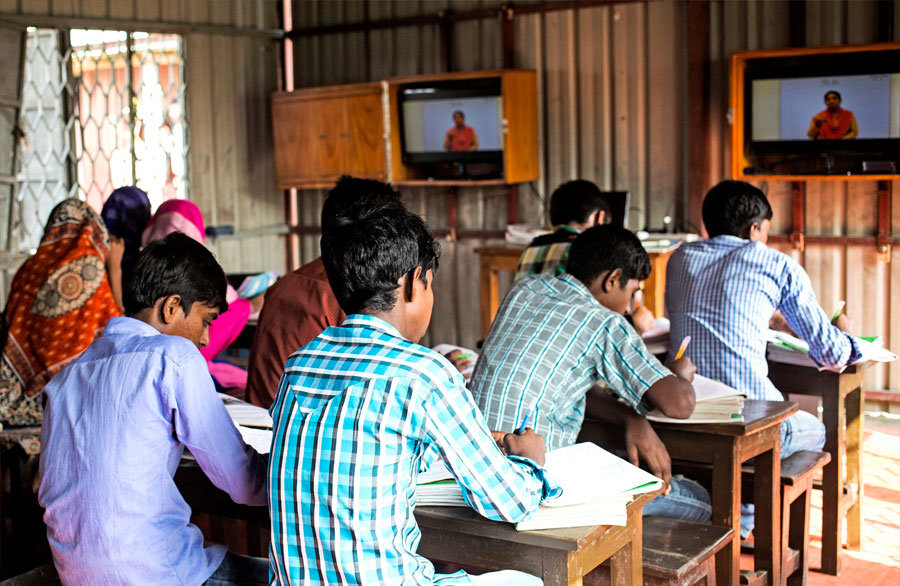
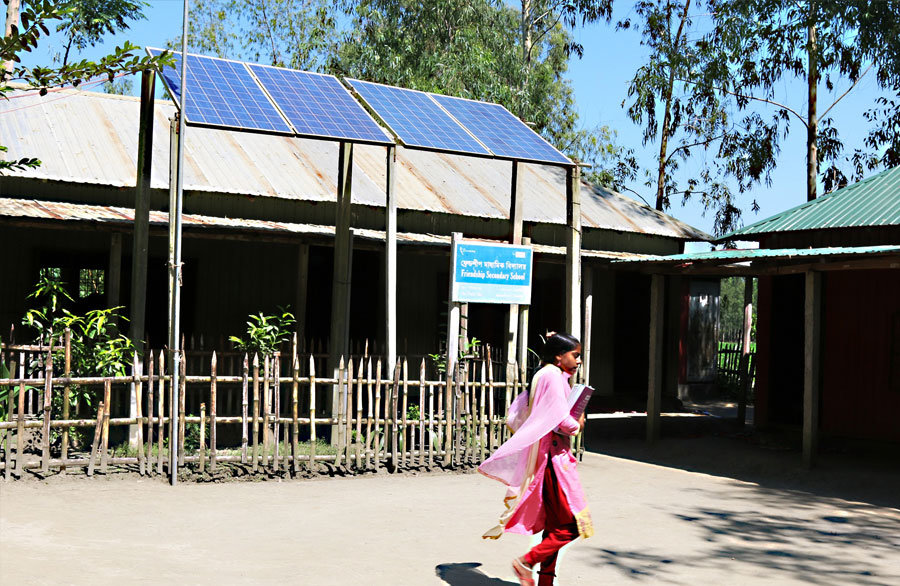
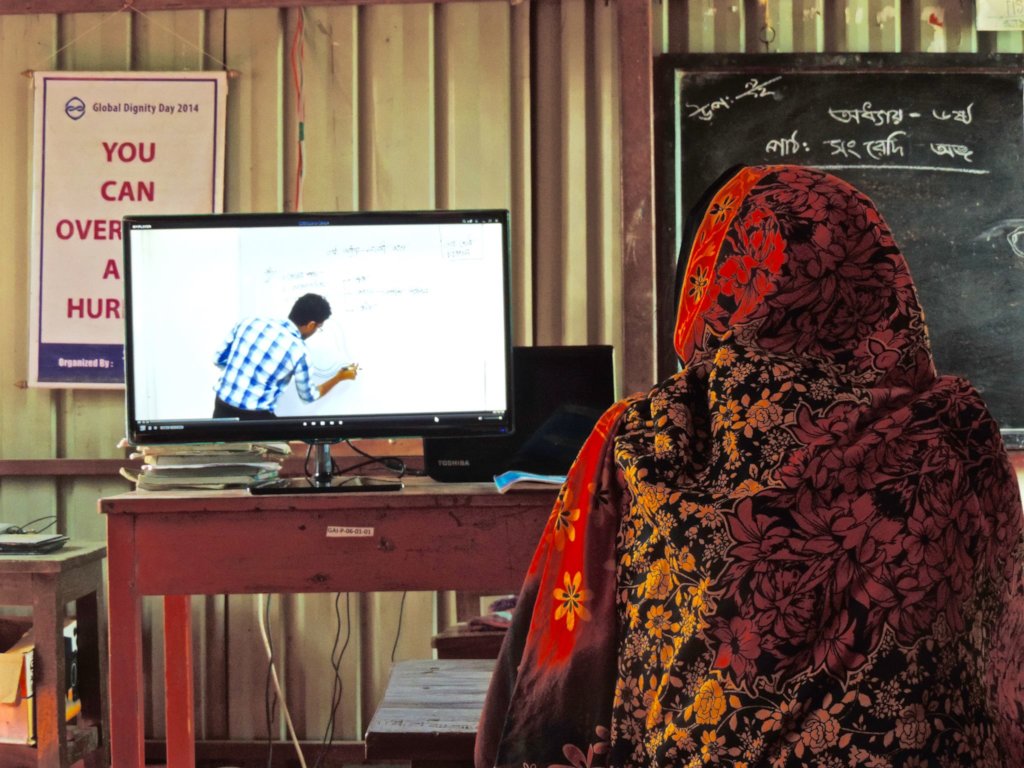
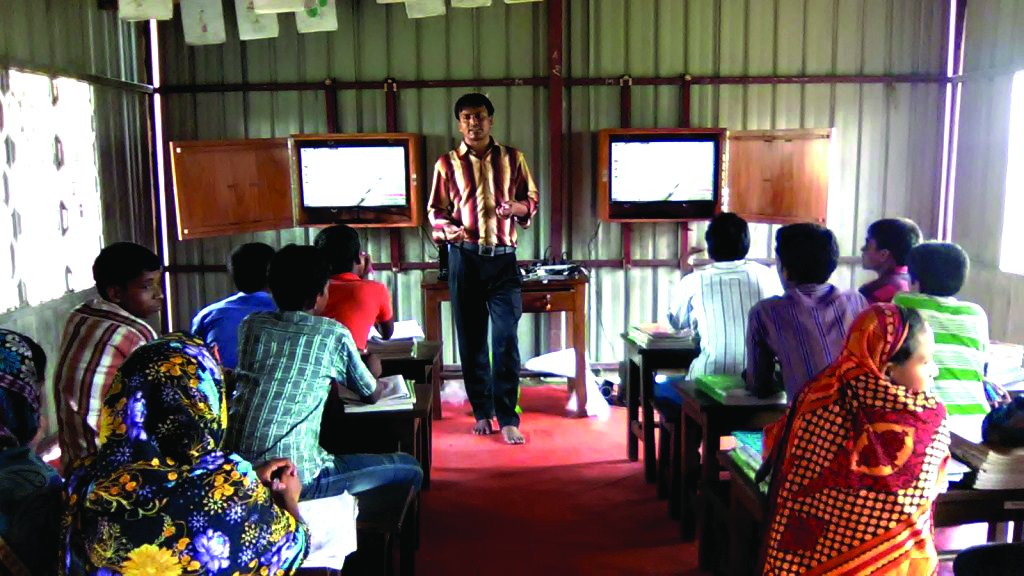
Infrastructure: There are one computer (laptop), two-three monitors (depending on the number of students) and lights in each of the classrooms. There is one solar panel installed in every school for supporting these solutions across the classes.
The classrooms are constructed just beside the existing Friendship Primary Schools.
Solar grids: This project requires solar panels that provide power up to 8 hours, for all computers in operational classes. Friendship’s own rural electrification program provides required technical support in this regard.
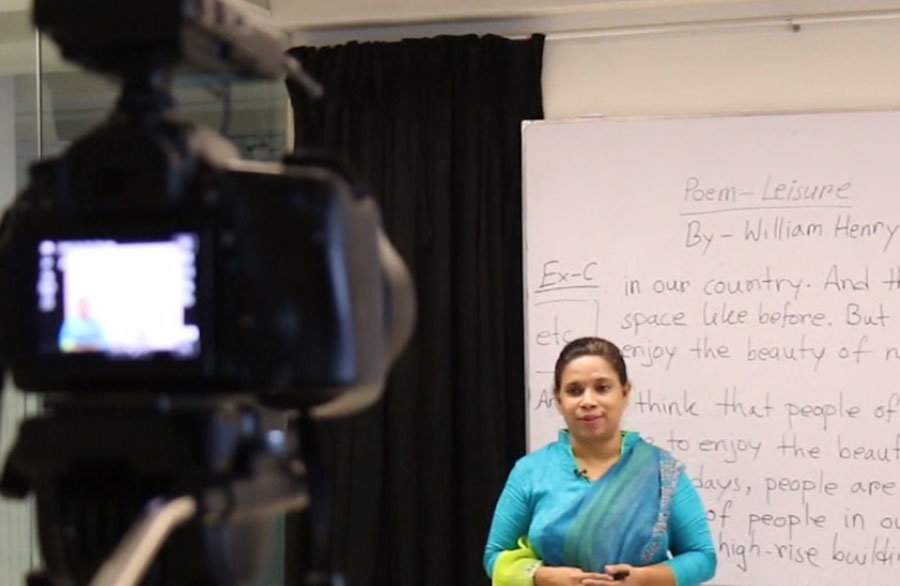
Learning method: Videos are made on government curriculum syllabus and CDs are produced based on them. Prominent teachers from Dhaka have appeared for those videos and the concepts have been explained in easy understandable terms for the students. Lessons on different subjects were recorded and converted into CDs by subject-wise teachers from renowned schools of Dhaka. The teachers took an interactive approach for explaining the concepts well to the students. They also focused on conceptual clarity and better application of learning materials. Each session is approximately 40-45 minutes long.
The videos are shown to the students during classes and they have option to ask questions after the classes. The questions are either resolved by the facilitators or if required are responded by the teachers from Dhaka during weekly phone calls.
Call Centre: When students have questions, they are taken down as notes by the facilitator. The teachers help to solve those problems through a phone call with the students by the call centre at Friendship once every week. The teachers also visit the schools from time to time to understand them and their ecology.
Primary school teacher as facilitator: The trained Friendship primary school teachers work as facilitators/ shadow teachers and are offered basic subject knowledge related to the topics that are taught to the students beforehand. During the classes, they answer to questions that the students may raise after watching the videos.
Checking exam scripts: In order to ensure that students get fair and accurate evaluation of their merit, all the monthly and semester exam scripts are sent to Dhaka Head Office and are checked by teachers in Dhaka. The checked exam scripts are then sent back to the students.
School Library: Secondary school students are given the opportunity to read different books (novels, fun books, history, etc) from the established school libraries.
Code of Ethics
In the Friendship Education program, building the sense of ethics and citizen rights and responsibilities among students is given highest importance.
Child Rights
Friendship puts utmost importance on enabling the students to become good citizens. And in the way of doing so, the teachers teach them their basic rights, responsibilities, etc.
Healthcare for the students
Through the presence of Friendship field level health workers in the chars, the students always receive nutrition related information, behavioural change communication, dental and eye check-ups, basic medication, etc. For requirement of advanced or secondary care, they are referred to the floating hospitals of Friendship where they can undergo surgeries, if required.
The 3 years of journey for Friendship Secondary Education Program can be summarised in the below table:
Details
2015 2016 2017 2018
Number of Students 65 123 249 326
Number of male students 28 49 98 128
Number of female students 37 74 151 198
Number of schools 5 5 7 7
Number of classes 5 10 17 19
Number of facilitators 5 10 17 19
Cumulative number of
video lessons available 456 550 1268 N/A
Pass rate of JSC - - 100% N/A
Secondary Education Program Highlights 2017
The secondary education program is being piloted in 7 schools in the remote char areas. 2017 has been a year of achievement for Friendship Secondary Education Program.
Students from Friendship Secondary Schools appeared in the Junior School Certificate[1] exam for the first time in 2017. 56 students (30 boys and 26 girls) appeared for the Junior School Certificate (JSC) exam with a pass rate of 100% as compared to the national average of 83%. 36 students of Friendship Secondary Schools achieved A-, 19 got A and 1 student got B.
Follow Up
For future employment, Friendship provides training to its graduating students for better opportunities:
- Vocational Training: Friendship has some vocational training initiatives for secondary level school students where they can use these learning for income generating activities in future. In 2017, 6 students were given a 3-day training in healthcare and an internship at the Friendship floating hospitals. For 2018, Friendship is taking the initiative to provide training to male students on solar panel installation and maintenance.
- Government Trainings: Friendship is cooperating with the Department of Youth Development under Ministry of Youth and Sports to create access to government facilitated training programs for the graduated students.
- Out of the 56 students graduating from Grade VIII in 2017, 47 got enrolled in Grade IX in some other Secondary schools having Grade IX and X (both Government and Private). The schools are located mostly in mainland (whereas some of those are located in slightly developed chars).
21 of the 47 students are female - who, in absence of any secondary schools in their respective chars for studying Grade VI, VII, and VIII, would have discontinued their education after primary schools and would possibly have got married off. Therefore, presence of basic Secondary Education is ensuring that these girls will be able to lead an improved life in future.
- Indicator Development process: Friendship has recently been doing extensive works for updating and reviewing the existing indicators for different projects across Friendship. As part of this, the available indicators of Secondary Education have been reviewed and updated. This is expected to make reporting more accurate and realistic. The indicator list has been annexed with this document.
Future Plan
The following are the future plan for Secondary Education:
- As there is an existing demand for secondary education in the char areas, Friendship envisages to establish 2 new secondary schools in 2019, which will start with Grade VI and gradually add one classroom per year until there are all three grades available.
- Introduce Grade VIII in the two schools which started in 2017 and have currently two grades only.
- Friendship is looking into the possibility to incorporate Grade XI and X in all its schools in the near future, subject to permission from the Government.
- Friendship will start running advocacy program with the Government for incorporating video based lessons into Government supported schools in remote locations- where traditional method of teaching is not feasible because of unavailability of qualified teachers. This has already been highlighted once during the press conference in the beginning of the year.
- Government’s ICT division is expected to further support Friendship for improving the ICT infrastructure in each of the classrooms. Discussion has been ongoing and a concrete proposal is expected to be finalized by mid-2018.
- Subject to availability of fund, Friendship intends to operate one hostel for female graduates in Gaibandha town who intend to continue further studies after completing Grade VIII, in order to ensure safety for girls and encouraging their parents to continue their children’s education.
- Follow up of graduating students: Follow-up is already in place to monitor the students who have graduated from Friendship Secondary Education program, in order to understand and support the continuation of their further education.
Friendship envisages to organize short internship programs for at least 60% of the graduating students at its different facilities (such as floating hospitals, weaving centers, training center, satellite clinics, etc.) by the end of 2019. In addition, Friendship Secondary Education graduates, after completing further studies, will be connected with job-providers after the completion of their studies.
Friendship Adult Literacy Program
Friendship Adult Literacy Program- Project initiation
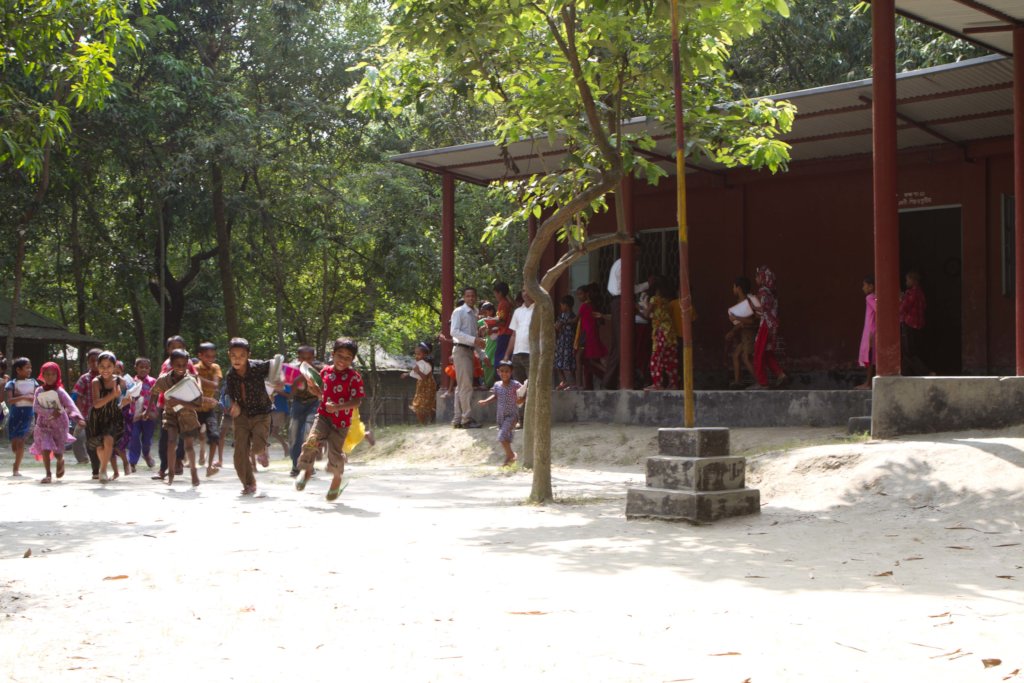
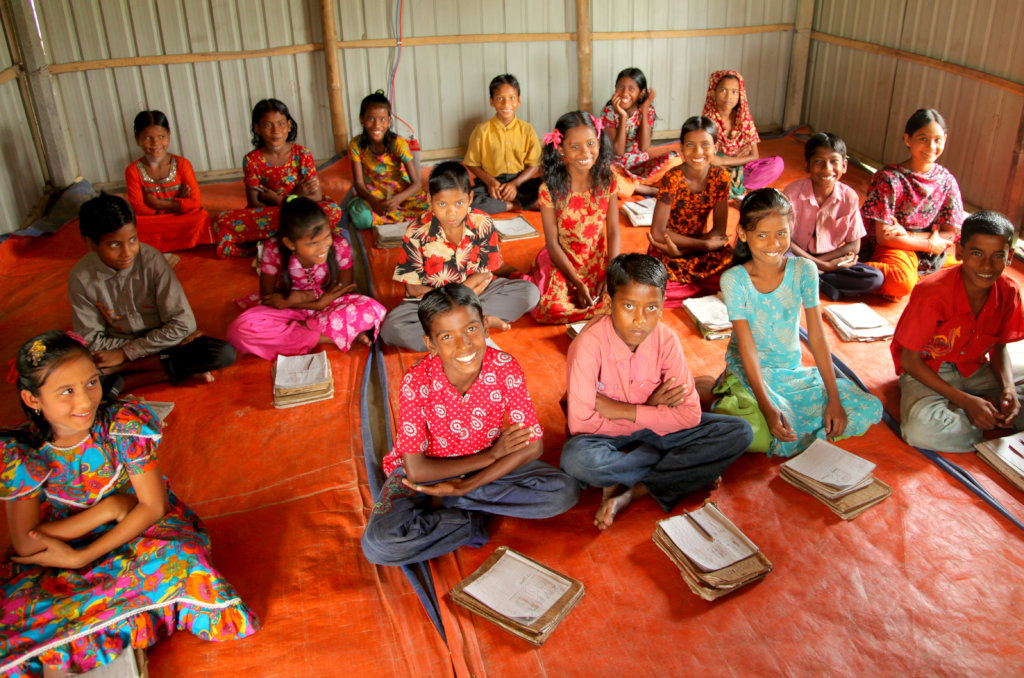
Friendship Primary Education Program, which started its journey back in 2006, is currently implemented through 78 primary schools in Gaibandha and Kurigram districts in the North of Bangladesh and in Satkhira and Patuakhali districts in the Southern Coastal Area. 4,876 children attend Friendship primary schools at 177 classes in those 78 schools.
However, when the Primary School Program was first initiated, we identified that the literacy rate among the parents and the adolescents was quite low (only around 10%) with people lacking in basic literacy skills. When the Primary School Program was started, the community, especially the mothers of the school going children, felt a need for a basic literacy initiative targeted to and customized for the adults.
Friendship Adult Literacy Program was introduced as an extension of the existing Friendship Primary School Program. We believed that if basic education can be offered to these underprivileged people, the community in general would be able to read and write, do basic calculations, and thus lead a better and an enlightened life by being aware of the social rights that they deserve.
The program is currently being implemented through 73 adult literacy centers in remote northern char regions and southern coastal belt areas.
Adult Literacy Program at a Glance
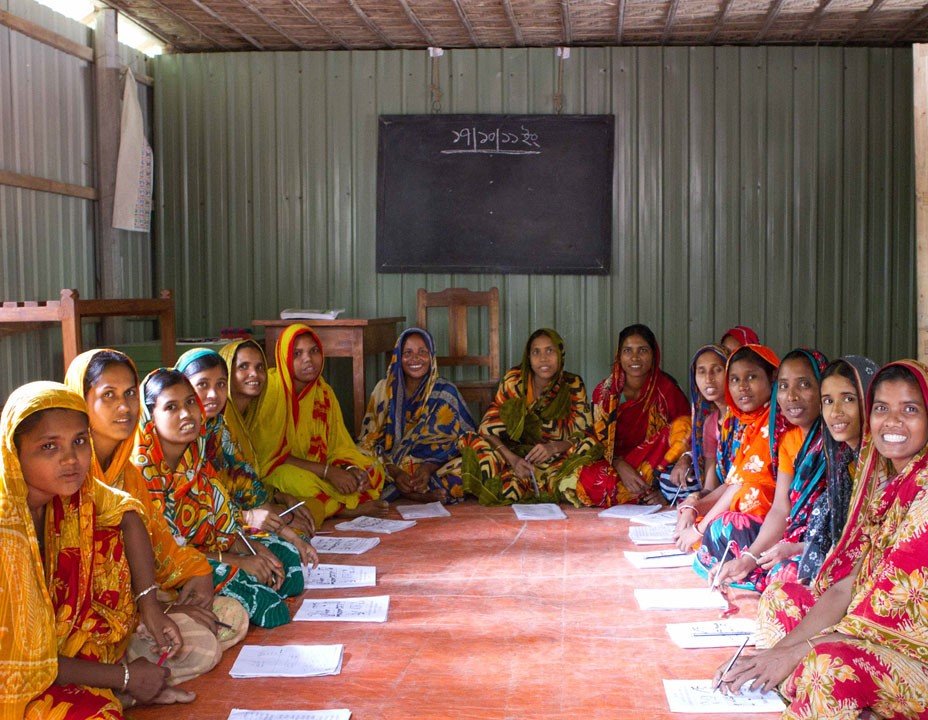
- Currently Friendship Adult Literacy Program is run in 73 centers in remote northern char and southern coastal belt areas. 73 teachers are recruited from the same char areas to run classes at these schools.
- Each session is conducted for 8 months.
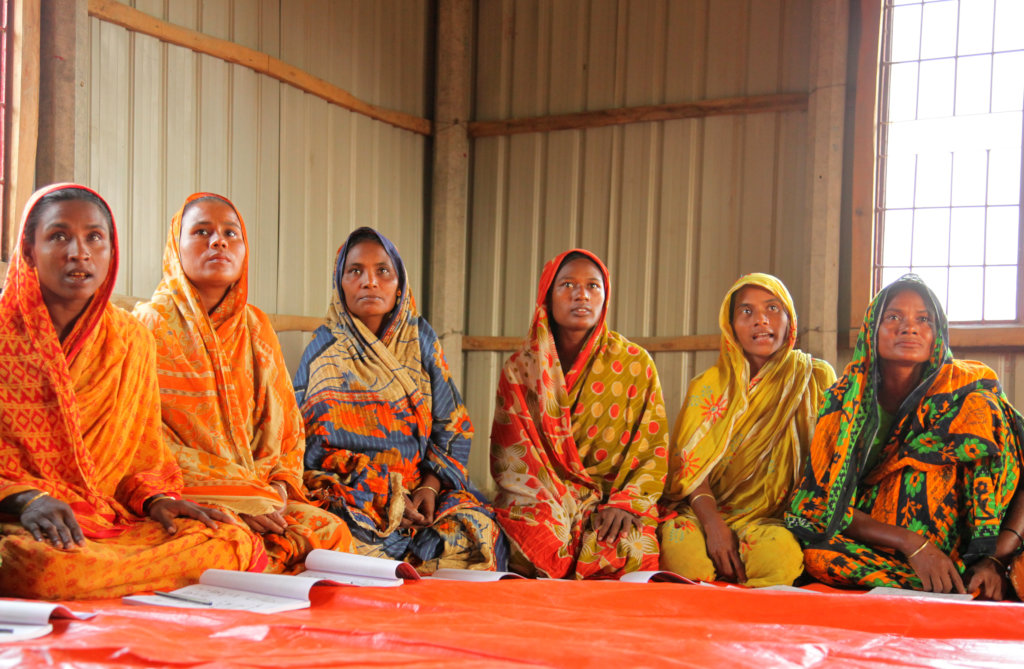
- 1,429 learners are being taught in those adult literacy centers. 100% of them are women
- Age group distribution: 25% of the students are adolescents (15-19 years), around 40% are between 20-30 years of age.
- 94% of the students passed in the ‘Adult Course Completion Assessment’ exam conducted across the 73 schools in 2015.
Features of the Adult Literacy Program:
Recruiting below SSC teachers
We are the only NGO in the country to deliberately recruit teachers who have not passed SSC (Secondary School Certificate) exam. These teachers are originally from the very communities where the adult literacy centers are located. This ensures low absenteeism rate among the program participants which would not be possible if more qualified teachers were recruited from outside the community.
We also try to ensure that the teachers are able to perform well in classrooms by providing them necessary training on a continuous basis. We also try to ensure that the teachers selected for the program are socially accepted among the community.
Prefabricated materials for construction
Considering the danger of river erosion, we have built the adult literacy centers with prefabricated materials so that they can be moved in parts when the islands break away. It also makes the program cost-effective in the long run.
Curriculum
The curriculum of the program was developed targeting the overall development of basic literacy among the program participants. We want to ensure that the persons enrolled in the program develop basic understanding of calculations, write in Bangla, and read through newspapers and contractual agreements. Therefore, we designed our program with the following components:
- Word and sentence construction;
- Reading habit development;
- Basic arithmetic (counting and basic numeracy);
- Writing letters in Bangla;
- Connecting with the workforce.
The books that are used for the program were developed and tested by different NGOs across the country, especially in the remote areas. The books and materials are offered for free to the students. Three books of three different levels are incorporated in the curriculum with the following division:
- Grade 1: 65 days
- Grade 2: 72 days
- Grade 3: 37 days
Connecting with job force
Once the learners complete the education at the adult literacy centers, they are tagged with our own vocational training centers (weaving, tailoring, and embroidery) and other government and NGO run programs so that they can earn their own livelihood.
Friendship Code of Ethics
Friendship Code of Ethics plays an important role in the curriculum as we believe thatcode of ethics plays a vital role in making people better human beings and better citizens. Though our code of ethics was initially communicated in Friendship primary schools only, this is now an integral part of the adult literacy program that is run all through the 73 adult literacy centers.
Flexible hour for Adult Centre
Hours for Adult Centres are flexible and depend on learner convenience. Classes are normally run for 2 hours, thus attracting more adolescents and adults who otherwise would not have spent time for education.
Social awareness and rights education
Lessons on social awareness and rights are incorporated in the curriculum, thus making the learners aware about their social rights and responsibilities. Social values are taught in our literacy centers so that the participants can have basic insights about how they can make their community a better place to live in.
Impact at a Glance
- Early marriage has gone down drastically as adolescent girls attending the programs get to know about basic rights and therefore do not want to get married at an early age. There has been approximately 42% reduction in child marriage among the adolescent learners.
- 37% of the adult literacy graduates have been involved in some income generating activities run by Friendship or some other NGOs.
- 100% of the learners who have completed the program are able to write and read successfully.
- More than 80% of the women attending the program reported that they now have better say in the society.
Attachments:
![Share on Twitter]()
![Share on Facebook]()