By Mafabi Tom Robert | Executive Director
Introduction
The Feed to Learn 100 Project was created to enhance the nutrition, health, school attendance, and academic performance of at-risk children by providing them with nutritious meals during the school day. This initiative focuses on children from extremely vulnerable households, especially those living with single mothers, grandparents, or in child-headed families in Kitobe Town Council, Uganda.
The project understands that hunger is one of the biggest obstacles to learning. By offering meals at school, the program aims to boost children's focus, decrease absenteeism, promote cognitive development, and foster a supportive learning environment where every child has the chance to thrive.
Fundraising progress
The project kicked off on the GlobalGiving platform with a fundraising goal of USD 1,500. So far:
• Fundraising target: USD 1,500
• Funds raised: USD 202
• Funding gap: USD 1,298
• Funds raised: About 14% of the total target
While we have only reached a small fraction of our fundraising goal, these funds have allowed us to start implementing the project and make a positive difference for vulnerable learners.
Project Implementation
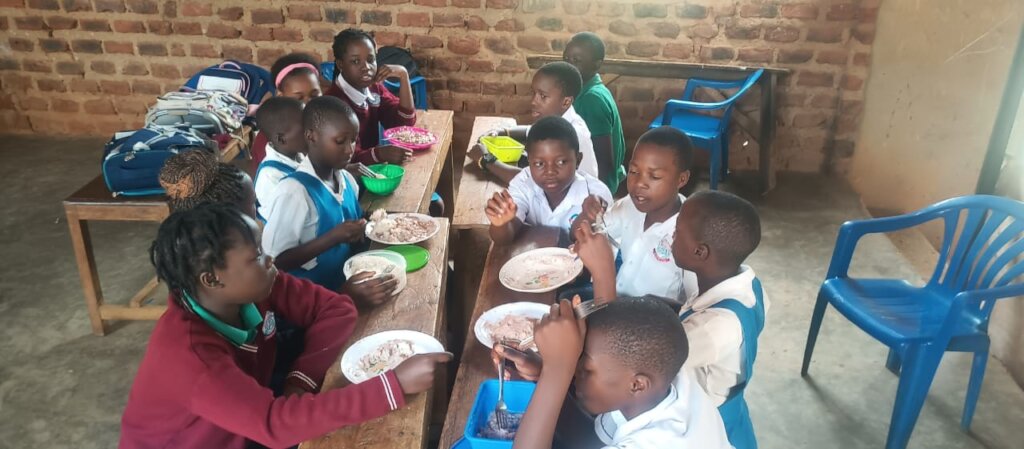
The funds we have received have been used to provide simple yet nutritious meals during school Term III of 2025 and Term I of 2026.
The meals included: Plain rice and simple prepared G.nutes source.
Thanks to this initiative, 100 vulnerable learners have been receiving regular school meals, which has helped alleviate hunger in the classroom and allowed children to engage more fully in their learning activities.
Community participation and cost-saving measures
With limited financial resources, the school management, parents, teachers, and the broader community have shown incredible dedication by implementing various cost-saving and sustainability strategies to ensure the program runs smoothly without any interruptions. These efforts included:
Here is what we accomplished together:
• We asked parents and guardians to send their kids to school with a personal eating plate from home, which helped us avoid the need to buy new feeding utensils right away.
• Community members stepped up and generously donated firewood for cooking meals.
• We made the most of locally sourced ingredients to whip up nutritious snacks.
• Instead of hiring cooks, our dedicated volunteer teachers took turns preparing porridge while still managing their teaching duties.
These combined efforts not only cut down on costs but also fostered a sense of community ownership and ensured the program's long-term sustainability. A heartfelt thank you goes out to:
• Our amazing volunteer teachers
• Parents and guardians
• Community members
• Local leaders
• All our supporters and donors, your kindness and dedication made this achievement possible.
Project Impact
Even with limited funding, this project has brought about significant benefits for the learners involved. Here are some key highlights:
• We successfully provided school meals to 100 vulnerable children.
• We helped reduce hunger during school hours.
• Learner concentration and participation in class have improved.
• School attendance among the children has seen a boost.
• We have supported the health and nutritional wellbeing of the kids.
• Community involvement and local ownership have strengthened.
• We have shown that practical, low-cost methods can sustain school feeding programs.
This project has proven that even small investments can lead to big improvements in children's educational outcomes when paired with strong community support.
Remaining activities
While we have made great strides, there are still several planned activities that remain unfunded due to the current financial gap. Here are some of the standout activities we've been involved in:
• Buying cooking utensils and feeding equipment.
• Sourcing a variety of nutritious food supplies.
• Purchasing firewood and other essential cooking materials.
• Providing balanced and diverse meals.
• Hiring dedicated cooking staff when needed.
• Enhancing program monitoring and coordination.
• Expanding nutritional support for the rest of the implementation period.
Next Steps. We are now looking to raise the remaining USD 1,298 needed to fully carry out our planned activities from July to December 2026. With this additional funding, we can:
• Ensure that balanced and nutritious meals are available consistently throughout the school term.
• Boost children's nutritional health and overall wellbeing.
• Alleviate hunger and malnutrition among our most vulnerable learners.
• Support cognitive development and improve learning outcomes.
• Increase school attendance and retention rates.
• Enhance academic performance.
• Strengthen community resilience and child protection efforts.
• Reach out to the most vulnerable children, especially those from single-parent households, orphaned families, and child-headed households in Kitobe Town Council.
Conclusion
The Feed to Learn 100 Project showcases the incredible impact that school feeding programs can have on children's education and wellbeing. While we have only reached 14% of our fundraising goal so far, the dedication of teachers, parents, community members, volunteers, and GlobalGiving supporters has allowed us to provide life-changing nutritional support to 100 vulnerable children. This initiative is a shining example of community-driven development, where local ownership and collective action work hand in hand with donor investment to create a meaningful impact.
We are dedicated to making sure that no child misses out on learning due to hunger. With the ongoing support from our GlobalGiving donors and development partners, we can successfully wrap up this project and provide at-risk children with the nutrition they need to learn, grow, and create brighter futures. Together, we can guarantee that every child has the chance to learn with a full stomach and reach their true potential.
By Mafabi Tom Robert | Executive Director
By Mafabi Tom Robert | Executive Director
Project reports on GlobalGiving are posted directly to globalgiving.org by Project Leaders as they are completed, generally every 3-4 months. To protect the integrity of these documents, GlobalGiving does not alter them; therefore you may find some language or formatting issues.
If you donate to this project or have donated to this project, you can receive an email when this project posts a report. You can also subscribe for reports without donating.


Support this important cause by creating a personalized fundraising page.
Start a Fundraiser