![]()
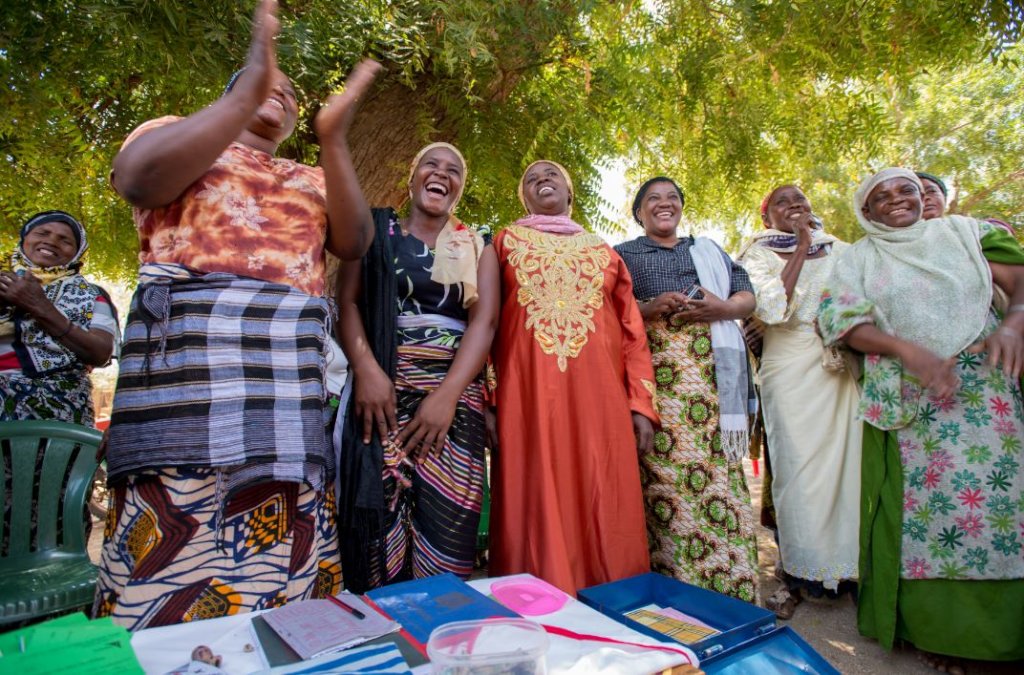
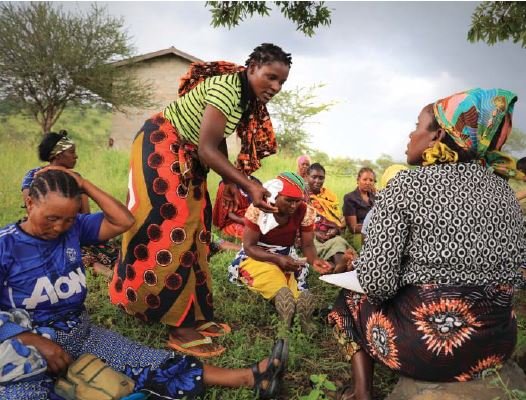
The Women’s Empowerment Fund aims to build the resilience of women and their families, improve gender equality, and support the development of livelihoods by increasing access to and quality of financial services to vulnerable women.
The fund is facilitated by VisionFund, World Vision’s microfinance network. The current and first phase of this two-phase project is focusing on significantly growing loan capital for women that can be invested to expand small businesses and farms. Phase two, which begins in FY2019, will seek to strengthen the services we provide women, such as developing links to savings for women, developing insurance products specifically for women, and expanding financial education.
The fund seeks to improve financial access by doubling the current reach of VisionFund International to annually benefit 2 million women and impact 6 million children by 2021. So far, $1.55 million has been raised toward the $25 million needed to impact the lives of these women and children, with 5,062 women currently receiving loans through this fund that impact 13,037 children.
ANNUAL HIGHLIGHTS
Improved products and relationships focus on the needs of women
The initial focus of the Women’s Empowerment Fund is to provide capital and other resources in the Dominican Republic, Mexico, Myanmar, Peru, Rwanda, and Senegal.
Dominican Republic Highlights:
• An educational loan, primarily to serve women with school age children, has been launched to cover the cost of uniforms, shoes, school supplies, and school fees. Through September, 89 women with 161 children have taken out $28,814 in loans, which offer VFDR’s lowest interest rate and no commission charges.
• Service coverage has expanded into Monte Plata, a rural, agricultural area that was not previously served. Plans are to place a new branch in the area.
Mexico Highlights:
• The Women’s Empowerment Fund helped support a community loan product that allows repeat clients in good standing to receive a loan without a co-signer or collateral.
• VFM has opened a call center to address client complaints. The center solves problems in an average of 2.4 working days. The call center’s database is analyzed and shared with the audit department. In the future, it will be shared with human resources and the risk department to map recurring problems.
Myanmar Highlights:
• In the first half of FY19, VFM plans to give gender sensitivity training to staff and is currently reviewing resources.
• VFM is opening three new branches in Rakhine state.
• VFM is a joint recipient of the A2RDIS award from Blue Ochard, a global impact investment manager, for its work in Myanmar. The award went to organizations that have left a social impact on 4 million beneficiaries and 690,000 families in Cambodia, Kenya, Mali, Malawi, Myanmar, and Zambia.
Peru Highlight:
• In focus group discussions, clients said they value the rural access to credit, and the culture of saving that the MFI promotes. Clients requested small business management training.
LOANS IMPACT NEXT GENERATION
Agnes and her husband, Noël, live in Nyamata, about 90 minutes south of Rwanda’s capital, Kigali. They were children of subsistence farmers who, with little education or capital, borrowed money to diversify their livelihoods and make purchases to benefit their family.
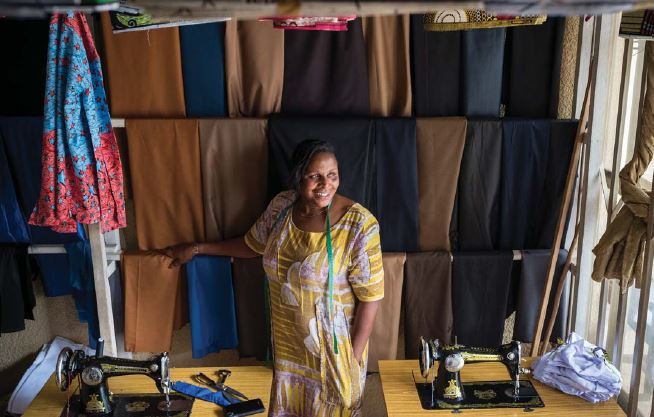
This is economic development at the grass roots, and it all began with a small loan to a promising entrepreneur. The family income stems from five very different businesses. Agnes’ main enterprise is a stall selling clothes in the local market. Her husband also has a stall selling various types of flour. Together, they own a farm of about two-and-a-half acres, and they also have 13 dairy cows and about
30 goats. With six children, Agnes is constantly busy. She and her husband juggle the responsibility for the livestock, which, along with the garden, are about three miles from her home. They have a motorcycle for this, which also greatly eases the delivery of the milk and all the stock for their two shops.
With all these assets, the family is obviously prospering in economic terms. For the last four years, Agnes has had business loans from VisionFund Rwanda to develop her multiple livelihoods, mostly for buying stock for the two shops. These businesses are increasingly profitable, and Agnes has a clear idea of how she wants to develop them further.
Yet the family’s rise in income is not the main story. The real impact is on their children. Agnes and Noël have four biological children, the youngest, nicknamed Boy, 8; Arberic, 12; Dianne, 15; and Noella, 17. The three youngest go to a local school, while Noella attends boarding school, which costs just under $600 a year. The expense is justified to her parents because she scored highly on the national exam that gave her access to the country’s best secondary schools. She will go on to university to study medicine, which will be funded by a loan from the government; Agnes and Noël are determined to contribute money from the sale of animals or other assets. Education, says Agnes, gives all her children a very different life than she has had. Once they have completed secondary school, they will have good skills, and they will be able to have better jobs. She has been able to pay for school fees from her business profits—and says their food and healthcare also has improved—but it is school fees that Agnes emphasizes repeatedly.
The other two children in the family are Gillay, 3, and Fis, 14. Both are orphaned relatives whom Agnes and Noël have adopted into their family. That makes six children who will complete secondary school because Agnes and Noël have profitable businesses. The parents of Fis owned a small compound with a house and two animal sheds that Agnes and Noël will hand over to Fis when he’s older. Currently, the compound is home to the goats, and the house is occupied by the young men employed to herd the livestock. Including the casual labor, Agnes and Noël employ five people, and provide a home for two.
This is how their prosperity extends to the community. Prosperity has brought changes for Agnes personally. With the success of her businesses, she feels strong and confident. She is respected by her neighbors. Most importantly, to her, she is respected by her extended family members, who consult her about decisions and problems.
![Agnes]()
Agnes
![Share on Twitter]()
![Share on Facebook]()