By Esther Chidodolo | Donor Liaison, World Vision Tanzania
A short drive from the main road in Babati, it opens up to a small village. The scorching sun and the dust kept everyone inside their houses and no one was seen around the village except for one woman who rushed towards us waving her hands and smiling. This is Sarafina (28) who is married to Zakaria (36). They have two children, Naftari (11) and Gloria (6) who are in class three and class one respectively. Sarafina and her husband are farmers and livestock keepers, they have ten acres of land where they farm maize and sesame. Sarafina is a member of a Savings and Poultry Group.
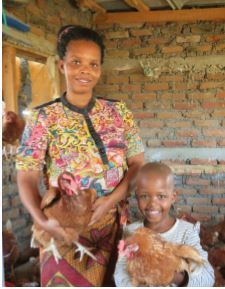
“For me, poultry is a hobby. I grew up on a farm and the only thing I loved to do was feed chickens,” says Sarafina as she walks towards the chicken coup. Sarafina explains that poultry allows her to work from home and be able to take care of her family. She is able to spend more time with her family and enjoys teaching her children about poultry.
A couple of years ago, Sarafina and her husband struggled to provide for their family. Their ten acres could only produce forty bags of maize, which were used for food and for sale to buy home supplies. “Life was hard and asking my husband for money to buy food was even harder because I knew he did not have any money. It made us sad, even the children were sad,” says Sarafina as she collects eggs alongside Gloria in the coup. Sarafina and her family survived on ugali, a porridge made from flour and milk for months. “Thank God my children did not complain, it’s like they understood the rough time that we had,” says Sarafina.
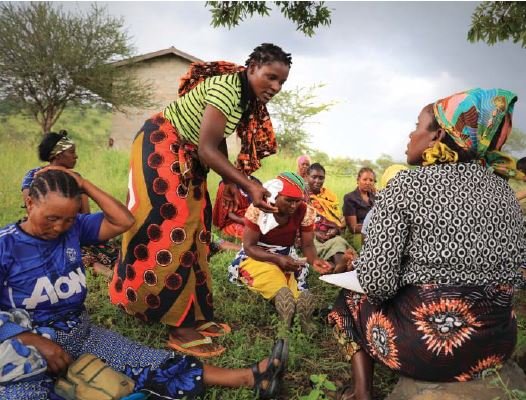
Sarafina and her husband joined a savings group that was mobilized by World Vision’s Transforming Household Resilience in Vulnerable Environments project. World Vision supported Sarafina and Zakaria with a chicken coup and one hundred chicks to start poultry. They received trainings and were linked to a market. A year later a terrible fowl cholera disease broke out in the village that killed many of her chickens. The disaster forced her to sell the remaining chickens.
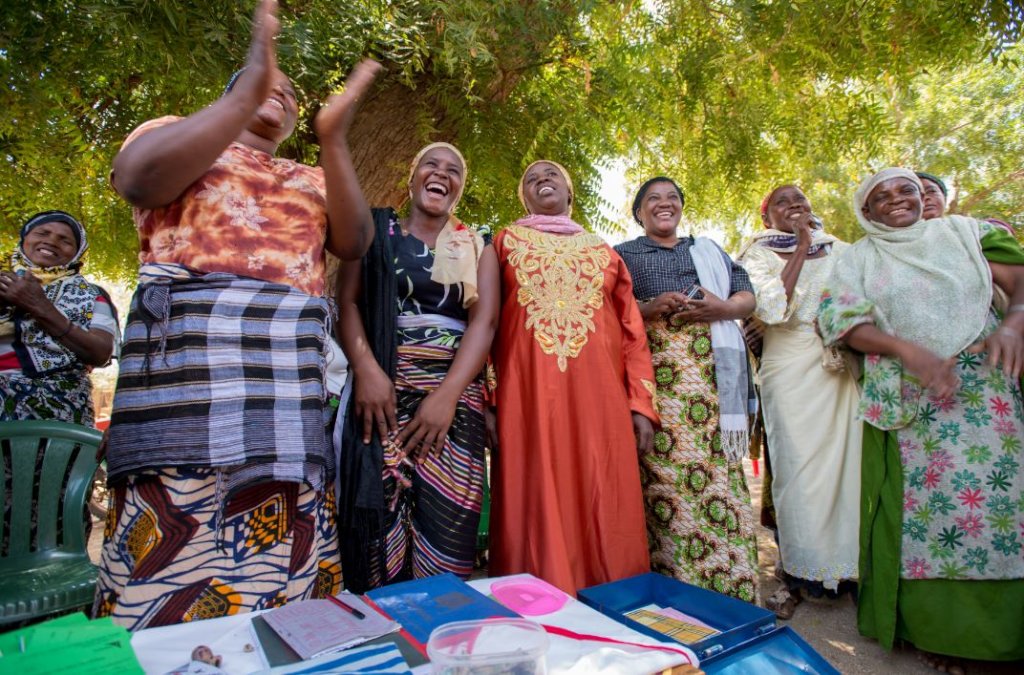
Through her savings group, Sarafina joined hands with eight other women and took out a loan of $800 from Vision Fund, World Vision's microfinance arm, to start raising poultry again. Judging from the previous disease that killed numerous chickens in her village, she realized $800 was not enough so she went to her savings group to borrow another $200 for pesticides and more feed.
Today, Sarafina collects five trays of eggs per day and sells them to restaurants in the nearest town. She raises about $200 each week. There is a great improvement in her children’s health and overall wellbeing. The family’s diet has improved and her children are healthy and happy. She is able to buy school supplies for her children such as shoes and books.
Sarafina and her husband started building a better house for the family. Through the sale of eggs, Sarafina has supported her husband with house furnishing as well as buying food for the family.
“I love helping my mum to collect eggs from the coup,” says Gloria, whose attention was captured by the camera. Gloria wants to be a doctor and a photographer.
“Nothing makes me happier than seeing my children dream of big things, dreams that did not exist a couple of years ago because of poverty,” says Sarafina.
Project reports on GlobalGiving are posted directly to globalgiving.org by Project Leaders as they are completed, generally every 3-4 months. To protect the integrity of these documents, GlobalGiving does not alter them; therefore you may find some language or formatting issues.
If you donate to this project or have donated to this project, you can receive an email when this project posts a report. You can also subscribe for reports without donating.