By Dipak Basu | Founder
In our digital livelihoods classrooms, we were facing a specific problem: students were learning to follow a trainer’s steps, but the job market was not asking for step-followers. It was asking for people who could handle a situation nobody had walked them through.
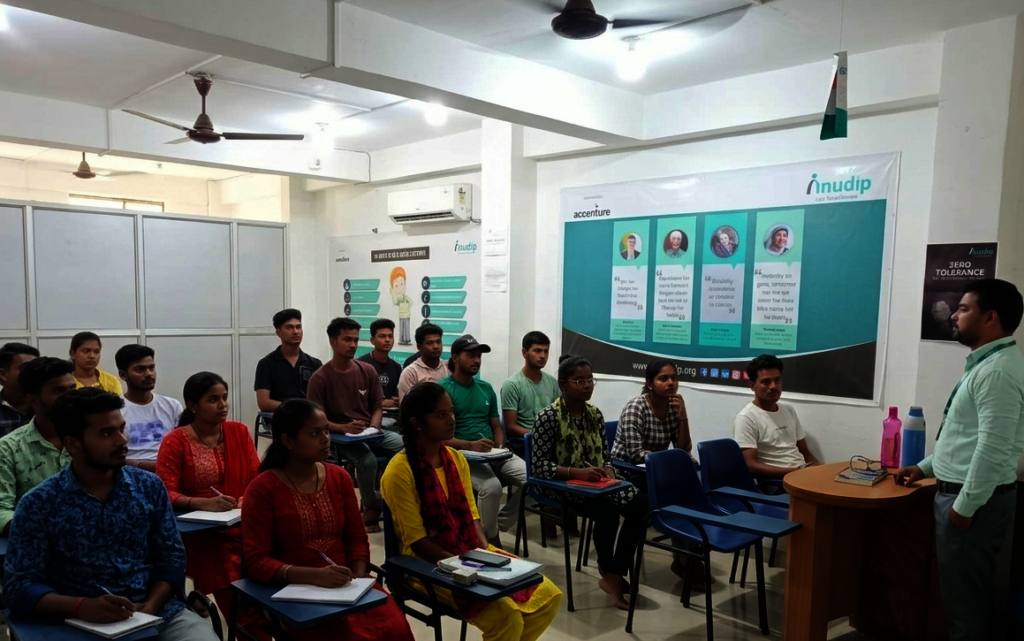
To address this, at Anudip, we formally adopted the new Discovery-Based Learning method across all our digital livelihoods classrooms in India.
How this Method Works?
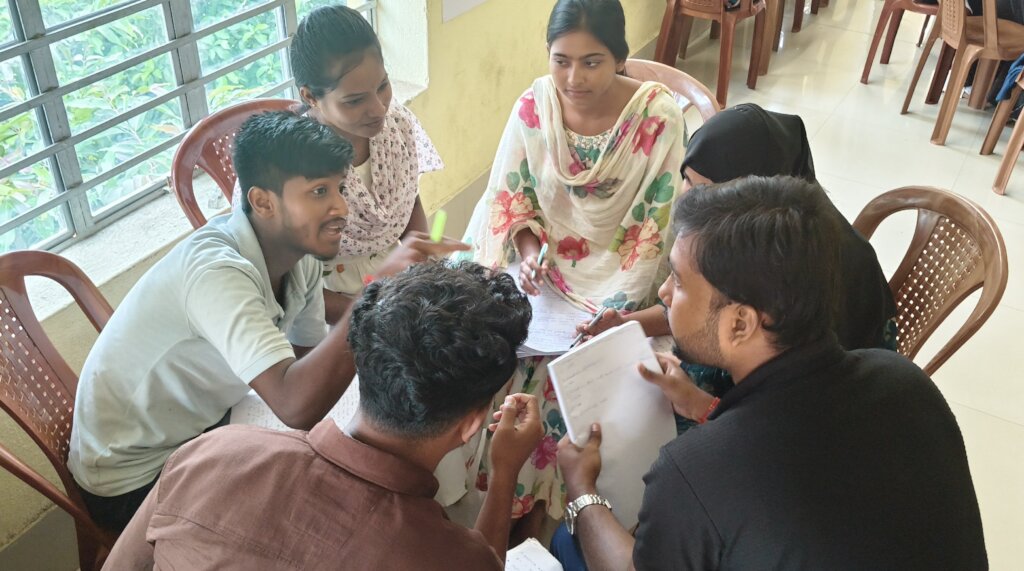
An example of the Discovery-Based Learning method in practice would be the following: instead of demonstrating the correct way to solve a spreadsheet problem or structure a task, we give students the problem itself, incomplete data, an unclear instruction, a result that does not match expectations, and ask them to work out a path through it before any solution is shown.
Hence, our method is focused more on building the problem-solving and decision-making capacity of students by prompting them to sit with an unresolved situation, rather than training them to execute one fixed procedure correctly.
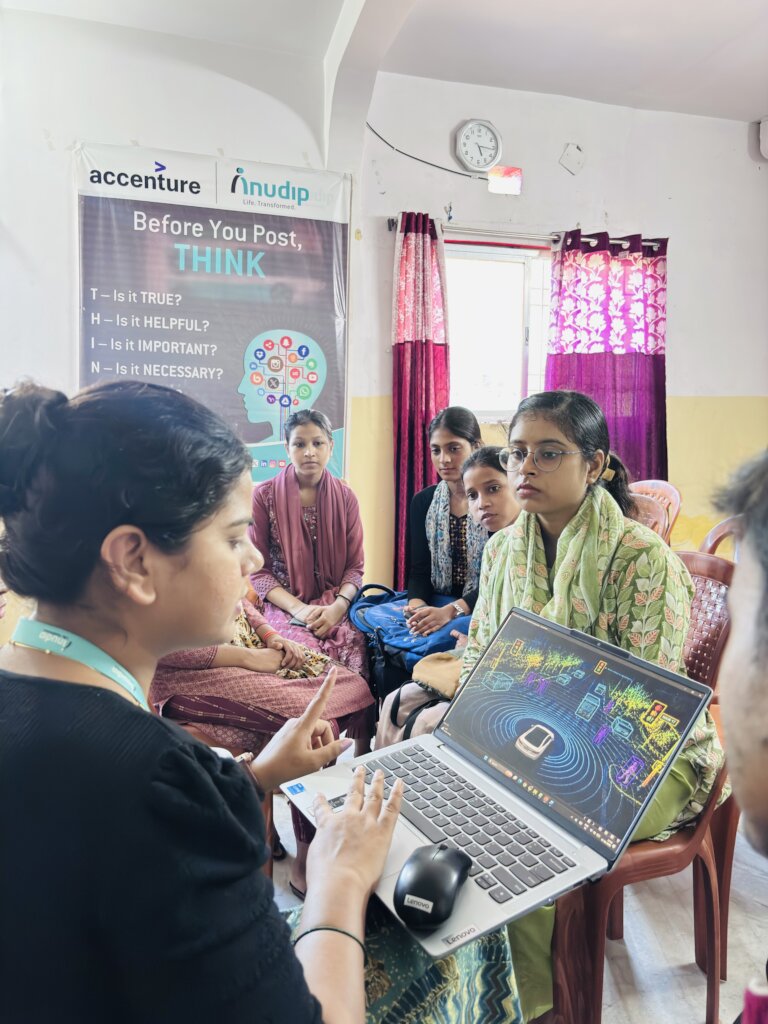
Trainers were the first to go through this shift. Before teaching it, they practiced the method themselves, learning to hold back the instinct to rescue a stuck student too early, and letting the room stay in that stuck place long enough for students to work their own way out.
After testing the approach across a pilot group of classrooms, we made it mandatory practice for every trainer across our digital livelihoods programme.
Centres now report classrooms where students attempt a second approach before asking for help, and where a wrong first attempt becomes something to examine rather than something to fix and forget. These are early signs, but they are consistent across classrooms.
The aim is not to produce students who can complete a fixed set of tasks well. Those tasks will not stay the same for long. The aim is to produce students who can walk into a job, meet a problem they were never specifically trained for, and work through it with judgment rather than a memorized procedure. Early classroom behavior suggests that habit is beginning to form, and it is the outcome this shift was designed to build.
By Dipak Basu | Founder
By Dipak Basu | Founder
Project reports on GlobalGiving are posted directly to globalgiving.org by Project Leaders as they are completed, generally every 3-4 months. To protect the integrity of these documents, GlobalGiving does not alter them; therefore you may find some language or formatting issues.
If you donate to this project or have donated to this project, you can receive an email when this project posts a report. You can also subscribe for reports without donating.


Support this important cause by creating a personalized fundraising page.
Start a Fundraiser