The Struggle of Ashanti's True Heirs to Reclaim Their Ancestral Lands
The Benimasi-Boadi people of Ghana have secured a landmark legal victory in their quest to protect ancestral lands granted to their maternal ancestor by the founder of the Ashanti Empire. Yet despite court rulings in their favor, this direct royal bloodline faces continued persecution, highlighting a profound clash between traditional power, modern law, and indigenous rights in one of Africa's most culturally significant regions.
A Royal Gift and Ancient Lineage Under Threat
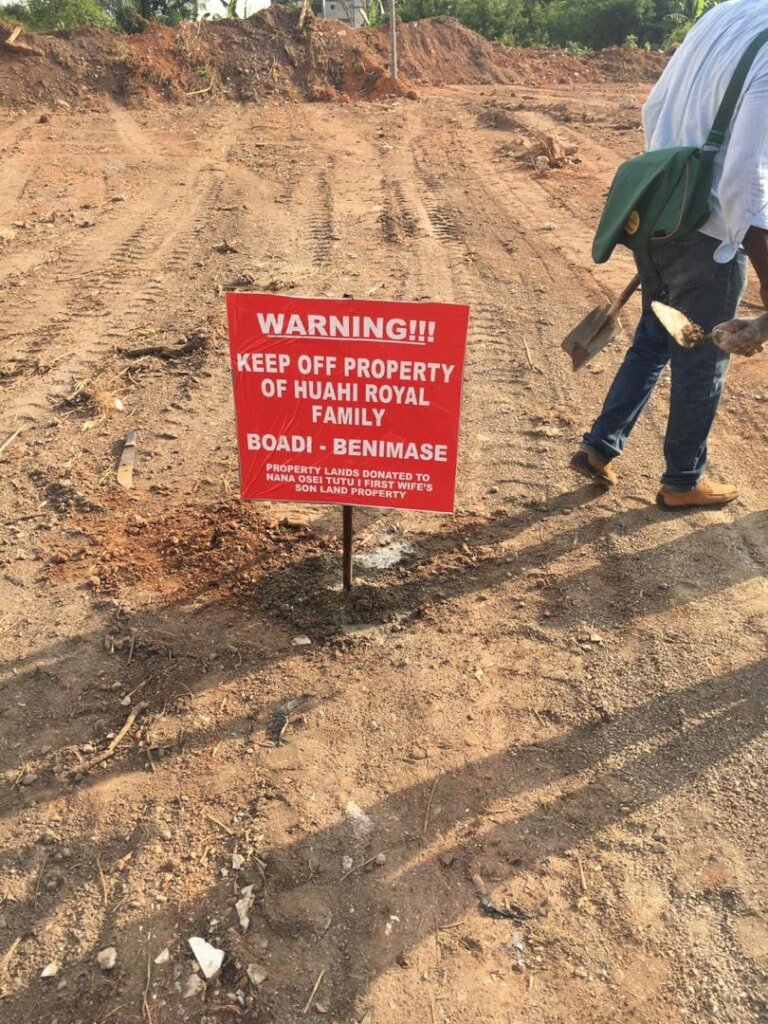
The story begins over three centuries ago with a love story at the heart of the Ashanti Empire's founding. King Osei Tutu I, who established the powerful Ashanti Kingdom in the late 1600s, granted a significant parcel of land to his beloved wife, Oheneyere Yaa Huahi Achama Tutuwaa, as a gift of affection during their marriage. This land, located in what is now known as Benimasi-Boadi near Kumasi, was not given to a "Stool" (traditional authority position) but as a personal gift to the “Oheneyere” – consort.
"Legend has it that when he saw her, he involuntarily exclaimed 'Obaa yi fata me', to wit, 'This woman is deserving of me,'" records show of the King's first encounter with the woman who would become his favored wife. Their union produced a daughter, Afia Konadu Afia-fi, establishing a matrilineal royal bloodline that continues to this day
According to court documents and family records, the Huahi Achama Tutuwaa Royal Family has maintained possession of these lands for generations, with the gift being witnessed and formalized according to traditional customs. The land itself holds profound cultural significance as it contains the final resting place of Oheneyere Tutuwaa, making it not just property but sacred heritage.
Legal Victories Overshadowed by Continuing Struggles
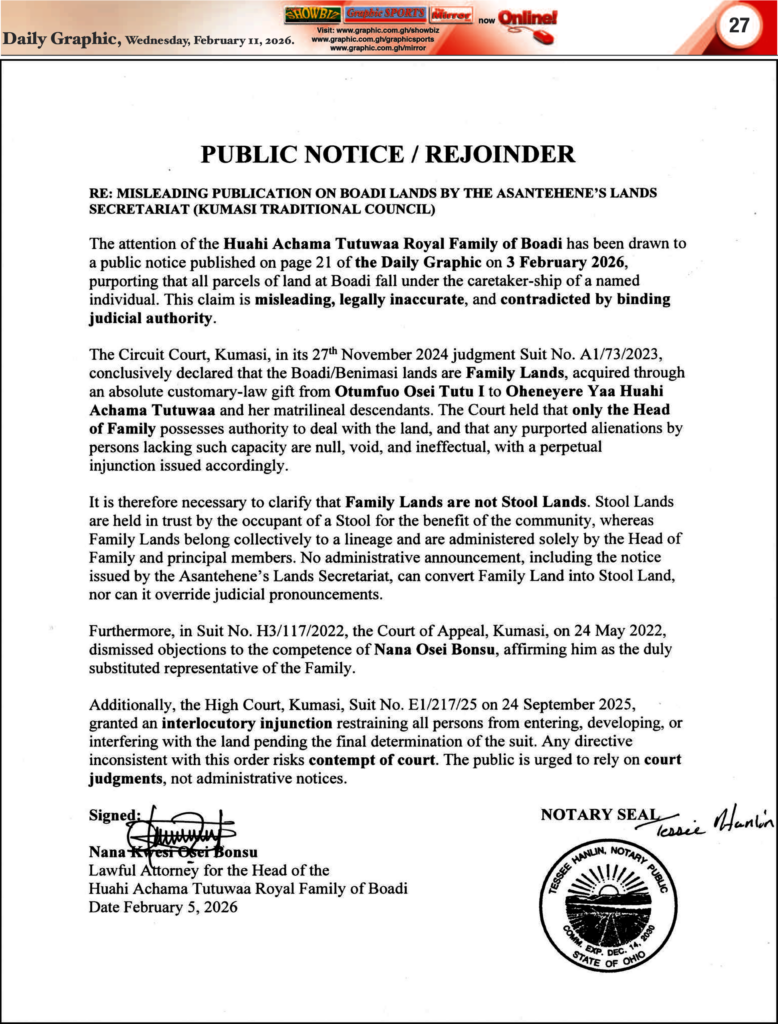
In a declaratory landmark ruling on November 27, 2024, the Circuit Court in Kumasi affirmed the family's ownership of the contested lands. Justice Abdul-Razak Musah declared that "Oheneyere Yaa Huahi Achama Tutuwaa is the owner of all that piece or parcel of land situate and lying at Benimasi-Boadi" and recognized Abusuapanin Odeneho Odehyee Nanaba Kwabena Badu as the legitimate head of the family with authority to administer the lands.
This recent victory follows an earlier 2020 High Court Judgment by Justice E. Senyo Amedahe that similarly affirmed the family's ownership of 114 acres of land within the same area. Despite these clear legal rulings, the family continues to face significant challenges in exercising their rightful ownership.
"We, the people of Benimasi-Boadi have been subjected to intimidation, harassment, criminalization and violence simply for defending our birthright," writes Nana Kwesi Osei Bonsu, the voice of the community. The situation has become so dire that some family members, including Bonsu himself, have had to flee Ghana to escape persecution.
A Clash of Authority: Traditional Power vs. Legal Rights
At the heart of this conflict lies a fundamental tension between Ghana's traditional chieftaincy system and modern land rights. The current Asantehene (King of Ashanti), Otumfuo Osei Tutu II, who is ironically in direct succession to the very king who granted these lands, has reportedly challenged the family's claim.
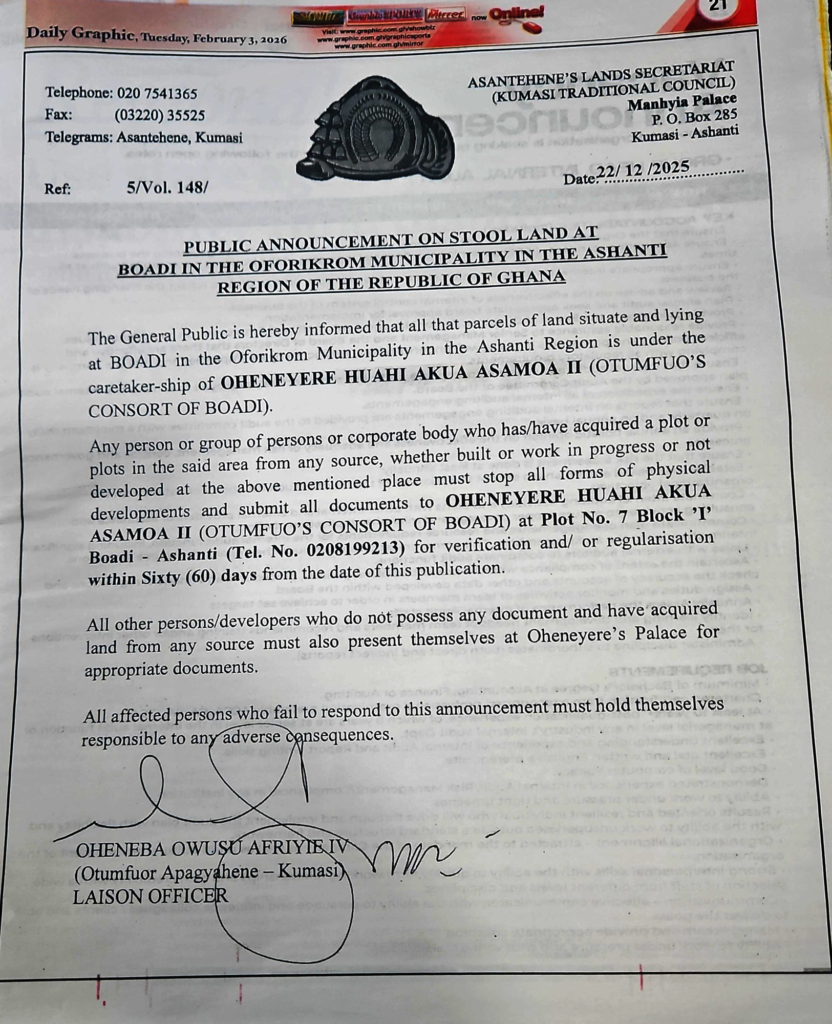
According to a petition on Change.org, the Asantehene allegedly declared: "The lands are mine, there is no family land in Ashanti region. Therefore, no Abusuapanin have right to alienate lands to private developers... I have cancelled your family name from enjoying their rights of inheritance to the Boadi Lands. I am the reincarnated Osei Tutu and have taken the land back. Anyone who disobey my authority shall face my wrath"
This stance directly contradicts both historical evidence and court rulings. It represents a troubling example of how traditional authority can sometimes be wielded against Indigenous land rights, even when those rights have been affirmed through proper legal channels.
The current Asantehene, who has served as the traditional ruler of the Ashanti people since April 26, 1999, wields immense cultural influence in the region. While he has been known to crack down on chiefs involved in land fraud in other cases, this particular situation suggests a complex power dynamic at play when it comes to lands with direct connections to royal heritage.
Indigenous Lands Under Global Scrutiny
This case emerges amid growing international recognition of Indigenous land rights. The United Nations Declaration on the Rights of Indigenous Peoples affirms the right of Indigenous communities to maintain connections to their ancestral territories. The Benimasi-Boadi community's struggle exemplifies the challenges many Indigenous groups face worldwide in protecting their heritage.
"In the heart of Ghana, the voices of my people, the Indigenous People of Benimasi-Boadi near Kumasi, resonate through our ancestral lands, serving as a poignant reminder of the ongoing theft of our heritage," writes Bonsu in a powerful statement published on Fair Planet.
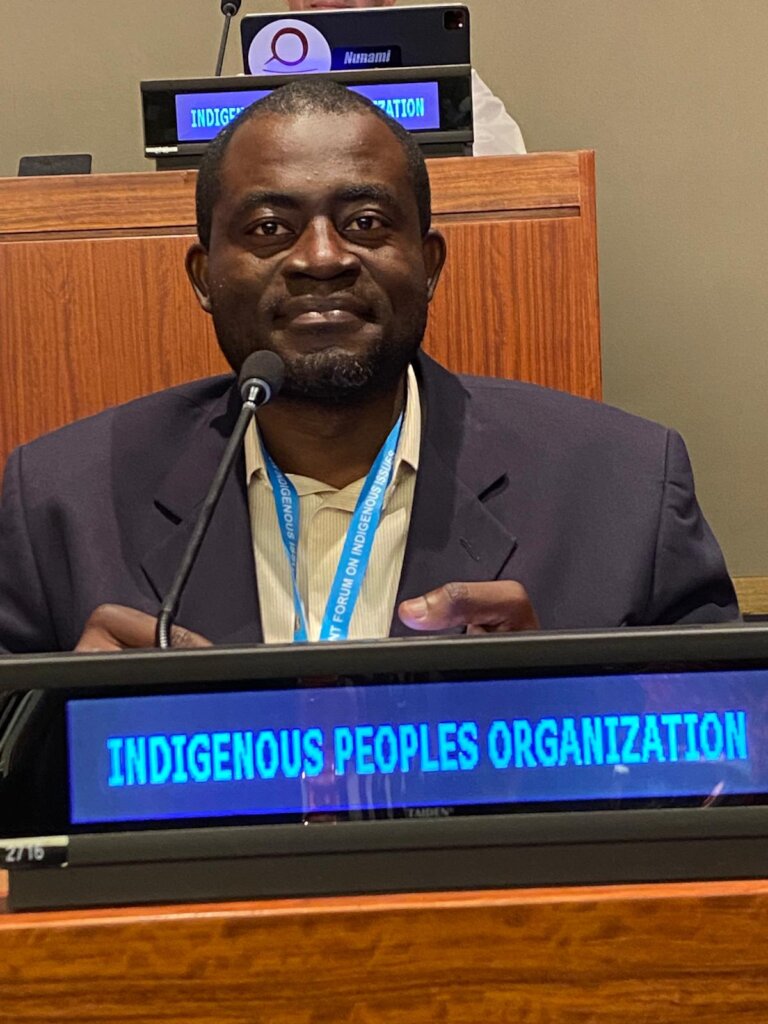
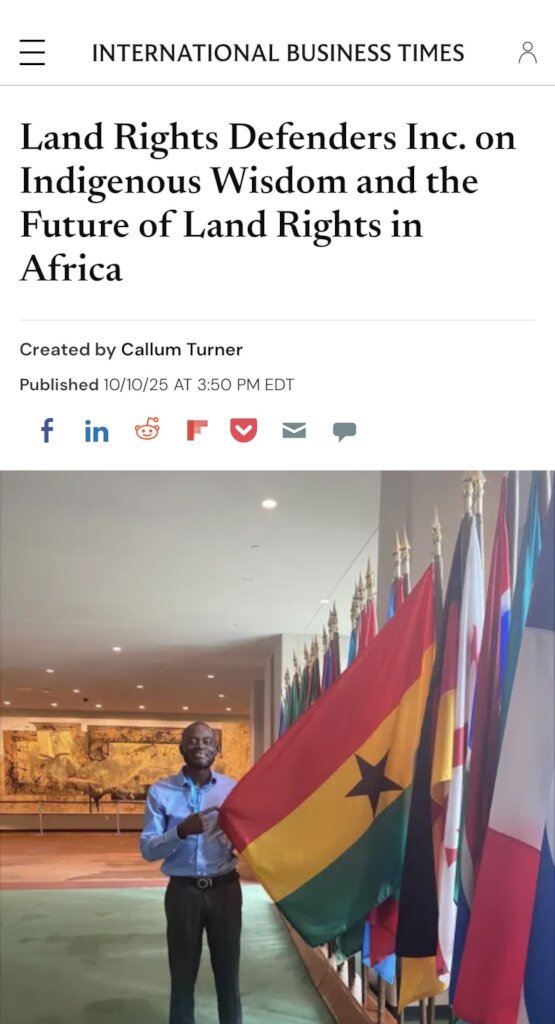
The family's plight has caught the attention of international human rights organizations. Bonsu has presented their case before the United Nations, seeking support under the UN Convention Against Torture (UNCAT), framing their struggle not merely as a property dispute but as a human rights issue.
Preserving Cultural Heritage and Historical Truth
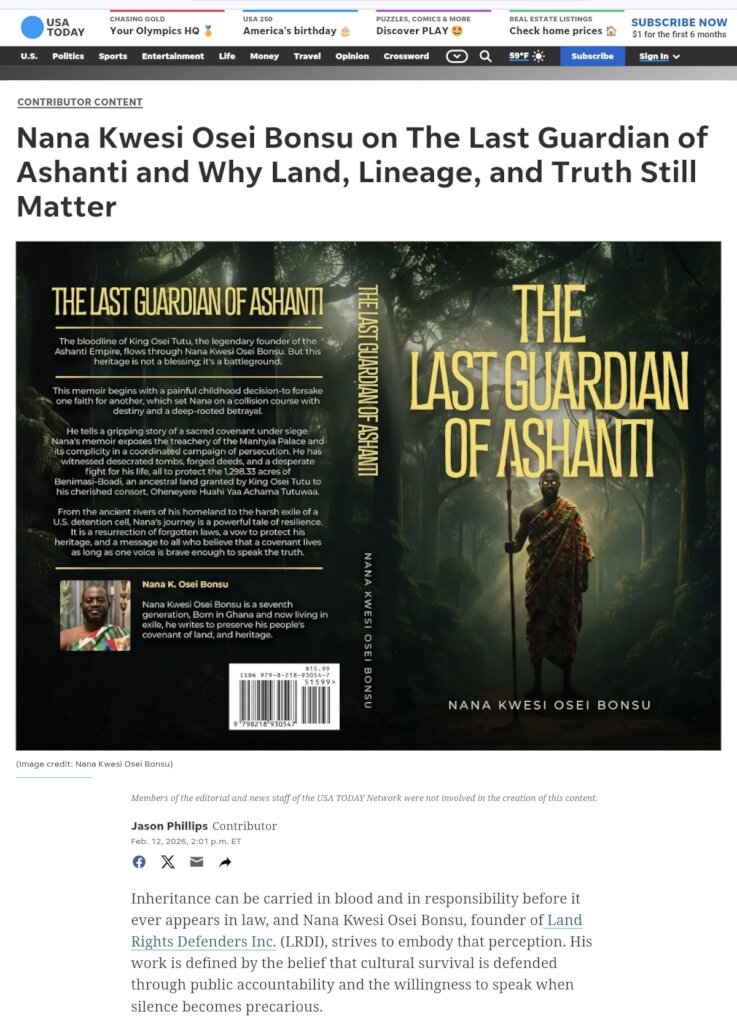
Beyond the legal implications, this case represents a struggle to preserve cultural heritage and historical truth. The family has taken steps to document their lineage and history, publishing accounts of their connection to the founding of the Ashanti Empire.
"Our roots, deeply entwined with the matrilineal tapestry of history, stem from a royal grant bestowed upon Oheneyere Huahi Achama Tutuwaa, the esteemed consort of our ancestor," explains Bonsu.
This direct connection to King Osei Tutu I, who unified the Asante kingdoms in the late 17th century and created the powerful Ashanti Union, places the family at the heart of Ghana's most significant historical narrative. Sadly in the family structures where women predominantly hold leadership positions, one might anticipate an inherent resilience and strength. However, even within such seemingly matriarchal systems, the undue influence of external authority figures can subtly erode established norms. This report examines how the numerical majority of women at the family's helm paradoxically exposes them to intimidation tactics employed by the Asantehene.
The Asantehene, leveraging his perceived authority and historical standing, employs methods of coercion that may not involve overt aggression but rather a consistent, subtle pressure designed to compel conformity. This strategic application of influence undermines the family's autonomy and well-being.
A critical observation is that many of the elderly women within the family remain largely unaware of this exploitation. Their adherence to traditional respect for authority and established customs often leads them to interpret the Asantehene's pronouncements as immutable decrees rather than manipulative actions. This lack of recognition highlights how deeply entrenched cultural norms can obscure exploitative practices.
This case report underscores a vital principle: unregulated power, regardless of its source, can compromise even well-established societal structures. The Asantehene's influence over this family, despite the numerical dominance of its female members, demonstrates that true empowerment extends beyond mere representation; it necessitates awareness, agency, and the collective capacity to resist undue external pressures.
The lands themselves represent not just property but living heritage. According to family accounts, "Fifty percent of the Benimasi-Boadi territory is earmarked for urban development by government planning authorities, while the remaining fifty percent is preserved as a nature reserve for future generations". This conservation effort showcases the family's commitment to responsible stewardship of their ancestral lands.
Media's Role in Indigenous Rights and Accountability
This case offers a compelling opportunity for investigative journalists to explore themes of power, justice, and cultural heritage in contemporary Africa. With Ghana ranked relatively highly for press freedom in Africa despite recent declines, there remains space for critical journalism that holds powerful institutions accountable.
As the Media Foundation for West Africa has noted, Ghana "has been characterized by a semblance of official aversion for critical investigative journalism". Yet this is precisely the type of story that requires thorough investigation—examining the intersection of traditional authority, legal systems, and the rights of indigenous communities.
The case also emerges at a significant moment in Ghana's relationship with its colonial past. In 2024, the Asante in Ghana commemorated the 150th anniversary of the Sagrenti War and celebrate the 25th anniversary of the enstoolment of Otumfuo Osei Tutu II. Recently, the UK returned several gold artifacts that were looted during colonial wars to the Asante royal family. This context of historical reconciliation makes the ongoing dispossession of indigenous lands all the more poignant.
Recent Developement
The past month have seen significant legal actions initiated to combat the systemic challenges threatening the ancestral lands and fundamental rights of the Benimasi-Boadi People
- Urgent Petition to Ghana's Chief Justice Alleges Judicial Misconduct: In a pivotal move, Nana Osei Bonsu, petitioned Ghana's acting Chief Justice. This comprehensive petition alleges severe judicial misconduct, administrative dereliction, and external interference in a protracted land dispute currently before the Court of Appeal in Kumasi. Nana Osei Bonsu, asserts that his family's allodial title to over 1,298 acres of ancestral land in Benimasi-Boadi is under grave threat. The core of this appeal concerns a 114-acre portion of these lands, crucial for its protection against encroachment and unauthorized alienation.The petition, filed under Article 125(4) of the 1992 Constitution, meticulously details a series of deeply concerning incidents. These include alleged unlawful reversals of judgments by courts of coordinate jurisdiction, the disappearance of crucial court records, misrepresentation of filing dates, and documented intimidation of legal representatives. Despite four years of diligent procedural compliance, Mr. Osei Bonsu states that this critical appeal, now consolidated as Suit No. H1/22/2023, has not been assigned a hearing date. A key concern raised is the alleged influence of pronouncements by the Kumasi Traditional Council, which have reportedly created significant impediments to securing independent legal representation within Kumasi.To ensure impartial adjudication and prevent a "miscarriage of justice," Nana Osei Bonsu has formally requested the administrative transfer of his appeals to the Court of Appeal in Accra. He also seeks an independent inquiry into the conduct of implicated judicial officers and registry personnel, and immediate directives for his case to be expeditiously set down for hearing before a neutral and independent panel of Justices.
- New Legal Action Filed Against KNUST for Unlawful Encroachment and Sales: In a desperate cry for justice, Land Rights Defenders has supported the Benimasi-Boadi community in taking significant new legal action by issuing a Writ of Summons to the Kwame Nkrumah University of Science and Technology (KNUST). This lawsuit addresses not only KNUST's alleged unlawful encroachment on the ancestral lands of the Benimasi-Boadi people but also the deeply concerning allegation that the university is unlawfully alienating portions of these precious lands to private developers.This alleged act of selling off sacred ancestral land, including potential burial grounds and farming areas, is considered a profound violation of trust and heritage. These actions are occurring under the watch of His Royal Majesty the Asantehene Otumfuo Osei Tutu II who doubles as the chancellor of the University. This legal action is a determined effort to permanently restrain KNUST from further exploitation and to reclaim what rightfully belongs to the Benimasi-Boadi people, building upon a prior favorable rulings regarding the same lands.
- Call for Upholding Legal Integrity in Ghana: Petition Against Mujeeb Rahman Ahmad, Esq: A crucial development has also emerged within Ghana’s legal community with the formal petition submitted to the General Legal Council by Nana Kwesi Osei Bonsu. Filed on June 23, 2025, this petition specifically concerns Mujeeb Rahman Ahmad, Esq., a solicitor from Moomin & Botta Solicitors in Kumasi.The petition outlines serious allegations of professional misconduct, potential breaches of client confidentiality, alleged conflicts of interest, and a purported abuse of power by Mr. Ahmad. As the founder of Land Rights Defenders Inc., Nana Bonsu has formally requested that the General Legal Council conduct an immediate and thorough disciplinary inquiry into Mr. Ahmad's conduct. The petition urges the Council to consider appropriate sanctions, ranging from a public reprimand to disbarment, and additionally calls for a referral to the Attorney-General for a criminal investigation into the alleged threats and abuse of process.This case represents a critical examination of legal ethics in Ghana, highlighting the fundamental importance of attorney-client privilege and the potential for professional misconduct to erode public trust in the justice system. The outcome of this petition will be a significant indicator of the Ghanaian legal system's commitment to integrity and its role in upholding the dignity of the legal profession.
The Benimasi-Boadi Legacy: A Call for Global Action on Indigenous Land Rights
The struggle of the Benimasi-Boadi People is not simply a matter of contested territory—it is a testament to enduring heritage, a demand for justice, and a rallying cry for indigenous communities everywhere. It connects the birth of one of Africa’s greatest empires to the present-day pursuit of dignity and human rights.
Despite securing multiple favorable court rulings that affirm their rightful ownership, the Benimasi-Boadi family continues to face systemic barriers in reclaiming access to their ancestral lands. These challenges persist not because of legal ambiguity, but because of entrenched interests that seek to silence historical truth and erode indigenous sovereignty.
Land Rights Defenders remain steadfast in their support—mobilizing, documenting, and advocating without pause. Our commitment is unwavering. While support from national and international bodies has been slow and often elusive, we refuse to be deterred. The stakes are too high, and the voices of the Benimasi-Boadi People are too vital to be drowned out.
We call on journalists, philanthropists, human rights organizations, and the global community to rise in solidarity. This case represents a unique moment to honor justice over convenience, to uphold the law against arbitrary power, and to recognize the royal lineage of Benimasi-Boadi for its rightful place in Ghana’s cultural and historical narrative.
Justice delayed must not become justice denied. The fight continues—and we will not falter.
Links:
Attachments:
![Share on Twitter]()
![Share on Facebook]()