By Jenna Bailey | Employee Engagement Intern
The Amazon Big Cat
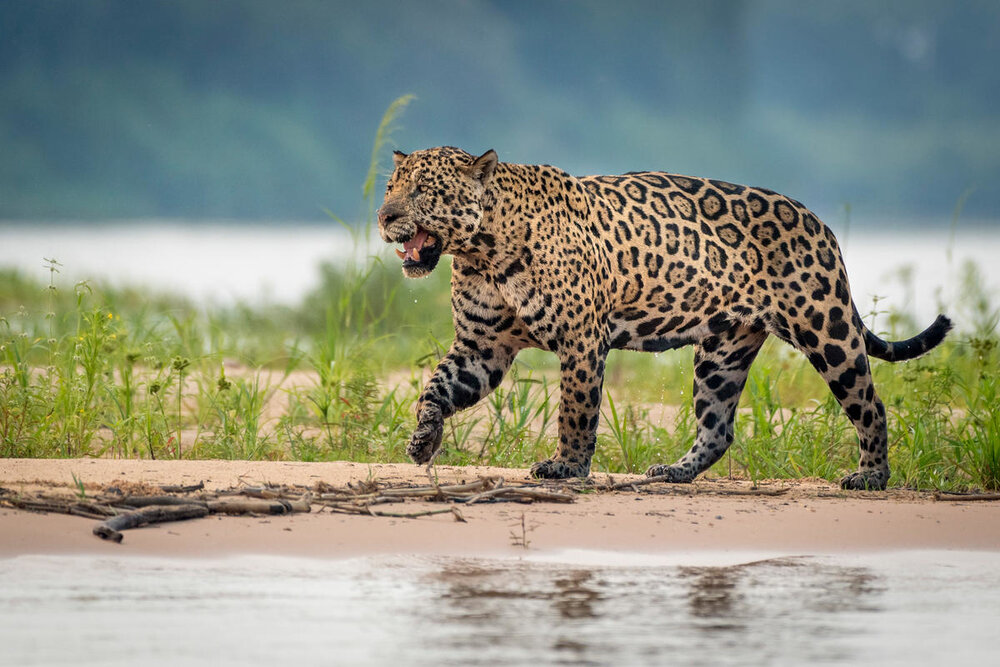
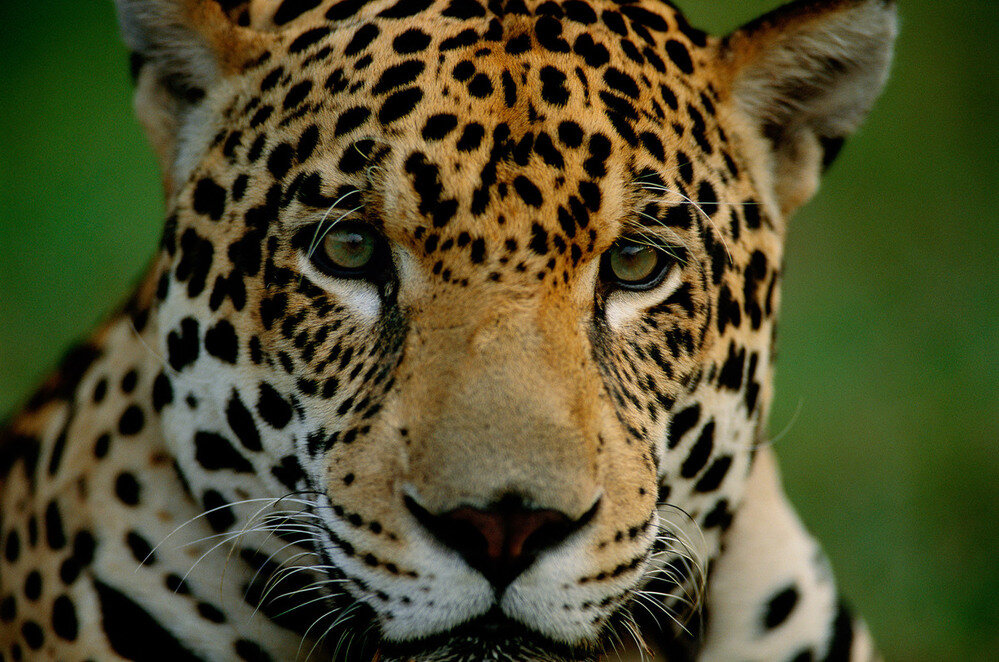
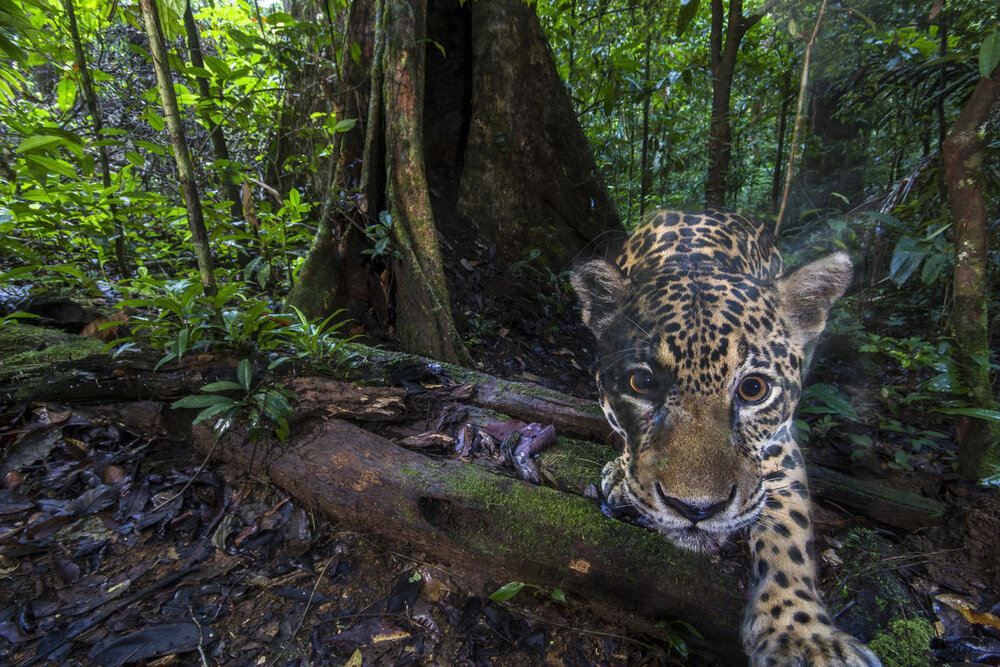
Jaguars, the main predator of the Amazon and the largest cat species in the Americas, play a large role in the control of prey populations and the maintenance of healthy ecosystems across the 18 different Latin and South American countries where they can be found. Known for a powerful bite that can pierce the shell of turtles and caimans, an impressive swimming ability, and an unmatched talent for ambushing prey, jaguars have been an important cultural symbol of strength for indigenous communities for thousands of years and have fascinated researchers for generations.
Jaguars are classified as an “umbrella species”, meaning that because they sit on top of the food chain, their conservation positively trickles down to the whole ecosystem. This all hangs in the balance as the wild jaguar populations faces major threats, but conservationists and organizations including WWF are working together in an international effort to save this iconic predator.
A Threatened Population
Jaguars have lost 50% of their historic range in the last 100 years to deforestation and increased agricultural activities, and have also been heavily impacted by hunting, loss of prey species, and human-wildlife conflict. In fact, many areas within the jaguars range including parts of the Amazon Rainforest located in Brazil, Colombia, Peru and Bolivia have been identified by WWF as “deforestation fronts”, meaning they are emerging as deforestation hotspots based on data collected from 2004-2017. These threats have left the population at an estimated size of between 64,000 and 173,000 individuals.
Impressively, the jaguar’s current range still includes 28% of the world’s biodiversity and provides 53 million people with ecosystem services. These services include freshwater, commercial fisheries, clean air, and crop pollination and these ecosystem services are estimated to generate more than $4 billion annually in Brazil alone. Jordi Surkin, the Director of Conservation for WWF-Bolivia, writes that “If we have healthy jaguar populations, then it’s likely that all biodiversity is healthy.”
Jaguar 2030 Roadmap
To help protect the remaining jaguar population and range, WWF teamed up with the Wildlife Conservation Society, the United Nations Development Program, Panthera, and representatives from 14 jaguar range countries in 2018 to develop the Jaguar 2030 Roadmap. This Roadmap is a global commitment to protect 30 different priority jaguar landscapes from Mexico to Argentina by 2030 and hopes to build relationships across the entire span of the jaguar’s natural habitat to ensure their protection.
When discussing the Roadmap, the conservation director of WWF-Mexico who leads WWF’s jaguar conservation work, said that “We were losing the battle. We realized we had to collaborate and raise our voices in a more coordinated way.” The Roadmap requires international collaboration and has goals of protecting core areas, involving local communities, education, and dealing with human-wildlife conflicts, all to make major strides in jaguar conservation over the next decade.
WWF Jaguar Regional Strategy
Additionally, WWF launched its own Jaguar Regional Strategy in 2020, which will function in connection to the Roadmap. This strategy includes 15 different priority landscapes, chosen by WWF as important ecological regions for the species, that will have tailored, site-specific plans created for each of them. These plans will focus on reconnecting fragmented landscapes and increasing connectivity between these priority areas. By supporting the Jaguar 2030 Roadmap and creating its own Jaguar Regional Strategy, WWF aims to drastically scale up its jaguar conservation efforts and ensure the long-term survival of the species.
While success of these projects will not be seen overnight, the continued coordination and collaboration between WWF and other actors in support of jaguar conservation will all be worth it. Protecting this iconic species and its landscapes, helps to also protect so much more including the water we drink, the air we breathe, and the stable climate we rely on.
How You Can Help!
In the face of tremendous threats to jaguar’s survival, your support is aiding in the conservation of this crucial umbrella species by helping to stabilize population numbers and restore their habitat - helping to ensure the long-term survival of jaguars in the wild. Your commitment makes a difference in our work and sets an inspiring example that together, change is possible. Please share this project with your colleagues, friends and family, and be a voice for nature. Thank you!
Links:
By Jenna Bailey | Employee Engagement Intern
By Emily Goodheart | Employee Engagement Intern
Project reports on GlobalGiving are posted directly to globalgiving.org by Project Leaders as they are completed, generally every 3-4 months. To protect the integrity of these documents, GlobalGiving does not alter them; therefore you may find some language or formatting issues.
If you donate to this project or have donated to this project, you can receive an email when this project posts a report. You can also subscribe for reports without donating.



Support this important cause by creating a personalized fundraising page.
Start a Fundraiser