By Youssef Aouli | Health Project Manager
Alzahraa Medical Center (AMC) is a Primary Health Care Center located between Mankoubin and Jabal Mohsen in Tripoli, North Lebanon. AMC operates under the Alawite Islamic Charity Association (AICA), a Lebanese charitable, non-political, and non-profit organization established in 1950 under Decree No. 4500/1950. AMC continues to serve as one of AICA's core healthcare institutions, providing accessible and affordable primary healthcare services to vulnerable populations across North Lebanon.
Founding and Institutional Growth
Established in 2008 as a community dispensary and upgraded into a full Primary Health Care Center in 2016, AMC has developed into a key healthcare provider serving beneficiaries from Tripoli, Akkar, Koura, Zgharta, and surrounding areas. The center maintains strong partnerships with the Ministry of Public Health (MoPH), Ministry of Social Affairs (MoSA), YMCA, Médecins Sans Frontières (MSF), the World Bank-supported healthcare initiative, and other health-sector stakeholders.
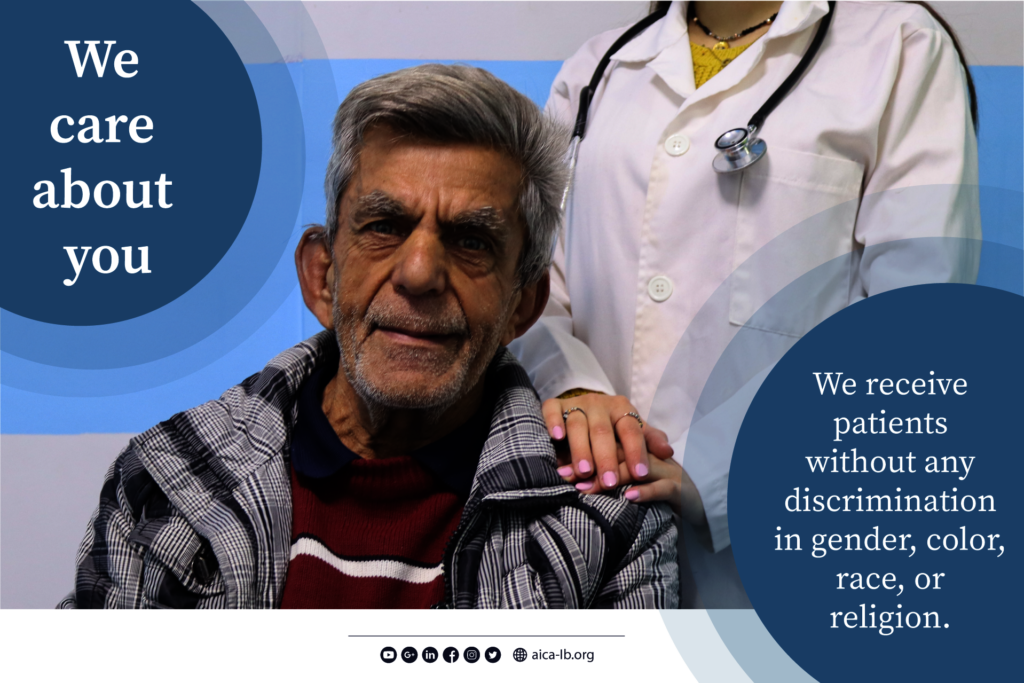
AMC remains committed to providing healthcare services without discrimination based on nationality, religion, gender, social status, or disability. Services include general and specialized consultations, vaccination, chronic disease management, pharmacy support, laboratory referrals, health awareness activities, and mobile primary healthcare outreach.
Current Services and Subsidized Access
Throughout March 2026, AMC continued providing essential healthcare services through subsidized consultation fees and free medication support whenever available.
These services helped reduce financial barriers and ensured continued access to healthcare for vulnerable Lebanese and displaced populations.
MSF Partnership: Supporting Chronic Diseases and Mental Health
AMC's partnership with Médecins Sans Frontières (MSF) remained a cornerstone of healthcare delivery during March 2026. Through this collaboration, patients with chronic illnesses and mental health conditions continued to receive medication renewals and follow-up care. Syrian displaced individuals benefited from full consultation coverage, while Lebanese patients received substantial financial support through partially subsidized consultation fees.
The center also continued coordinating with MSF to ensure medication availability when Ministry-supported stocks were insufficient. However, the suspension of the MSF-supported social worker position and the discontinuation of several partner services continued to affect referral pathways and reduced the availability of specialized social support services.
YMCA and Laboratory Access
In response to increasing demand for laboratory testing among chronic disease patients, AMC maintained its coordination with YMCA and MoPH. Registration through the YMCA-supported program remained a prerequisite for accessing subsidized laboratory services. The center actively facilitated beneficiary registration and follow-up to ensure continuity of care and medication access.
World Bank / MoPH / MoSA Health Support Program
The World Bank-supported healthcare initiative continued during March 2026, targeting low-income families registered with the Ministry of Social Affairs. By the end of the reporting period, 1,960 individuals from 380 families had been registered and were benefiting from healthcare support. While the initial target was 3,000 individuals, enrollment continued according to available approvals and program capacities.
Mobile Primary Healthcare Unit (PSU)
AMC's Mobile Primary Healthcare Unit continued providing outreach services to vulnerable populations residing in shelters and underserved areas. The multidisciplinary team, composed of a public health physician, nurses, and a licensed midwife, conducted routine visits to shelters in Jabal Mohsen, delivering:
In addition, two dedicated service days per week continued in Jabal Mohsen Public Garden to facilitate healthcare access for community members unable to visit the center.
Emergency Response for Displaced Families from South Lebanon
During March 2026, AMC responded to new displacement movements from South Lebanon toward schools located in the Jabal Mohsen area. Through its mobile medical team, AMC conducted six field visits to three public schools hosting displaced families:
A total of 315 displaced individuals received free medical consultations and basic healthcare support, including:
No medical referrals were required, as all identified needs were addressed through on-site consultations, health advice, and follow-up guidance. This intervention demonstrated AMC's ability to rapidly adapt its services and maintain healthcare access during population movements and emergencies.
Service Delivery Performance – March 2026
During March 2026, Alzahraa Medical Center (AMC) continued to provide a significant volume of healthcare services to vulnerable populations across North Lebanon. A total of 3,984 health services were delivered during the reporting period, representing 66.4% of the annual target of 6,000 services. Service utilization remained balanced across genders, with 2,020 female beneficiaries reached, achieving 67.33% of the planned target of 3,000 females, and 1,964 male beneficiaries reached, representing 65.46% of the target of 3,000 males. Overall, AMC served 3,984 beneficiaries with duplication, reflecting sustained demand for primary healthcare, consultations, medication support, and outreach services.
The center also maintained strong performance in chronic disease management through its collaboration with MSF and other health partners. During the reporting period, 1,070 individuals benefited from chronic medication services, achieving 87.84% of the annual target of 1,218 beneficiaries. This high achievement rate demonstrates the continued need for chronic disease treatment and follow-up services among vulnerable populations, particularly individuals living with non-communicable diseases.
In addition, AMC successfully responded to the healthcare needs of newly displaced families from South Lebanon. Through six mobile medical outreach visits conducted in schools hosting displaced populations in Jabal Mohsen, the center provided 315 emergency medical consultations and basic healthcare services to displaced individuals, including 120 males and 195 females, among whom were 20 children and 30 older persons. As this intervention was implemented under a needs-based emergency response approach, the planned target was determined by the evolving humanitarian situation, and the response objectives were successfully achieved during the reporting period.
These figures demonstrate sustained utilization of AMC services and continued demand for chronic disease management, outreach healthcare, and emergency response support.
Accountability to Affected Populations (AAP)
AMC continued implementing multiple feedback mechanisms to collect beneficiary opinions and improve service quality.
Complaints Box
No formal complaints were received during March 2026. Regular monitoring of complaint channels continued.
Hotline
No hotline complaints or urgent feedback were recorded during the reporting period. Hotline services remained available for all beneficiaries.
Individual Interviews
Twenty-two beneficiary interviews identified the following concerns:
AMC responded by:
Main Challenges and Responses
During March 2026, AMC continued to face several operational and service-delivery challenges resulting from the ongoing economic crisis, increased healthcare needs, and displacement-related pressures. The high cost of medical consultations remained a significant barrier for vulnerable populations seeking healthcare services. To mitigate this challenge, AMC maintained its subsidized consultation model while continuing to provide free medications and vaccinations whenever available, helping ensure that essential healthcare remained accessible to those most in need.
The continued influx of Syrian displaced individuals increased demand for healthcare services throughout the reporting period. AMC addressed this challenge through its partnership with Médecins Sans Frontières (MSF), which continued to fully cover consultation costs for Syrian displaced patients, thereby reducing barriers to healthcare access. Similarly, financial constraints affecting vulnerable Lebanese patients were partially alleviated through MSF’s consultation subsidy mechanism, which covered a substantial portion of consultation fees and reduced the financial burden on beneficiaries.
The growing prevalence of chronic diseases and mental health conditions also continued to place pressure on available healthcare resources. AMC maintained its collaboration with MSF to ensure the continuity of chronic disease management services, including low-cost medication renewals, follow-up consultations, and mental health support. At the same time, access to laboratory services remained limited for many chronic disease patients. To address this issue, AMC continued coordinating with the YMCA and the Ministry of Public Health, requiring registration through the YMCA-supported program to facilitate organized and subsidized laboratory testing.
Referral pathways remained affected following the suspension of several partner-supported services and the discontinuation of the social worker position previously supported by MSF. In response, AMC adjusted its internal workflows and temporarily suspended referral mechanisms while awaiting the reactivation of services or the establishment of alternative partnerships.
The increasing number of displaced individuals arriving in the area created additional healthcare needs and operational demands. AMC strengthened its mobile primary healthcare outreach activities to identify newly arrived displaced populations and provide timely consultations, medication support, and follow-up services. Limited healthcare access in shelters and underserved locations was further addressed through the continued deployment of mobile medical teams that delivered healthcare services directly within shelters, schools, and public spaces.
Operationally, weak internet connectivity occasionally affected coordination and timely data sharing. To minimize disruptions, AMC relied on phone-based communication, offline data collection tools, and delayed synchronization once connectivity was restored. In addition, obtaining complete and updated information regarding displaced populations hosted in schools proved challenging during emergency outreach activities. AMC responded by coordinating directly with school focal points and conducting field-level verification visits to improve the accuracy of beneficiary information and service planning.
Success Story
One of the most notable achievements during March 2026 was AMC's rapid deployment of mobile medical services to schools hosting newly displaced families from South Lebanon. Through six outreach visits, AMC ensured that 315 displaced individuals received timely healthcare support directly within their temporary shelters. This intervention reduced transportation barriers, minimized healthcare costs for vulnerable families, and strengthened coordination between healthcare providers and educational institutions hosting displaced populations. The successful response highlighted AMC's capacity to rapidly adapt healthcare services during emergencies while maintaining continuity of primary healthcare support.
Outlook for April 2026
AMC will continue strengthening primary healthcare delivery through its fixed center services and mobile outreach activities. Priority actions for April 2026 include expanding support for displaced populations, improving access to chronic disease services, maintaining coordination with MoPH, MSF, YMCA, and the World Bank-supported program, and continuing efforts to reduce financial barriers to healthcare access for vulnerable Lebanese and displaced communities.
Project reports on GlobalGiving are posted directly to globalgiving.org by Project Leaders as they are completed, generally every 3-4 months. To protect the integrity of these documents, GlobalGiving does not alter them; therefore you may find some language or formatting issues.
If you donate to this project or have donated to this project, you can receive an email when this project posts a report. You can also subscribe for reports without donating.



Support this important cause by creating a personalized fundraising page.
Start a Fundraiser