By Ashley Capps | Project Leader
There are so many reasons a shift to more plant-based hunger relief is critical, from climate mitigation to natural resource conservation to global food security. Our recent blog post for World Hunger Day explores these, as well an important but frequently overlooked reason. Here's an excerpt:
"If we combine the different categories of food-related assistance programs worldwide—including school feeding programs, famine relief rations, food stamps and other government welfare vouchers, free meal programs, community food banks, subsidized staple foods, and direct food distribution from humanitarian organizations and charities— an estimated 10-20% of the global population receive some form of food aid at any given time.
Given the global scale of these numbers, it’s important to consider that food aid doesn’t just address a present need for nourishment; it also shapes future consumption patterns.
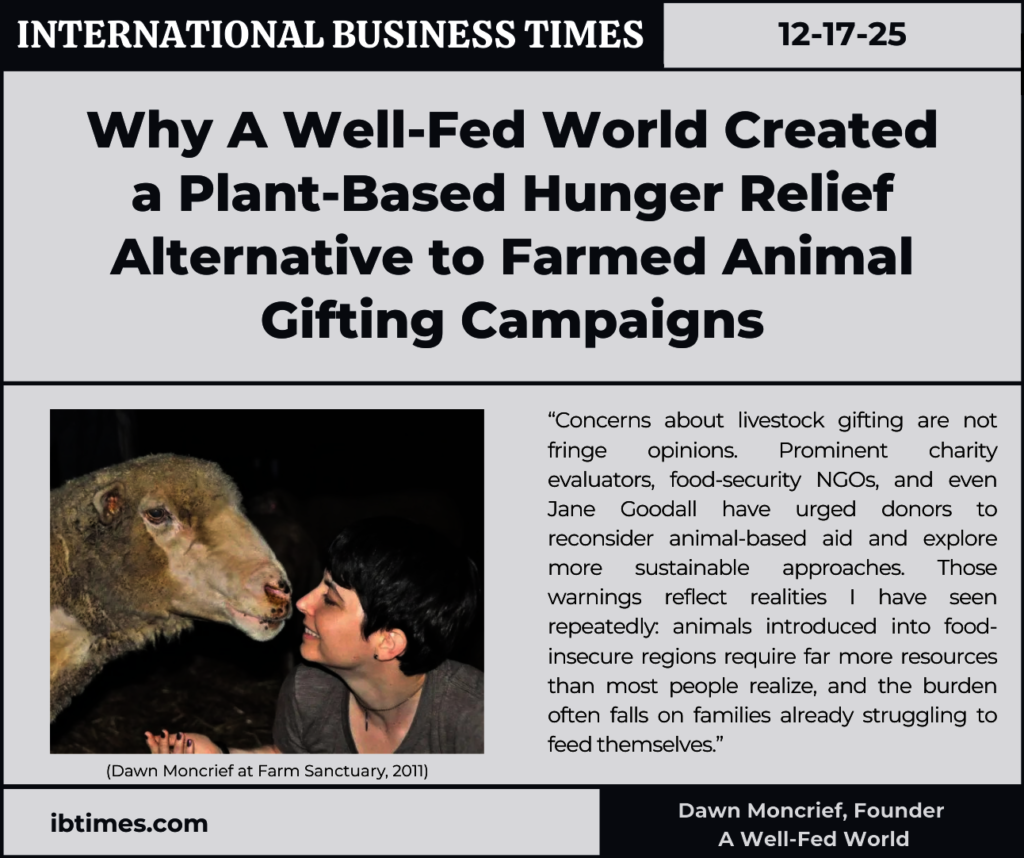
To give one example, the many hunger charities promoting "send a cow" and "give a goat" programs that “gift” live animals to families experiencing poverty may appear to just focus on small-scale animal farming, but they have extremely large-scale implications that pave the way for industrial or “factory” farming, and exponentially increase consumption of meat, dairy, and eggs throughout entire countries.
Even more inlfluentially, under the guise of increasing food security, Western development banks, private investors, and multinational agribusiness corporations have played a major role in accelerating meat and dairy production and consumption in Asia and the Global South. This transformation is now referred to as the “Livestock Revolution.”
Critics and analysts maintain that people in lower-income countries did not just “naturally” begin consuming more meat and dairy as incomes rose. Rather, global lenders, corporate investors, and development institutions with pro-meat biases and vested interests actively helped build the infrastructure, supply chains, and consumer markets that made large-scale increases in meat and dairy consumption possible.
These forces not only increase the consumption of animal-sourced foods; they significantly increase greenhouse gas emissions and environmental strain, often in regions already experiencing land degradation and scarcity, water stress and scarcity, and increased weather disasters such as drought and flooding due to climate change."
Read more at our blog post, which we hope will reaffirm how vital your support of our Plants-4-Hunger project is. Thank you so much for being a critical part of this important work. We truly couldn't do it without you.
Links:
By Ashley Capps | Project Leader
By Ashley Capps | Project Leader
Project reports on GlobalGiving are posted directly to globalgiving.org by Project Leaders as they are completed, generally every 3-4 months. To protect the integrity of these documents, GlobalGiving does not alter them; therefore you may find some language or formatting issues.
If you donate to this project or have donated to this project, you can receive an email when this project posts a report. You can also subscribe for reports without donating.



Support this important cause by creating a personalized fundraising page.
Start a Fundraiser