![]()
A life of running and living in fear. At 25, that’s all Jorina knows.
Jorina remembers the first wave of violence six years ago in Myanmar. Her family’s thatched-roofed house was burnt to the ground. They fled to a camp for displaced people in the city. They were forbidden to move around or access any kind of services outside of the camp. For the next five years, Jorina constantly feared more attacks.
When violence erupted in Myanmar in August 2017, all 270 shelters in Jorina’s camp were torched. She remembers running with strangers in any direction.
“Our camp was burnt first before they moved on to torch other villages. We were the first ones to leave,” says Jorina, recalling her exodus to Bangladesh alongside almost 700,000 men, women and children fleeing their homeland.
Jorina fled with her husband, Sukur, and their son, Alam, who was just 14-months-old at the time. She was two-months pregnant. Frail and weak following days without food, she fainted several times, remaining unconscious for up to two hours. Jorina felt sick constantly due to the unbearable heat, torrential rain and cold nights outdoors.
This excruciating trek from Myanmar ended in Cox’s Bazaar, Bangladesh, now home to the world’s largest, fastest-growing refugee camp that shelters 888,000 people.
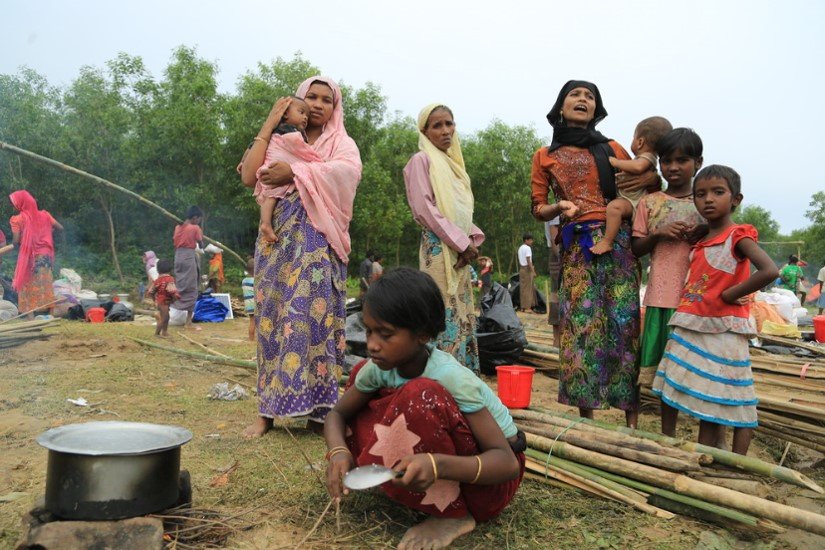
For almost a year now, Jorina, Sukur and Alam have lived in a makeshift tarpaulin-and-bamboo shelter. Squalid, overcrowded and chaotic as the refugee camp is, Jorina sees it as her safe haven.
“At least we don’t worry about being attacked here,” she says.
However, the camp is actually far from safe. Hundreds of thousands of shelters clinging to hillsides stretch as far as one can see. These flimsy structures are no match for the torrential rains and high winds during the monsoon season. Since May, a reported 34,600 refugees have been affected by weather-related incidents, including rain, wind, landslides, floods and water-logging. Almost 20,000 people living in the highest-risk areas for landslides were relocated to safer ground. More families need to be shifted but more flat, safe land is urgently needed for sustainable relocations sites. Living in severely congested, unhygienic conditions has far-reaching negative effects.
The worst weather is yet to come. Two days of heavy rains of 3 and 4 July dumped 184 mm of rain on the camps, creating havoc. The heaviest annual rainfall is usually in July, sometimes accompanied by cyclones.
Jorina worries about her toddler Alam, now age 2, going outside after the rains. “I am concerned about his safety, especially when it rains hard and the path around my home is slippery. Not long ago, he slipped and fell near the edge of the hill. He could have been badly hurt.”
During the monsoons, disease outbreak is also a public health concern. Waterborne diseases are widespread, with more than 135,00 cases of acute watery diarrhoea reported in the camps since January by the Health Sector.Flooding has contaminated many water points. A recent World Health Organization assessment found that 21 per cent of the estimated 5,700 tube wells in the camps need to be repaired or relocated or due to their closeness to latrines that have flooded.
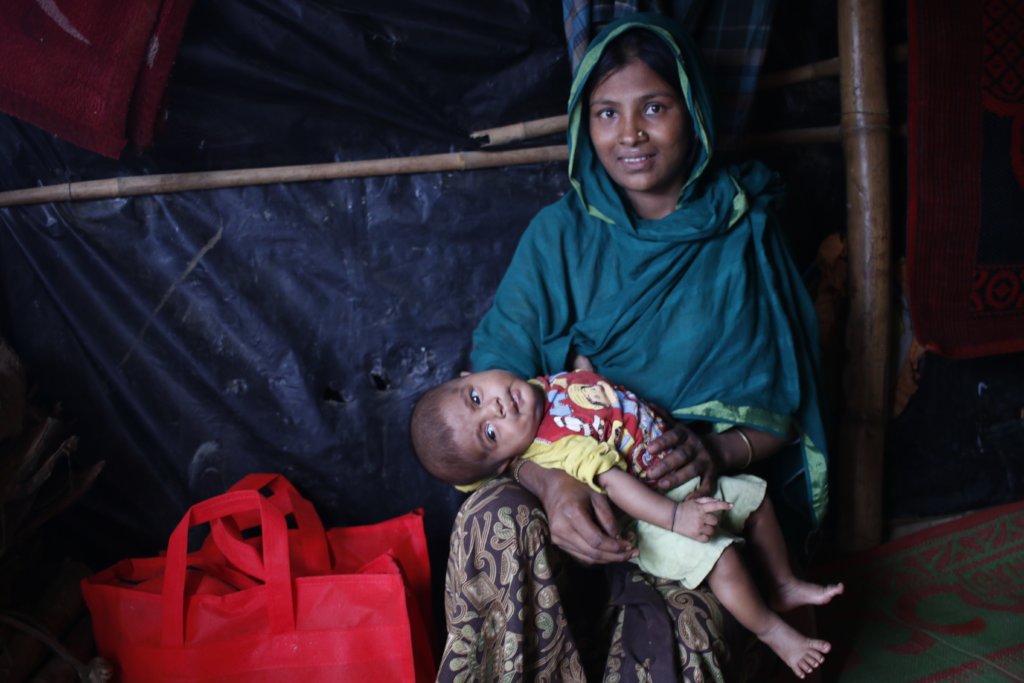
Jorina can’t help but worry about her children’s health. Born in the camp, her four-month-old son, Ayaz, suffers from a stomach infection; Alam, age 2, has a severe cold and fever. Jorina took them to a health care centre nearby, but the children haven’t fully recovered.
“Ayaz cries of stomach cramps and vomits sometimes,” says Jorina. “Alam’s cough gets worse at night. They are not feeling better even after a month.” Living in the wet, leaking shelter has not helped their conditions.
Infants like Ayaz are far more susceptible to bacterial and/or viral infections due to lesser developed immune systems. They are also at risk of malnutrition if mothers are not breastfeeding children adequately or are unable to give them the nutritious food they need for healthy development.
A recent nutrition study conducted by the Government of Bangladesh revealed that 37 percent of children age 6 to 59 months surveyed in the camps suffer from chronic malnutrition (stunting)—precariously near the World Health Organisation’s critical threshold (40 percent). Findings indicate that 13 percent of children have moderate acute malnutrition. Less than 10 percent of children age 6 to 23 months receive a minimum acceptable diet (four of the seven food groups, and three or more meals per day[i]).*
All families in the camps receive monthly rations of rice, lentils and oil, distributed by the World Food Programme. However, children and adults need more diversified diet with protein, as well as fresh fruits and vegetables. These foods are available in the market, but refugee families can’t afford them.
“Do do do doyaa,” croons Jorina, attempting to calm crying Ayaz in his make-do cradle. Alam rests in his father’s arms across the room.
Jorina has almost forgotten what her house back in Myanmar looked like. For now, this leaking one-room shelter furnished only with plastic floor mats is home. If she and her family can’t go back, she hopes at least to live peacefully. Jorina hopes her children can receive an education and know the freedom she never has.
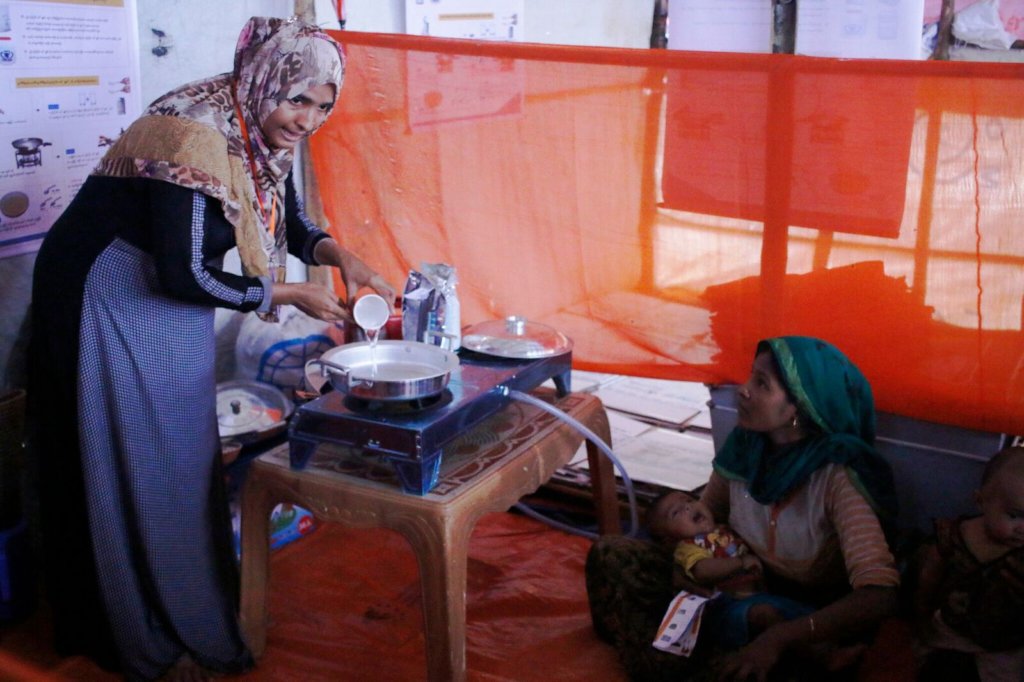
*Note: Jorina and her children recently began participating in World Vision’s new life-saving nutrition programme. It is designed to prevent and manage moderate acute malnutrition in children age 6 to 59 months, and support malnourished pregnant and lactating mothers.
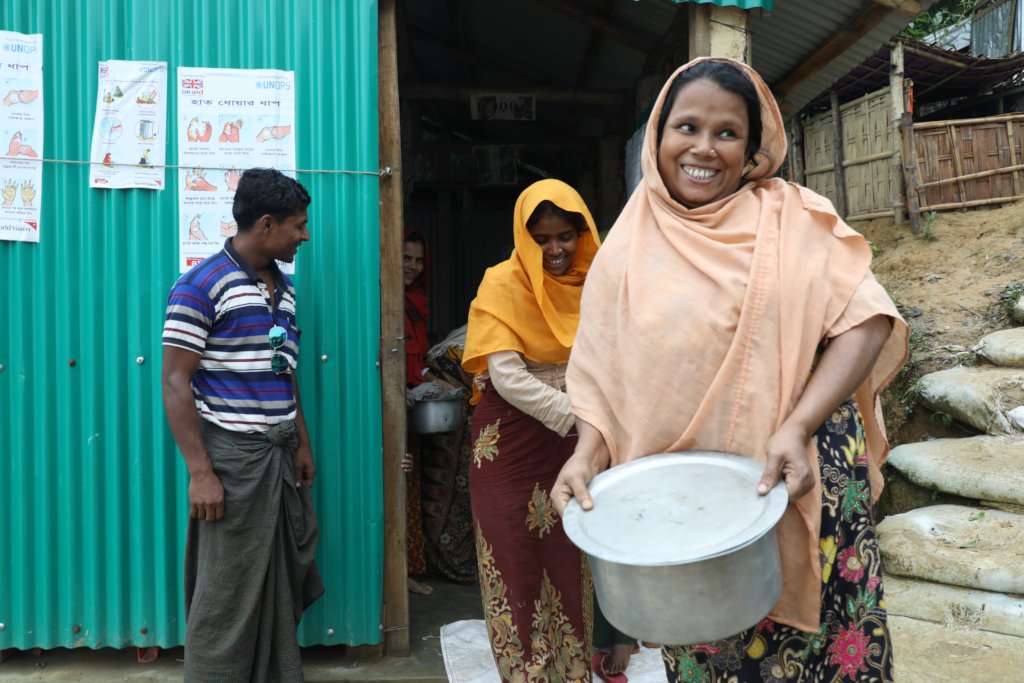
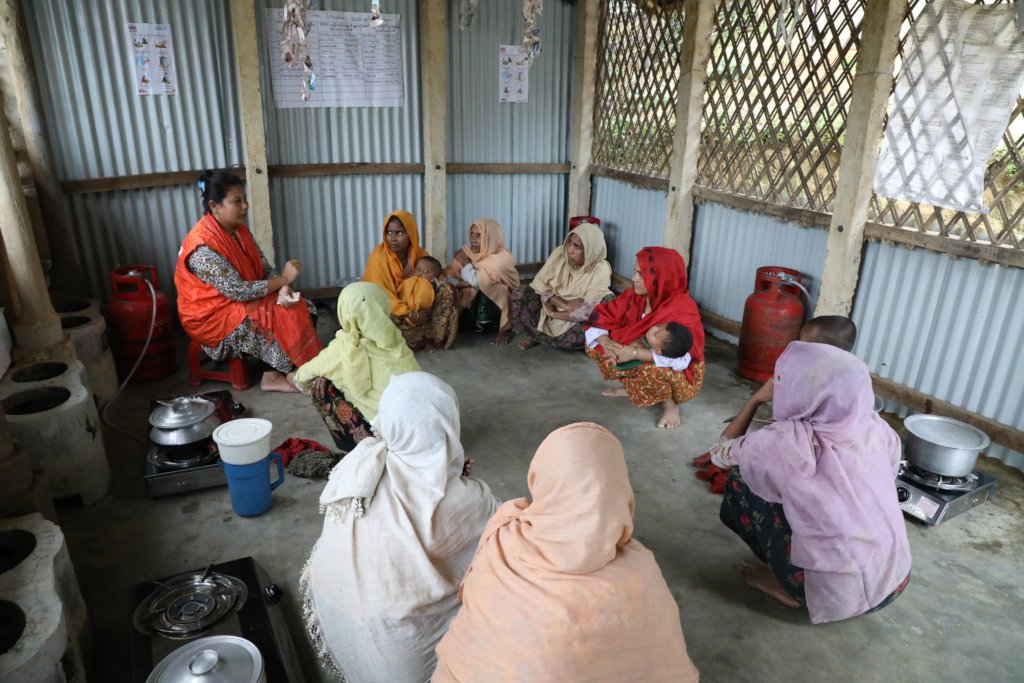
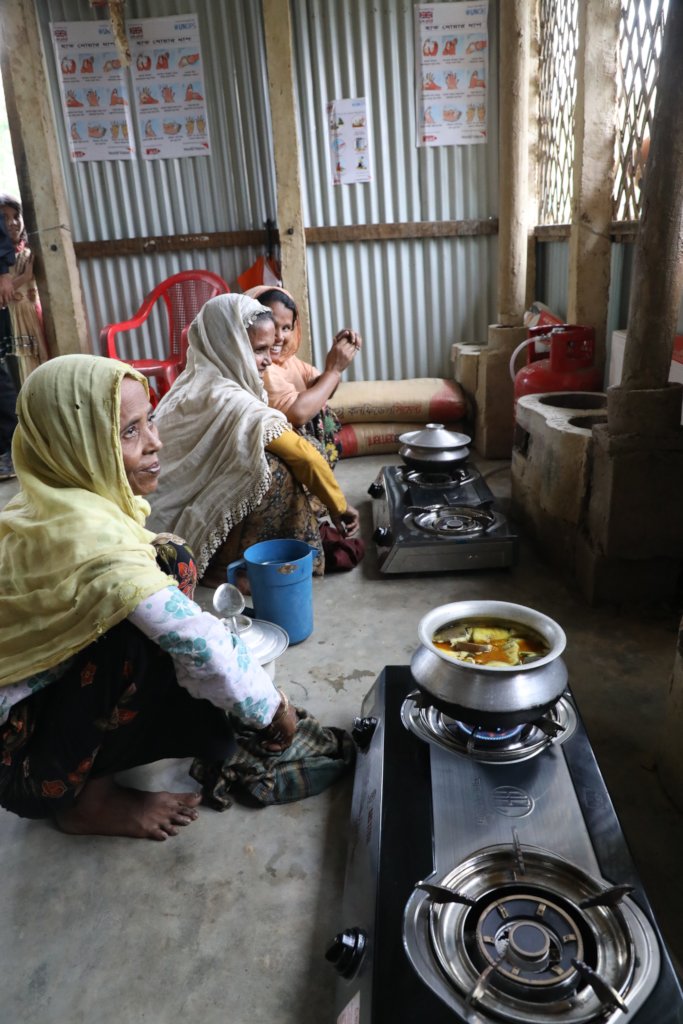
It will run daily from early July until the end of December in three densely-populated refugee camps (Camp 4, 8W and 10), conducted in partnership with the World Food Programme.Some 11,200 children will receive monthly rations of Super Cereal, a high-energy supplementary food to help prevent malnutrition. An estimated 3,595 pregnant and lactating women will also receive the monthly rations of Super Cereal, as well as vegetable oil. An additional 5,100 children who are assessed as having moderate acute malnutrition will be given biweekly rations of food and follow-up treatment, as well as 1,061 mothers.
WORLD VISION'S RESPONSE
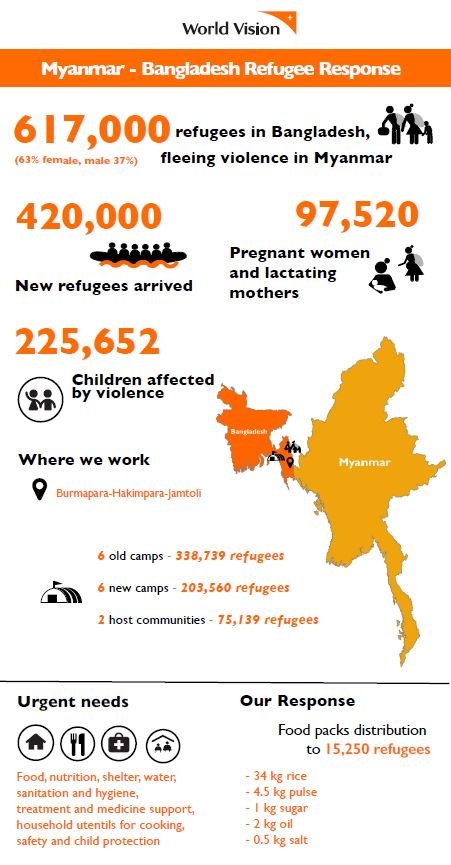
World Vision has served 200,600 refugees through food, nutrition, shelter and WASH activities, as well as the distribution of non-food items, such as hygiene kits.
- 883,000 people - Advocating for the rights of all refugees, including their voluntary, safe and dignified repatriation to Myanmar.
- 154,500 people - have benefitted from construction of 77 deep-tube wells and 1,551 latrines.
- 49,200 people - have received shelter upgrade kits to reinforce their homes during the monsoon season.
- 18,200 people - received hygiene kits.
- 2,000 children - each week are benefitting from child protection activities, including attending our centres where they can play, learn and recover.
- 14,000 children, 4,500 pregnant and lactating mothers - will receive supplementary food to prevent and treat moderate acute malnutrition.
- 12,063 families - have benefitted from cash-for-work activities, including bridge construction, shelter repair, slope stabilisation and road paving.
![Nutrition program]()
Nutrition program
![Share on Twitter]()
![Share on Facebook]()