By Guadalupe Blevins | Director
The Association of Highland Women (AMA) has long witnessed what many women in Guatemala's Western Highlands are afraid to say aloud: that the care they receive during childbirth can itself become a source of harm. This study is the organization's response—an effort to document obstetric violence from the inside, on local terms, in the words of the women who have lived it.
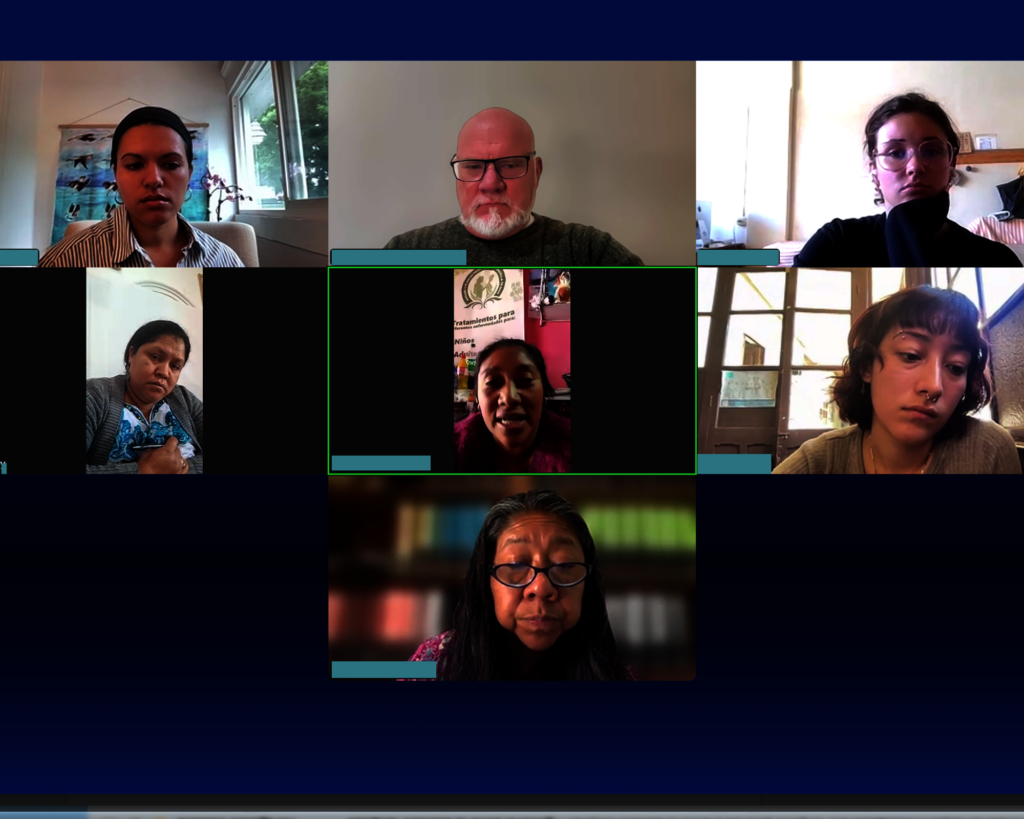
To carry this work forward, AMA is collaborating with academic partners to support and strengthen the organization's capacity to lead. Dr. Zobeida Bonilla and the University of Minnesota Department of Public Health provide technical partnership and research support, made possible through a University of Minnesota grant. Dr. Benjamin Blevins of the Highland Support Project plays a key coordinating role, facilitating Participatory Action Research partnerships and guiding team training so that the process remains community-centered at every step. In August, Dr. Kevin Emmons of Rutgers University will join the fieldwork in Guatemala to investigate the institutional conditions that give rise to obstetric violence.
Our Method: Participatory Action Research
Participatory Action Research is both a method and an ethical commitment. It means that community members are co-investigators, not subjects—that knowledge is built with the community, not extracted from it, and that the people most affected by a problem are the ones who shape how it is studied and addressed.
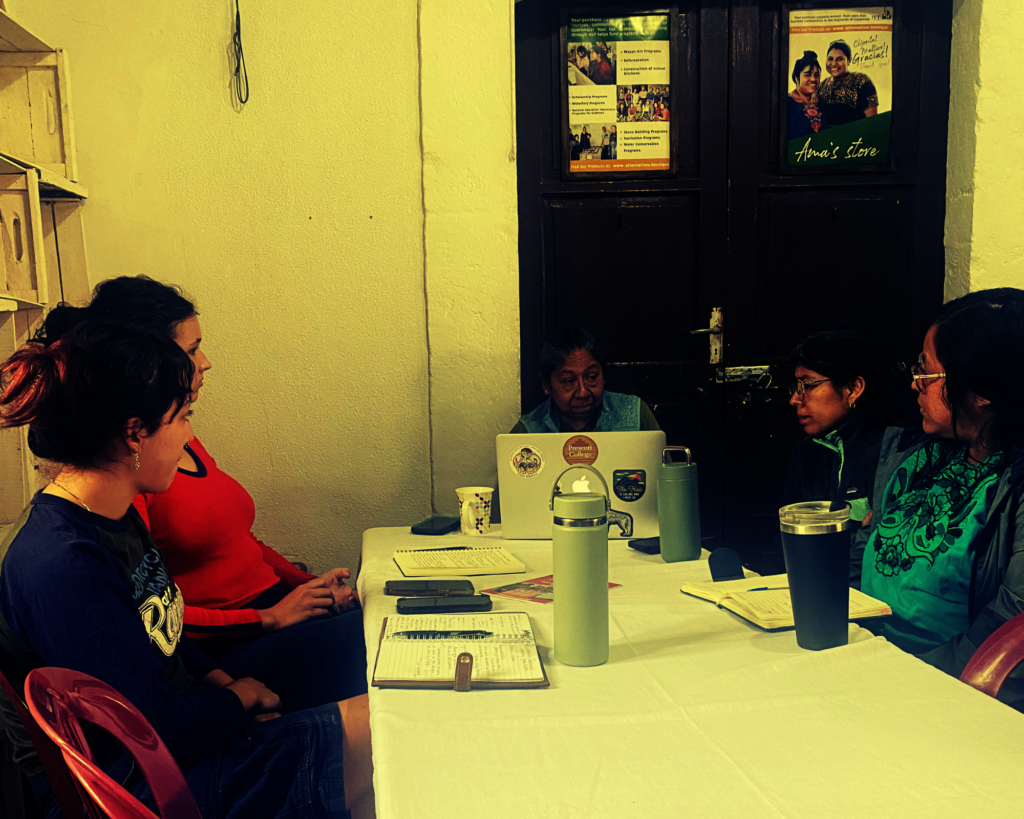
The Guatemalan team, whose leadership grounds this work in community, is headed by AMA staff members Lesley Bravo—the first licensed Duela in the Western Highlands and a traditional midwife—Guadalupe Ramirez, Iris Romero, and Catarina de Jesús Tuy Tzep, a community health promoter. Izabel Lobez, a traditional midwife and community leader, also anchors this work. Supporting the fieldwork are University of Minnesota graduate students Mary Nystrom and Maren Assef, and Dickinson College undergraduates Saira Lemus and Sophie Jones. We are also grateful for Arzoo Qureishy's long-term contributions as a pre-med student at Virginia Commonwealth University.
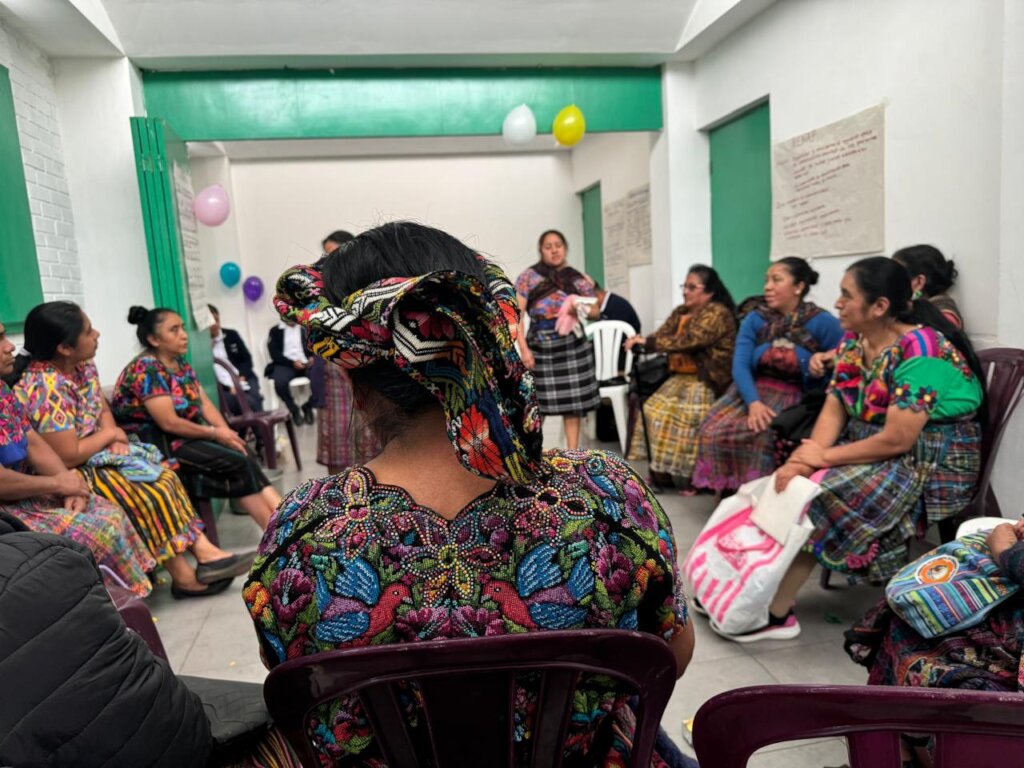
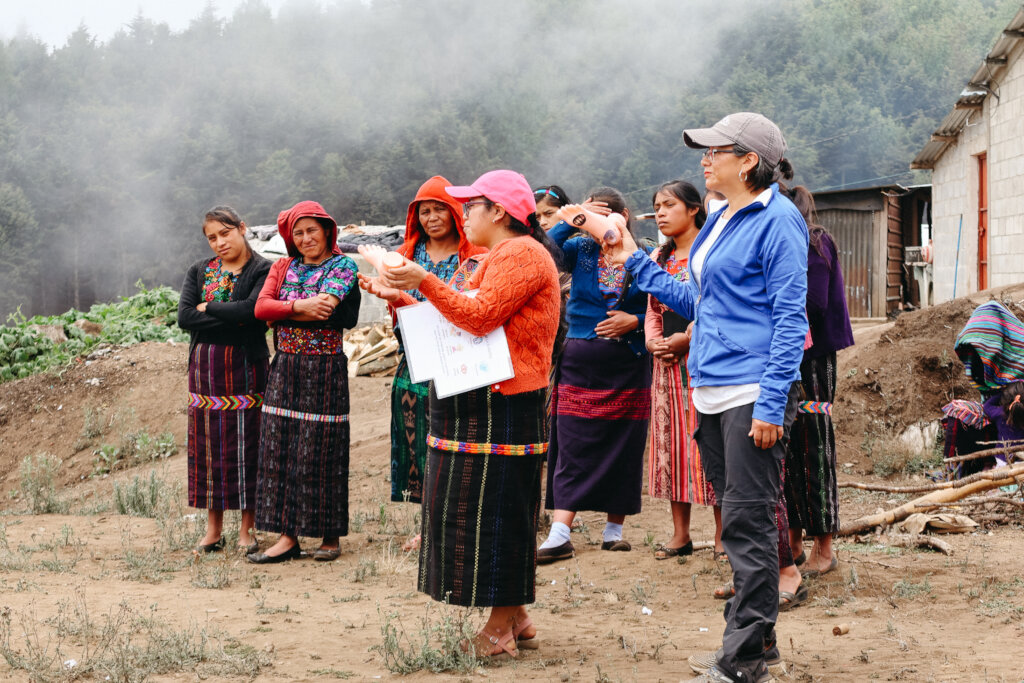
The participatory interview plan is designed to cross divides that health research too often leaves intact. It brings together grassroots rural and urban women whose experiences sit at the center of the inquiry, networks of traditional midwives (comadronas) whose knowledge and relationships anchor community care, and representatives from the Ministry of Health of Quetzaltenango, whose participation opens a path from community insight to institutional change. These conversations are reciprocal and horizontal—listening and sharing on equal terms, so that findings emerge with the community rather than being imposed upon it.
What We're Hearing
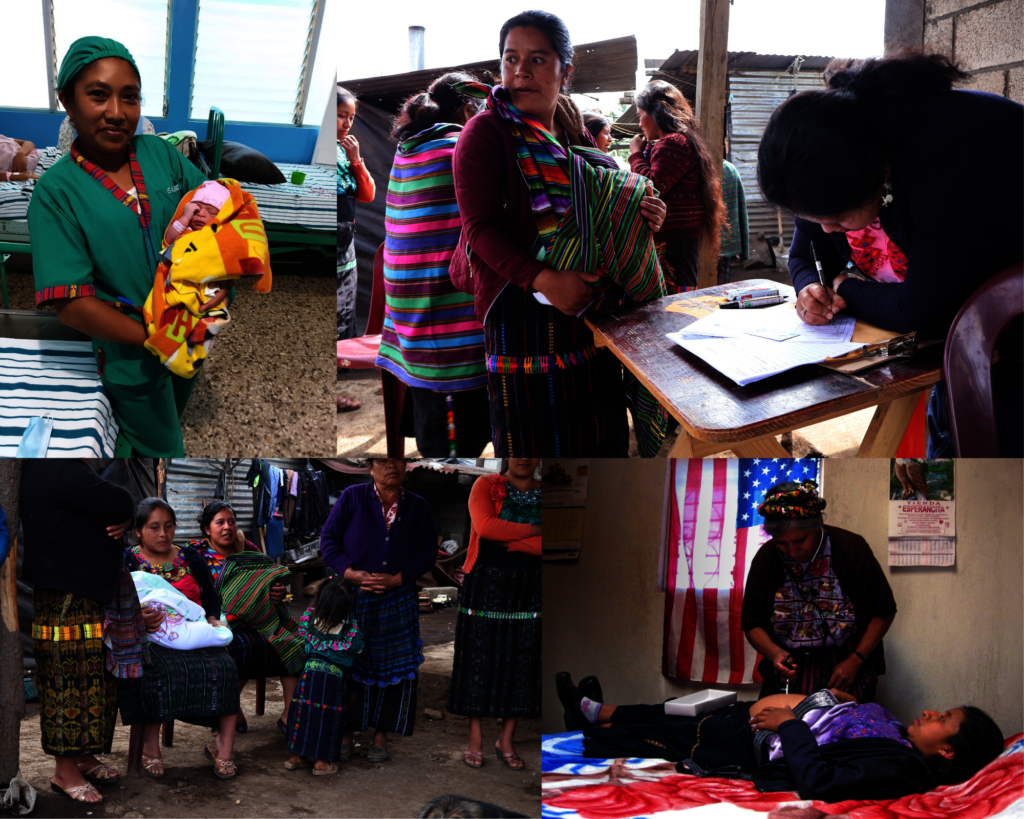
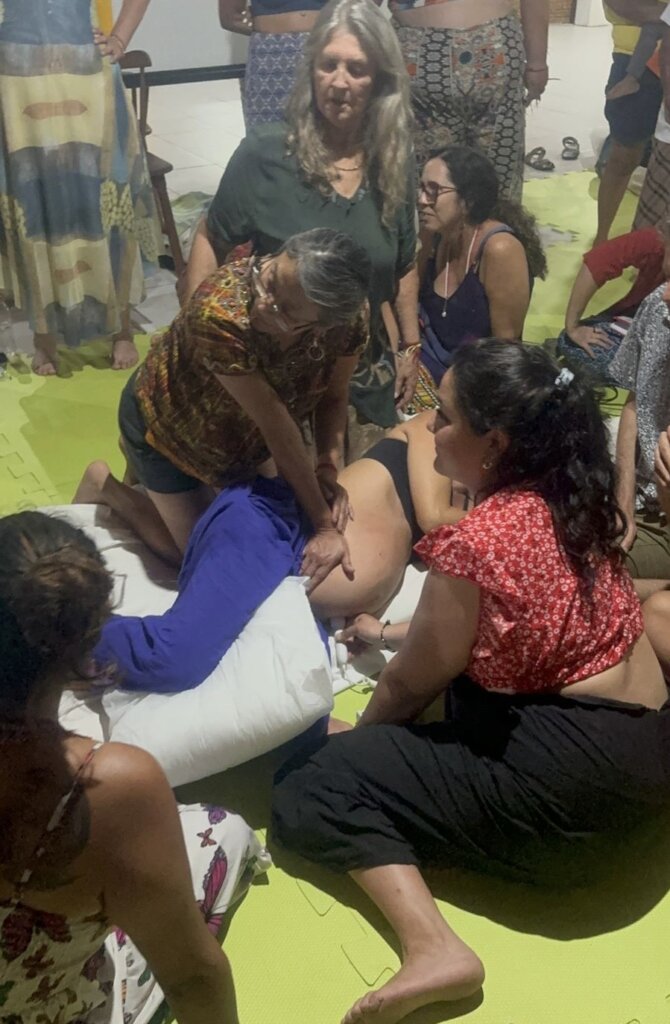
Through interviews with midwives, women's circles, and new mother groups, a clear and troubling pattern has emerged. Women describe being left in cold hallways, one mother delivered her own baby while staff were absent, and many were yelled at to stay quiet. Unrequested cesareans have been linked to severe shortages of beds, blankets, and personnel. Women have been left uncovered and uncleaned for hours after delivery. A recurring sentiment captures the depth of this crisis: many say they would rather die at home than return to these facilities.
These interviews have been a source of healing in themselves. In response, we are launching a community-based therapy program to help mothers process this trauma.
Expected Outcomes
The place-based definition we are building together will serve purposes that reach well beyond this study. It will inform training programs for health professionals, so that care providers understand obstetric violence as women in this region actually experience it—not through an outside lens, but through the knowledge and testimony of the community itself. It will support the development of advocacy programs, giving midwives, women, and their allies a shared language and evidence to press for change. And it will advance a transformative vision of health—one that honors relational, Maya-centered understandings of wellness alongside clinical care, and that treats women and midwives as full partners in shaping the systems meant to serve them.
The Olintepque clinic offers a living example of what is already possible. There, midwives are welcomed as partners, doctors seek permission before touching patients, and Izabela Lopez noted that physicians asked to learn ancestral practices—including sensing a baby's position through touch and smell. That culture of mutual respect, flowing from leadership down, is the standard this work aspires to help build across the region.
By centering community voice, cultivating local leadership, and developing a model adaptable and transferable elsewhere, this project aims for impact that outlasts the study itself—rooted in dignity, sustained by partnership, and driven by the needs of the people it serves.
By Lesly Bravo | Well Being Promoter, Midwife & Doula
By Lesly Bravo | Well Being Promoter, Midwife & Doula
Project reports on GlobalGiving are posted directly to globalgiving.org by Project Leaders as they are completed, generally every 3-4 months. To protect the integrity of these documents, GlobalGiving does not alter them; therefore you may find some language or formatting issues.
If you donate to this project or have donated to this project, you can receive an email when this project posts a report. You can also subscribe for reports without donating.



Support this important cause by creating a personalized fundraising page.
Start a Fundraiser