By Carmen Perez-Jordan | President & CEO
This quarterly update builds upon the context and work outlined in the previous reporting period. Since that submission, several developments have shaped the trajectory of the Latinx Police Accountability Network (LPAN), including continued program activity, evolving organizational capacity, and a decision regarding the program’s future structure.
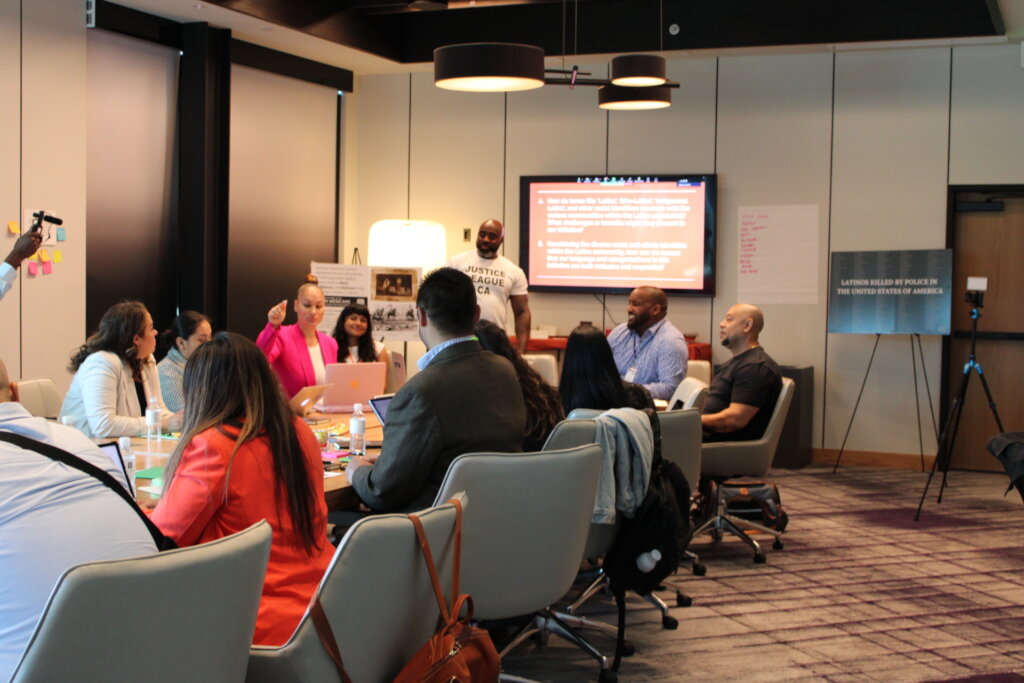
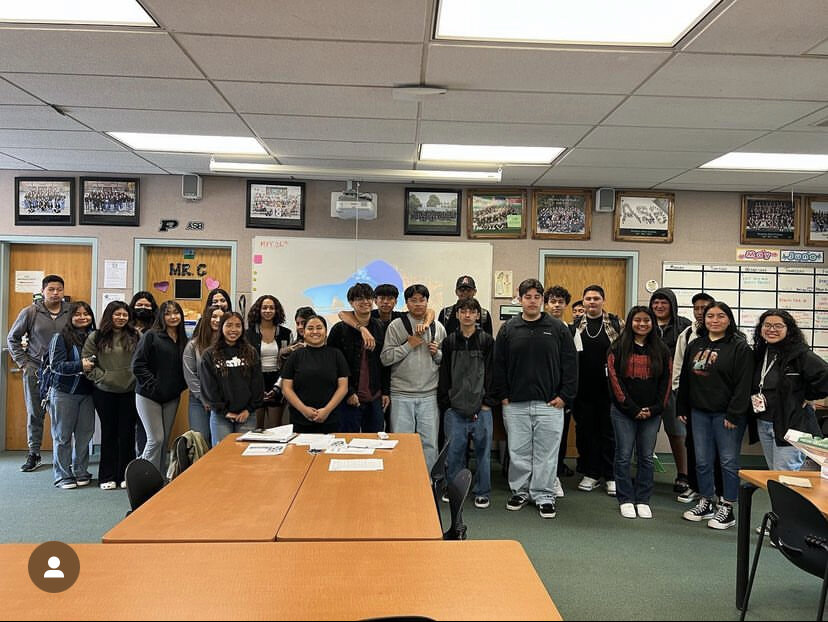
During this reporting period, LPAN-related trainings, workshops, and political education continued, particularly those focused on:
These activities were carried forward even as The Gathering for Justice responded to urgent community crises and increasing demand for rapid-response support. The continuation of this work reflects both the ongoing need within Latinx communities and the commitment of staff and partners to meet that need.
At the same time, The Gathering for Justice is undergoing a leadership transition, paired with a broader reassessment of organizational capacity. As part of this process, the organization evaluated the sustainability of LPAN as a standalone program in the absence of dedicated, long-term funding.
Based on this assessment, LPAN will sunset as a standalone program following this reporting period. This decision reflects capacity constraints, not a diminished belief in the relevance or urgency of the work.
The conditions LPAN was created to address have only intensified.
Latinos continue to be killed by police at rates higher than white people, yet their deaths are frequently misclassified racially or excluded from official datasets. This misclassification contributes to systemic undercounting and erasure, limiting accountability and policy response.
At the same time, the intersection of local policing and federal immigration enforcement (ICE) continues to expose Latinx communities, particularly Mexican and Central American communities, to compounded harm. Routine police encounters increasingly serve as gateways to detention, deportation, and family separation, blurring the line between public safety and immigration enforcement.
These dynamics underscore why policing, immigration enforcement, and racial justice must be examined together when addressing state-sanctioned violence against Latinx communities.
Building on prior work, LPAN participated in a delegation to Mexico during this period, engaging elected officials, researchers, and community organizations on the importance of data collection, visibility, and narrative power for Latine communities. These conversations reinforced how deeply interconnected our struggles are across borders and highlighted the need for binational and transnational strategies to document and challenge state violence.
Preparations remain underway for a potential return delegation mid-year, contingent on available resources.
This quarter also saw continued progress in LPAN’s research on state-sanctioned violence against Latinos in the United States, aimed at filling critical gaps in national data and narrative. While this research has advanced using limited internal resources, it is not sustainable without dedicated funding and infrastructure.
The decision to sunset the Latinx Police Accountability Network as a standalone program reflects a responsible assessment of organizational capacity during a leadership transition and the absence of sustained, dedicated funding to support the depth and rigor this work requires. LPAN addresses complex, intersectional systems of state-sanctioned violence that demand long-term investment, specialized research capacity, and consistent staffing. Without those resources in place, continuing the program would risk under-resourcing work that our communities deserve to see done with care, accuracy, and accountability. Sunsetting LPAN at this moment is an act of stewardship and allows The Gathering for Justice to remain aligned with its values while naming the urgent need for future investment in this work.
LPAN has always been about more than data. It is about dignity, truth, and accountability. Every training, delegation, and act of storytelling has reaffirmed why this work exists.
While LPAN will sunset as a standalone program due to current constraints, the issues it surfaced remain urgent and unresolved. This moment calls not for silence, but for renewed attention, alignment, and investment.
Our communities deserve to be seen.
They deserve to be counted.
And they deserve justice.
By Carmen Perez | President & CEO
By Carmen Perez-Jordan | President and CEO
Project reports on GlobalGiving are posted directly to globalgiving.org by Project Leaders as they are completed, generally every 3-4 months. To protect the integrity of these documents, GlobalGiving does not alter them; therefore you may find some language or formatting issues.
If you donate to this project or have donated to this project, you can receive an email when this project posts a report. You can also subscribe for reports without donating.