By Bernadette Martin | Engagement Manager
SITUATION OVERVIEW
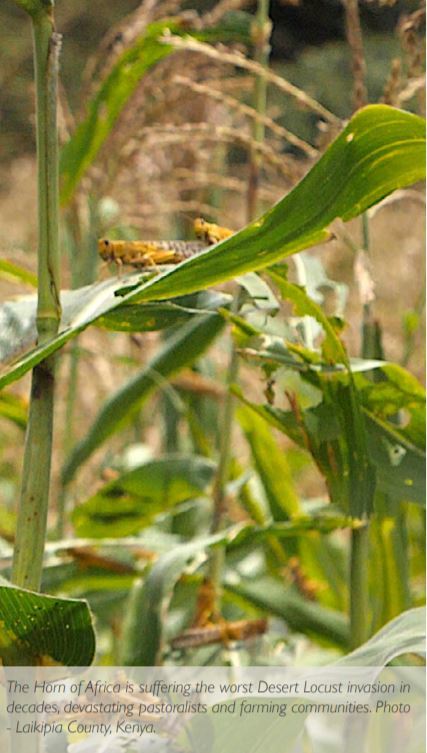
According to the Food and Agriculture Organisation (FAO), the current desert locust situation remains extremely alarming in East Africa where it is an unprecedented threat to food security and livelihoods since it coincides with the current growing season. New swarms from current breeding will form from mid-June onwards, coinciding with the start of the harvest. At this time, there is a risk that swarms will migrate to new breeding areas such as Sudan and perhaps West Africa.
• Kenya: The combined risk of desert locust on the livestock range land, floods, human diseases, livestock diseases and the COVID-19 pandemic poses alarming and unprecedented threats to livelihoods, food and nutrition security in Isiolo, Kitui, Wajir, Samburu and Marsabit Counties of Kenya.
• A few immature and mature swarms remain in the south of Ethiopia. Breeding has increased in the Ogaden and hopper bands are present. Breeding continues near Dire Dawa where hopper bands persist, and adults have formed groups and swarms. Breeding also occurred in Afar and on the eastern edge of the highlands, causing hopper bands to form. Ground and aerial control operations continue.
• Somalia: Breeding is underway in central areas (Galkayo and Galmudug) where scattered adults and hopper groups are present. Breeding is also underway in the northwest where hopper bands and groups of immature and mature adults are present on the plateau (east of Burao to the west of Boroma) and the coast near Bulhar. Hopper groups are also present in the northeast near Garowe. Control operations are underway.
• Uganda: On 26 May, at least one swarm was seen in the northeast district of Kaaborg that was probably moving towards South Sudan.
• Sudan: Scattered gregarious adults are present near the South Sudan border at a few places in Blue Nile, White Nile, and South Kordofan states. A few adults persist in the Nile Valley north of Kordofan.
WORLD VISION'S WORK
Ethiopia
• World Vision continues to actively engage with the Government and partners in desert locust control operations through it’s response strategy.
• Responding through:
Kenya
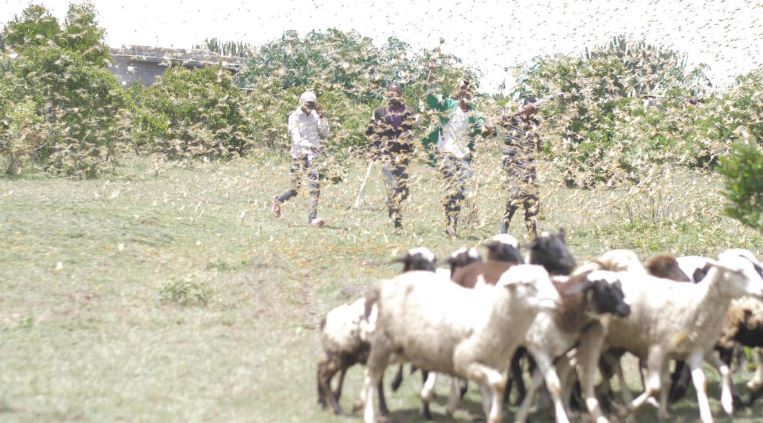
The expected second generation of desert locust invasion in the counties of Samburu-Marsabit-Isiolo, Wajir and Kitui is threatening the pastoral and agro-pastoral communities’ livelihoods, markets and peace, which might lead to food insecurity and conflicts among the pastoral and agropastoral communities.
• Aerial and ground operations supported by FAO, department of agriculture, livestock and fisheries, nonstate actors, Non-Governmental Organizations including World Vision in Kenya are ongoing, but remain insufficient due to the size and spread of the swarms. Currently, approximately 45,000 hectares of livestock range land have been decimated by the desert locust translating to an estimation of 4,700 affected households in North Horr and Laisamis sub-counties of Marsabit county and with the emergence of hoppers the situation will worsen further if the long rains do not persist.
• World Vision is responding to the desert locust infestation through:
Somalia
The desert locust situation in Somalia is now classified as dangerous with bands of hoppers reported in the breeding grounds in Galmudug in Southern Somalia, Puntland and Somaliland in the north. Rains from March allowed the new swarms to mature and lay eggs. This is presenting an unprecedented threat to food security.
• Air and ground control operations are ongoing to prevent a further increase of desert locusts in Somalia. Despite these efforts, locust populations remain high in parts of Somalia with young nymphs (hoppers) reported at the Somaliland border with Ethiopia, the coastal region of Somaliland and the north east of Puntland.
• Currently Somalia is dealing with a triple challenge of locusts, floods and COVID-19 and this makes it difficult on navigating the funding landscape.
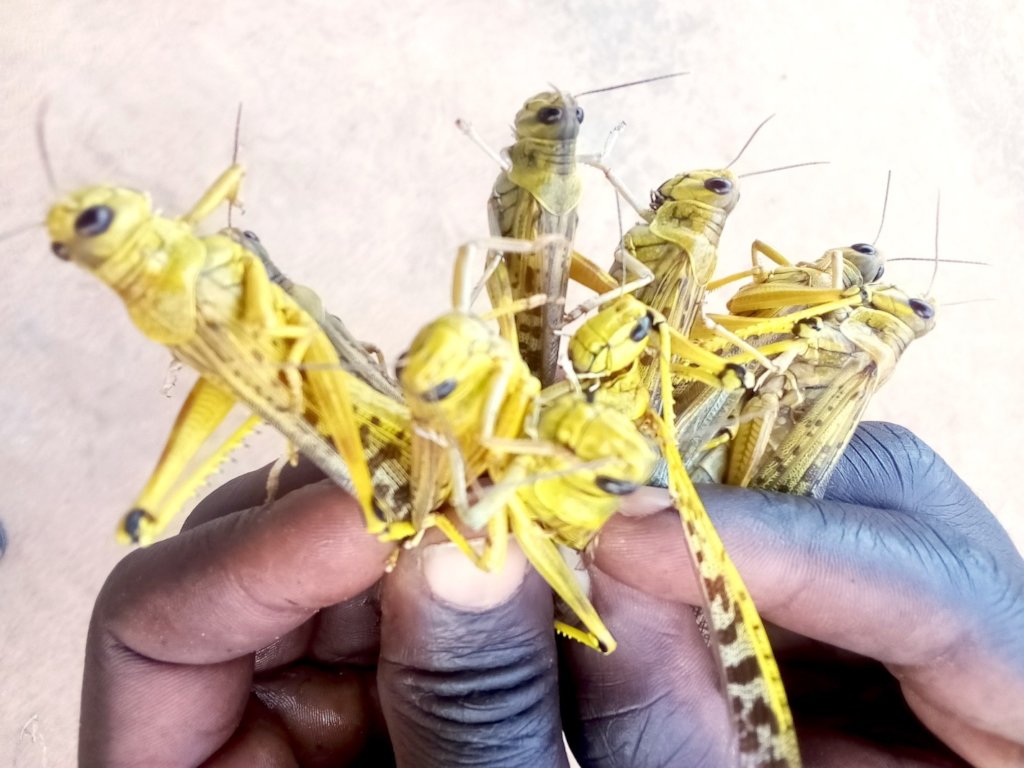
• Together with the Government authorities, FAO and other stakeholders World Vision in Somalia is sensitising communities on identification of locusts at different stages and how to report through the hotlines.
• With the limited available resources, World Vision in Somalia has been able to support with 7 motorized knapsacks for ground spraying, 350 sets of protective gear and 35 canvas camping gear for the team engaged in spraying the locusts.
South Sudan
On 14 May 2020 new swarms invaded Kapoeta East (Lopua, Lotimor, and Kuron). New swarms from current breeding will form beginning mid-June, coinciding with the start of the harvest. In South Sudan 2.76 million people’s food security is under threat from the expanding swarms.
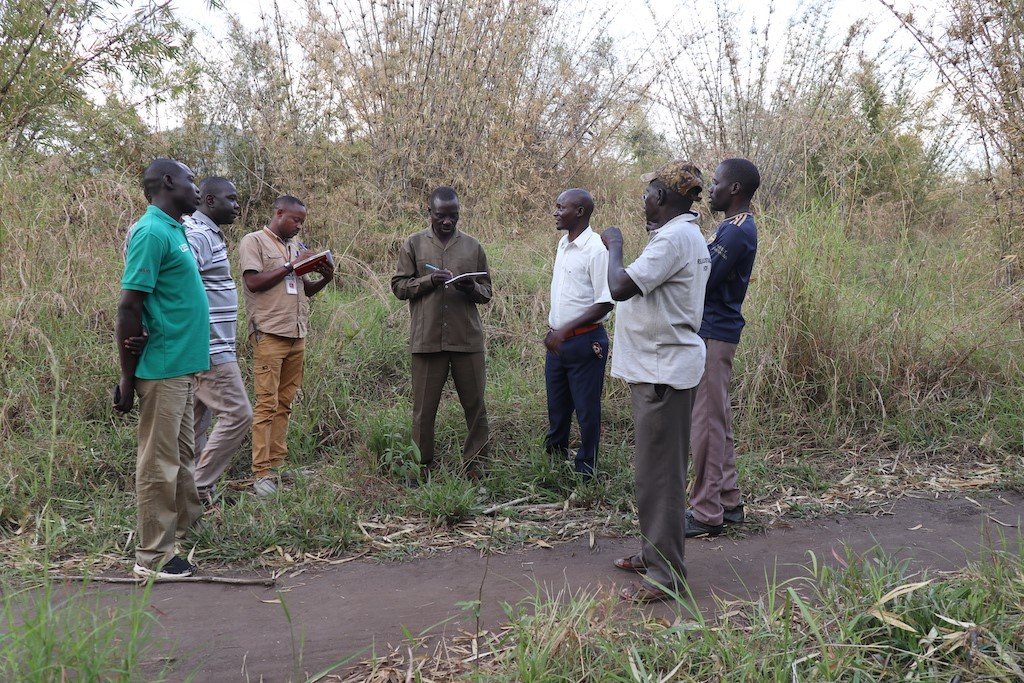
• World Vision has trained 450 community members on the control of desert locusts. Predominantly, these are farmers who need to protect their crops. 200 stakeholders including County Agriculture Director, Local Relief and Rehabilitation Commission Supervisor, Payam/Boma administrators, paramount chiefs, faith-based groups, youth and women representatives as well as farmers group leaders have also been trained and mobilised.
• Child protection continues to be integrated in all our response activities. Through the month of June, the project will conduct child protection activities with farmers in the affected areas
Uganda
• Desert locust swarms entered Uganda mainly through Amudat District, Karamoja. The swarms that entered spread inland into other districts in Karamoja and to districts in Teso, Sebei, Lango, Acholi and other regions. The locusts have now been reported in over 25 districts in Uganda.
• According to FAO, up to 291,000 people are already considered severely food insecure in Karamoja and Teso Regions (Integrated Food Security Phase Classification [IPC] Phase 3-crisis and above) hence the desert locust invasion in these areas could have severe consequences for agriculture-based livelihoods where food security is already fragile. The desert locust crisis poses a potential threat to the food security of another 1.32 million people in both regions (FAO, 2020).
• World Vision in Uganda has been involved in coordination and advocacy through participation in meetings and surveillance.
By Cecil Laguardia | Communications Manager
By Zipporah Kageha Karani | Communications Manager
Project reports on GlobalGiving are posted directly to globalgiving.org by Project Leaders as they are completed, generally every 3-4 months. To protect the integrity of these documents, GlobalGiving does not alter them; therefore you may find some language or formatting issues.
If you donate to this project or have donated to this project, you can receive an email when this project posts a report. You can also subscribe for reports without donating.