By Candice McGregor | Reports and Communications Manager
Household Resilience Pilot: Building Healthier Families, One Egg at a Time
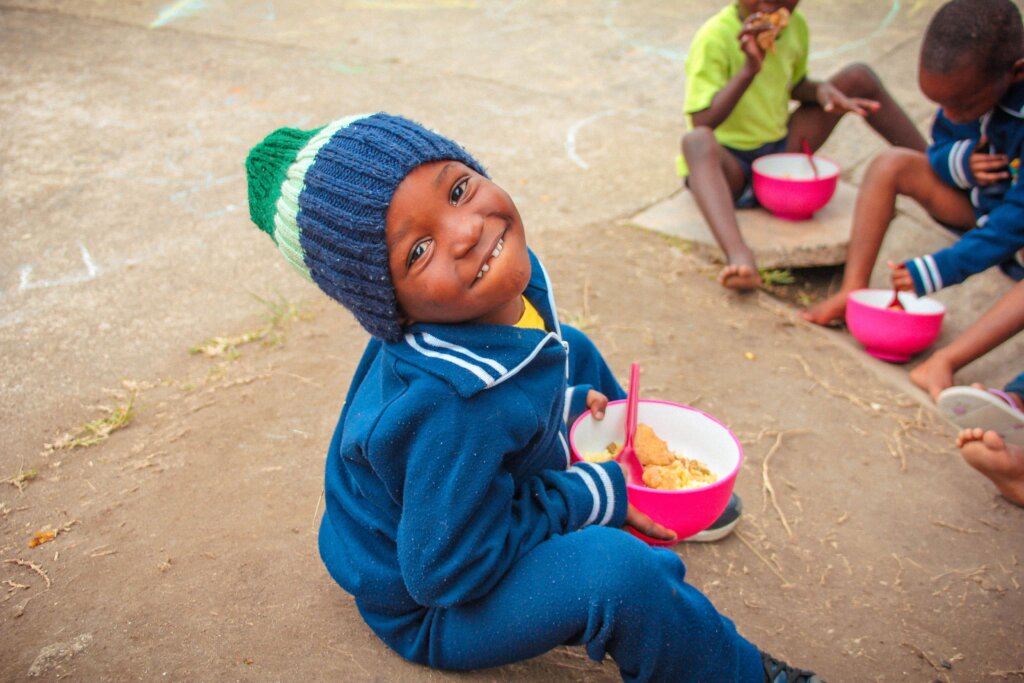
At the end of 2024, Thanda's ELOM assessments highlighted an important concern: some children in our Early Childhood Development (ECD) programme were showing signs that placed them at greater risk of stunting. While the causes of stunting are complex, poor nutrition during the first 1,000 days of life is one of the most significant contributors. In response, we strengthened our focus on improving the quality of food available to families, particularly increasing access to protein for young children.
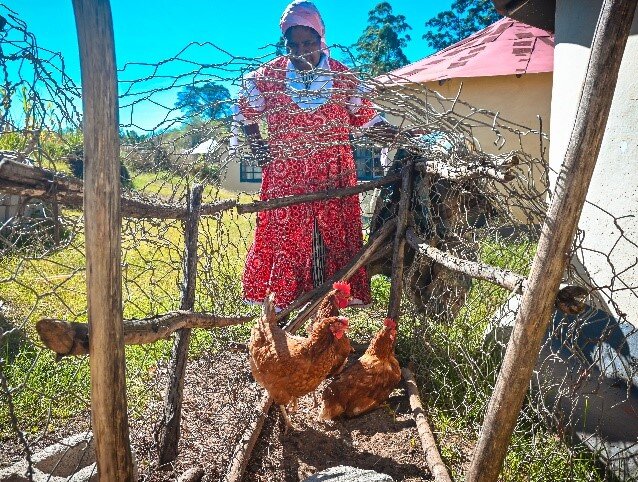
One of the ways we are doing this is through our Household Resilience Pilot. The pilot equips families to produce it themselves by integrating layer hens and fruit trees into household gardens. The aim is to improve dietary diversity, increase access to protein-rich foods and strengthen household resilience over the long term.
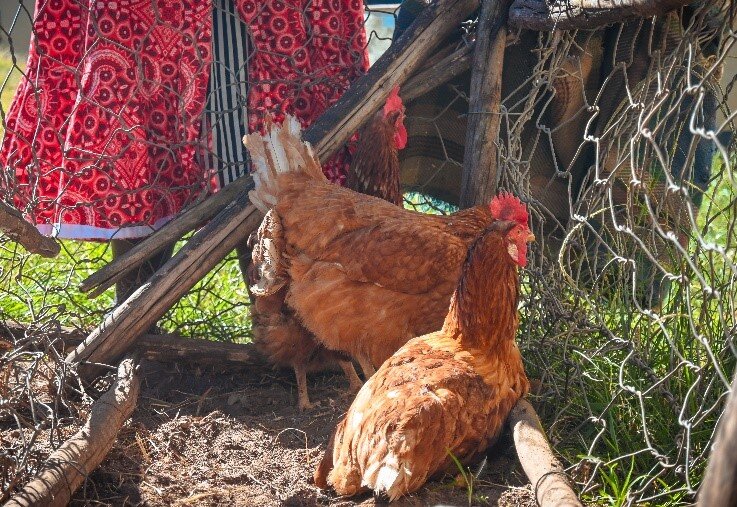
The pilot began in September 2024 with 25 households who were either already farming well through our Household Gardening Programme or were identified as particularly vulnerable to food insecurity. Each household received five Hyline Brown layer hens, three mixed fruit trees, training on building chicken coops and caring for layers, and ongoing support from Thanda's farming team.
Nearly two years later, we are encouraged by what we are seeing.
Twenty-four of the original 25 households still have their layer hens, with 22 households continuing to produce eggs. Of the original 125 hens distributed, 100 (80%) are still alive, the others were lost mostly to predators and illness. Nine households have successfully cared for all five of their original hens. Fruit trees have also performed well, with 24 households still growing them. Nearly three-quarters of households have retained at least two of their original trees, while 40% still have all three.
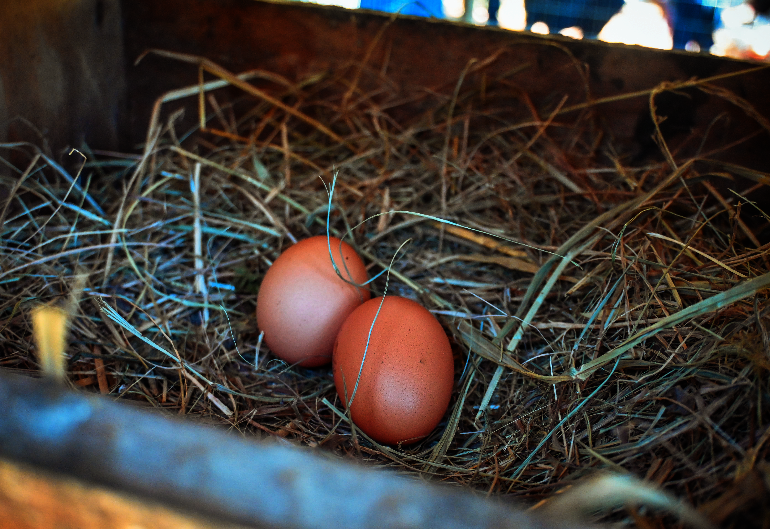
In April 2025 the farmers began tracking egg production and Thanda began collecting the data. Participating households have recorded the production of an impressive 38,789 eggs. Almost half of these eggs (17,695) were eaten by families themselves, while a similar number (17,813) were sold to generate income. A smaller portion was shared with neighbours or extended family, with very few eggs being lost.
One of the most encouraging findings has been the amount of additional protein now available within participating households. The eggs consumed during the pilot provided an estimated 123 kilograms of additional protein across 104 indirect beneficiaries. For young children, who can safely begin eating eggs from around six months of age, this represents a simple but highly nutritious food that supports healthy growth and development.
Our analysis suggests that, even after selling enough eggs to cover feed costs, every household in the pilot could still have produced enough eggs to meet the daily protein needs of one child between six and twelve months old. Nearly two-thirds of households could also have done this for a child aged one to three years. These findings reinforce our belief that supporting families to produce nutritious food at home can play an important role in preventing malnutrition and reducing the risk of stunting.
The pilot has also strengthened dietary diversity far beyond eggs alone. Eighty-eight percent of participating households harvested more than seven different crops during the year, while 60% grew at least one high-protein crop such as beans or peas. Around one-third also harvested groundnuts, 72% successfully maintained at least two fruit trees and almost half were already farming other livestock such as goats, pigs or cattle. Together, these food sources provide families with a wider variety of nutrients and reduce dependence on purchasing food.
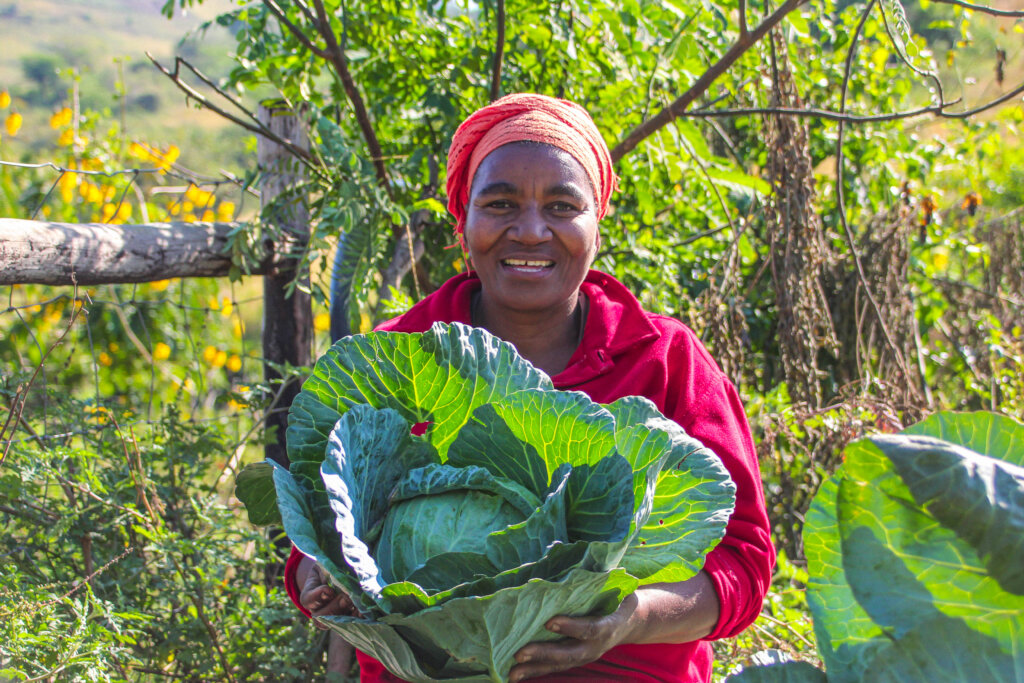
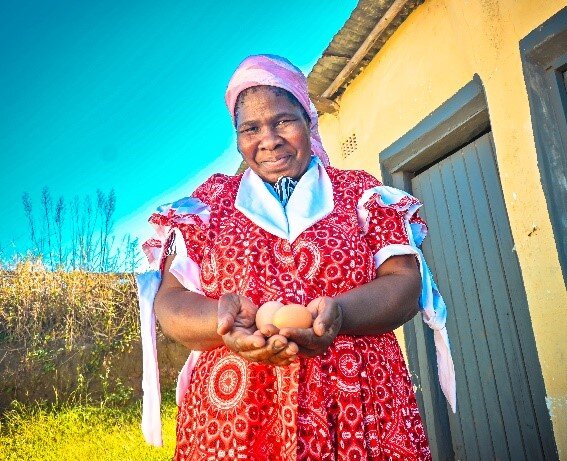
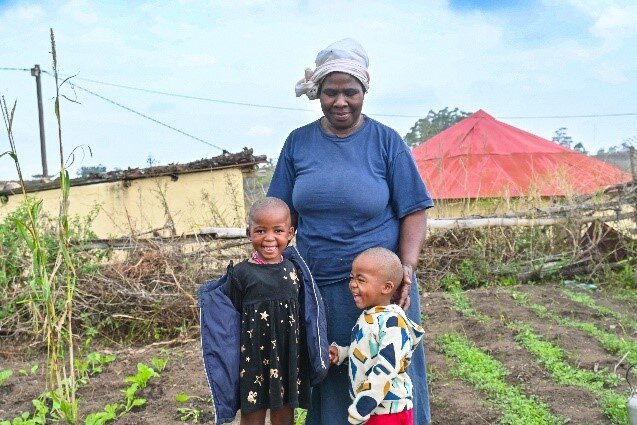
Nomusa is one of the Household Gardeners who has been entrusted to the care of layer hens and fruit trees through the Household Resilience Pilot. She shares what being part of the Household Resilience Pilot means to her:
I love my chickens. In the neighbourhood the people know that I am one of the ‘go to’ people that sell eggs now. I have a baking business so the eggs come in handy for that too. If I do not have eggs, my neighbour from that other side of Plazini also has layer hens, when I am out of eggs they share with me. I believe that working together and sharing is important.
For example, if I receive an order for a batch of eggs and the amount of eggs that I have is not enough, I go to my neighbour and ask if she could supply me with eggs and we will split the profit. That way, we all work together. I sell the eggs for R2.50. When the chickens first arrived they did not take a long time to start laying, it must have been about two weeks before they started laying eggs and I have been happy ever since. I can’t thank Thanda enough for trusting me with these chickens. Currently, having layer hens is boosting my baking business and I have made money through my baking business and also through selling eggs to achieve the small milestones I want to achieve.
Nomusa’s dedication to her chickens is clear as the data we have from April 2025 to June 2026 reflects that her layers produced an impressive 1,578 eggs! You know, all these R2.50s from my eggs accumulate (she giggles). At the end of last year, I made about R4000 through selling these eggs and that was a proud moment for me knowing that I was able to achieve that myself. I save the money in a 2L bottle throughout the year and only take money out when I needed to buy chicken feed. Then, at the end of the year, with this money, I was able to use R800 to buy material for a chicken coop.
I know that it is very important for me to invest back into my chickens, because they have changed my life. I need to look after them well and I have been doing my best. Unfortunately, I only have 3 chickens left. The other two were not doing well. I have been keeping a close eye on the remaining chickens and they are looking healthy. There is one specifically, that lays jumbo eggs and it is the smallest out of all the chickens! I have never seen anything like it, but I consider it a blessing. In fact, I see the ability to be able to make your own food a great gift. We live in a time where things are not easy at all whether you have money or not. We are all just trying to get by. That is why I take pride in my eggs, and my garden and also feel really cared when people from Thanda come past to check on us. It makes me feel seen and important. I believe that Thanda is assisting us wholeheartedly, and not many people get an opportunity to feed themselves without having to give something in return. Thanda treats us like people, in a time when if you’re not the wealthiest you’re treated less.
It is so great to know that Nomusa’s family, including her two grandchildren who are both in Thanda’s ECD, benefit from the inclusion of extra protein into their diet and that the family also enjoys the added financial benefit of the eggs contribution to Nomusa’s baking business and the sale of the eggs themselves.
In the second half of 2026 we will be expanding the pilot to approximately 60 more households and will implement our learnings from the first phase into this next phase of the project. We are excited to bring this exciting pilot to the lives of more families.
By Candice McGregor | Reports and Communications Manager
By Candice McGregor | Reports and Communications Manager
Project reports on GlobalGiving are posted directly to globalgiving.org by Project Leaders as they are completed, generally every 3-4 months. To protect the integrity of these documents, GlobalGiving does not alter them; therefore you may find some language or formatting issues.
If you donate to this project or have donated to this project, you can receive an email when this project posts a report. You can also subscribe for reports without donating.



Support this important cause by creating a personalized fundraising page.
Start a Fundraiser