By Pauline Kayser and Odeline Ravasse | President and Fundraising Officer
I – End of the year with the Bearcat Study Programme
The last three months have been marked by the rainy season and the passage of Typhoon Tino, which was particularly violent. The team mobilized to support residents affected by the storm by collecting donations, clothing, bottled water, and food. As a result, some activities were temporarily put on hold and resumed in early January.
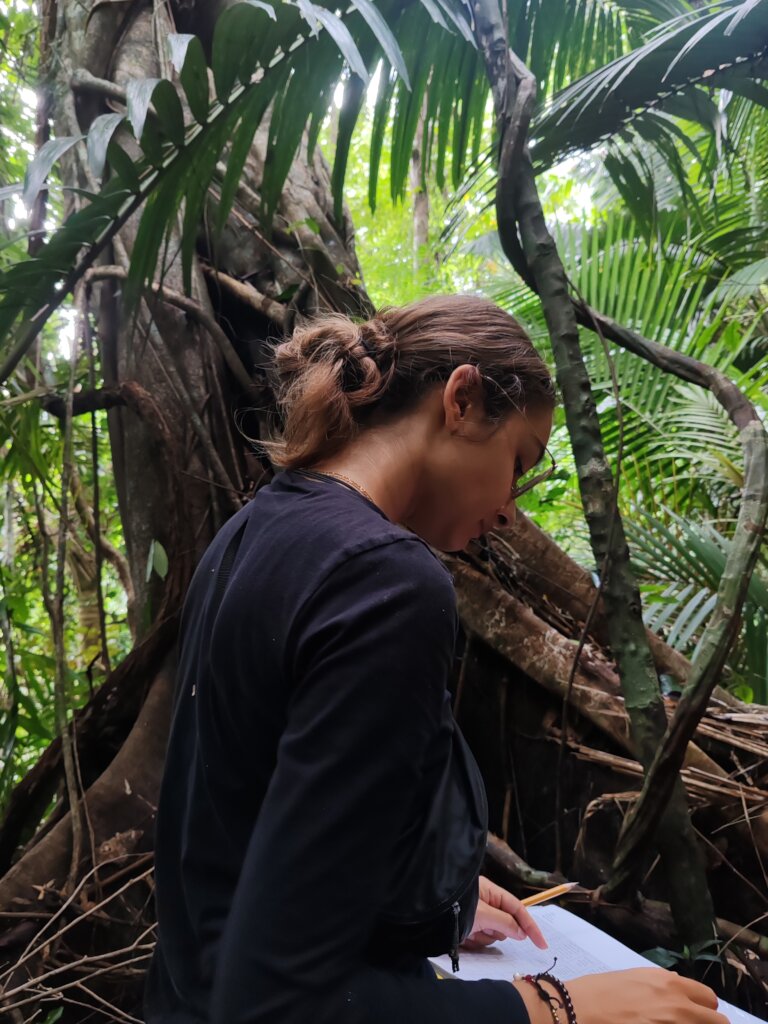
In October, the team grew with the arrival of Elli, a volunteer on a civic service mission. Her arrival made it possible to compare different smartphone applications for the behavioral study and select one definitively. Elli also contributed to the analysis of part of the data collected. The dataset from the Palawan Flora and Fauna Watershed Reserve (PFFWR) and Sitio Capacuan is extensive, and the support of an additional team member has been greatly appreciated.
In November, the scientific manager and assistant (Eléa and Reziel) attended the annual conference of the Southeast Asian Zoos Association (SEAZA) in Singapore. They presented a poster describing ABConservation’s scientific missions and the relationship between our in situ and ex situ programmes. This event also provided an excellent opportunity to expand our network and strengthen partnerships.
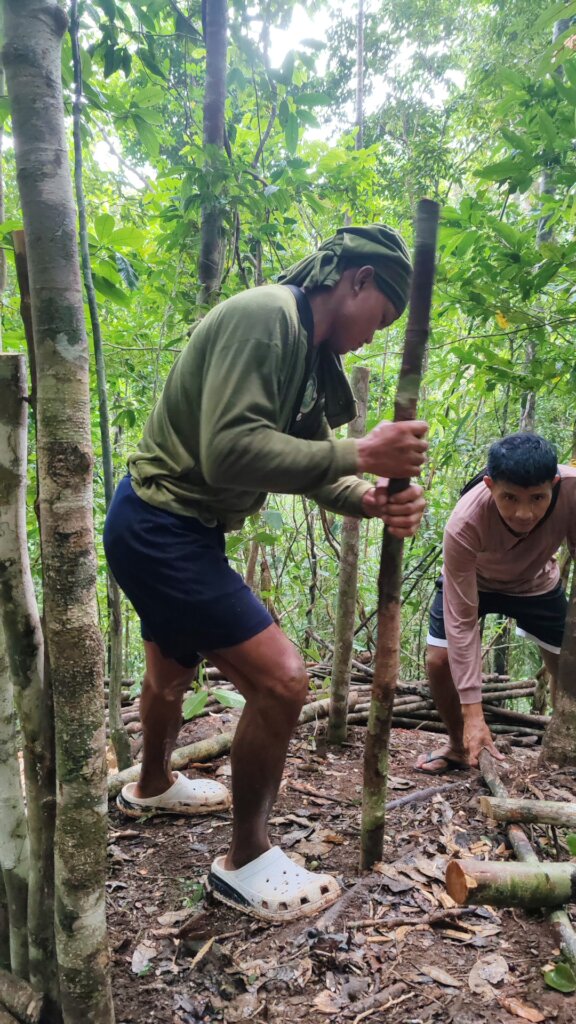
To resume binturong captures in January and begin radio tracking, three new cage traps were built, one of which was installed in December. The other two will be installed at the beginning of the year. From January onwards, all traps will be reopened. The number of cage traps has therefore doubled, which we hope will increase our chances of capturing a binturong and launching radio tracking. As a reminder, our capture season is short and runs only from January to June, during the dry season.
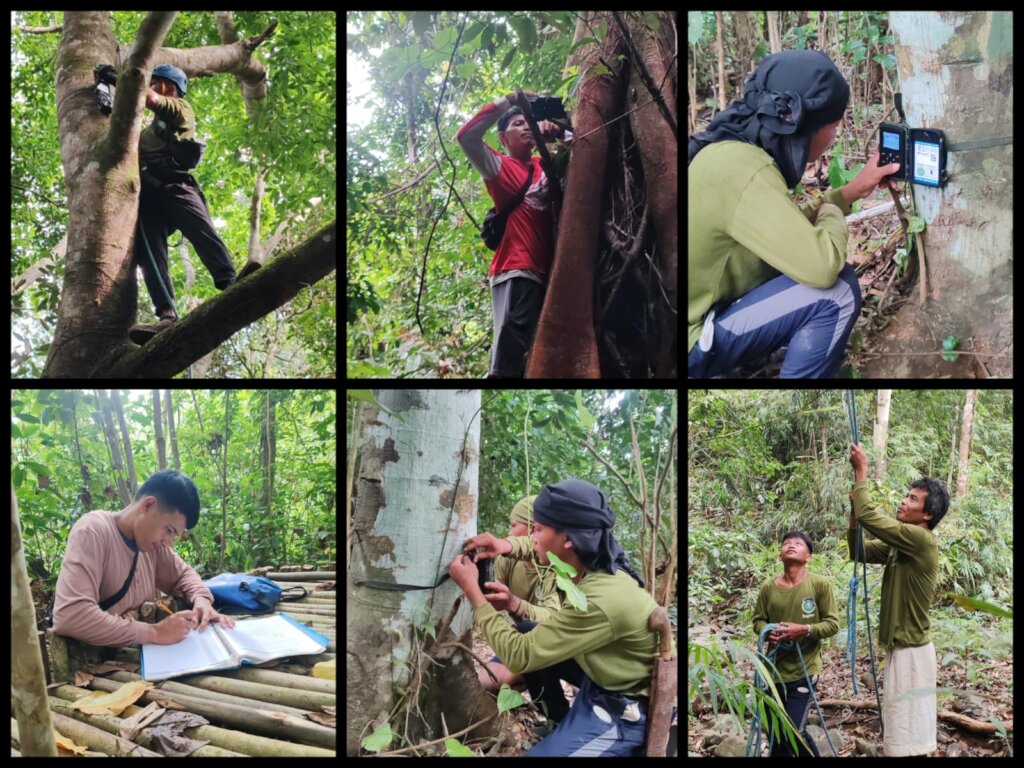
The rainy season also provided an opportunity to review and strengthen the guides’ training in data collection and refine their skills.
Finally, we took the time to rethink our scientific objectives for 2026:
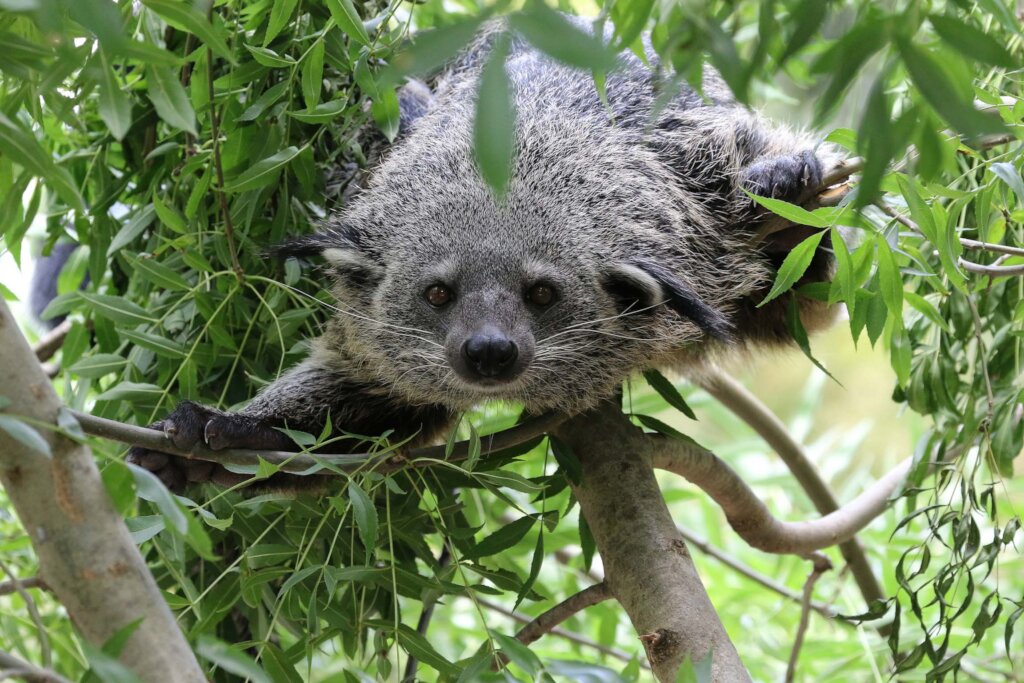
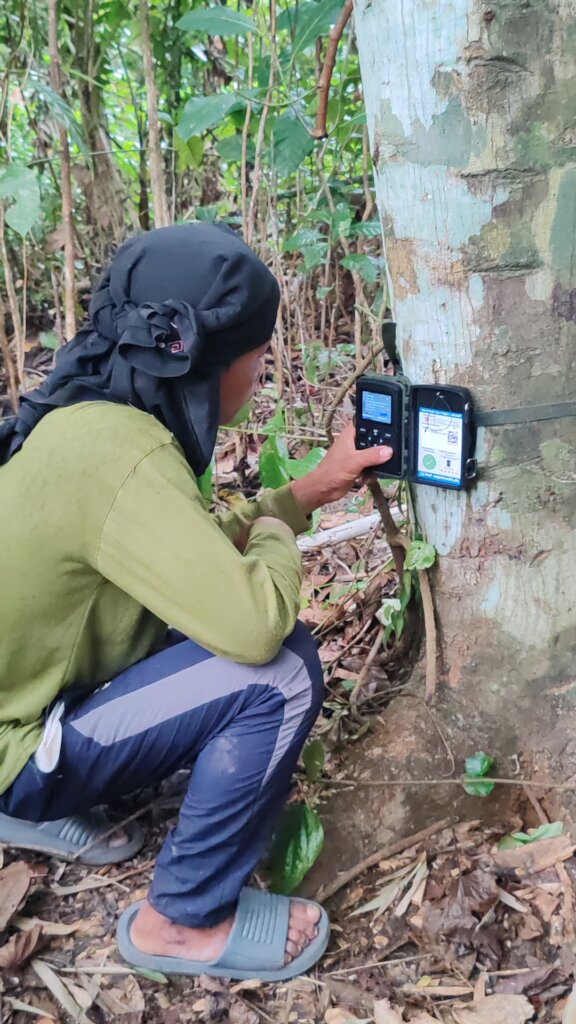
Publishing a monograph on binturongs and a bibliographic review about its geographical distribution will be a priority for this new year. Then via radio tracking we would like to determine the size of the home range of a wild binturong in Palawan, calculate the activity budget and describe their diet. Via camera traps, we intend to describe the spatio-temporal activity of the binturong in Palawan and identify its microhabitat preferences at the study sites.
II – Beginning of 2026 with the Bearcat Study Programme (January and February):
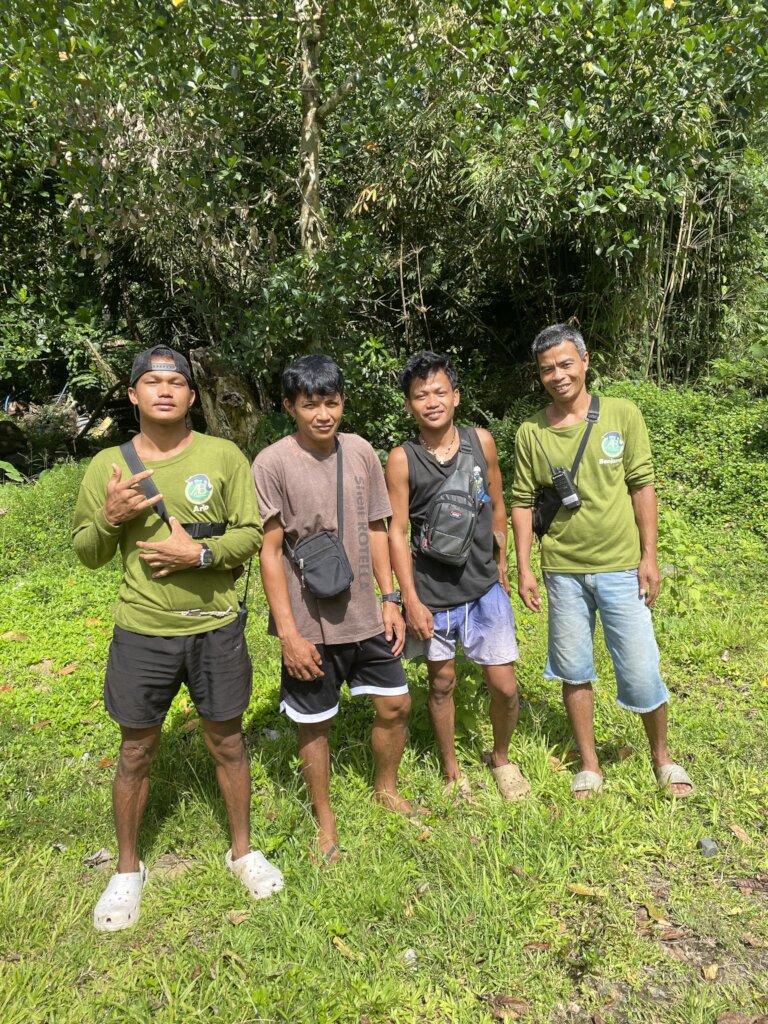
In January, Reziel (scientific assistant) and Marlon (field manager) participated in a radio tracking training course organised by the Talarak Foundation. When they were back, Marlon did a new training session for Jaylor and Arlo (field guides) on the radio positioning, adding elements he saw during the training at Talarak.
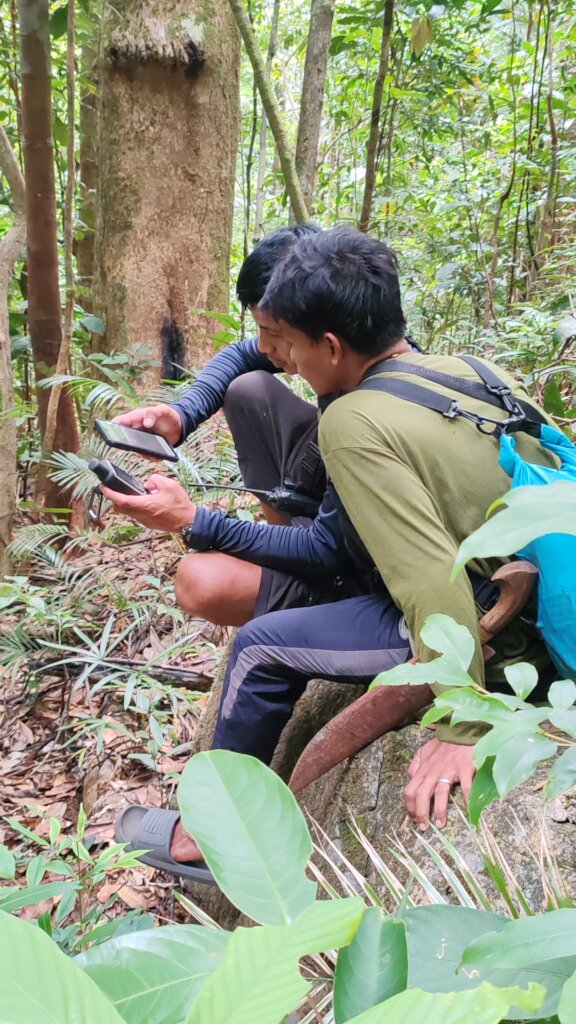
Elli (civic service) showed Reziel how to use the Zoomonitor mobile app for recording behaviors and Marlon trained the guys on how to use the new app.
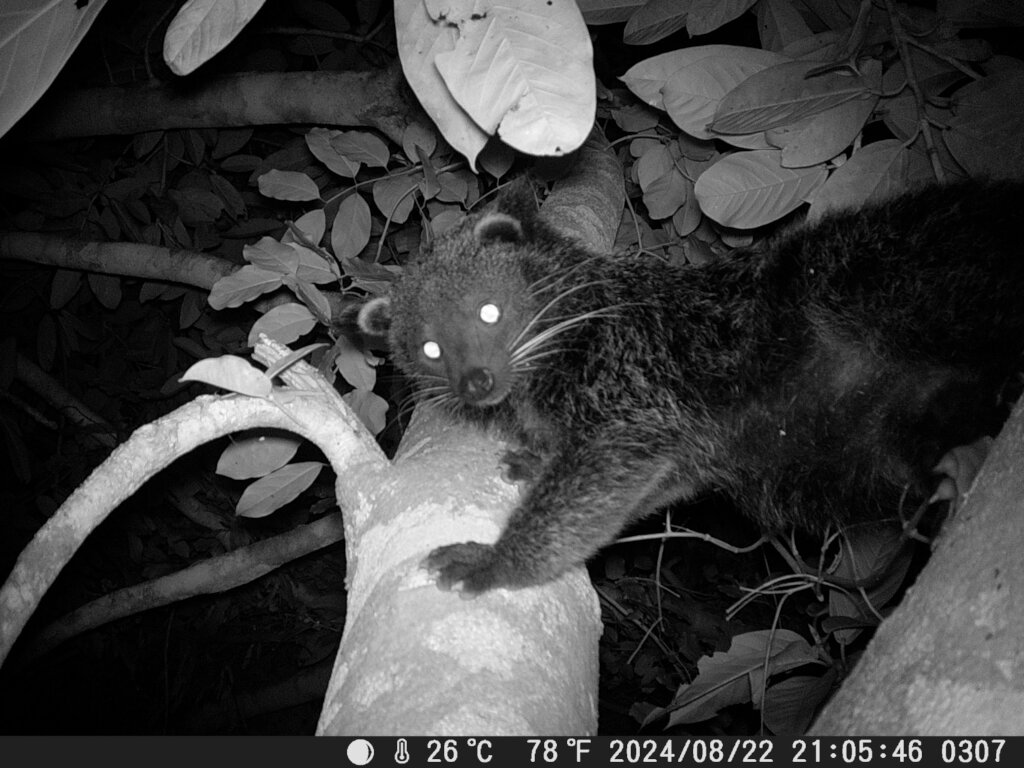
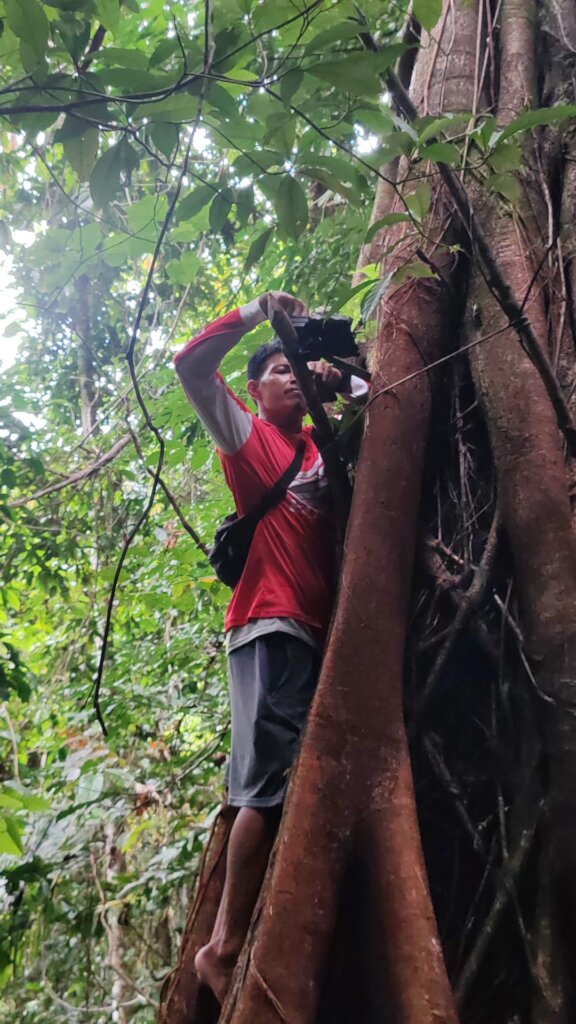
In the begining of February, two of new traps were installed in new trees near where the camera traps already caught some binturongs. We are really hopping to finally catch a binturong to start the radio-tracking programme. We are still working with the vet and with the PCSD (Palawan Council of Sustainable Developement) to organise the process of equipping the collar on the future wild captured binturong so that it is as uncomplicated and disruptive as possible for the animal.
We also welcomed on the field two teams of reporters named The Puerto Podcast and Icarus Production who filmed a documentary with the field scientific team as well as Eléa (Scientific Manager) and the citi-ENRO team. The very cinematic rendering will soon be put online and we hope that it will attract many more people to raise awareness about the protection of this wonderful species on the island.
During this month’s SD card exchanges, unfortunately no photos of binturong were observed. We continued however hoped for more data to be able to write a new scientific paper.
On a side note, we participated in a meeting between the 2 sub-groups of the indegenous community in Irawan to rediscuss and reorganise with them the agreements for situations in which our study sites overlap with the ancestral domains of these numerous communities. The discussions with the different representatives went very well, even if the procedures are quite long, complicated and costly. That being said, no worries, all the communities have submitted their agreement for the Bearcat Study Programme to be continued and they all give us their support.
Finally, with the funds we manage to buy new cameras and batteries as well as new anesthetic products. In the coming months, we will test new ways to manage our cameras with regard to rain, among other things, to hope for a longer lifespan for them. We hope for less frequent renewal and better quality data reports.
III – A little note for the end:
We would like to thank all our members and partners who have supported our missions financially.
The funds received at the end of the year allow us to approach 2026 with greater confidence.
With the GivingTuesday campaign and the donations received, the GlobalGiving platform has paid us an additional $1,059. Thank you to all our partners who took part in this campaign.
Thank you to everyone who read this update all the way to the end, and thank you to our members and partners for their continued support. We’ll see you soon for the next installment of our adventures!
ABConservation teams
Links:
Project reports on GlobalGiving are posted directly to globalgiving.org by Project Leaders as they are completed, generally every 3-4 months. To protect the integrity of these documents, GlobalGiving does not alter them; therefore you may find some language or formatting issues.
If you donate to this project or have donated to this project, you can receive an email when this project posts a report. You can also subscribe for reports without donating.