Project Report
| Apr 14, 2015
Slash and Burn Farming and Illegal Mines Top Priorities
By John Lukas | President
![Illegal Gold Mine on the Reserve]()
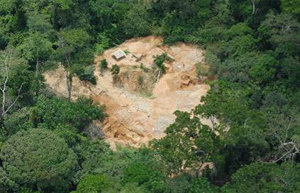
Illegal Gold Mine on the Reserve
Closing Down Illegal Mines Protects Okapi Habitat
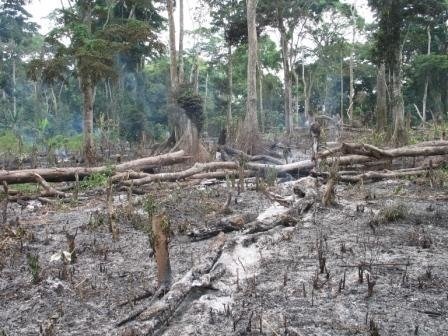
As Okapi Conservation Project agronomists and educators continue programs on ending “slash and burn farming,” ICCN guards and Congolese military actively pursue illegal mining that is devastating to the Reserve's habitat.
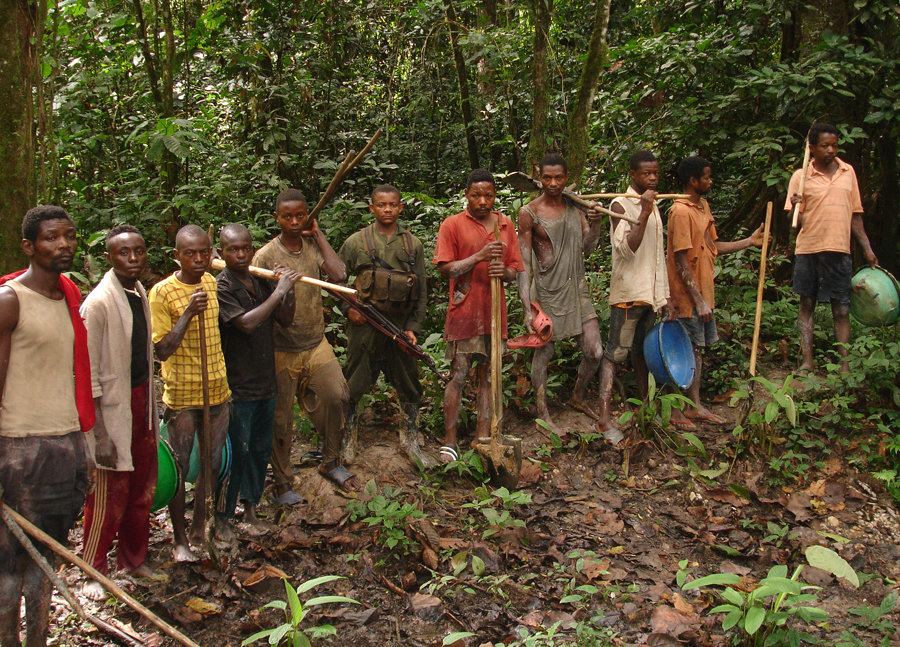
After a three month amnesty period declared in August of 2014 by Governor Saidi of Orientale Province, a special force of ICCN guards and Congolese military has been moving through the Reserve shutting down illegally operated gold mines. To date over 20 mining camps have been evacuated with an estimated 5,000 miners moving out of camps as a result of public awareness campaigns.
ICCN guards will undertake continued surveillance of the closed gold mines to prevent the re-establishment of the mining operations and allow for regeneration of the forest. Recent surveys show that wildlife quickly returns to areas around abandoned mines once the human disturbances are removed. Monthly reconnaissance trips during the next year by ICCN patrol units are planned to prevent the mines from being reoccupied.
Progress made by the ICCN and the Congolese army to clear out armed militia, poachers and now miners is truly a remarkable achievement given the lack of government resources to impose law and order in the region. The brave actions of all those involved, and the support of all partners and OCP staff to secure the okapi wildlife reserve with a minimum impact on local communities is truly commendable.
![Eviction of Miners]()
Eviction of Miners
![Share on Twitter]()
![Share on Facebook]()
Jan 6, 2015
Call to Farmers for Sustainable Agriculture
By John Lukas | President
![Farmers Meeting and Sustainable Gardening]()
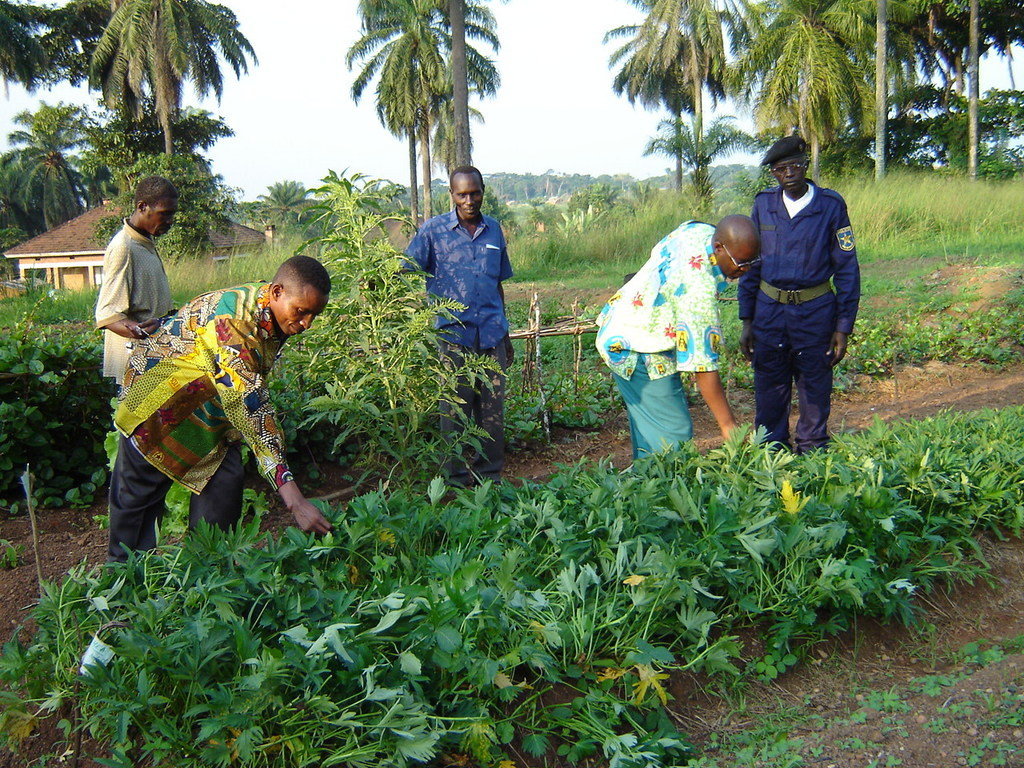
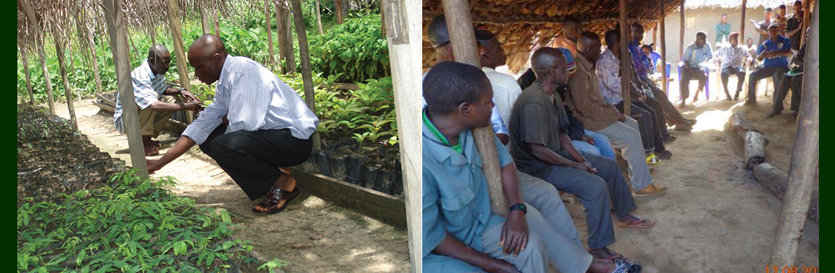
Farmers Meeting and Sustainable Gardening
Okapi Conservation Project agronomists and educators organize regular meetings with farmers in remote villages to discuss sustainable agricultural practices. It is widely known that a slash and burn approach has long lasting negative impacts on soil fertility. Crops are more likely to fail due to wind damage, and unnatural crop associations were contributing to impoverished soil fertility in a short period of time. An OCP agronomist explains the benefit of crop rotation, adding nitrogen fixing plants and timing of plantings season as ways of improving crop production and increasing the length of time the soil remains fertile reducing the need to expand their farmland into the forest.
At a recent meeting, farmers voiced concerns about crop raiding by primates. They requested frequent and regular visits by ICCN rangers to help control crop raiding by wildlife and monitor the conversion of protected forest into fields which could quickly impact the limits of the delineated agriculture zones and compromise their ability to farm legally inside the Reserve. These forums are important avenues for productive dialogue between community members and OCP as we inform residents how they can live sustainably in this biologically diverse landscape and still provide for their families.
Through the Agrioforestry program, OCP was involved in the following activities during the third quarter of the year:
- Distribution of 847 kg of rice seeds, 303 kg of peanut, 24 files, 25 machetes and 25 hoes
- Assiting in monitoring the peanut multiplication field in the Bandisende area and rice multiplication field in Epulu and Mambasa
- Collection of 773 kg of rice seeds in Bandisende and 140 kg of peanut in Epulu
- Monitoring community reforestation in two school plots in Mambasa
- Weeding the Terminalia matali trees planted at Zunguluka Patrol Post
- Distribution of seedlings: 7172 seedlings including 1562 nitrogen fixing, 865 agroforesty tree species, 350 fruit tree species and 4395 multiple use tree species.
- Monitoring the BIAKATO and MAMBASA nursery
![Share on Twitter]()
![Share on Facebook]()
Sep 30, 2014
Agroforestry Team Gets help from School Children
By John Lukas | Presdent, White Oak Conservation Center, Inc.
![Students Receive Seedlings for Agroforestry]()
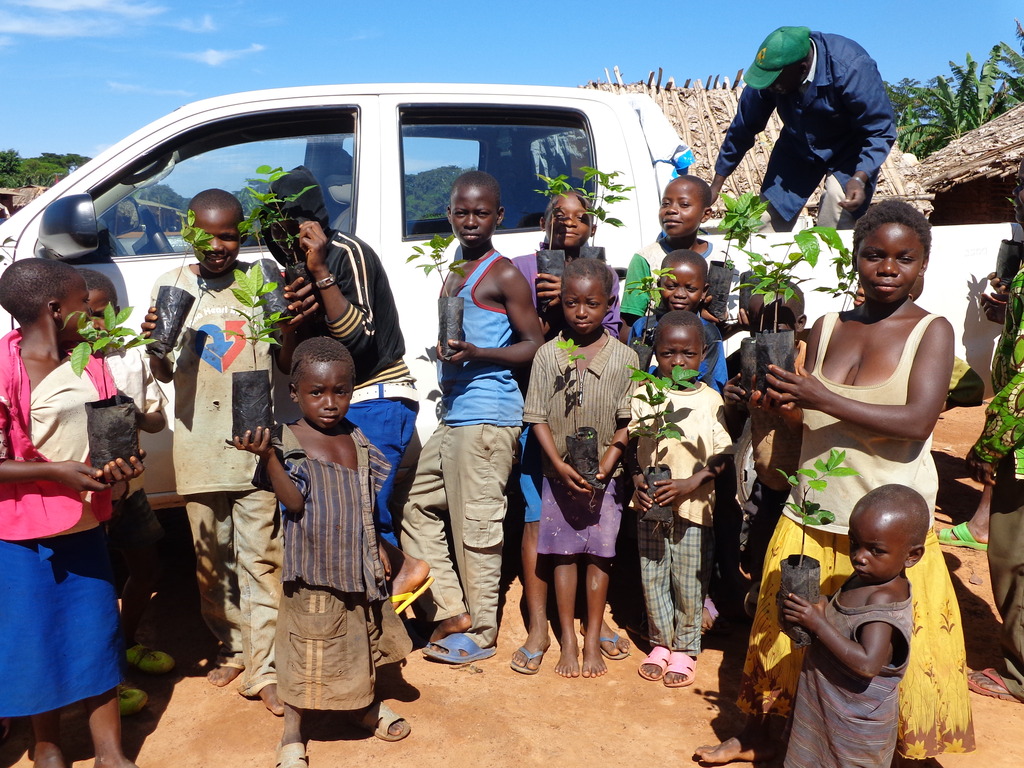
Students Receive Seedlings for Agroforestry
The Okapi Conservation Project (OCP) agroforestry team continues to expand their impact from the already implemented planting and education activities in communities in the north of the Reserve, now working with students from three schools in Mambasa planting much needed shade trees in their community. During these activities knowledge about the importance of trees, especially of those species which they were planting, was shared between the agronomists and the students. Along with needed trees for shade and wind buffering, the students planted native fruit trees.
In addition to the school programs, so far this year the agroforestry team has distributed 1,497 tree seedlings, 785 kg of rice seeds and 474 kg of peanut seeds and machetes and hoes to farmers in Bandisende, Epulu and Mambasa. From the experimental garden in Epulu 197 kg of beans and 540 kg of tomatoes were harvested and given to OWR personnel and to the citizens of Epulu to promote the nutritional benefits of planting these crops.
Links:
![Share on Twitter]()
![Share on Facebook]()