![Bombali - School assisted]()
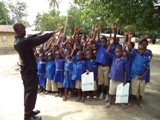
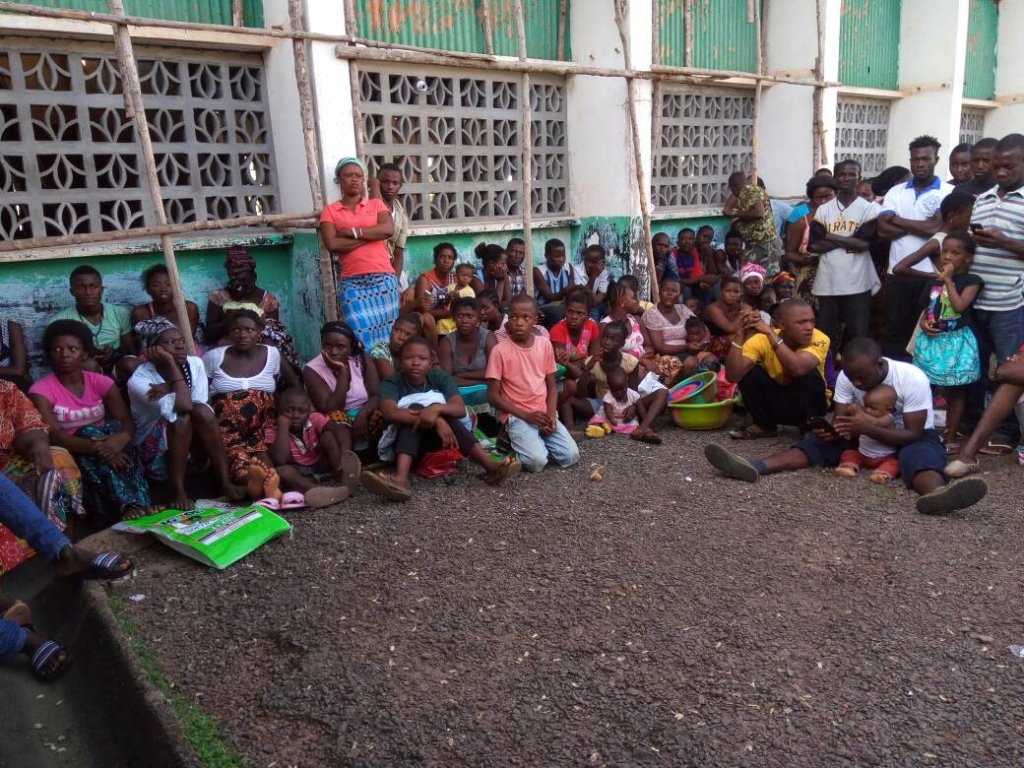
Bombali - School assisted
Project Title: Girl Power Project
Funds Raised so far: $ 13,457
Reporting Period: End-of-Year 2018 Reports – 8th December, 2017
Social Workers: Mrs. Laura Kamara, Kassim and Paul Amadu Bangura
Beneficiaries: Bombali, Koinadugu, Kambia, Port Loko, Tonkolili and Pujehun districts
Donors: Donors through GlobalGiving; Anne Frank Fonds, SILPA, ChildHelp, Grace Webb, Bradley Webb & Friends at home and abroad.
REFLECTION FROM 2016 – Mid-Term
Girls Educational Challenge was succeeded by Girl Power Project in January 2017. Its mandate is to empower girls dramatically to improve the wellbeing of their families and their communities changing lives in society. This is an answer to the call made ‘’ Don’t leave No One Behind’’.
Our Girl Power Project is a transformational and post-Ebola crisis project, as it targeted girls within the bordering of Guinea and Sierra Leone. Girls in this era has faced the most vulnerable juncture of their lives, with choices that has led many into a life of early marriage, pregnancy, dropped out of school, and left behind in their communities.
Activities undertaken were as follows:
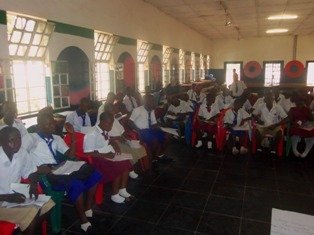
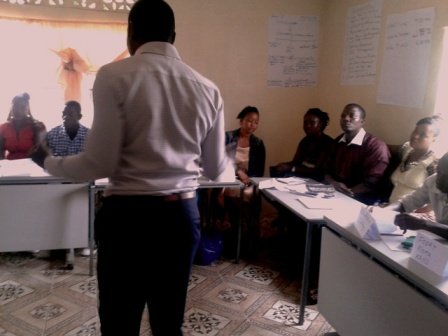
- Introduction to Girl Power - worked with communities, created positive learning environments with skills for girls
- Developing Girls Mentors as agents of change
- Camp Girl Power
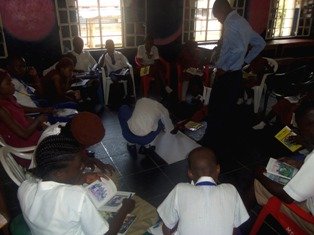
- Mentoring in Practice
ChildHelp succeeded in equipping girls with skills to avoid early marriages and teenage pregnancy, disease and girls voices and rights were respected with minimal dropouts in identified, and their economic productivity increases and reduces infant mortality chances of education were increased.
REFLECTION FROM 2016 – Final-Term
ChildHelp achievement on awareness raised to end early and forced marriages (CEFM) in schools and communities.
- Child Help Line call response reached 7699 children and youths on abuse and neglect
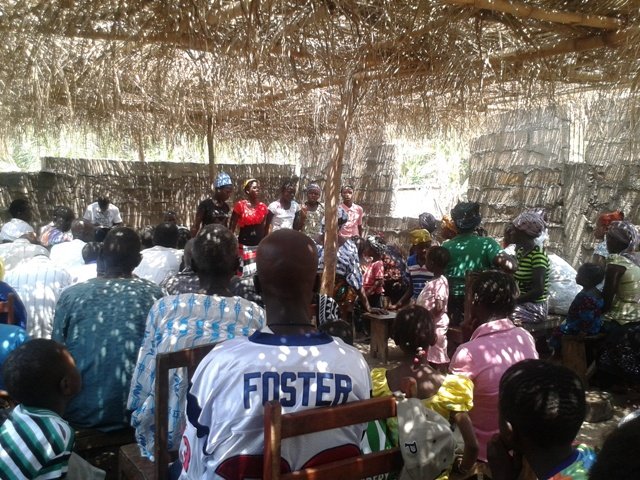
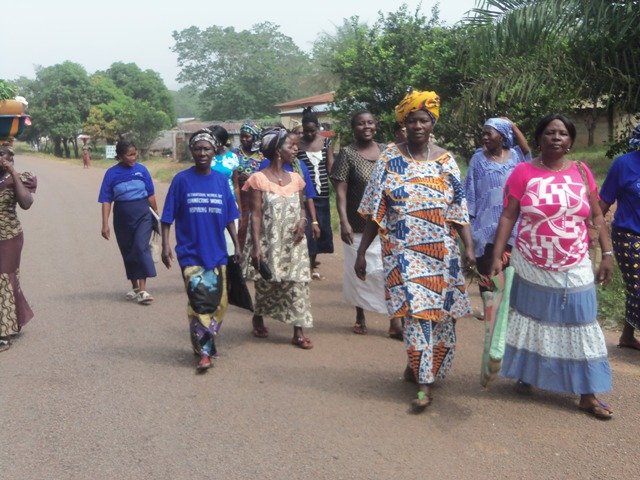
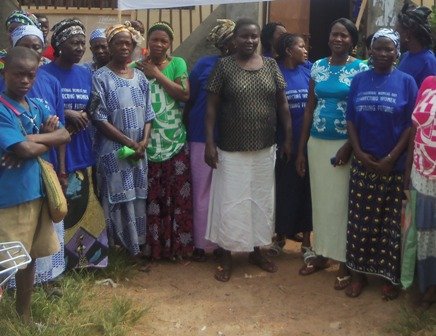
- Community dialogue meeting with parents and stakeholders on ending CEFM reached in 28 communities with 130,000 to date
- 32 girls supported in skills training for 18 months in tailoring, carpentry, agriculture, masonry and catering
- 157 teenage mothers were supported to access and retain in school
- Global Giving UK volunteers Rosie and Paulina visited and provided training to ChildHelp Sierra Leone senior staff on Fundraising, Engagement (local & international), Social media, Governance & Accountability, Development of staff & volunteers, Networking & collaboration, Inclusion & access, Communications review, Finance & Administration, Environment & Well-being, monitoring and evaluation.
2017 Reflections/Flashbacks – (January – August)
Funds provided were used to gain the following results below:
- Empowered girls dramatically continue to improve their wellbeing and their communities.
- 49% of the girl-children trained in the use of computers and the Internet. This is shown by the use of facebook, promoting of girls issue online, making groups and seeing their likings and comments on ChildHelp’s facebook, Messenger, LinkedIn, facepic, Instagram, etc and also taught the principles and laws biding users of social media network to avoid problems and troubles.
- Girl-children are empowered with voices to avoid child marriage, teenage pregnancy and to go school
- Contributed improved health and nutrition, and increases the chances of education for the next generation.
- Continuing Awareness raising involving girls and boys, against child marriage, teenage pregnancy, girl-child labour in homes and farm and FGM in schools and communities.
- Child Help Line call response reached another 12,756 children and youths on abuse and neglect.
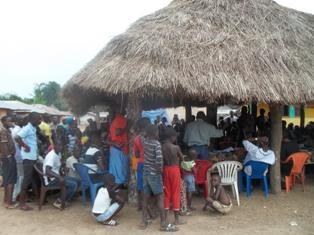
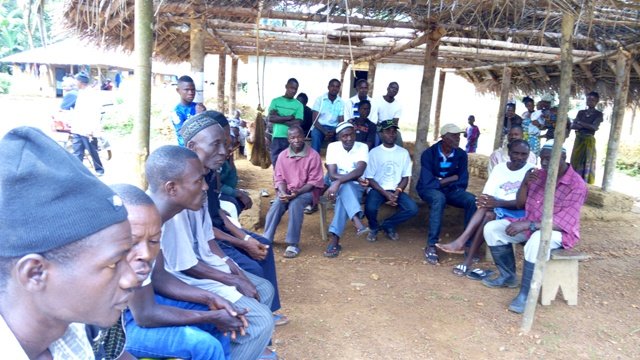
- Community dialogue meetings and focus discussion with parents and general stakeholders including the government’s social welfare ministry to end child marriage, poor parenting, discrimination, neglect, stigmatization, continues in the 28 communities.
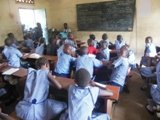
- So far, 126 more girls supported with uniforms, study fees and learning materials in Blama Perri to Mallah section of Pujehun and 217 girl-children and 211 youths in rural Makeni, Bombali district in non-formal primary education.
- Mentoring exercises in camping and community centers reaching 126 adolescent girls.
- New communities identified with the messages of SDGs on No One Should Be Left Behind.
- Due to the basic computer literacy provided in the Easter holiday for mostly girls with no access to information and communication.
- Continued the Village Saving Loan Scheme awareness is increasing in communities for girls- who cannot go to school again, but can be trained in adult education wit village saving loan assistance
- Support to children affected by the mudslides and flooding – by relocating them to the rural Northern Province.
- Medical health plan for the most neediest
And Finally September to December, 2017 - Report and Lessons learnt.
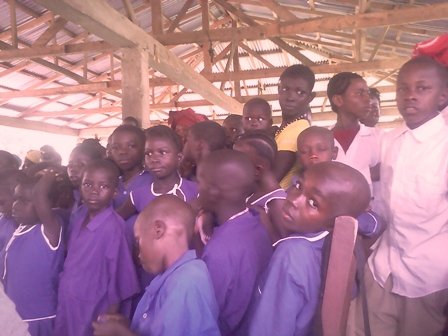
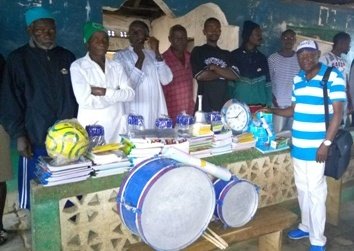
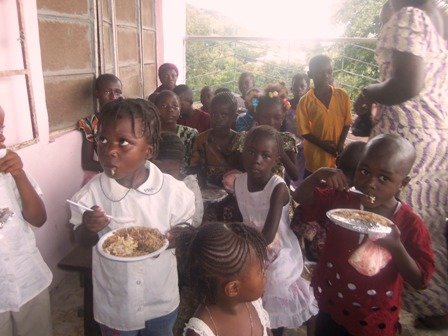
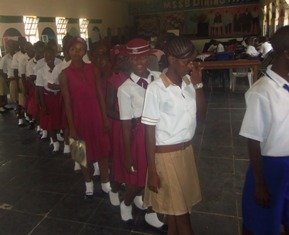
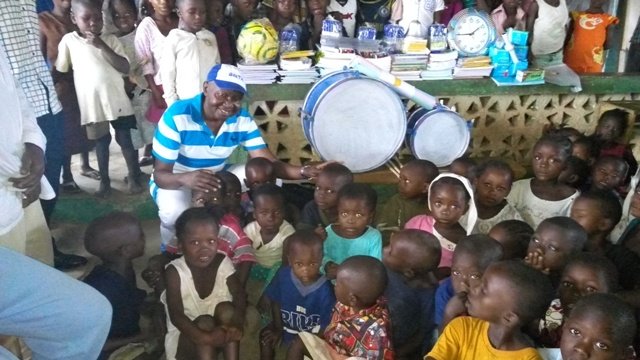
The donations from GlobalGiving Foundation, Anne Frank Fonds, Girls Not Brides, Friends and the Webb family, etc help improved life changes for Girls left behind. ChildHelp continues to identify girl-children who are experiencing complex marginalisation to access education, be economically fit for self sufficiency, engaged and ensured that their voices are heard and also improve the lives of YUA community teachers. The Global Giving Foundations has really helped by closing gaps that hinders girls’ education and socio-economic status. This fund, in addition to the above funding areas, recently supports 176 children and 13 teachers in different ways. The other supporters funds were used in addition to GlobalGiving Foundation on field events, community engagements, school visits, legal assistances, provided 43 uniforms, 45 packets of books, 2 refurbished lap-top computers for school used, 1 power mentor training for 25 girls, 13 child-mothers to access schools and support to rehabilitate school centre and mother child meetings held in different places in Pujehun district, Southern Province.
Lessons Learnt since January 2017
Since Mid 2016, Lessons learnt from the projects through meetings, consultative, workshop, community, line ministries and school visits in implementation communities where girls are at high social risks, below are clear set lessons identified and discussed:
- Child Sexual Exploitation (Teenage Pregnancy and Early Marriage): Discussions mentioned the mired poverty stricken at home which also caused child marriage and teenage pregnancy. Girls when marriage early and pregnant, fear to return to school.
Disaster and harmful traditional practices can caused girls to drop out of school.
- Economic Exploitation of Children (child labour, petty trading etc.): Children prefer working to make money and take care of their home an themselves. So working in harmful environment (mineral mining, charcoal breaking) because of the mired poverty and lack of knowledge, can cause them not to even think of accessing education. Policies should be used to stop such practices.
- Poor parenting and discrimination of children: lack of monitoring of children’s engagement in high social risk activities, in and out of school, discrimination of children, especially girls, by not sending them to school. (This was discussed as part of the reason for increased teenage pregnancy and many leading to early child marriage).
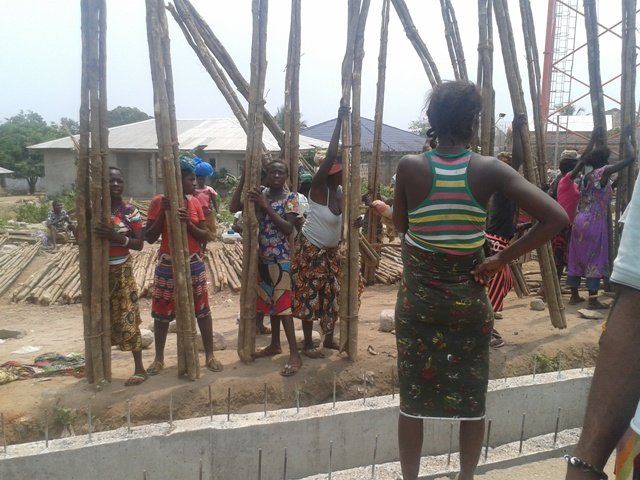
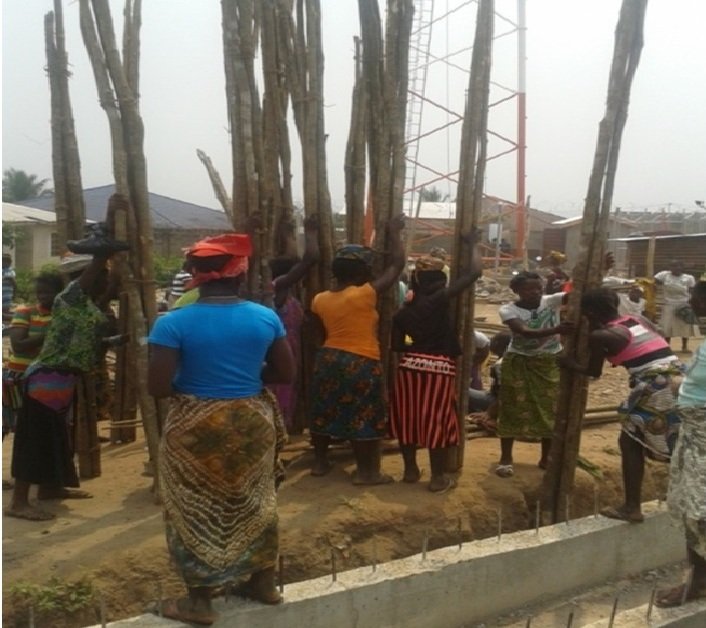
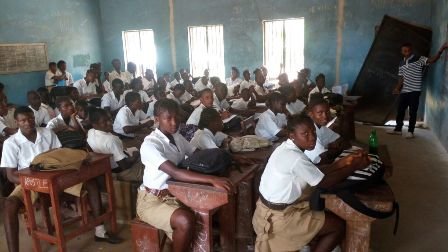
- Poor school infrastructure: Damage or lack of school building and poor seating accommodation for children, always cause Low primary school enrolment and high dropouts and illiteracy rate in communities.
- Poor access to school due to High direct and indirect costs of schooling. Low value placed on education as parents say girl-children never finish school. Parent’s low literacy level. Family or Community related factors - Cultural, traditional and religious beliefs and practices. For 80% of the poor living in rural communities, it is a choice between putting food on the table or sending their child to school at far distances as there is no school in their community. Since the nearest is too distanced, girls are not allowed to be released by parents to go too far to schools for fear of engaging in high social risk activities.
- Poor capacity of teachers: teachers are not trained and qualified and many are leaving communities because they are not on payroll and not approved as salary teachers.
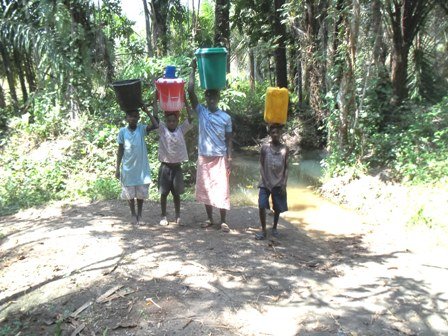
- Water and Sanitation: Lack of water to drink in schools, Lack of toilets, hand washing stations and water facilities in schools, especially private wash rooms for girls during their menstruation period, cause more absenteeism and missed out of schools. Others defecates in bushes and streams
- Poor gender and social inclusion: The project working communities do not maintain the focus on supporting girls as there are no gender specific messages for raising community awareness, no specific focus on gender responsive teaching within schools in teacher training and no gender equality promoted within school and community structures.
ChildHelp will use these data and recommendations to increase girls’ access to education and provide a springboard for increased action towards the plight of out-of-school and those that never attended school.
Constraints/Needs
Addressing the complex and overlapping issues of out-of-school girl-children requires a holistic approach that involves the various sectors and all stakeholders. Addressing the challenges of vulnerable and marginalised out-of-school girl-children and fighting against child marriages and harmful practices, requires financial and technical support. Many more girls affected and in extreme poverty are still out there, inflicted with pains both physical and emotional as they don’t have basic support including mentoring, to break free from the circle of violence and poverty, neglect and marginalisation.
More support will enable the ChildHelp Scholarship Fund to continue to support and provide basic needs for needy girls to access basic education and be agents of change to end child, early and forceful marriages, illiteracy, child poverty and traditional harmful practices; and to returns to schools, to champion their future progress and development.
We have included case studies done this 2016-17 project years for your kind understanding. On behalf of the ChildHelp Family at home and abroad, we thank all donors who contributed charitably to this cause, and we also thank our honored Global Giving Foundation, for best practices in raising funds and supporting our activities in Sierra Leone.
Prepared and submitted by: Kaprie J G Thoronka
CASE STUDIES IN TARGETED COMMUNITIES
Living with Caregivers or Relatives
Case Study 1: Mary.
“I am staying with my mother’s sister. My father is dead, my mother is alive but very old…she lives in the village. I am the person that does all the work in the house (aunt’s house) and help her in the farm. I wash plates, sweep, grind cassava leaves for cooking and also help in cooking. (During daytime) I sell cassava leaves then work at the groundnut farm after selling. My aunt has 5 children, 3 of them go to school. I dropped out in Class 1…I don’t know why I’m not in school.” (10 year-old girl from Manjawor.) Mary further stated that even if there was someone to sponsor her school fees, she believes her aunt would still not allow her to go to school.
Teacher’s sexual advances
Case Study 2: A teacher’s spurned sexual advances
“My father sent us all to school but I stopped attending school in the middle of the second term in class 4…I was 11 years old but I looked like a 15 years old…as you see my body is big…at the time, I had full grown breasts and looked like a ‘big girl’…my class teacher kept making “love advances” to me…he asked me to have sex with him…he did not say it directly but told me he loved me and that I should be his ‘girl friend.’ He was around 40 years old and had 2 wives and he said he was going to marry me. He was a very wicked man. Because I refused, he beat me every morning when I was late for school and also whenever he asked questions in class that I cannot answer – he would punish me. He would give me 24 lashes and say to me ‘fool man.’He would verbally abuse me in front of the whole class…I started missing classes whenever I am late for school and followed other girls to the river…it was not possible for me to tell anyone such a story…people think that teachers are good at discipline…the teacher told me I was not going to pass…so why should I waste my time (for school)… I feel bad because it wasn’t that I was not making an effort to learn…I was “unlucky”…this is why I am suffering today...my other siblings are in foreign lands…I am a farmer.” (25-year-old female from Koinadugu)
Case Study 3: Education and disability.
“I am the eldest of 3 sons in my family; I have to feed them by “dregging. Both my parents are blind; my younger brothers walk around with them. I was going to school…but I stopped in class 6. My mother sent me to school. Even though she was blind she was determined that I go to school. I used to take them (mother and father) to the park in the morning before going. Whatever she had, she used to pay my school charges, uniform and other materials. We were asked to pay for photographs, extra classes and other items…my mother could not get the 20,000 Leones required. Raising the money was difficult through begging alone and my mother could not pay the fees…I stopped attending (class 6) because I could not pay.” (17-year-old male from Makeni.)
Case Study 4: Alpha’s life with epilepsy.
“I sleep anywhere…I stay with my people…my mother doesn’t want me because of my condition…nobody wants me in school…I want to go to school but they won’t allow me in school (Alpha is epileptic).” (13-year-old male from Kambia.) “Alpha roams the streets of Kambia…his mother abandoned him here without saying goodbye to anybody or putting him in the care of someone…she left him over two years ago…she (the mother) spent lots of money on herbalists to cure him (the child)…we thought his condition was due to the “debul” ….a demonic spell…he attended school until class 5 but the teachers are afraid that his condition is contagious and might spread to other kids if they stepped on the saliva he released during his epileptic attack...so we stopped him from going to school…his condition is an embarrassment to us…each time he falls, we are sent to collect him from the school or in the streets…because nobody at school wants to touch him…or his saliva…we never deprive him of food when he is around…I cannot care for him...his father is a nurse in Freetown.” (Alpha’s 60-yearold blind “grandfather”.)
Case Study 5: Living with my (step)sister
“Since we moved to Makeni three years ago, my (step)sister keeps promising me that she was going to send me to school but up ‘til now she has not done that. I was attending school at Kalangba town, 15 miles to Makeni city, but since I relocated here, I have not gone to school. I really don’t feel good about it especially when my twin (who lives with another sister in a different town, Gbendembu, 7 miles from Kalangba) is going to school. I fetch water, go to the bush to collect wood, cook and care for her baby. I sell food stuff around town for my (step)sister...My twin and I have not seen each other since they separated us.” (12- year-old female from Kalangba.)
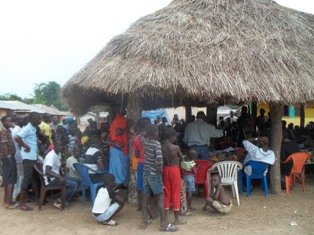
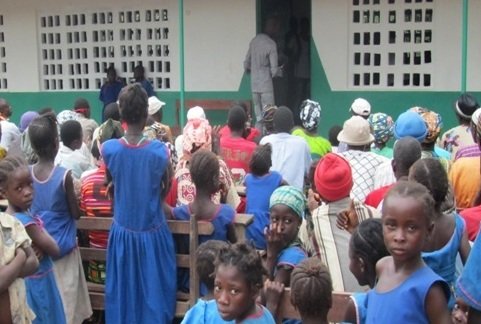
![community engagement]()
community engagement
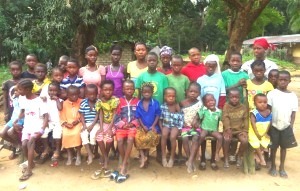
![Pujehun supports]()
Pujehun supports
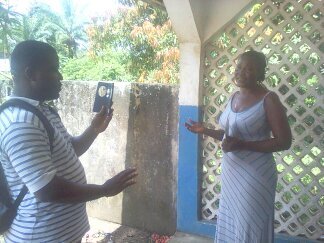
![Interviews with the head teacher]()
Interviews with the head teacher
![Share on Twitter]()
![Share on Facebook]()