By Olayinka Oyenekan | Development & Partnership Coordinator
With your generous donation and support, we have been able to support the recruitment and onboarding of our new set of fellows who will be placed in schools and communities in underserved and under-resourced areas to support both learning and non-learning outcomes for students. We have also scaled our FLN Initiative and improving the learning outcomes for students.
Progress During this Reporting Period
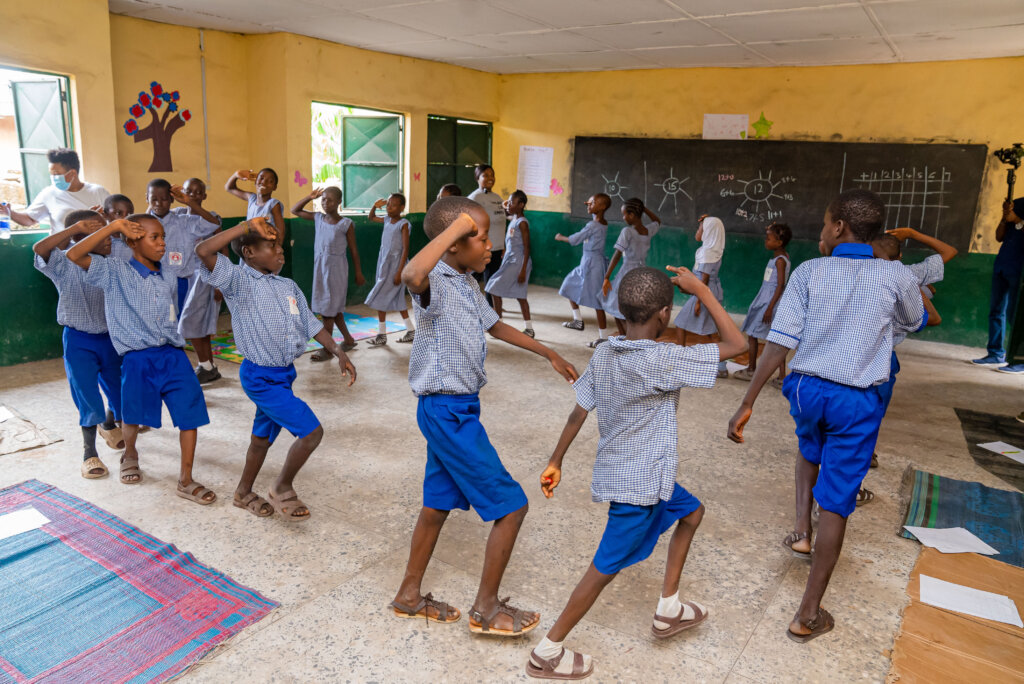
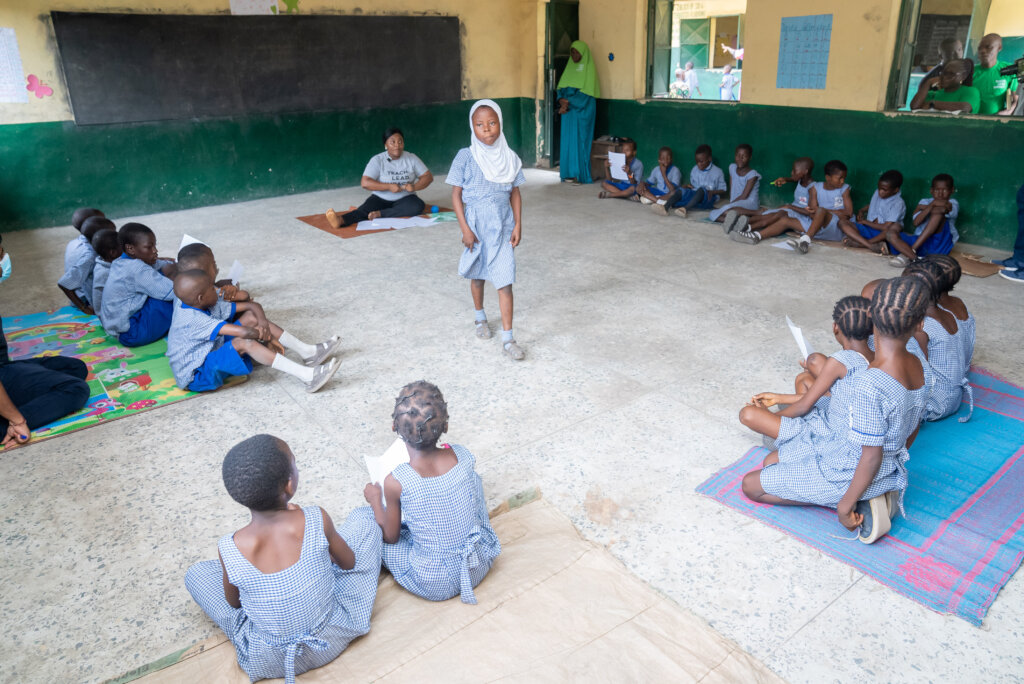
This reporting period covers the close of one academic session and the preparation for the next academic session. In this period, our work has spanned recruitment of the incoming cohort, the graduation of the outgoing cohort, delivery of the Pre-Service Training Institute, the scaling of fellows' Be the Change Projects, and endline assessment of student learning gains.
Fellowship Recruitment & Selection
The 2026 Teach For Nigeria Fellowship recruitment cycle commenced in January under the theme “One Vision. Endless Possibilities.” The campaign generated significant interest from young Nigerians passionate about educational transformation.
Following a rigorous and competitive selection process, a total of 420 Fellows and 81 School Leaders resumed at the Pre-Service Training Institute to prepare them for the realities of the classroom before proceeding to placement across Lagos and Ogun State public schools through TESCOM and SUBEB and the Ministry of Education.
Pre-Service Training Institute (PSTI)
The Pre-Service Training Institute (PSTI) is the entry point into the TFN Fellowship and the foundational learning experience for newly recruited fellows. It is a 6-week hybrid program, combining two weeks of virtual sessions with a four-week in-person residential session designed to equip prospective Fellows with the pedagogical knowledge, leadership mindset, and community engagement strategies required to succeed in under-resourced schools. It also grounds Fellows in TFN’s Theory of Change and in the structure and context of the educational sector in Nigeria.
Following the PSTI, we successfully placed 420 Fellows and 81 School Leaders in their placement schools across Lagos and Ogun States.
Alongside classroom pedagogy, the training builds the leadership capacity Fellows need to understand and address the broader drivers of educational inequity in their schools and communities. Following placement, our team will provide continuous professional support throughout the school year.
Fellowship Graduation and Alumni Transition
On 30th July 2026, TFN celebrated the graduation of the 8th cohort of 408 graduating Fellows and our 5th cohort of 91 graduating School Leaders, marking the successful completion of their Fellowship and leadership development programs. These Fellows have now joined our alumni community, which stands at 1622 leaders working to drive change across education and beyond.
Be The Change Projects
The Be The Change Project is a capstone social impact project delivered by Fellows in their second year, designed to address challenges they have identified in their placement schools and communities.
Students' Academic Outcomes (2025/2026)
Measuring student learning remains central to TFN's approach to program delivery. Student assessments are conducted at baseline and endline to establish students' starting points and measure progress over the course of program implementation.
The baseline assessment provides a benchmark for measuring learning progress, while endline assessments will provide evidence of learning gains and program outcomes. The findings will be analyzed and incorporated into TFN's program reporting, helping the organization identify what is working and where further improvements are required.
Across our academic program for the 2025/2026 school year, learner proficiency showed strong gains from baseline to endline. Numeracy proficiency rose from 52% to 70%, and literacy proficiency rose from 62% to 76%.
Foundational Literacy and Numeracy (FLN) Program Cohort 2
In literacy, the share of learners classified as readers grew from 17.3% at baseline to 48.9% at endline, while non-readers fell from 77.6% to 51%.
In numeracy, learners moved up the skill ladder: those whose ability was concentrated at basic two-digit number recognition fell from 63.59% at baseline to 32.47% at endline, while those able to perform operations rose from 24.42% to 64.15%. This shift indicates that most learners progressed beyond basic recognition into higher-order numeracy skills.
Conclusion
We are deeply grateful for the support and look forward to making more impact for students in underserved communities.
Project reports on GlobalGiving are posted directly to globalgiving.org by Project Leaders as they are completed, generally every 3-4 months. To protect the integrity of these documents, GlobalGiving does not alter them; therefore you may find some language or formatting issues.
If you donate to this project or have donated to this project, you can receive an email when this project posts a report. You can also subscribe for reports without donating.



Support this important cause by creating a personalized fundraising page.
Start a Fundraiser