By Capt. Indraani Singh | CEO & Managing Trustee
GyanTantra: Unique Digital Learning Innovation for the Grassroot
Education is a social good and implies that it has a positive impact on individuals and societies. Besides the fact that it provides ability to read & write, and a vehicle of empowerment, it is also an edifice that promotes growth and development in life eventually helping the nation grow and prosper.
When children are being robbed from enjoying their childhood and sometimes forced to play the role of an adult then there is something fundamentally wrong in the society. Children attempting to earn and avoiding academics with unfettered freedom to roam, loiter and spend paltry earnings complicates the already vulnerable situation of a child.
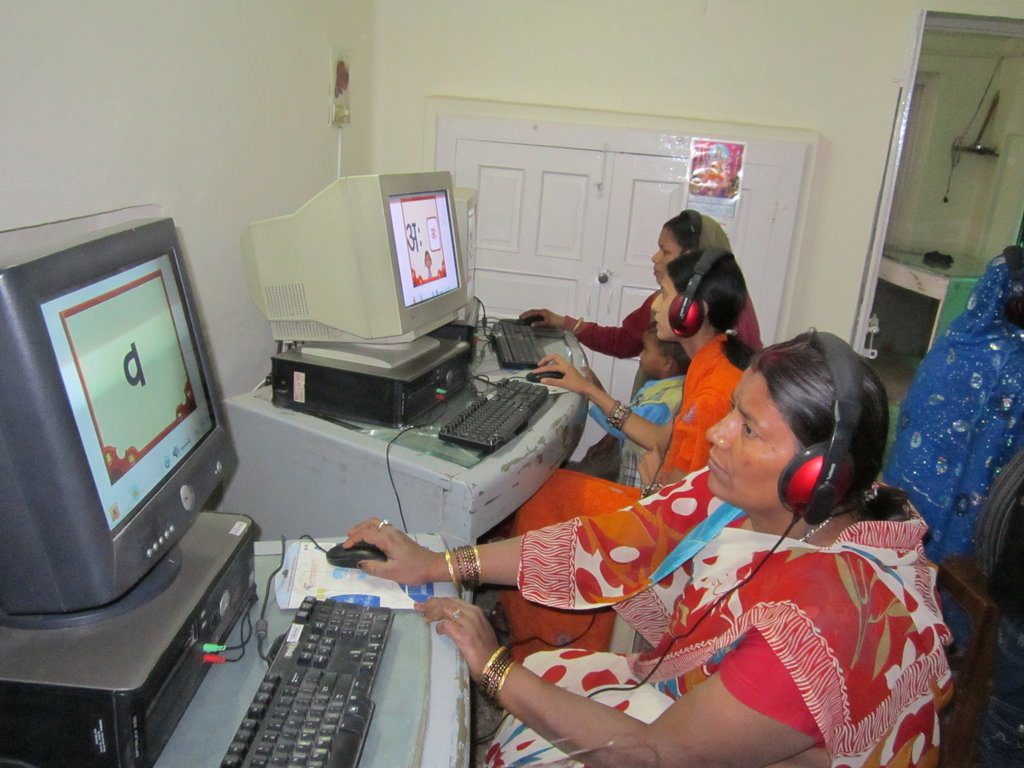
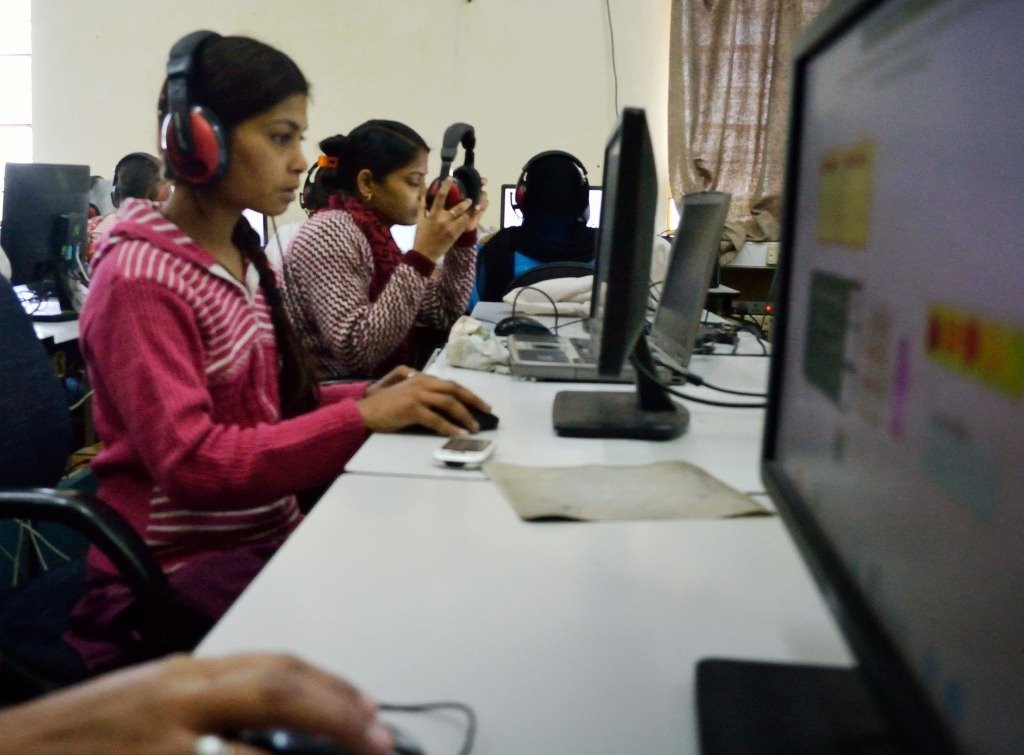
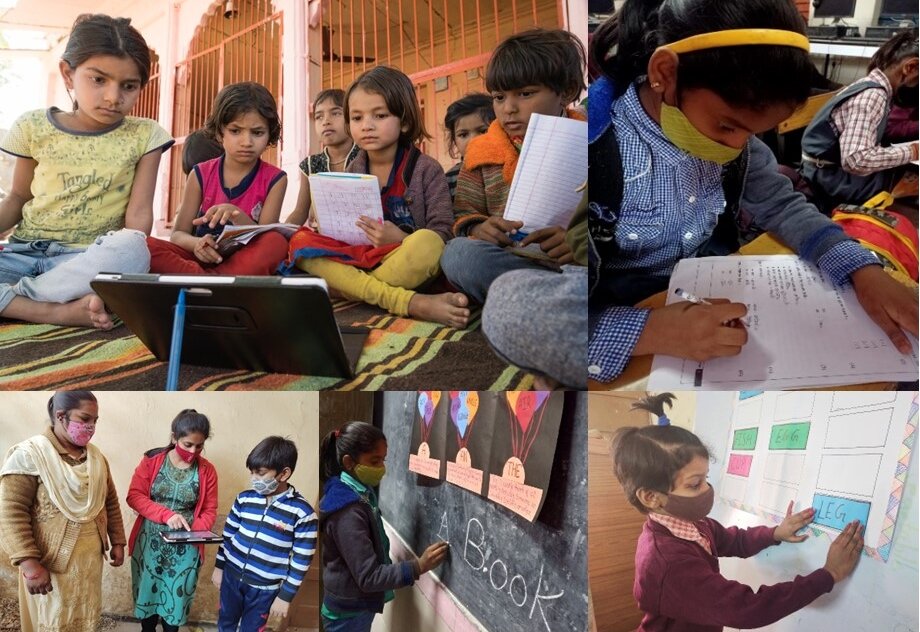
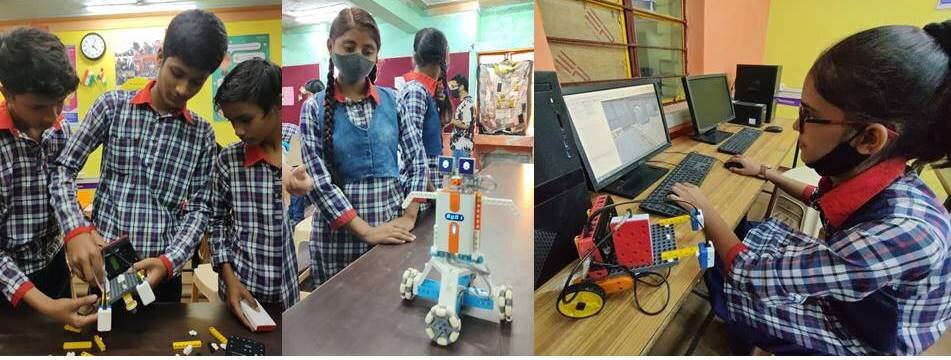
Literacy India reaches out such children, especially girls from underserved communities and provides tech-based learning opportunities. For more than 25 years, particularly on imparting primary education to children severely impacted due to various socio-economic reasons, has been the forte of Literacy India. Literacy India’s robust education delivery solution, GyanTantra -Innovation on improving the Foundation using technology (www.gyantantra.org) is an child-centric, child friendly educational software that facilitates academic learning at a student friendly pace and accelerates the learning of foundational concepts.
Project location and its background
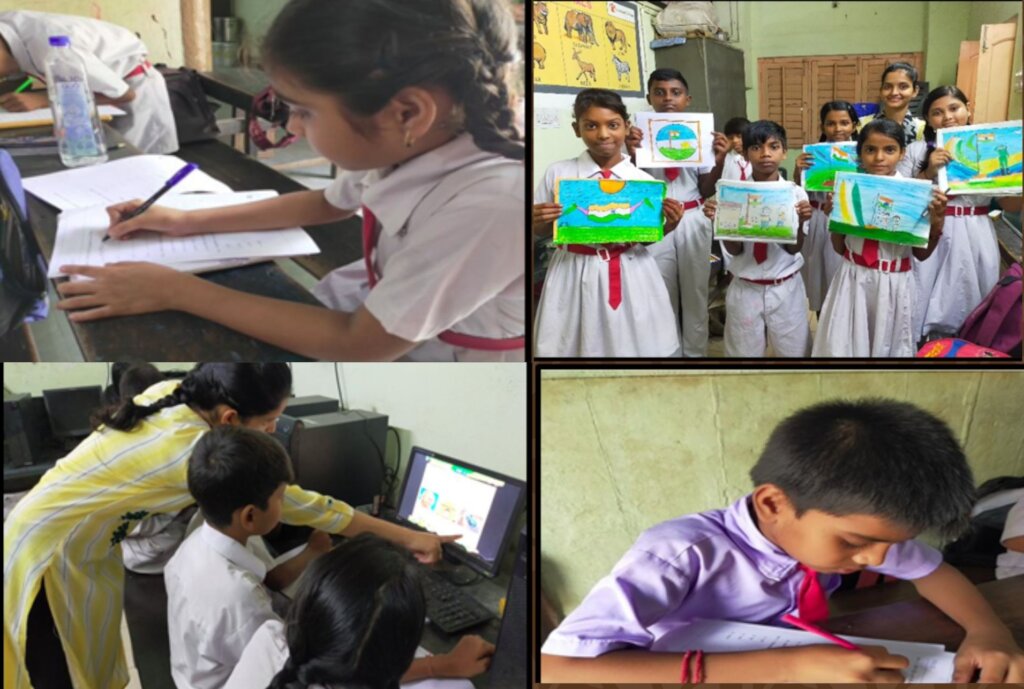
Literacy India has established a primary level digital education programme at the “Raj Bhawan Free Primary School”, that was established in 1974 in Kolkata, West Bengal. This school is situated in the residential premises of Governor’s House with an aim to serve the children of the staff of Raj Bhawan. This co-education school has two sections - 1) Hindi Medium 2) Bengali Medium with a total enrolment of nearly 150-200 children. At present, this school caters to the children of Raj Bhawan staff and also the children of adjacent areas staying on the pavement or in shanties/ nearby slums covering areas including Dalhousie - BBD Bag, High Court, Stand Road, Decres Lane, Lal Bazar and Esplanade. The students study up to standard IV and later they join the nearby High School.
Before Literacy India introduced its GyanTantra – Digital Literacy Innovation Programme at Raj Bhawan School, the school was experiencing absenteeism and drop-out issues. A section of these students were involved in petty activities at nearby tea shops, vegetable vendors and street food stalls. Some would fish out coins, thrown by devotees, from the nearby the Ganges river-bed using a magnets or nets etc. It was clear that these children were missing out on regular schooling. The LI programme staff assessed problem, realised the need and implemented strategies to remedy the state of affairs.
The GyanTantra programme was introduced and children found tech-based education as an attractive and engaging method of schooling. This digital, multimedia self-learning academic initiative not only helped arrest the dropping out rate but has also enhanced the academic quotient of children.
The Programme Team of LI has successfully initiated its activities with a three-fold objective:
Activities undertaken
Pre -assessment has been conducted for each child. This included oral and written tests. The questions range from easy to grade level competencies. Apart from basic reading and arithmetic ability, it also measure a child’s ability to understand, express, think critically and solve problems.
Based on the results of the pre-test there was a substantial gap between what students are required to know at a certain age and what they actually do. Even school going children were at least two grades below the desired level of proficiency based on their grade-textbooks. In order to bridge this gap, to address the academic needs of students and help them come up to their age and grade appropriate level of academic understanding the following activities were conducted:
Steps followed
Progress
Pre-Test The Pre- test was conducted as per the age and grade of each child.
Syllabus assigned & Regular Class room teaching
For each child, a specific syllabus has been assigned, based on his/ her pre-test. Special focus is put on subjects where the child is seen to be weak.
Practice Assignments
After completion of every topic, the teacher conducts Practice Assignments to ensure that there are no gaps. If gaps are found, the child goes through classes and practice once again.
Evaluation & Test
Periodic Tests along with Pre, Mid & Post are conducted to measure the learning outcomes of the students and plan for the next level of classes accordingly.
Progress of Students: From Pre to Mid-Test
The Pre-Assessment was conducted at the Raj Bhawan School for 31 students. Some important findings of the assessment undertaken are as follows:
After almost 3 months a Mid Test was conducted for all the students. Some important findings of Mid-test revealed that:
Achievements & Impacts:
Stories of Change
Navya ( Name Changed) now becomes exceling in academics with support of Innovative Technology Interventions
Navya (Name Changed), daughter of Mahan (Name Changed) and Anita ( Name Changed), lives with a younger sister at Babughat, Eden Garden Railway Station. They are staying at pavement in that area. Her father is a manual worker who loads the goods in a truck & her mother works as a maid in an office; their monthly income is 9000/-per month.
Navya studies in class IV at Raj Bhawan Free Primary School, Kolkata and hails from an underserved marginalised section. When she joined school she was academically weak and unable to read. Being a first in the family to attend a school, she could not bank upon her parents for any academic support. GyanTantra came to her rescue and she was able to develop interest in her studies and cleared her conceptual doubts. Soon she was able to read story books in Hindi and more than doubled her academic scores in all the subjects. She enjoys the computer enabled learning and is eager to attend school. She often shares that she aspires to be a teacher.
Links:
By Capt. Indraani Singh | CEO & Managing Trustee
By Capt. Indraani Singh | CEO & Managing Trustee
Project reports on GlobalGiving are posted directly to globalgiving.org by Project Leaders as they are completed, generally every 3-4 months. To protect the integrity of these documents, GlobalGiving does not alter them; therefore you may find some language or formatting issues.
If you donate to this project or have donated to this project, you can receive an email when this project posts a report. You can also subscribe for reports without donating.



Support this important cause by creating a personalized fundraising page.
Start a Fundraiser