By Mathusree Menon | Communication Department / RDT India
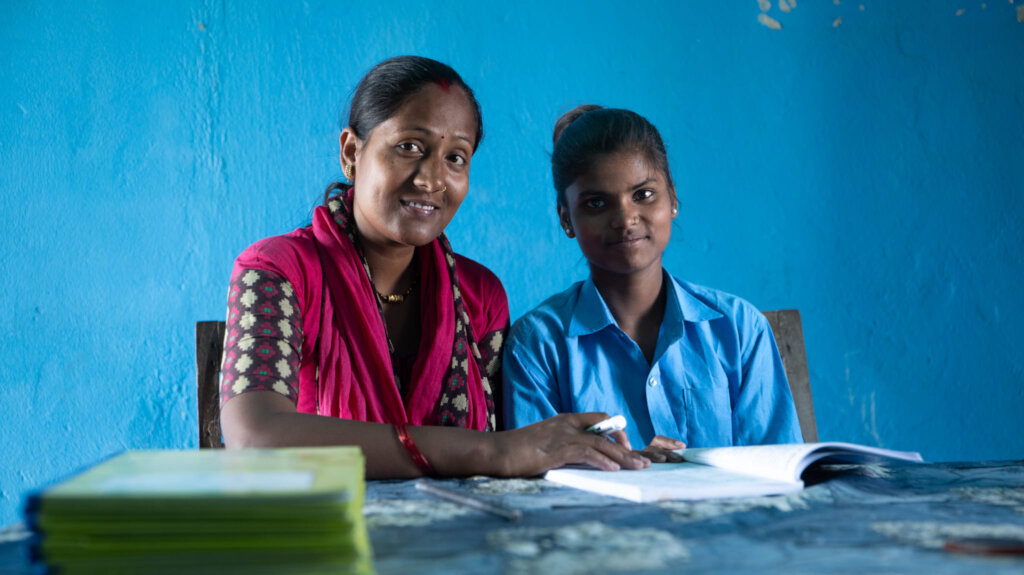
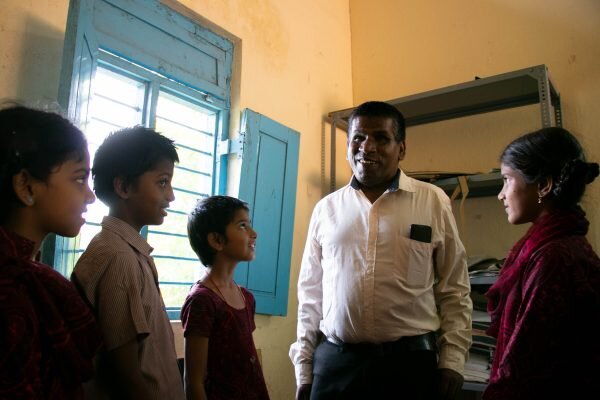
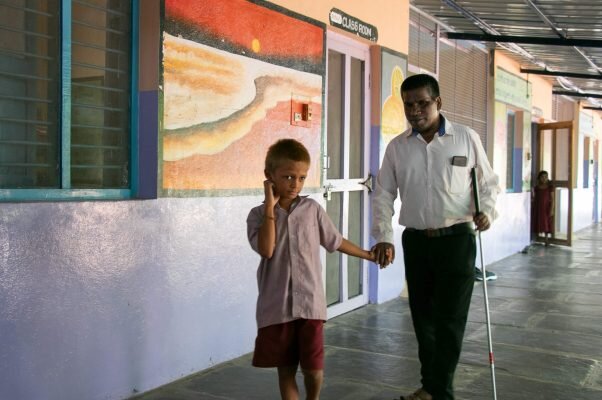
“Education allows you to live independently, most often, we overlook that being curious about something is also a big part of learning. Education is not limited to textbooks but also includes our surroundings,” speaks Battiraka Lakshman, taking his white cane from a student who helped him walk into the classroom. Every day, Lakshman walks through the corridor to his students, where the students are excited to see him. They guide him and make him sit in the chair. Lakshman is a teacher with visual impairment and has been working in RDT inclusive schools for the last 19 years.
Born visually impaired, Lakshman liked school from his childhood. After completing his schooling in the school for the visually challenged, his course of life changed when he got to know about a D. Ed course in Chittoor. As he enrolled in the programme, he got to know that he was the only person who was especially abled among his friends. Lakshman made friends and they helped him convert the text to braille to be able to learn on his own.
At the end of the course, his teacher told him something very important that struck a chord with him, “My mentor at that time told me how a profession like teaching would be an apt choice for someone curious like me. It made me realise that I should have a dream, one where I get to help people just like me, and it has led me to RDT. Here, I get to teach children and help them dream and realise their dreams!” he smiles.
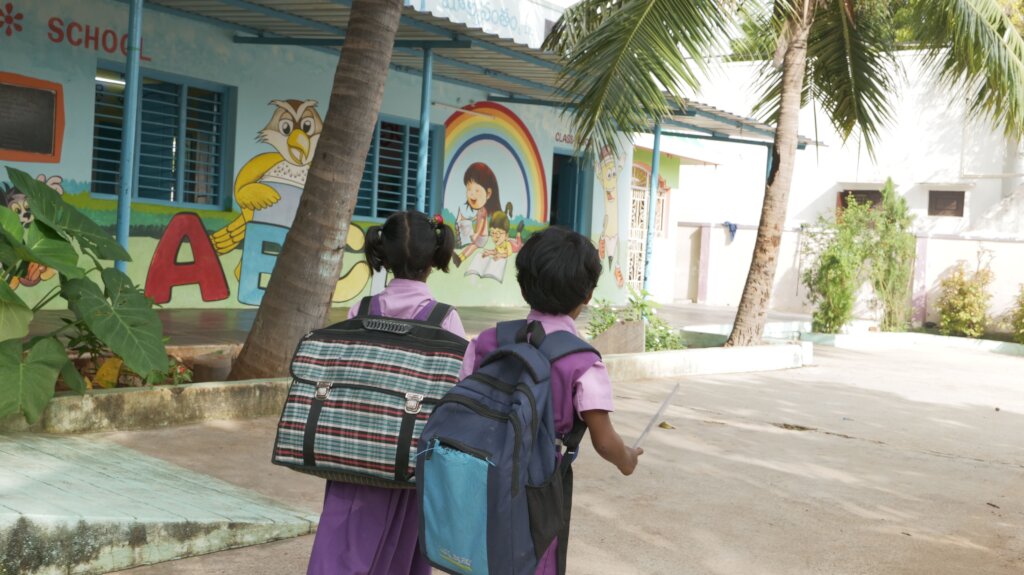
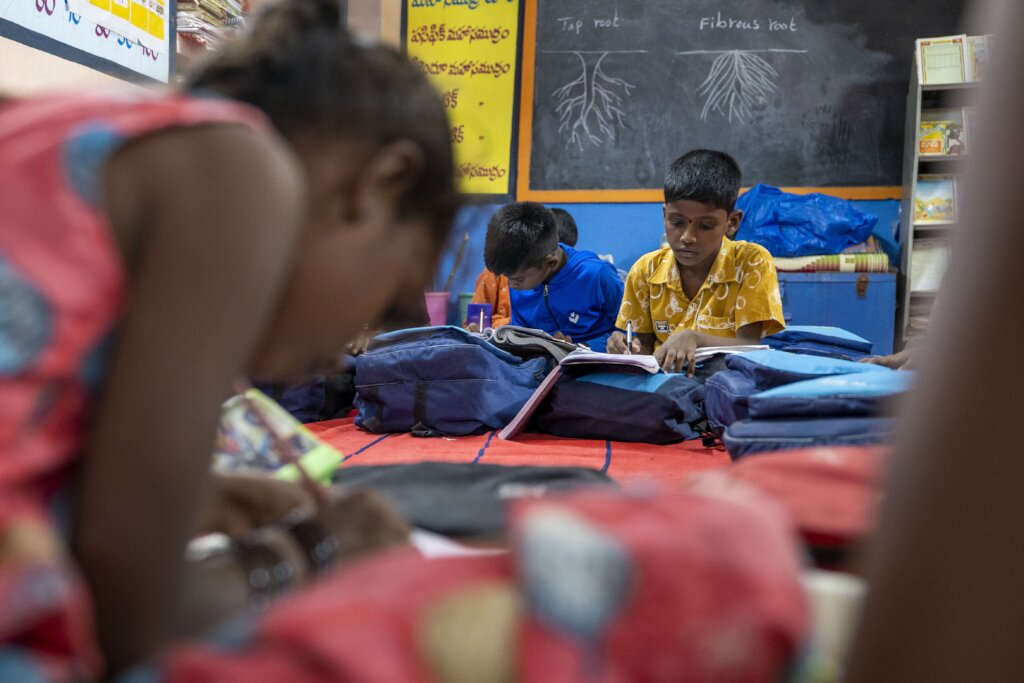
RDT/FVF initiated the Inclusive Education Programme in 2007 to enable children with disabilities to access education and the opportunities that arise from it. Of the 891 children currently studying in RDT’s Disability Inclusive Residential primary schools, 67 are visually impaired children. All students are provided with Braille books and devices, in addition to healthcare services, nutritious food, uniforms and books. 7 RDT inclusive schools enable children to enhance their life skills by intervening through proper braille education, which helps their holistic development.
“Education is a powerful tool that can guide people through their life, and being educated when you are visually impaired is a totally different thing. Braille is a difficult language to learn and master. For children with visual impairments, it is the basic thing you have to start with,” says Lakshman.
According to Lakshman, educating visually impaired children is difficult and is different from teaching children with normal vision. In RDT schools, children from the ages 3-5 years join and learn with small tests like identifying and counting objects through tactile sense. After mastering this, children are taught English and Telugu braille codes with a six-hole braille device called Golichekka.
“I know how difficult it is to live without sight. I feel very fortunate to be able to educate children with visual impairment. It is true that a teacher is a constant student. I desire to learn new things and impart them to the children, to answer the questions asked by the children. I think learning never ends at all. It is through all these ups and downs you learn about how to face challenges and how to deal with them without faltering. I hope my students have the courage to move forward in life,” Lakshman adds while moving forward to teach the next class.
It is fitting to say that our teaching workforce in India and their ability to reach the deepest pockets of the country makes them the people who are silently involved in the task of making the next generation leaders.
Enable inclusive education for children in rural India
You can help these kids reach their full potential!
Links:
By Dyuti Khulbe | Communications Officer Rural Development Trust
By Aida Maria Novaes | Aina Valldaura
Project reports on GlobalGiving are posted directly to globalgiving.org by Project Leaders as they are completed, generally every 3-4 months. To protect the integrity of these documents, GlobalGiving does not alter them; therefore you may find some language or formatting issues.
If you donate to this project or have donated to this project, you can receive an email when this project posts a report. You can also subscribe for reports without donating.



Support this important cause by creating a personalized fundraising page.
Start a Fundraiser