By Michael Winkler | Project Leader
1. BEYOND GOOD 2017
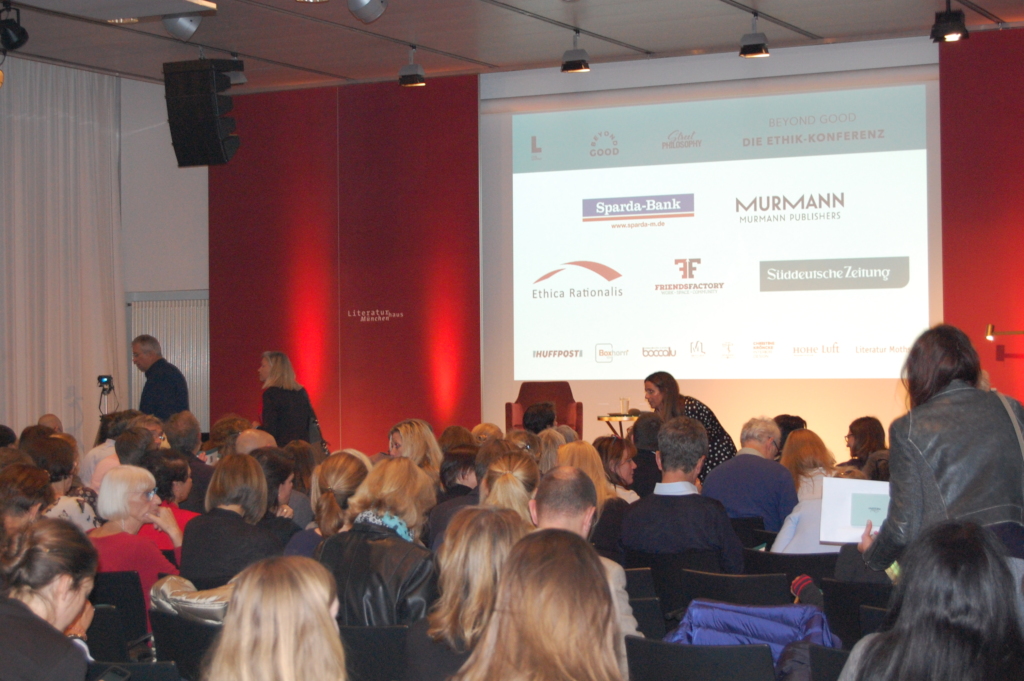
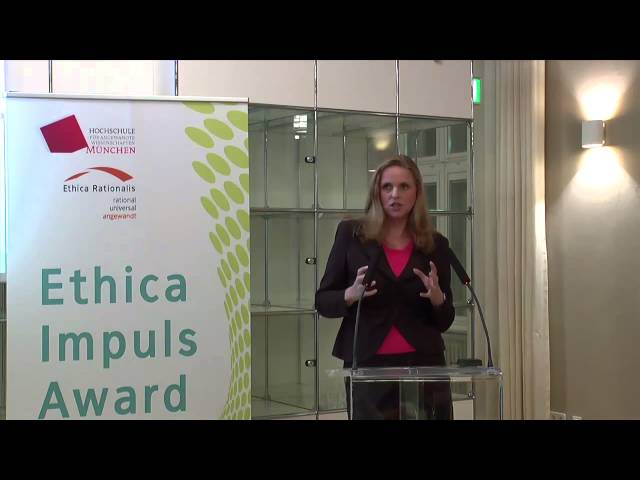
The ethics conference (November 9th, 2:00 - 6:30 pm at the Literaturhaus in Munich)
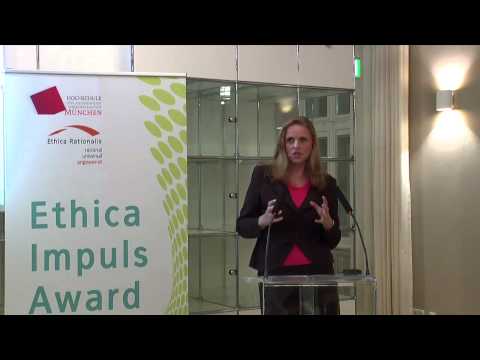
Ethica Rationalis supported this annual conference which is a cooperation between Salon Luitpold and Street Philosophy under the patronage of His Royal Highness Prince Ludwig of Bavaria.
Top-notch speakers were:Juliane Leopold Truth and lies in the media, Prof. Dr. Patrizia Nanz Democracy in crisis, Dr. Nadja Tschirner Nudging for more equal opportunities, Axel Hacke About decency Prof. Dr. Armin Nassehi The Ethification of Conflicts, Prof. Dr. Birger P. Priddat On a moral teaching of the digital world, Prof. Dr. Julian Nida-Rümelin Is it legitimate to draw boundaries? Prof. Dr. Richard David Precht Modern animal ethics.
The role of Ethica Rationalis at this event was a two-fold: 1. Financial support as a sponsor, 2. Design and execution of a master class workshop on Dialogue Ethics (see below)
2. Masterclass "Bridge between Me and You: The Ethics of Dialogue" on November 11, 2017 November 21, 2017
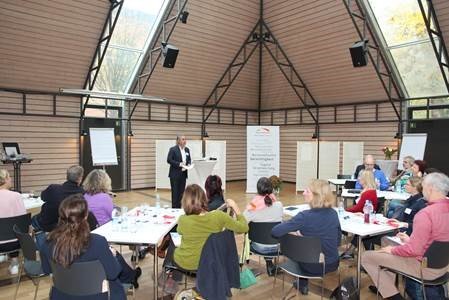
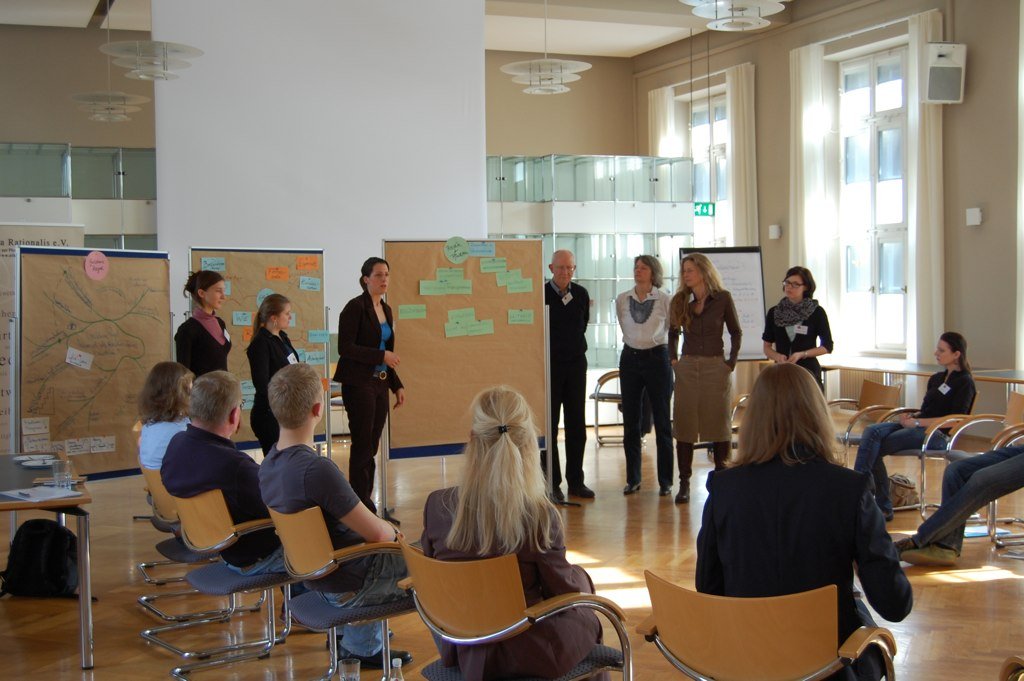
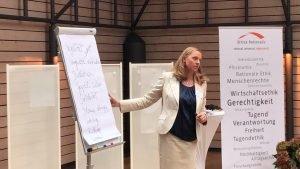
As part of the Beyond Good Ethics Conference, a hands-on workshop for interested participants took place. The topic in focus concerns us all: the ethics of dialogue. One participant commented: "whoever thought that visiting the masterclass would serve to 'polish his halo', was disappointed". Instead, Ethica Rationalis' motto (rational - universal - applied) was also the goal for this event: applying ethical principles in everyday situations.
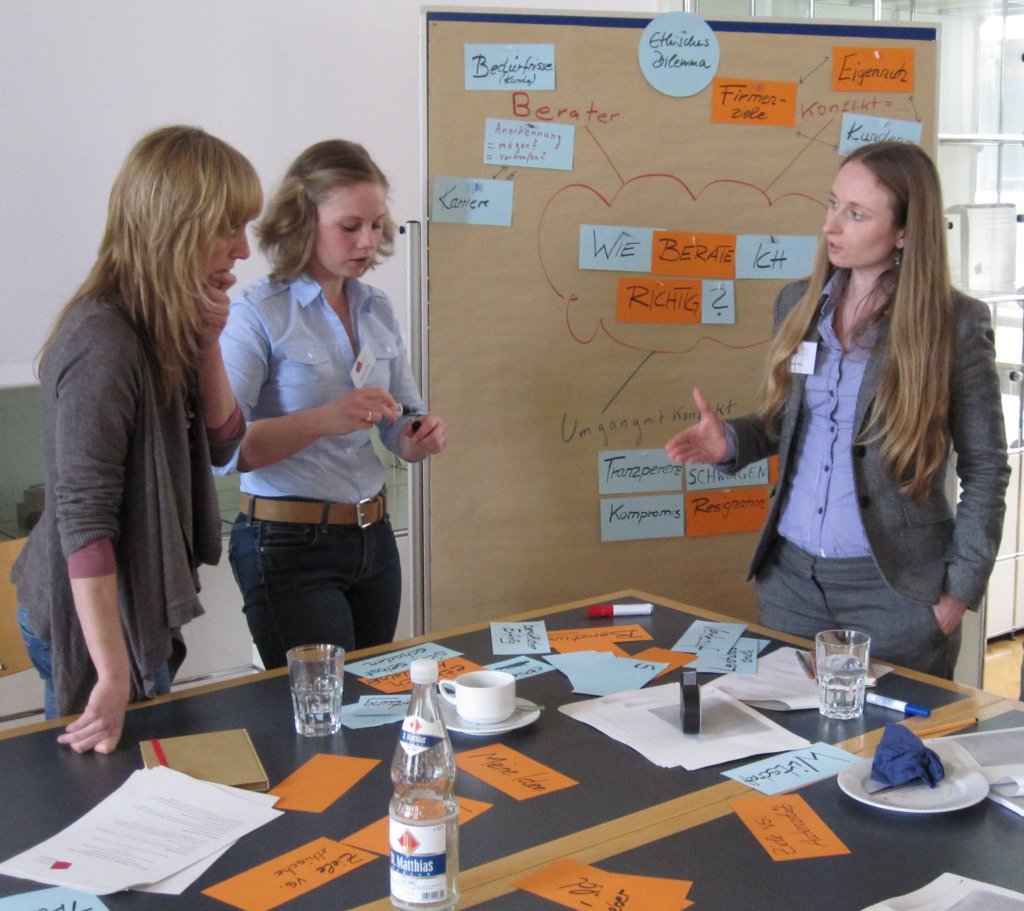
Jointly assessing the options We kicked off the session with a very engaging real life case study. We have all experienced being unjustly criticized by a boss in front of a large group peers.
Moderated by the co-speaker Dr. Angela Poech a lively discussion developed about possible responses: from "react immediately" through "take a deep breath first" to "I resign, because I do not want to work in a company with this corporate culture. The co-speaker Dr. Andreas Belwe added various philosophical approaches, including a lighthearted one from Epiktet : “If someone speaks badly of you, do not defend yourself against the accusations, but reply; "you obviously don't know about my other vices, otherwise you would have mentioned these as well".
What can we learn from this?
1. There is no right or wrong.
2. Everyone is working under different professional circumstances and thus has another picture in mind when he reads this dilemma situation ("everyone has their own reality."). So naturally the proposed solution will differ as well.
3. Philosophy can serve as a guide, but not everything is viable!
Ethics can never be an ego project Because the situation could have happened to everyone it was easy to imagine the ethical conflict. As trivial as it may sound: it is very important to thoroughly reflect on situations like this to gain deeper insights. Ethical behavior does not fall from trees - it is a process of cognition (in vitro) based on observation and reflection that ultimately ends in implementation (in vivo). A lot of this happens unconsciously, so it is so important to gain clarity and awareness about one's own actions. The basic requisite for this is an open exchange with our fellow human beings. Dr. Poech sums up, "Only when we interact with others can we learn about ourselves."
Dialogue is not merely conversation technique This was also illustrated by a role play on "difficult feedback". Two participants held a dialogue, which was later discussed: What was the effect of the conversation on the audience? How did the actors feel? It became clear how strong the impact of the spoken word is can be and how differently one and the same term can be interpreted: everybody has different pain points due to their personal experiences. However, one thing was clear: those who want to play fair, should resist the temptation of using manipulative conversation techniques. The role of recognition in the ethics of dialogue In the workshop, the participants worked in groups to develop the characteristics of dialog ethics.
Some key terms were appreciation, respect, level playing field, active listening, absence of fear, dignity, reflection. Furthermore one's own values that underlie communication with others were analyzed. In order to confrontyour own behavior you have to face tests over and over again and approach others with empathy. Because the reaction of others(keyword "critical listening") provides valuable information about one's own behavior. This is not always easy, because it confronts us with our own character deficits. As an example, a self-centered person will tend to occupy more "space" in discussions than others, prefers to speak of him or herself and is typically insensitive to the hardships of others. If such a person wants to change this trait, he must confront it with the opposite, selflessness. The participants came up with concrete examples: genuinely ask your colleague how he is doing! Apologize to your colleague for having wronged him! Thank your colleague for putting your coffee cup in the dishwasher yesterday! Anyone who has ever tried this knows how difficult it is.
In this respect, practicing makes us modest - by experiencing our own limitations.
Following the opening words of Prince Ludwig of Bavaria to the Beyond Good conference on November 9, 2017, Dr. Poech summed it up: Ethics is not something distant or unattainable. Start in small steps! Because: "A good intention will always bear fruit." Let me conclude: attending the Master Class does not make you a better person. But if you follow the basic idea - putting theory into practice - then your "halo will also shine a bit more".
3. Fireside chat: Practical ethics and a path to reintegration
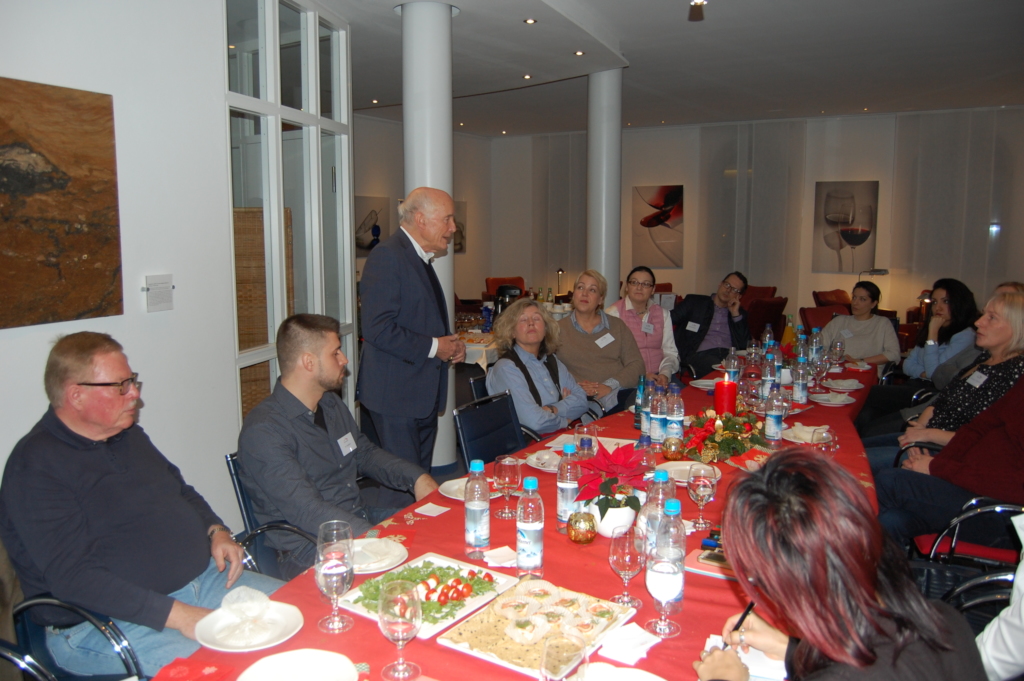
There are many people in life you can admire. A professional athlete, a successful singer, a nobel prize winner, a resocialised ex-convict. The last one wasn't on your list? After having visited our fireside chat on Dec 14th 2017, possibly yes. A former inmate from a bavarian correctional facility shared his moving experiences with us. He told us not only about his life in "jail", but also about how he escaped the negative downward spiral.
A fresh start for delinquents
The person responsible for the tipping point in his life is a man who puts all of his pioneering spirit, his courage, his intelligence and his persistent motivation into a program that is called LEONHARD: Dr. Bernward Jopen. He is an expert in founding businesses and looks back on a successful life with various professional chapters, one of them being a lecturer at the Technical University (TU) Munich.
After having worked closely with founders for many years, he asked himself: "Why not work with those who are significantly worse off?" Together with his daughter, Dr. Jopen founded the LEONHARD program which helps inmates to get back into a job. Because trying to continue life where one left off before prison doesn't make sense, according to Jopen. "Hardly anybody leaves prison as a better person..." This is backed by statistics: In Germany, nearly every second delinquent will recommit a crime (German Source). Having no connections to the outside world makes the program LEONHARD (for founders) so valuable; not only for the individual but also for society as a whole. The barriers shouldn't be underestimated: lacking acceptance both from the correctional facilities as well as from the inmates themselves is widespread because, in prison one learns to become "sceptical". Our second guest, who participated in the program, also asked himself: Why would anyone offer criminals such an attractive program? What's the price you have to pay? This goes to show much trust has been lost.
A new culture of collaboration: Appreciation and encouragement
LEONHARD employees and trainers approach participants with sincerity and warmth, creating an entirely different culture, an entirely different manner of dealing with one another. Professional and interdisciplinary lessons help strengthen different aspects of the participants' personality. After completion, they continue to be supervised. Not only economic basics are taught, but also discussions are held regarding "ethics and values". Participants proactively prepare themselves for life after prison and search for new employment opportunities, always in teams, so as to foster solidarity and mutual understanding. The facts speak for themselves: TU Munich monitors the program scientifically and the recidivism rate is only 13% (as of Nov 9th 2017). Today, the former convict who joined us at the fireside chat has a secure job, an immense thirst of knowledge and has grown as a person. An admirable change. Hearing him speak about the program is the best advertisement: "It has fundamentally changed me; I could smile all day long". His role models now are people like Dr. Bernward Jopen. Visionaries, who make a valuable social contribution with good intentions and lots of positive energy.
Links:
By Michael Winkler | Project Leader
By Michael Winkler | Project Leader
Project reports on GlobalGiving are posted directly to globalgiving.org by Project Leaders as they are completed, generally every 3-4 months. To protect the integrity of these documents, GlobalGiving does not alter them; therefore you may find some language or formatting issues.
If you donate to this project or have donated to this project, you can receive an email when this project posts a report. You can also subscribe for reports without donating.