![A Life With Limitations - Authentic Insights]()
A Life With Limitations - Authentic Insights
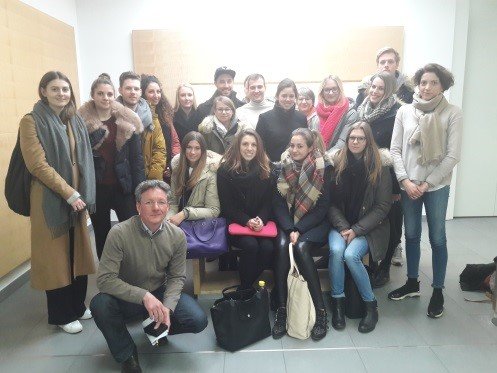
Major event in Q1, 2018 was the "Study Week on Inclusion"
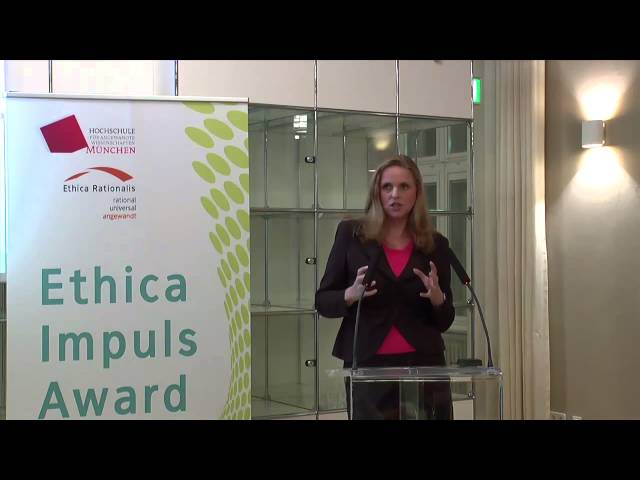
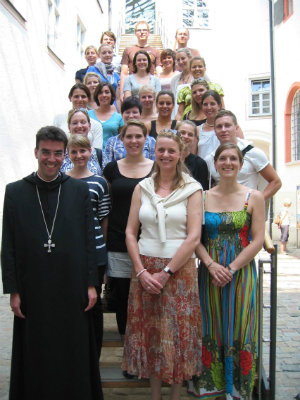
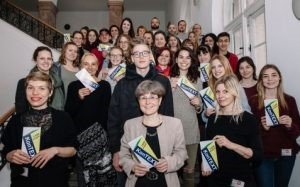
With its slogan "rational – universal – applied" Ethica Rationalis promotes the exchange and discussions about ethical issues in everyday life. One focus is on the topic of "Practical ethics and the path to inclusion". Dr. Angela Poech, professor at the Munich University of Applied Sciences, hosted an exciting event in cooperation with Ethica Rationalis, in which students were asked to develop "business ideas for people with handicaps" during a one-week seminar. Ethica Rationalis not only engaged a top-notch speaker for this event, but also organized two excursions, characterized by the combination of economic and responsible action.
Responsibility and entrepreneurial success – a contradiction?
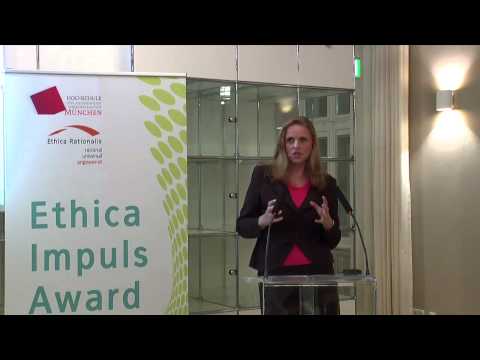
The week started off with a highlight in itself: an opening lecture by Thomas Heymel (a graduate in geography and has worked for several years in a leading position in an international industrial group). Since 2009, he is head of Corporate Development of the Munich Foundation Pfennigparade, one of the largest organizations for the promotion of people with physical disabilities. Ethica Rationalis has been cooperating with Thomas Heymel for several years now, and we were very happy to secure his participation.
The students learned first hand from a well-known, experienced manager of a social company the specific characteristics of a marketing approach for non-profit organizations.
Thomas gave valuable impetus to the participants, who then, during the course of the week further developed these ideas within their teams.
Excursion 1 (Feb. 8th):
The students visited JR Holding in Ingolstadt, a staffing agency, founded in 2009 by Jürgen Ragaller, board member of JR Holding. The successful founder and his team took an entire day for the students and offered exciting insights into his experience as an entrepreneur. The audience was fascinated by the strong growth and professionalism of his young company – a company with flat hierarchies and "no titles on the business cards".
The participants were thrilled by the strong corporate culture and they learned that the orientation towards values such as respect and appreciation and the maximization of profits need not be a contradiction. Rather, the young listeners were shown that taking responsibility is the key to success of Jürgen Ragaller's company, because the real "product is the person" and "every employee is an entrepreneur". According to Ragaller, the target is to provide personnel on-demand, but linked with social responsibility for the people who he employs. Each employee is accompanied by a JR holding employee on his first working day at the customer's company. There is a strong commitment to the promotion, training and further education of all employees and so far he has already been able to place more than 24,000 people.
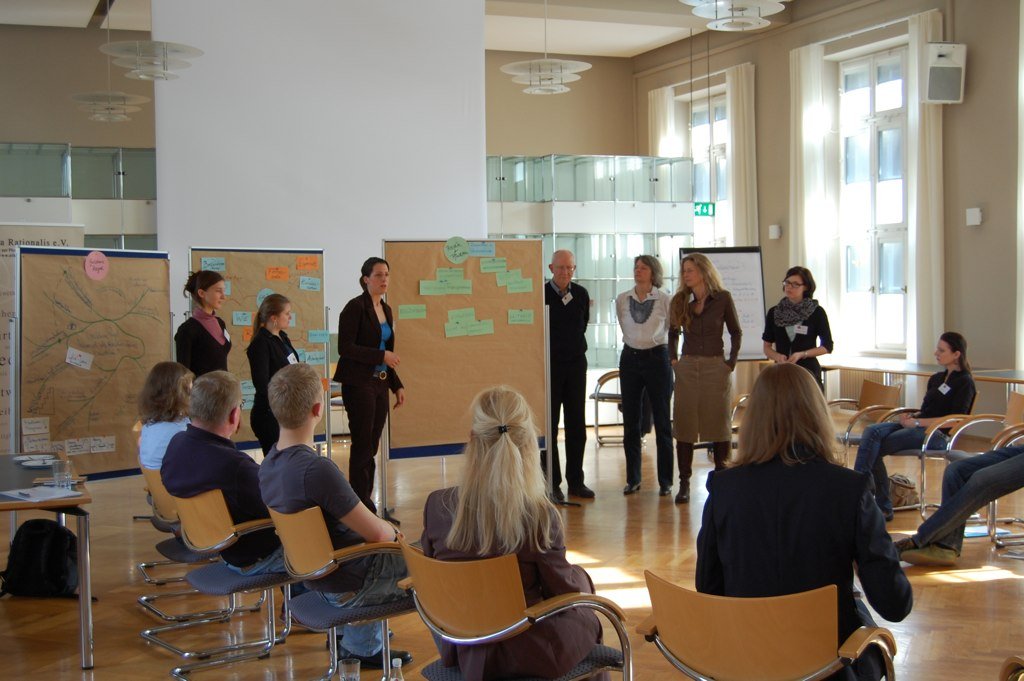
After the exciting insights into the company, there was an exercise on the culture of the company: during the lunch break, the students discussed the "artifacts" of JR holding and then presented them. The majority of students were fascinated that the focus was truly on the human being at JR Holding. One student commented, "You have shown us appreciation by the way we were hosted." Subsequently, the students presented their founding ideas in a pitch. For example, the „Teamclusion“ group presented "The Luck Finder, a Facebook for people with special needs". Another group developed a frame which would allow people to use the escalators with their wheelchairs. The students were enthralled by the excursion. This was not only due to the excellent hospitality, the friendliness of the staff and the giveaways, but above all because of the openness and honesty of Mr Ragaller and his colleagues.
Excursion 2 (Feb. 9th):
A Life With Limitations – Authentic Insights
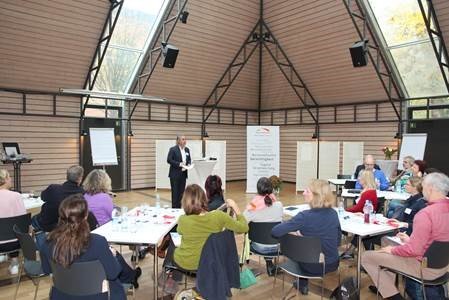
The following day the students went to the Pfennigparade Foundation, as invited by Thomas Heymel. At the beginning, students had the opportunity to take part in a guided tour of the institution. One employee presented the "accessible website" project, where the Pfennigparade Foundation advises companies on the accessibility of their websites. Participants also got insights into the workplaces of people with physical disabilities.
They were very impressed by Mr. E., who controls the computer only with his voice and his mouth. He demonstrated how he asesses the accessibility of a website. The students were fascinated, as he confidently navigated through the homepage of the Munich University of Applied Sciences, using only his voice and a stick, which he controls with his mouth.
Wrap up of the "Study Week on Inclusion"
Thomas Heymel took plenty of time for the students and gave valuable feedback on the presentations of their founding ideas. The students‘ impressions were then discussed and everyone agreed that inclusion was very important and that more needs to be done in this area. They were also very grateful to have come into contact with Mr Heymel and thus to the topic of inclusion.
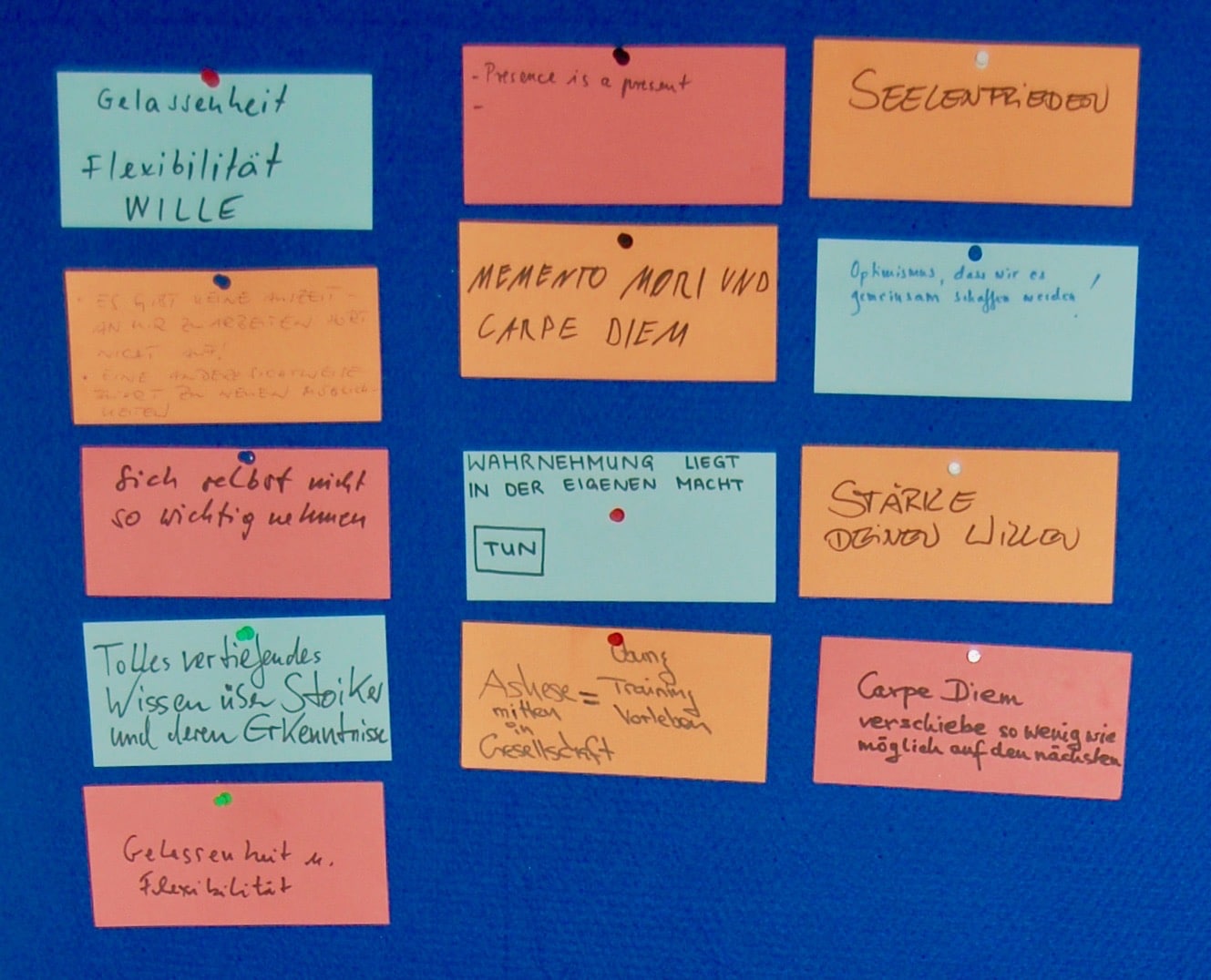
Ethical questions discussed „Entirely in Confidence“ (Feb. 22nd)
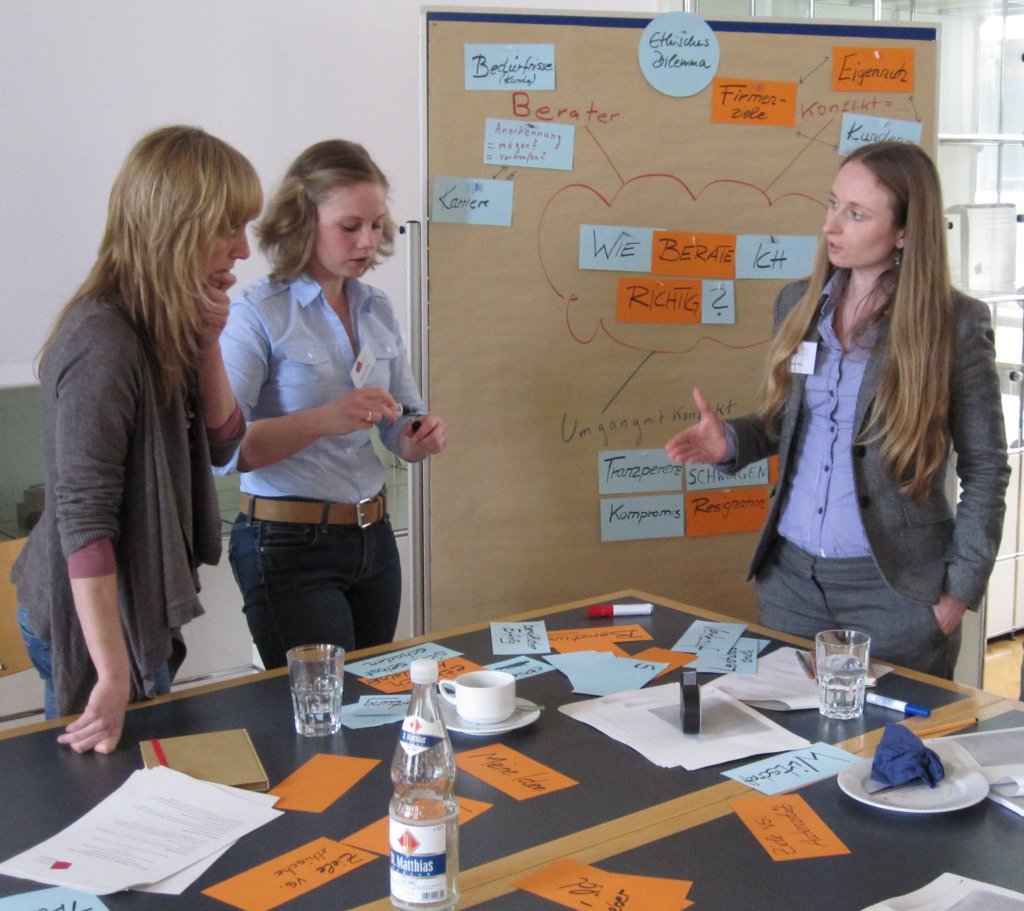
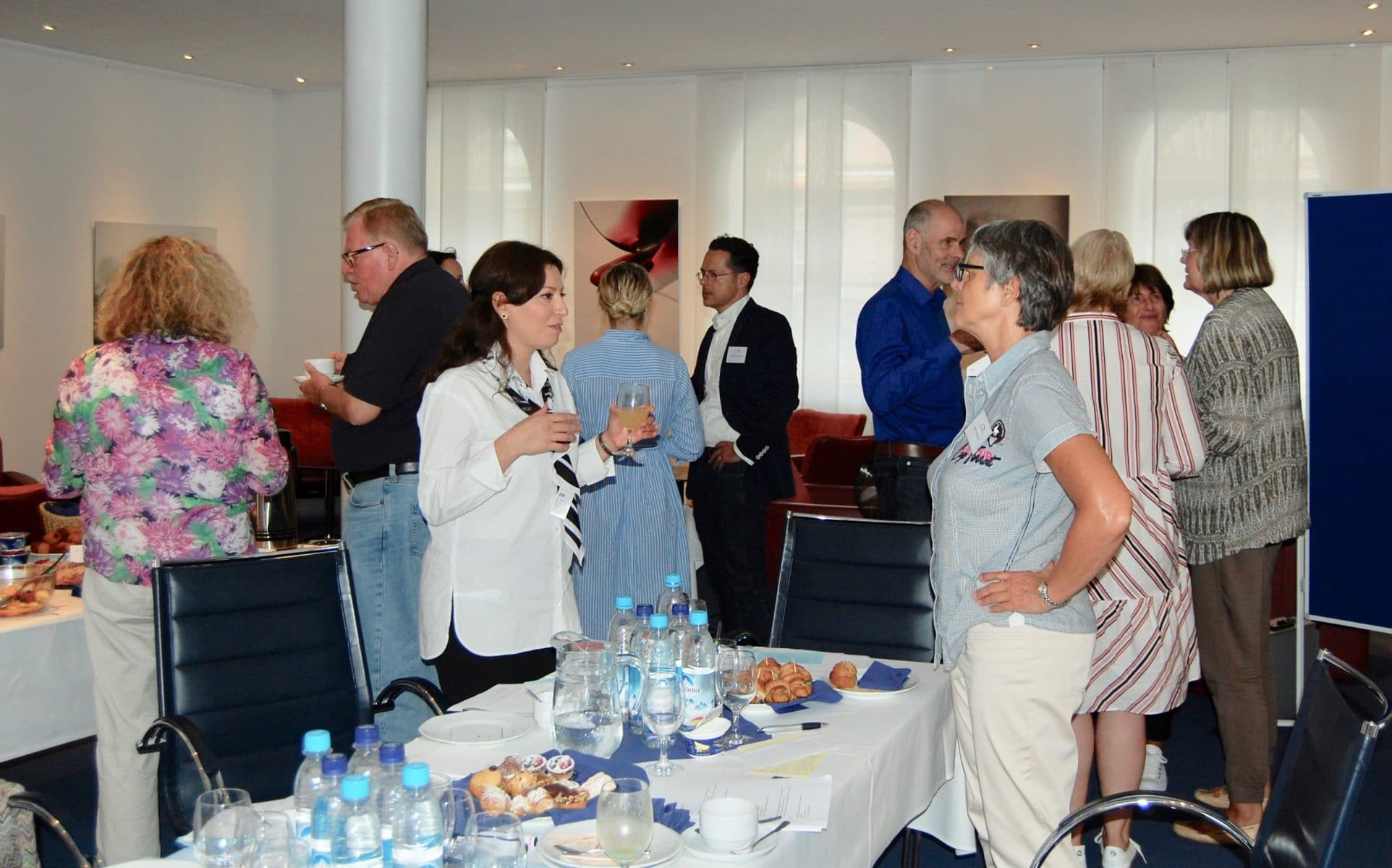
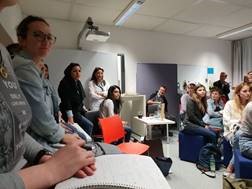
Based on feedback from various recent events Ethica Rationalis invited to a chat with the title „Entirely in Confidence“. In order to have the right degree of intamacy we chose a snug room in a cozy Bavarian restaurant with a small group of participants and provided appetizers.
In a protected atmosphere participants were able to speak about their experiences in their everyday lives and what moves them in their professional or private environment. They also had the opportunity to hear different views ... from people who deal with similar ethical issues.
Guiding questions were:
• What (ethical) conflicts do I currently have in my (working) environment?
• Where worries me, what bothers my counterparts?
• How do others view my problem?
• What strategies are there to solve my ethical dilemma?
• How can I communicate my opinions/convictions?
• What are typical problems at the beginning of a career?
• How can I learn from others?
Further support for KonTEXT
Another activity in Q1 was supporting the KonTEXT project (a non-profit organisation with whom Ethica Rationalis has been supporting for a number of years)in applying for project support (Google contest).
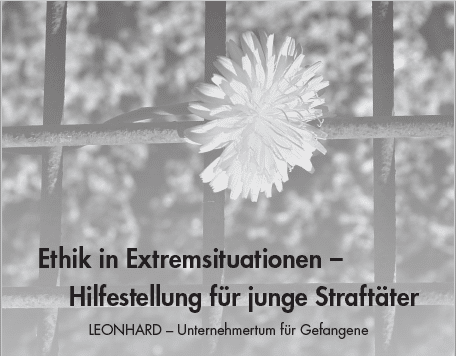
KonTEXT’s mission is the promotion of delinquent and otherwise challenged juveniles through the Contextual Reading Project that consist of a host of offers, including:
- reading groups (more than 100 per year),
- text workshops,
- a library,
- a special program for class skippers,
- as well as educational measures
to promote tolerance in the prisons systems of Munich and Landshut (especially the juvenile detention institutions).
KonTEXT supports fulfillment of court sentences of reading from the district courts of Munich and Fürstenfeldbruck (approx. 400 individually supervised youths per year). They also promote the planning and implementation of accompanying measures for the contextual reading project, as well as the development of multimedia material and-the implementation of scientific studies to reseach the preventive effects on crime and the conditions for efficacy of reading projects.
This time around Ethica Rationalis’ support consists of helping KonTEXT apply for funds for creating an App that would provide content for the juveniles during their commutes to the reading activities.
The App
Together with the Munich University of Applied Sciences, Munich Ethica Rationalis (who have already been providing support in the digitalization of the borrowing and return of books) would provide some of the application development. The University of Applied Sciences in Munich would be the other development partner, with 2 key supporters:
Prof. Dr.-Ing. Olav Hinz
More than 30 years of practical experience in software development in the fields of engineering, financial services, security and monitoring systems as well as public administration. The core area of his courses are agile and creative approaches, prototyping and integration of development and system operation.
Prof. Dr. Caroline Steindorff-Classen
Chair of the regional group Southern Bavaria of the German Association for Youth Courts and Youth Court assistance. She represents at the Munich University of Applied Sciences, among others, the fields of juvenile law and justice-related social work and has been leading the reading project context with over 4000 participants for seven years now.
Key success factors for the App are of course an engaging technology and equally important high quality, engaging content. Detailled requirements have been collected from the experience and research of the KonTEXT program, as well as from participants in the program.
The main effect of the App is to further motivate the juveniles in completing their “reading sentences”, while at the same time providing them with valuable content during their transit times to their sessions as well as providing data for the further reasearch in this area. The App will be another building block for the overall KonTEXT program, but it could also be used in other, similar programs.
We wish KonTEXT good luck in the contest and look forward to continuing supporting them.
More information: https://kontextleseprojekt.wordpress.com/
![Ethical questions Entirely in Confidence"]()
Ethical questions Entirely in Confidence"
![Further support for KonTEXT]()
Further support for KonTEXT
!["Study Week on Inclusion"]()
"Study Week on Inclusion"
Links:
![Share on Twitter]()
![Share on Facebook]()