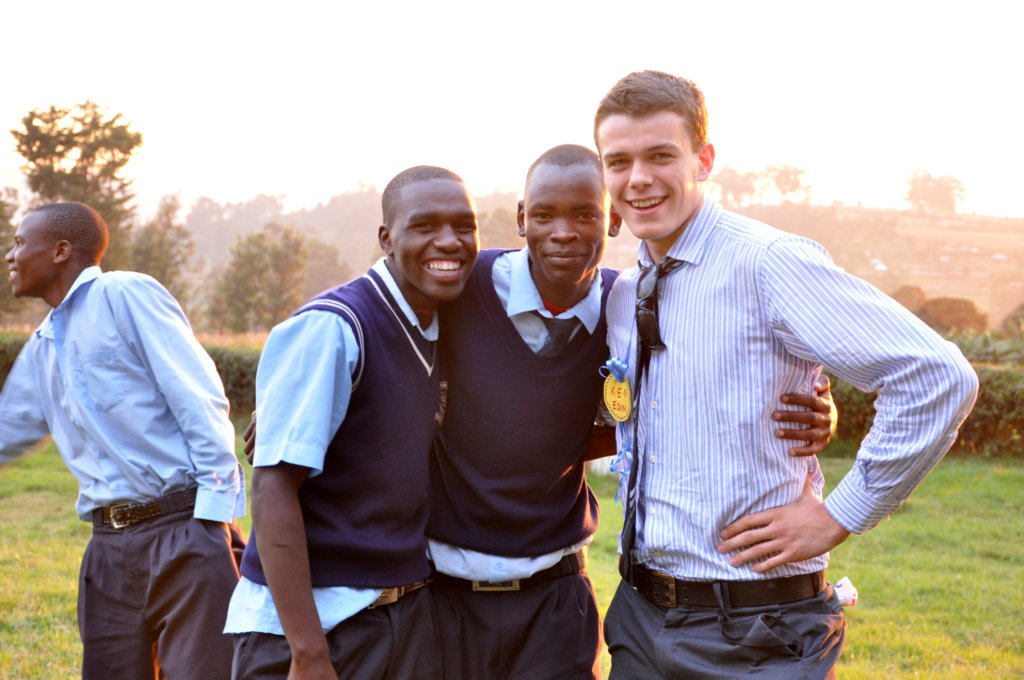
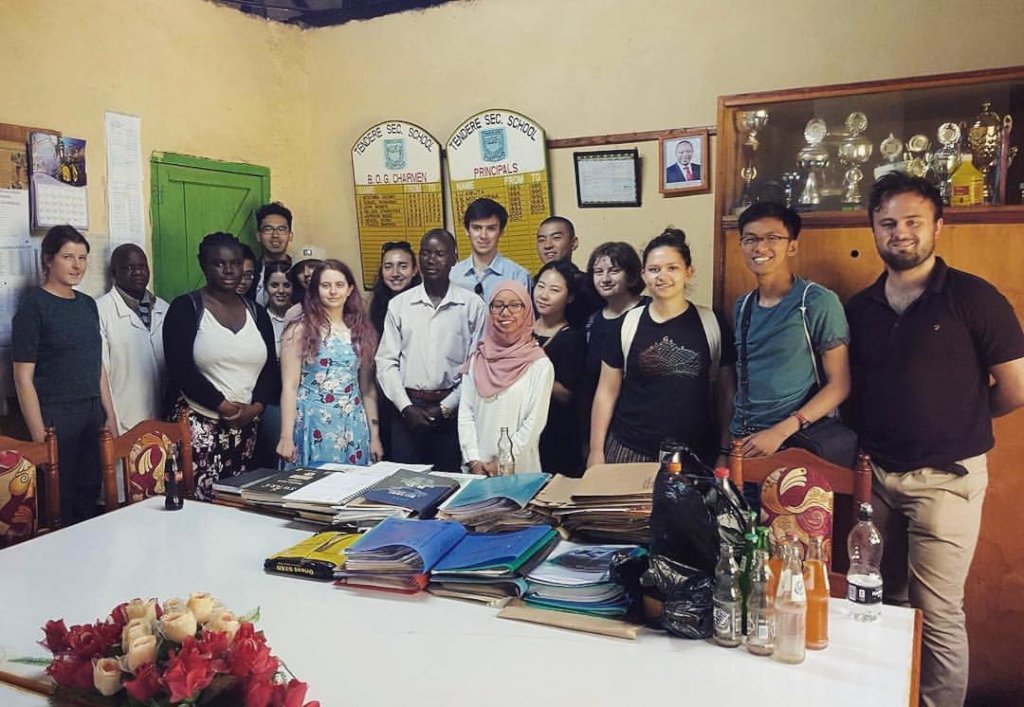
![Tom with the 2017 Kisii PWs]()
Tom with the 2017 Kisii PWs
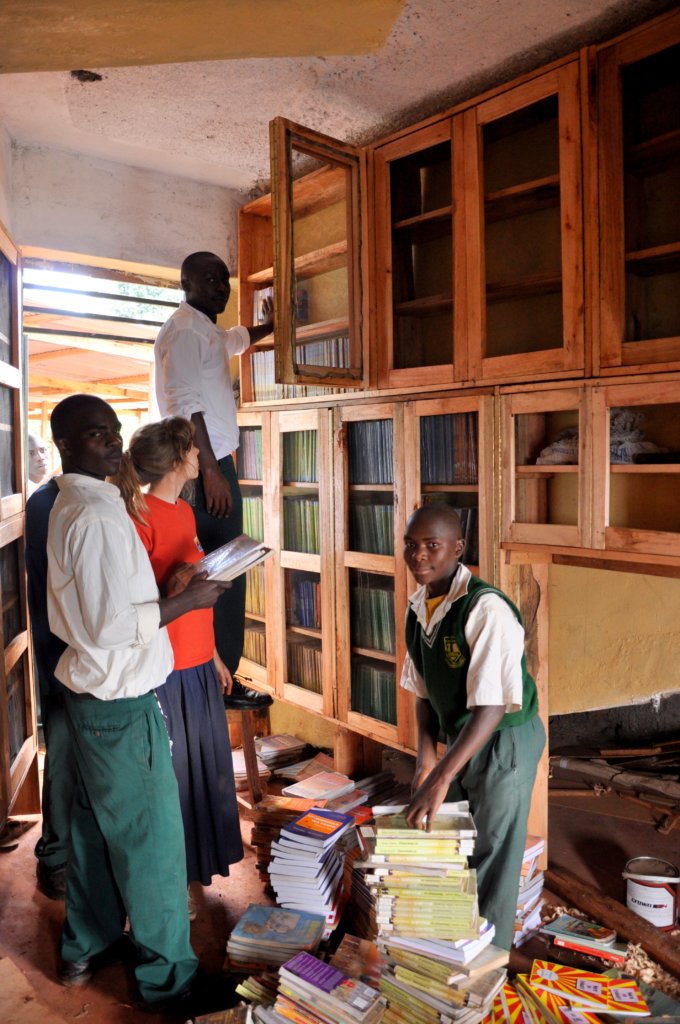
This summer I was fortunate enough to visit all three of our sites in East Africa. With more Project Workers, drawn from more universities, investing in more schools than ever, EPAfrica continues to change and grow as an organisation. As the second year of our Innovation Central Pot, and with growing opportunities for technical innovation in East Africa in general, this year also saw a really exciting and rewarding variety of investments. Whilst still delivering some great projects in areas where EPAfrica is more experienced, such as laboratory and library renovation, and electrification, Project Workers also boldly pushed the boundaries of what we are able to do.
What is most impressive is the extent to which our volunteers took responsibility for leading and shaping the remit of charity, through their innovation and creativity, broadening the scope of our investments and what we are able to do with the limited funds that we have. Several of our volunteers, mostly in Uganda, were working in schools that focused on areas we have no previous experience of. Rather than be daunted by this challenge, they rose to it and devised hugely exciting projects, which will undoubtedly be valuable sources for our own learning in the future.
Kisii
Kisii is our oldest and most established site. With 14 Project Workers (PWs), and 8 schools, we invested over £14,000, as well as three Water for Learning projects and one Innovation project.
Over the summer, we saw a range of investments in Kisii, particularly focused on important infrastructure projects (particularly water), such as in Marongo PAG Secondary and their Water Central Pot. This was made possible in particular by the extremely successful and generous GlobalGiving campaign earlier in the year, from which all the proceeds went to water projects.
The lone Innovation project was implemented in St Peter’s Kaberesi, in which they designed washrooms specifically tailored for the needs of the female students. This area of sanitary provisions for girls is often overlooked in secondary schools, and is a vital area of potential investment in the area of gender equality and health.
Kakamega
Our site in Kakamega saw its seventh year of investment this year, with 16 PWs across 9 schools. There were a number of exciting new partner schools in Kakamega this year, as well as two graduate schools from 2011/12. The combination of schools meant that there was great variation in the choice of investments from our volunteers.
In our graduate schools for example, there is space for us to expand beyond the more traditional EPAfrica investments to exciting new project. Examples of such include the extremely innovative “Shibinga Sounds” project, at St. Joseph’s Shibinga. This involved the creation of a small music studio for the school’s students in which they could record their own music, hoping to both contribute to academic performance and to help improve mental wellbeing. This is a great example of EPAfrica investments stretching the boundaries of what we are able to do, employing new forms of technology in novel ways. We will definitely be monitoring the project in future to see the results!
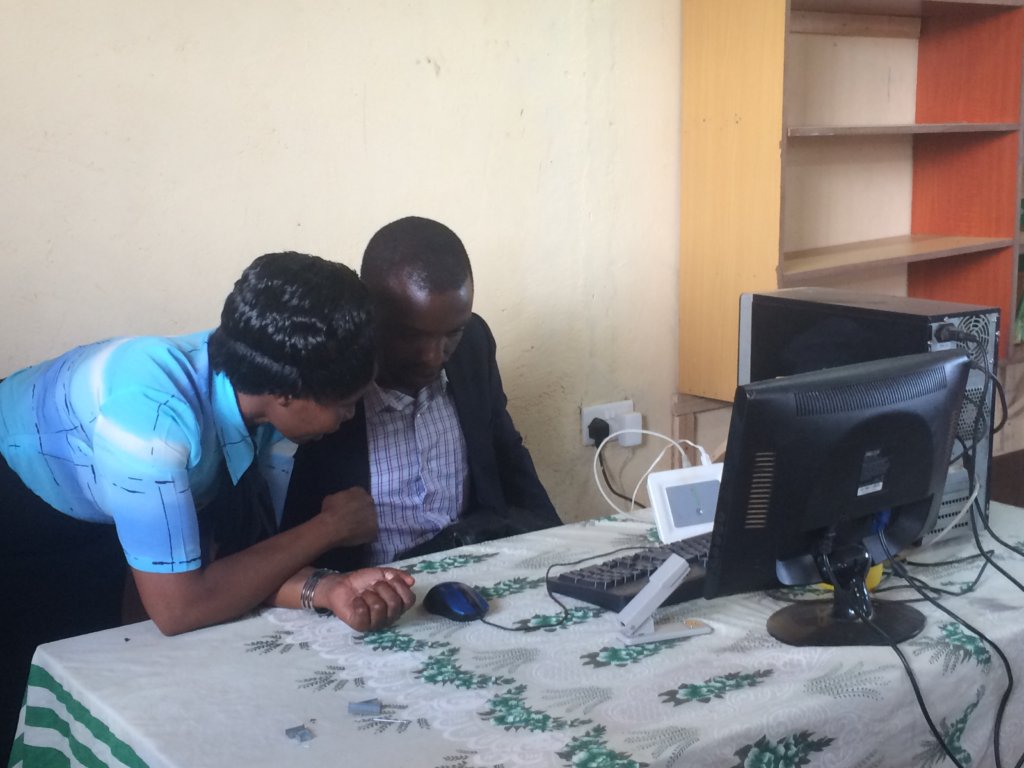
Meanwhile, in one of our new partner schools, St. Luke’s Khabukoshe, the PWs were working with a school that had perhaps more basic needs, reflected in their investments in areas such as electrification and a water project. However, this did not prevent them from also implementing an investment that took full advantage of the increased availability of technology. The PWs bought a laptop for the school administration, and input all the school’s administrative records (exam results, fee payments, drop out rates etc.) on it. They then installed a programme called ShulePro to help the school handle the administrative tasks. We saw in Ejinja Secondary School in 2016 how successful such programmes could be, and are again excited to see the results in the years to come at Khabukoshe!
Mbarara
Finally, I headed over the border to our newest site, Mbarara. Having only started working in Mbarara in 2013, it is safe to say that we still have much to learn about the Ugandan education system and the schools in the area. One important contribution to this was the work of our Project Researcher, Ben Macrae, this year, who wrote a report on Technical Schools, something which predominates a lot more in Uganda than in Kenya.
The fact that we have such a variety of schools that we work in means that Uganda is probably home to the greatest variety of projects and investments out of the three sites. This of course also brings challenges for the charity, as we get accustomed to new school environments and curriculums that often differ greatly to those in Kenya.
Take for example Rwampara Farm Institute, and school specifically focused on agricultural education. To my knowledge this is the first time EPAfrica has ever worked at a school so heavily focused on vocational education of this sort, and it is safe to say that very few volunteers have much expertise in this area. This new type of partner school meant that our investments explored areas well beyond our traditional scope, such as a sprinkler irrigation system, and the construction of a greenhouse for the students’ practical lessons.
Similar things happened at St. Benedict Technical Institute. As the name suggests, this is a technical institute, which focuses on areas such as carpentry, textiles, and agriculture, amongst many others. This again marks a big change from EPAfrica’s previous partner schools. As a result, the PWs decided upon an Innovation Pot investment in 8 modern beehives, to help the students with their agriculture curriculum.
What both these examples show, along with many more that I don’t have space to include, is how what constitutes an EPAfrica investment is rapidly changing. It is indicative of our increasing ability to put the funding that we have to new and innovative use, and thereby expanding and diversifying the impact that each investment makes.
As the development context in East Africa constantly changes, and new and exciting technology becomes available, this is precisely where EPAfrica’s investments will have to go in order to continue having big impacts in our partner schools. Further, thanks to the volunteers who have so successfully worked in new types of partner schools, the range of potential partners continues to increase. This can only be a good thing as we look to continue our expansion, and invest in even more schools, thus increasing our impact, and hopefully bringing an important improvement to the quality of education in our partner schools in Kenya and Uganda.
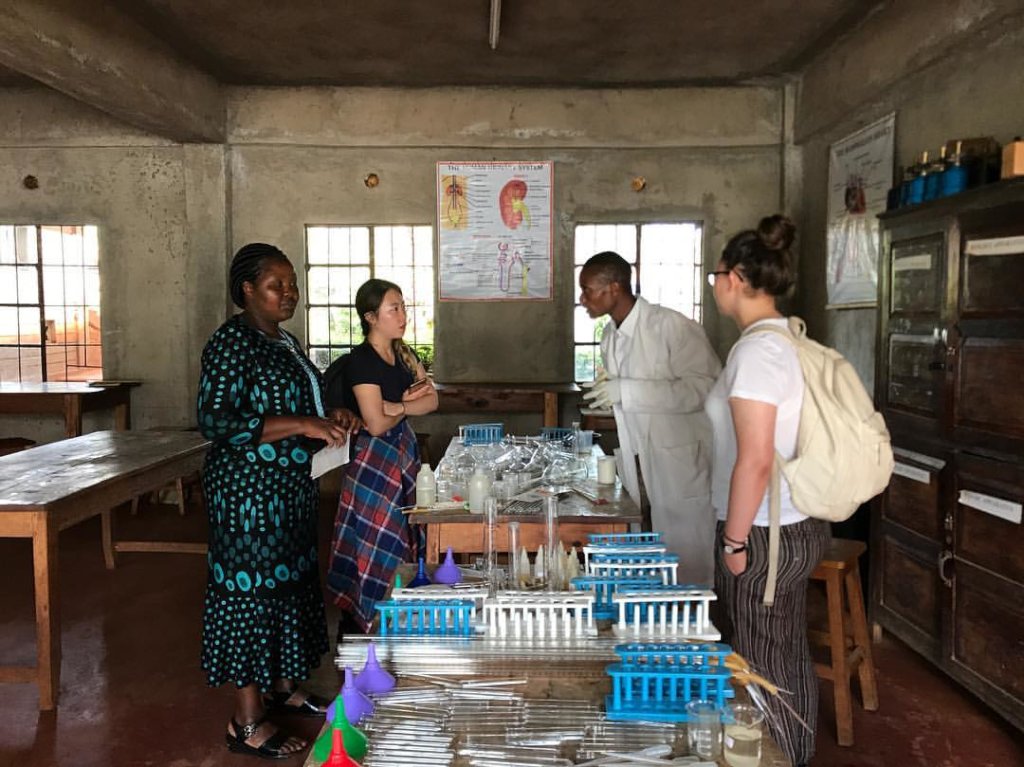
![PWs discuss science equipment with staff]()
PWs discuss science equipment with staff
![Share on Twitter]()
![Share on Facebook]()