By Donya Mojtahed-Zadeh | Mbarara Project Manager, 2018
This summer in Mbarara, Uganda, I had the privilege of being the second half Project Manager. This role entailed a lot of running around town to sort out logistics for next year’s summer, as well as squeezing in those final few school visits we had planned. Hectic as it was, I knew it was coming. I’d even pre-planned a to-do list for it all. But something slightly unexpected for the Summer Team was a new pilot investment scheme to come our way. Something very girly indeed.
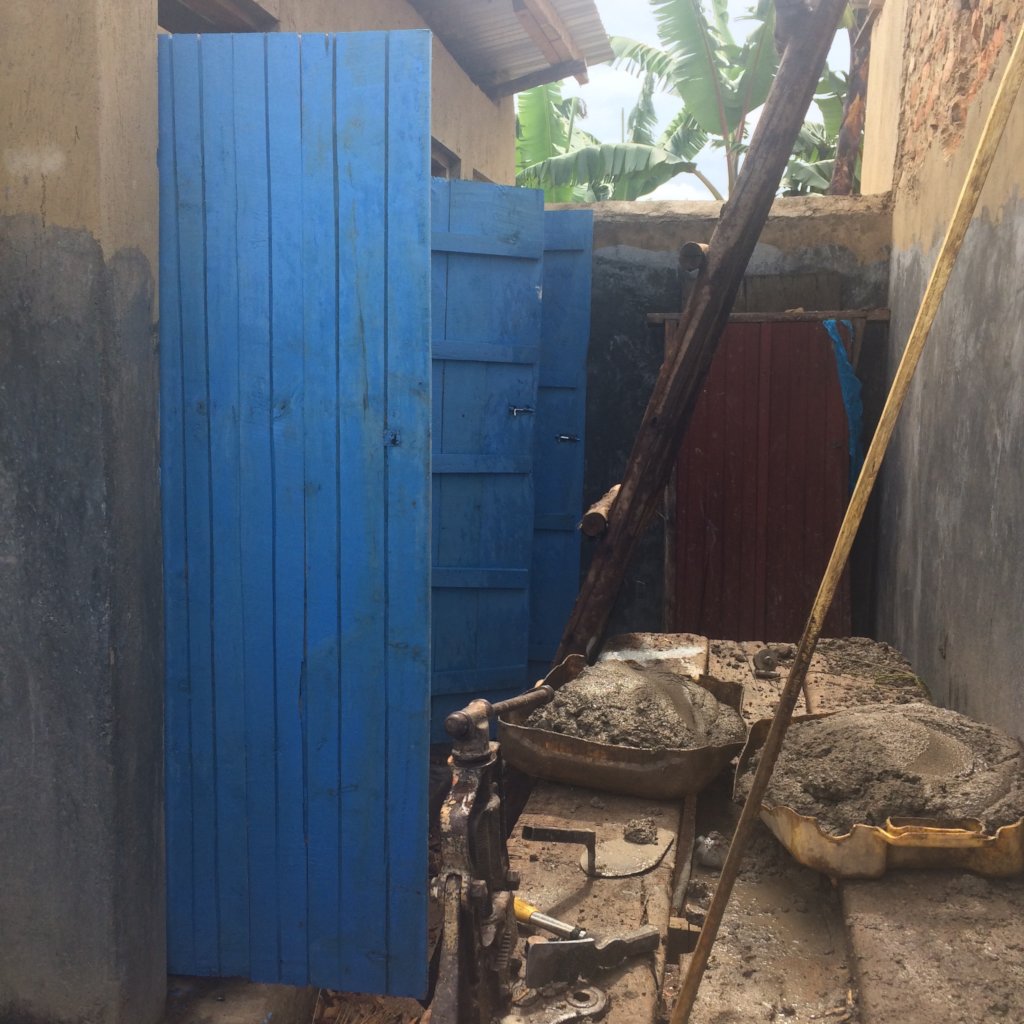
In a nutshell, what EPAfrica envisioned for this pilot scheme was an upgrade of existing girls’ toilets in previous and existing partner schools. This included focusing on a range of things, from installing lighting (to allow girls to change their sanitary pads at night) to ventilation (to prevent bad odors). This would be a first for the Summer Team – creating an “EPAfrica standard” for all girls’ toilets in partner schools, to be hopefully standardised in future across our Kenyan and Ugandan sites. But, why girls?
The majority of research tells us that it is girls who pay the biggest price for poor sanitation. This is because periods are a bloody pain and in several sub-Saharan African cultures, the only acceptable time for women to excrete is after dark, so no one notices. As well causing general discomfort, this fosters a whole range of other issues – one being assault. Changing a pad in an open toilet, at dark, in the middle of a communal space, unfortunately invites a lot of unwanted attention inside and outside of school. And this lack of a clean, safe space in which to excrete and change sanitary pads is a significant factor that contributes to drops in female school attendance and enrollment. Some schools in Uganda are forced to close altogether due to poor sanitation (https://www.newvision.co.ug/new_vision/news/1474189/leaders-blamed-lack-latrines). So we can see that girls’ toilets aren’t just a girls’ issue.
Accordingly, the Summer Team embarked upon a mission to find the most suitable graduate school (secondary school that has previously received EPAfrica investment) for this project. And we didn’t have to look very far to find St Benedict’s Technical Institute; the school I’d invested in last year as a Project Worker! This conveniently meant that we could assess previous EPAfrica investment, alongside bracing the school for a unique kind of investment. Starting work promptly-ish, we reached a shared vision for the school.
Head Teacher Benon’s ideas automatically married up with the charity’s pretty well, as he’d already attached importance to girls’ sanitation issues by planning to improve the girls’ toilets following the construction of their new dorms. Which, may I add, all the male students in St Benedict’s kindly helped build. Perks of working with a technical school… The only problem Benon faced was a lack of funds. Thus, the Summer Team complemented St Benedict’s well, by offering £100 (498,000 Ugandan Shillings) for this scheme. In partnership with the school, we invested in:
Girl-friendly toilets was one of many pilot projects run by EPAfrica in Summer 2018. Alongside hygiene, technology was a key focus of EPAfrica volunteers, with pilots being run on projector training, bulk SMS and solar panels amongst others. We are taking part in Global Giving's Little by Little campaign next week, during which we're raising money to take these technological pilots to the next level. Please keep an eye out or get in touch for how you can support!
By Beth Goodwin | Kakamega PM 2018
By Emily Grotto | Kakamega PM 2018
Project reports on GlobalGiving are posted directly to globalgiving.org by Project Leaders as they are completed, generally every 3-4 months. To protect the integrity of these documents, GlobalGiving does not alter them; therefore you may find some language or formatting issues.
If you donate to this project or have donated to this project, you can receive an email when this project posts a report. You can also subscribe for reports without donating.