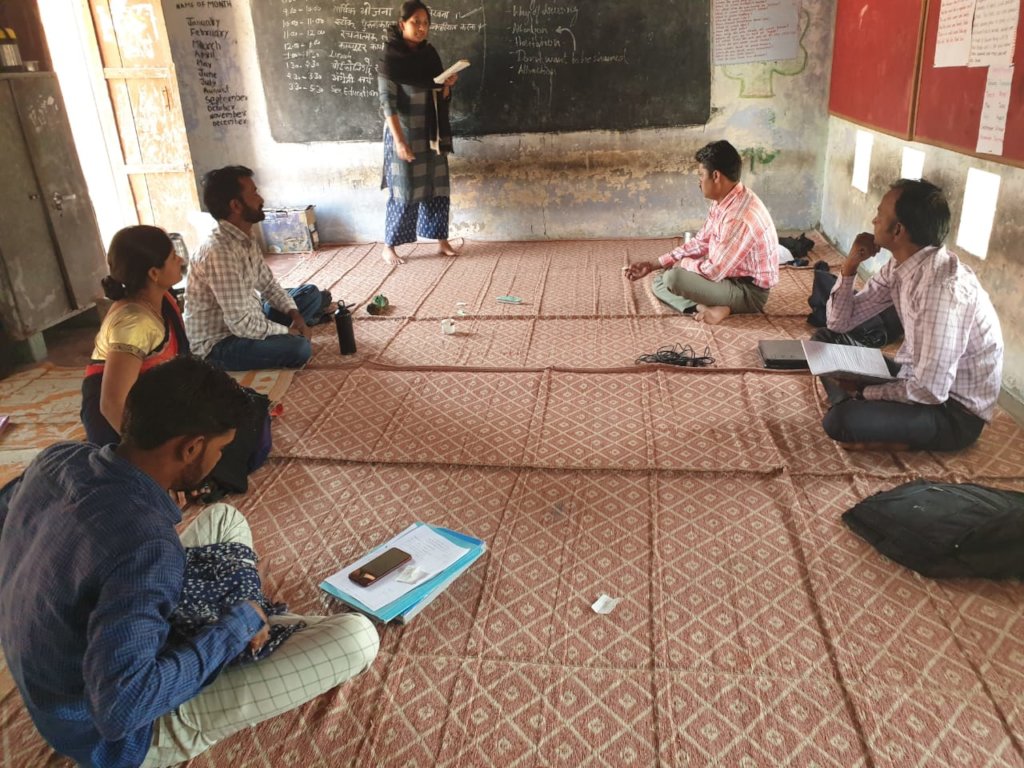
![Community visits by teachers]()
Community visits by teachers
The New Year was the advent of the COVID-19 global pandemic that has affected the whole world and Sawai Madhopur is no exception. With countries going into lockdown India witnessed the secondary effects of the pandemic including widespread reverse migration, starvation and rising unemployment. Even though the pandemic has had a lasting effect on everyone irrespective of the nationality, religion, gender, caste and class, the most affected were the vulnerable and marginalized communities.
During the lockdown, we witnessed as many walked home from the faraway cities that they worked at including Jaipur and as villages and hamlets were shut off from access to basic facilities and food. Even after the lockdown was relaxed we watched as many were still unemployed and not able to ensure food security for their families.
We have had a challenging time with the situation of communities and the hit that education has taken. Read to know more on the updates of the work we have done this quarter through the difficultimes.
Virtual Connect and Capacity building
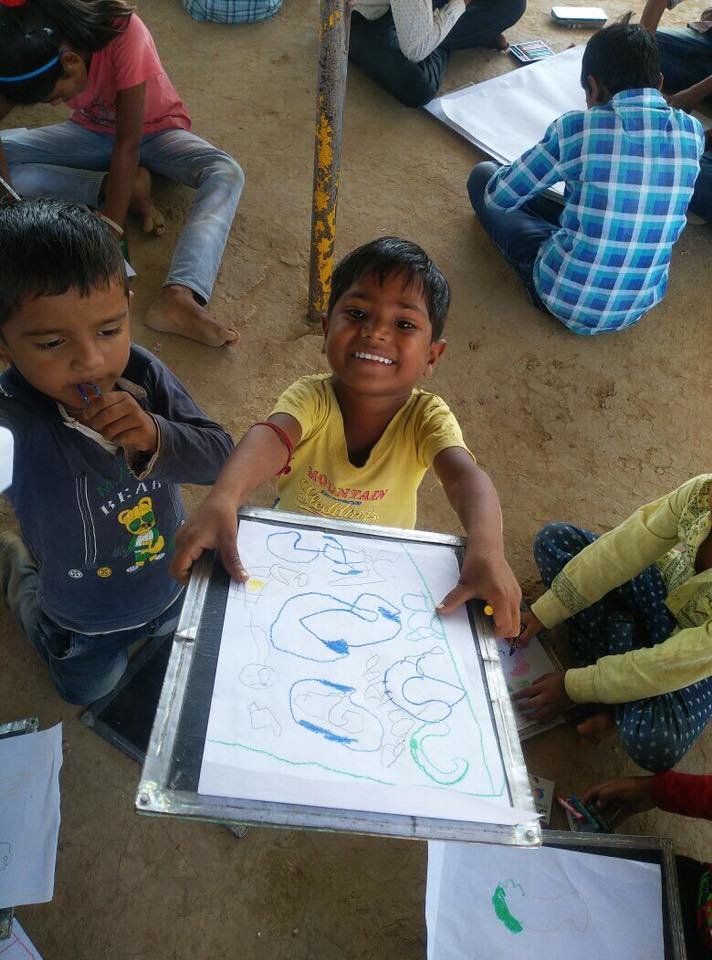
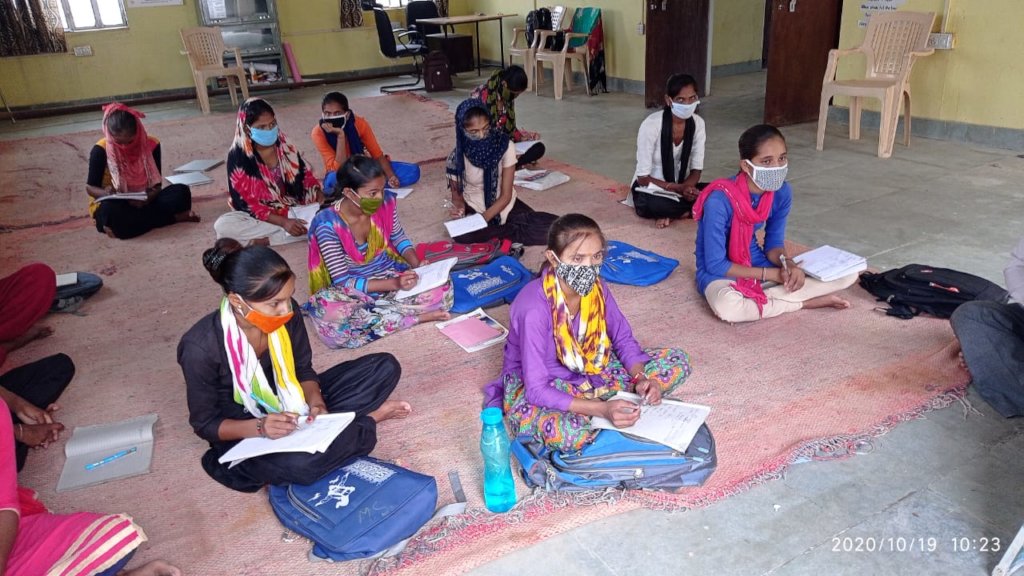
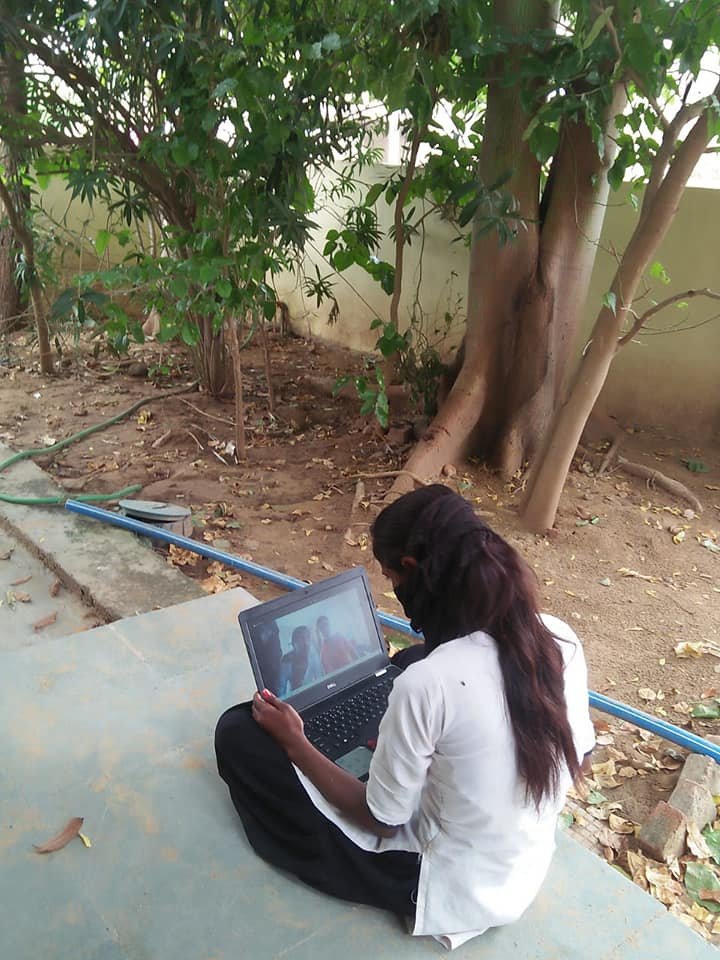
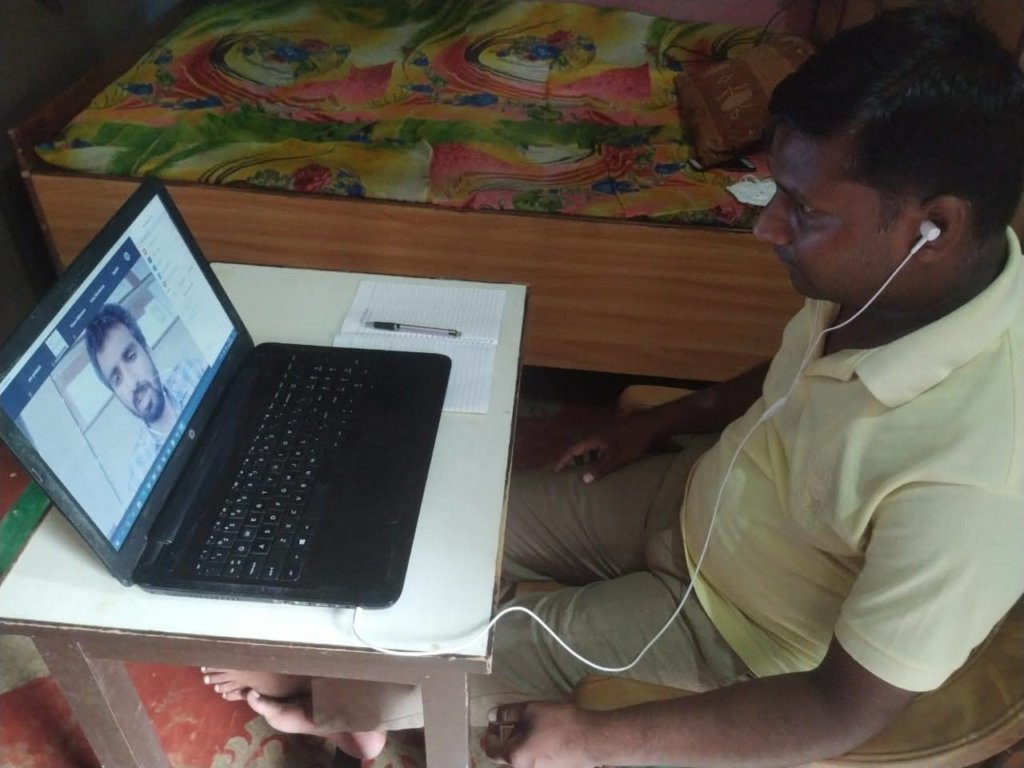
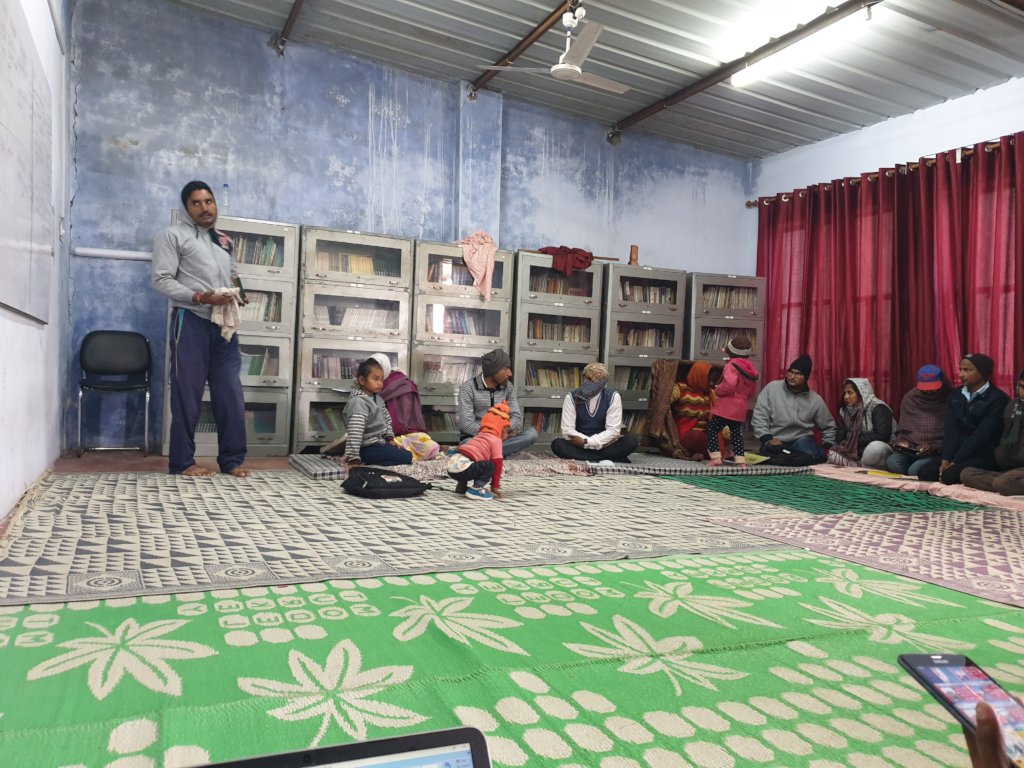
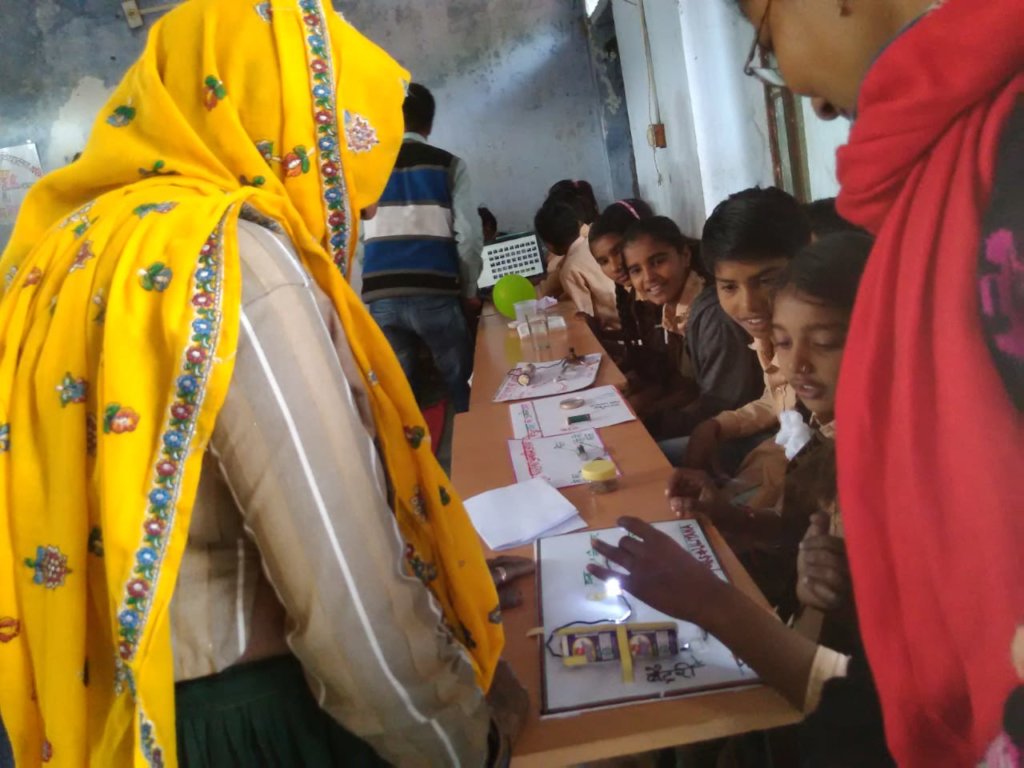
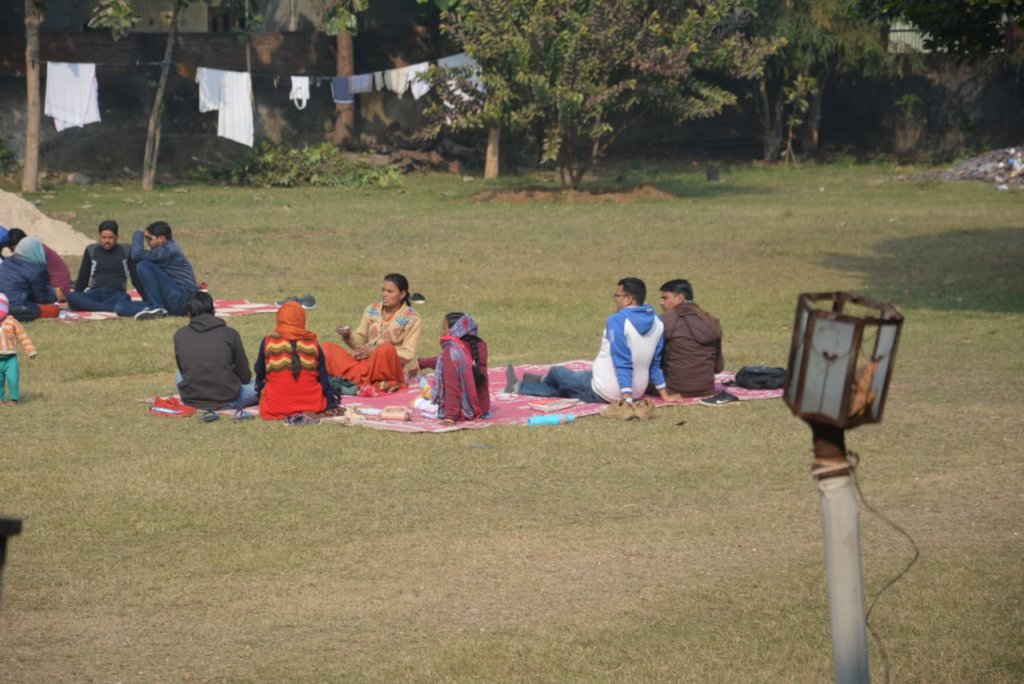
With the introduction of the computer programme the teachers and students regularly worked on learning the use of the technology available to them. This learning has helped especially during the lockdown. As the teachers sit at home, they use phones, laptops and tabs to continue their capacity building. The teachers have kept in touch with each other and the community with the help of messages and other virtual platforms. They have used various online video conferencing apps to continue their workshops and capacity building, subject wise and project wise through discussions, interactions, readings etc. Our teachers are also spending time in understanding the philosophy of Education and thinking of the ways to implement it in today’s context.
The teachers have also participated in various webinars by specialists on various topics to improve their understanding of the current scenario under the lens of Gender, Education, and Development.
“Never stop learning, because life never stops teaching.”
Updates from the schools
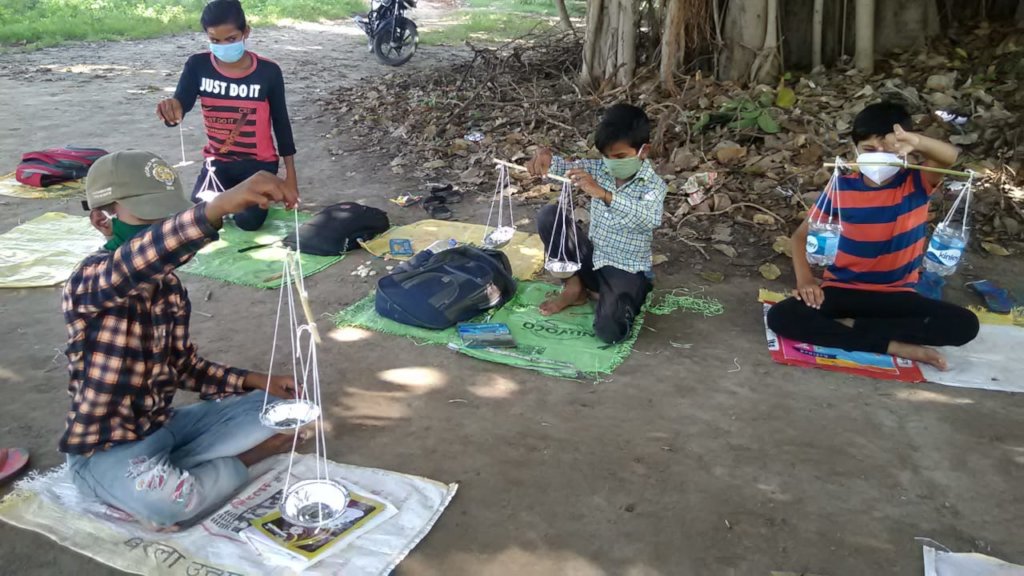
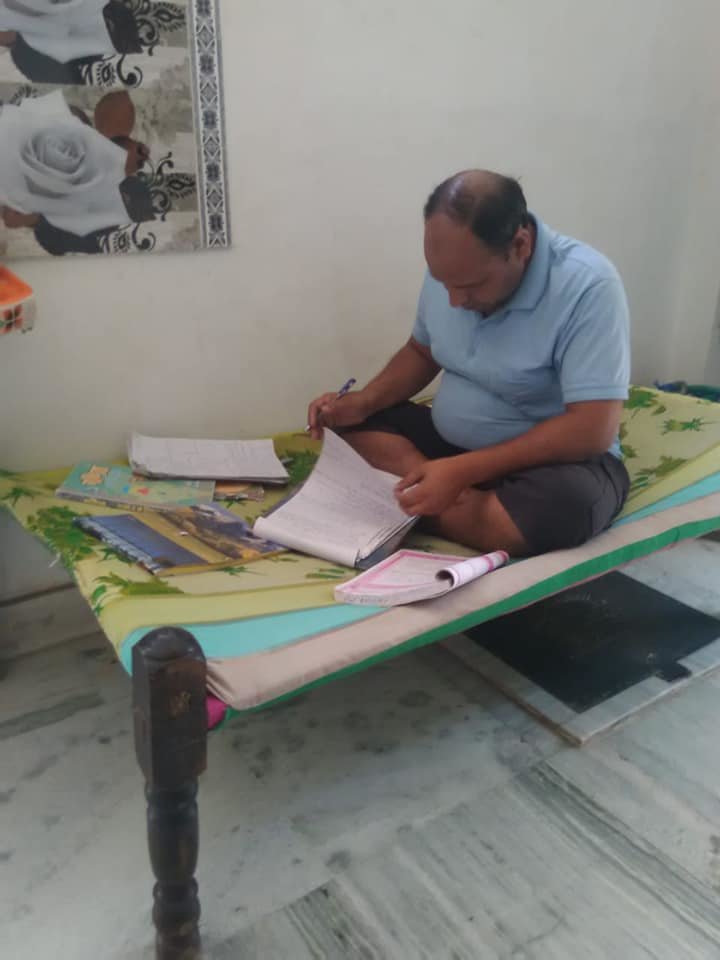
During the lockdown, the teachers continued to build their capacity and keep in touch with the community. During communications with parents and students, the main issue that rose was the fact that not all families had phones and therefore not everybody could be contacted. We are in the process of creating solutions for this particular issue. Through whats app groups lesson plans, Teaching/learning materials and videos to explain certain lessons, the students continue to be exposed to their studies. Parents were asked to provide the phone to their children for a certain time of the day to continue their learning process. The parents were also asked to take care of the basic hygiene and health habits of their children and to keep a check on their daily school work.
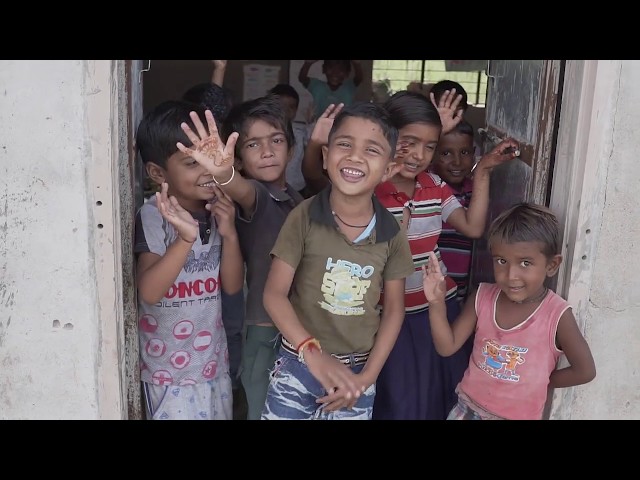
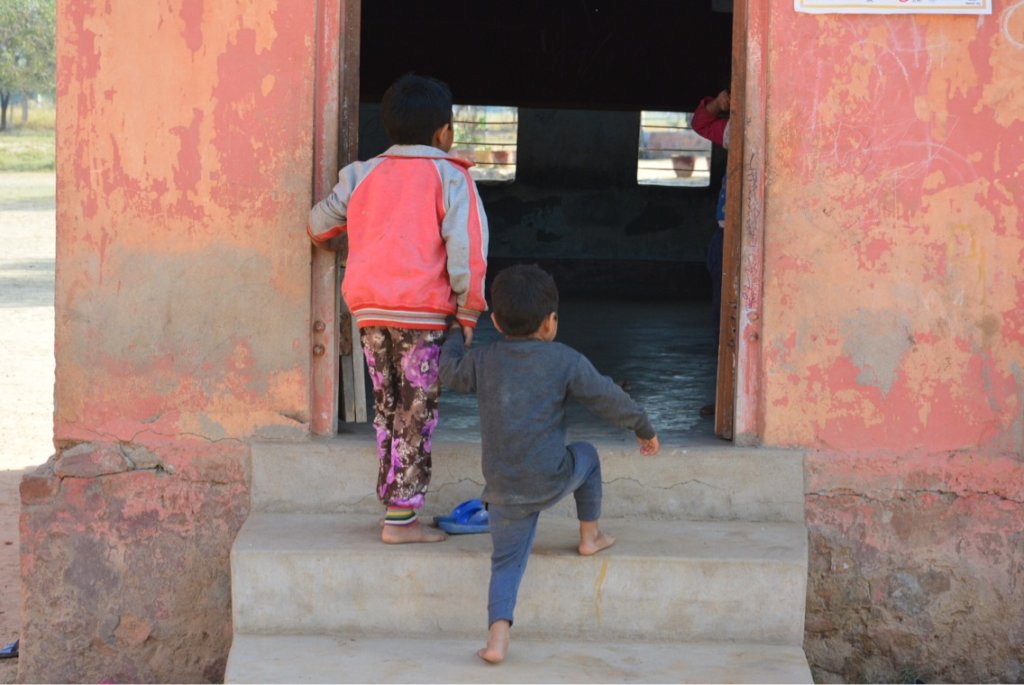
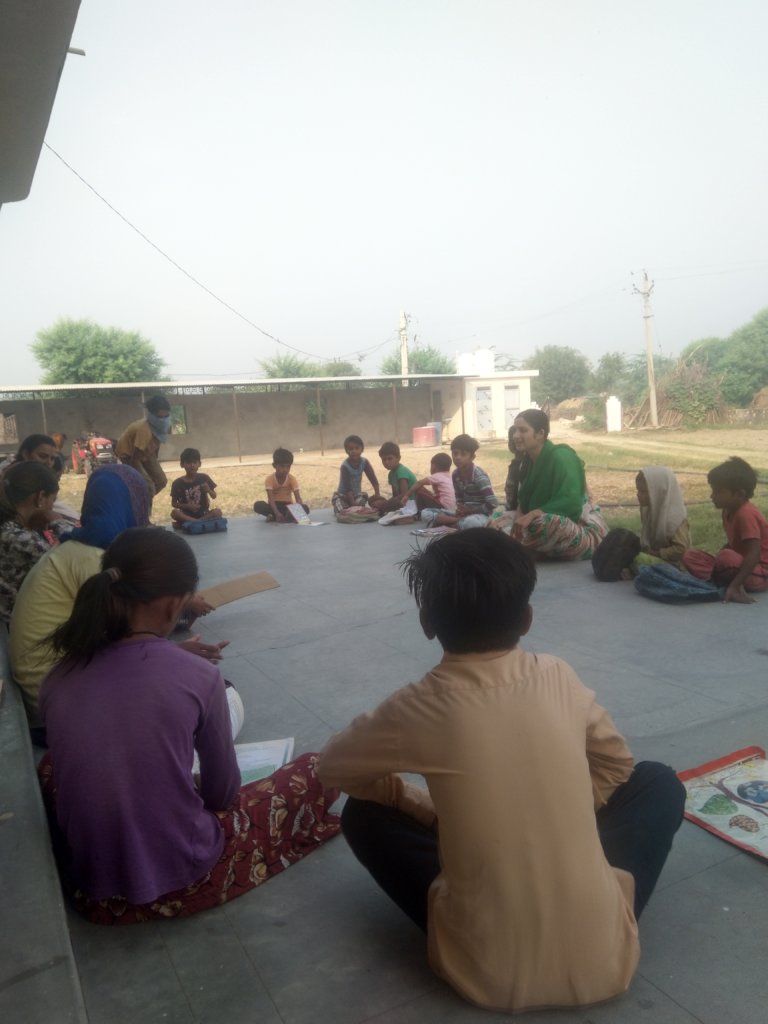
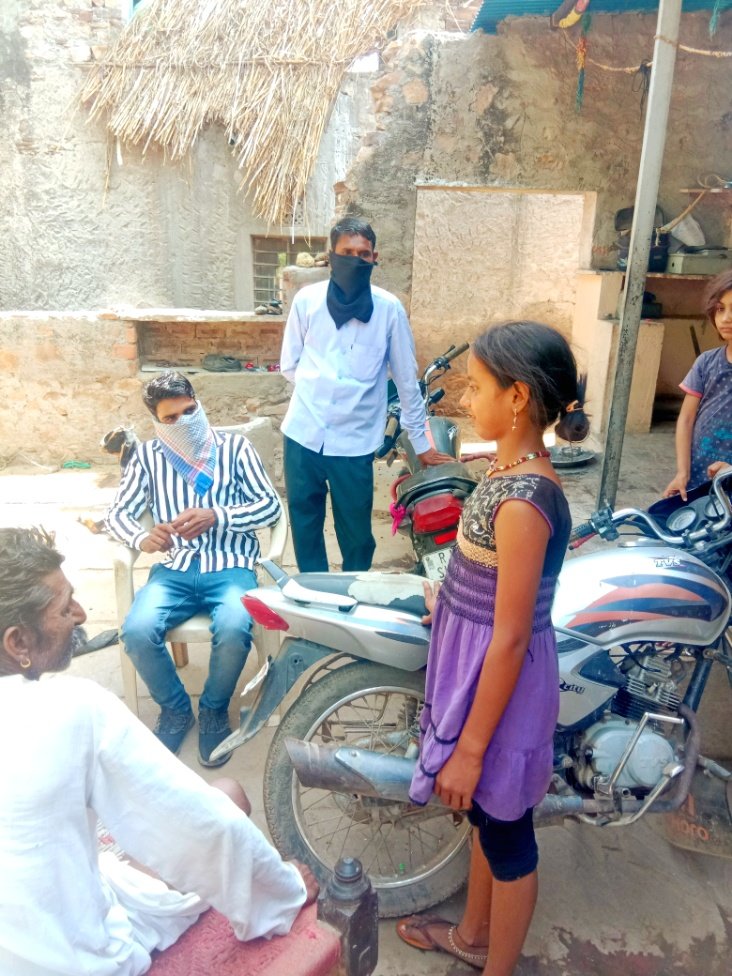
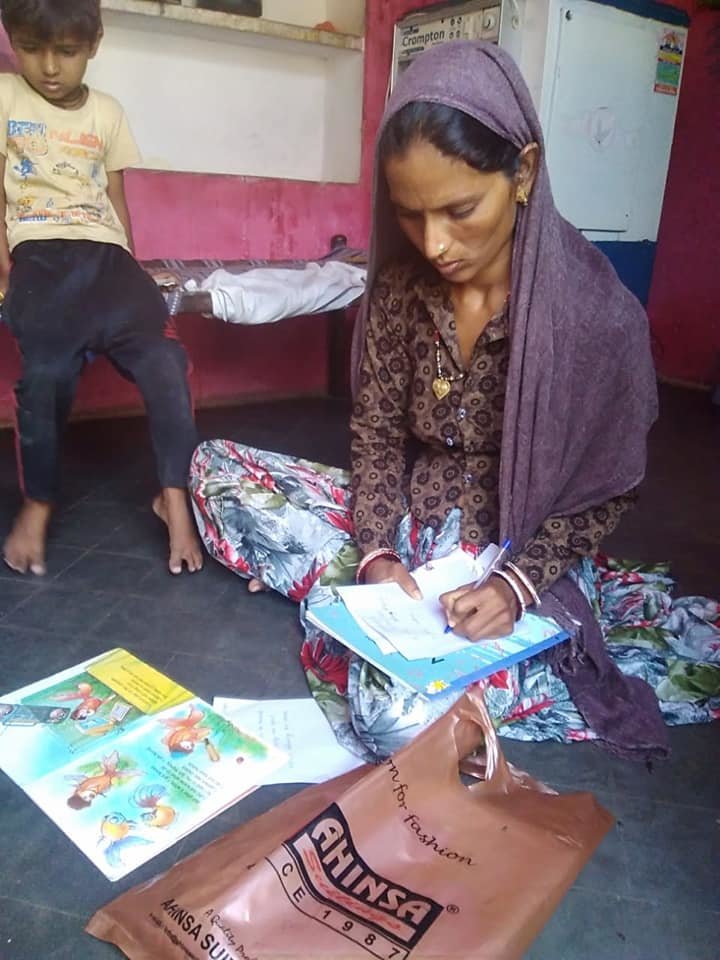
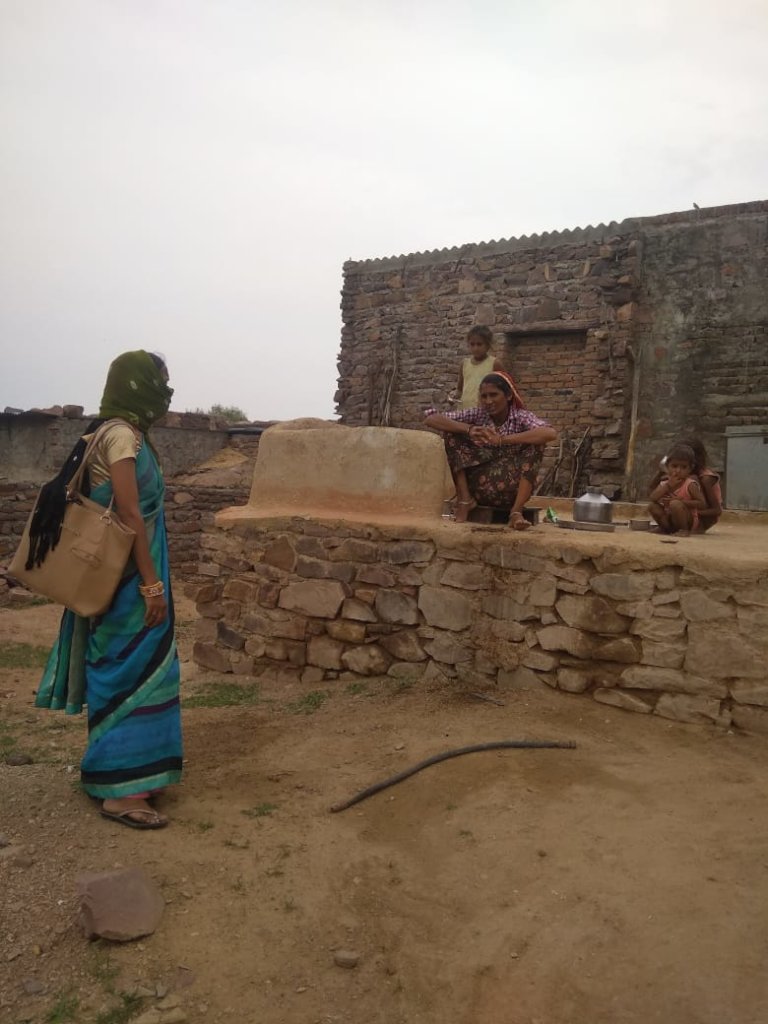
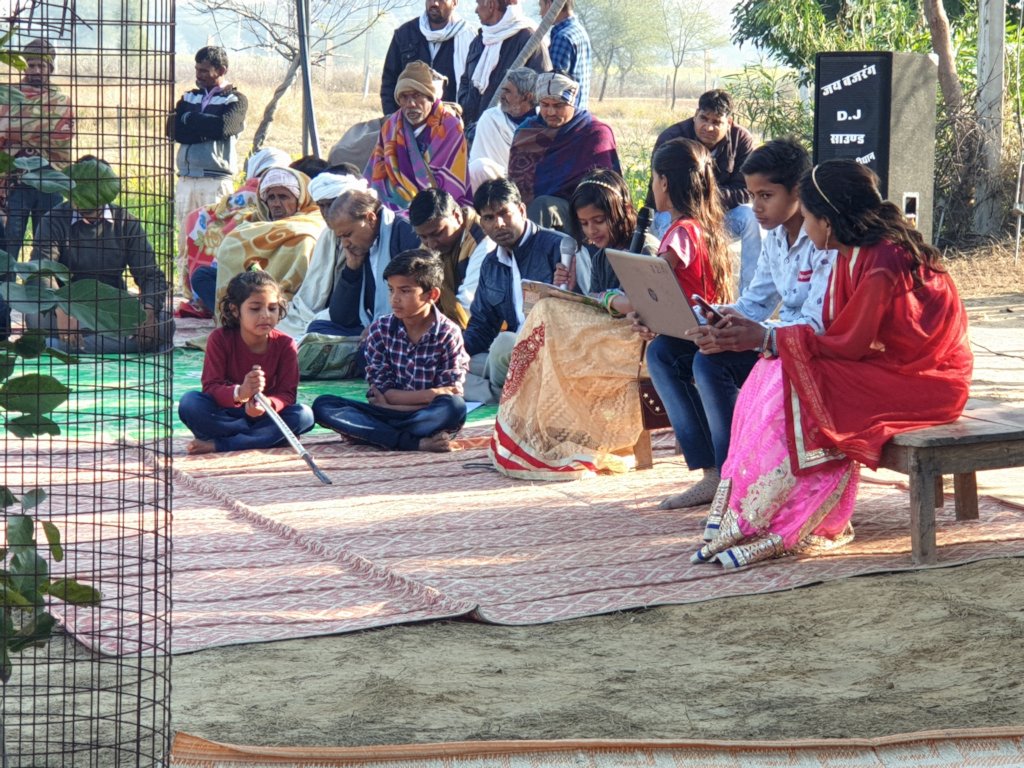
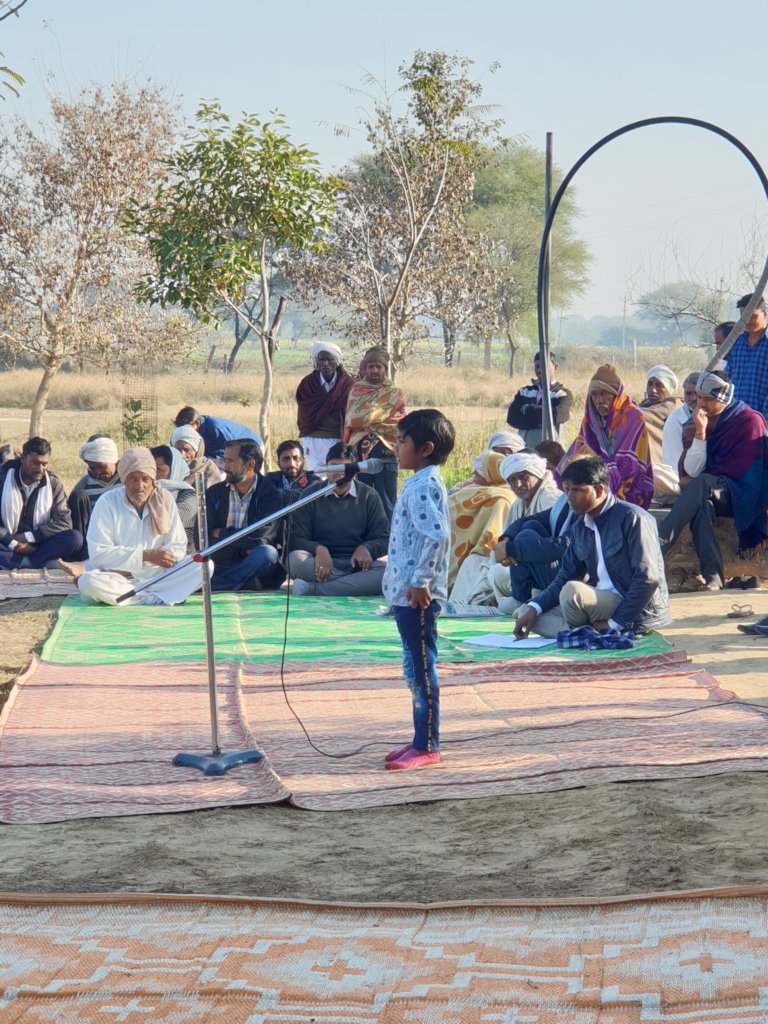
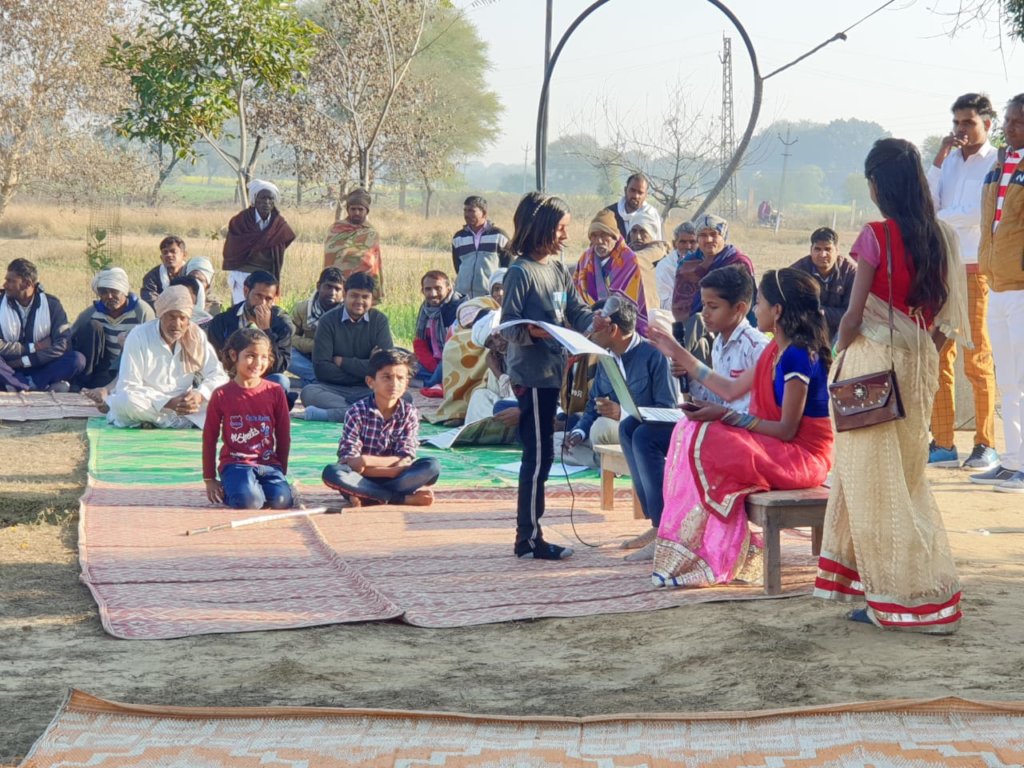
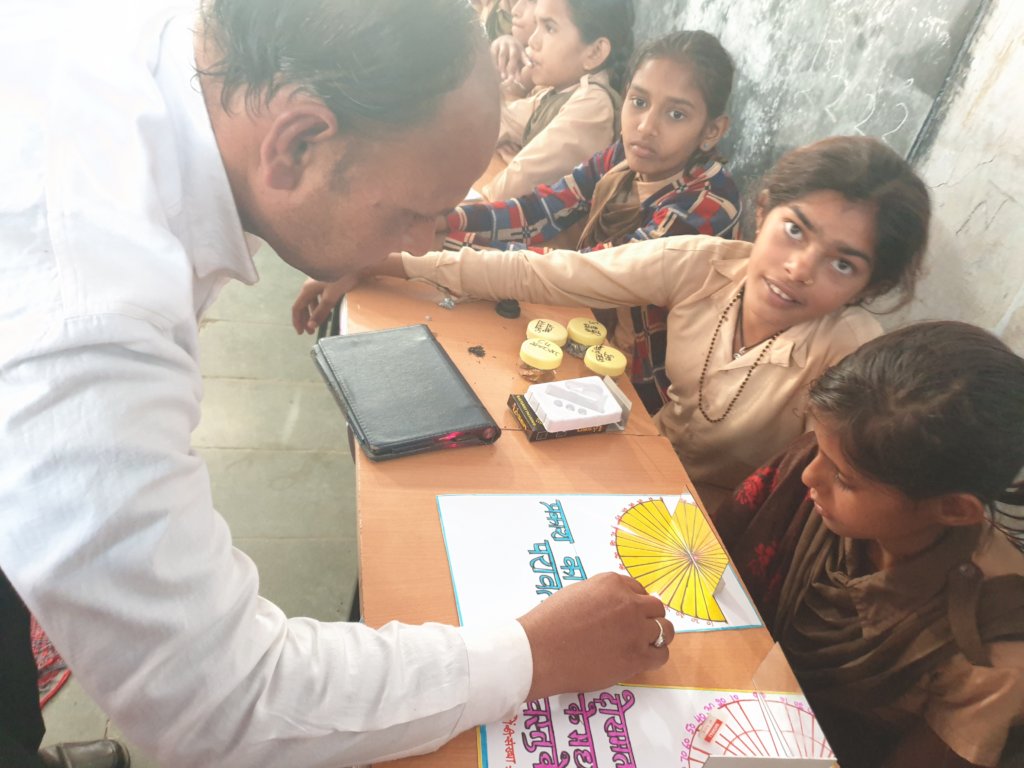
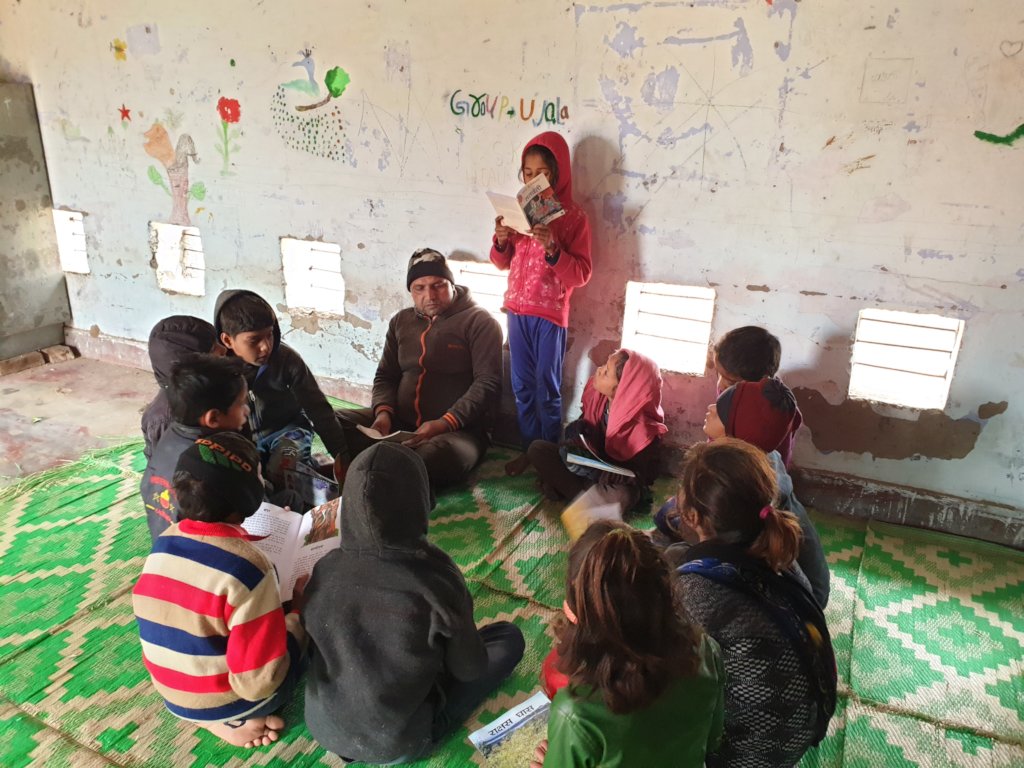
As the lockdown regulations relaxed the teachers visited each village to understand the current situation of the family and check on the learning levels and activities of the students. They also wanted to ensure that the parents and children are aware of the basic precautionary measures to be maintained for COVID-19.
Community discussions:
Once the lockdown was relaxed in the country, our team had decided to visit the communities 2 times every week to cover the houses of all students in the vicinity of the 3 Uday Community Schools. These visits are to understand the issues faced by the community. The topics that our team concentrate on include
- New possible enrolments for the new academic year
- Possible dropouts and how to prevent the same
- Progress of children according to lesson plans
- Awareness on the pandemic and the precautionary measure that has to be taken
- Any other issues that the community is facing or want to discuss
Uday Community School Fariya has decided to ensure that only 33% of the teachers will be working in the field with precautions at any given time to ensure reduced exposure.
Uday Community School Jaganpura shares that they will have many new enrolments this year to bring the number of students at the school to be around 115 students for the academic Year of 2020-21.
Uday Community School Girirajpura shares that the children and their parents are eager to go to school.
While teachers communicate with the community many parents and students are worried about the schools. Many ask about when the schools will reopen. Parents worry as they think that their children will be left behind in the times of online education. The team is working on a plan to ensure that the students are being provided with the quality child-centric education that we provide.
Community Aid during COVID-19
At the end of the month, our team decided to visit the vulnerable and disadvantaged communities to conduct a survey for identifying families that require immediate aid. Team members visited vulnerable communities including:
- Street doll performers who depend on daily wage work.
- Disabled members of the community
- Senior citizens
- Daily wage workers and migrants etc.
As the country went into a lockdown the villages and hamlets in Sawai Madhopur was cut off from any other sources of ration. Most families were consumed by hunger. Many farmers who don’t have storage capacity had to either refrain from harvesting or had to just leave their harvest in their fields. In both cases, it is causing severe damage to their produce and ultimately to their income. Even with the relief package announced by the government, it hasn’t proved to be sufficient especially for large families and for families with no ration cards. Therefore these vulnerable families have to rely on their neighbours or relatives to provide them with the necessary grocery or feed them. In such times we decided to provide immediate relief in the form of dry ration kits.
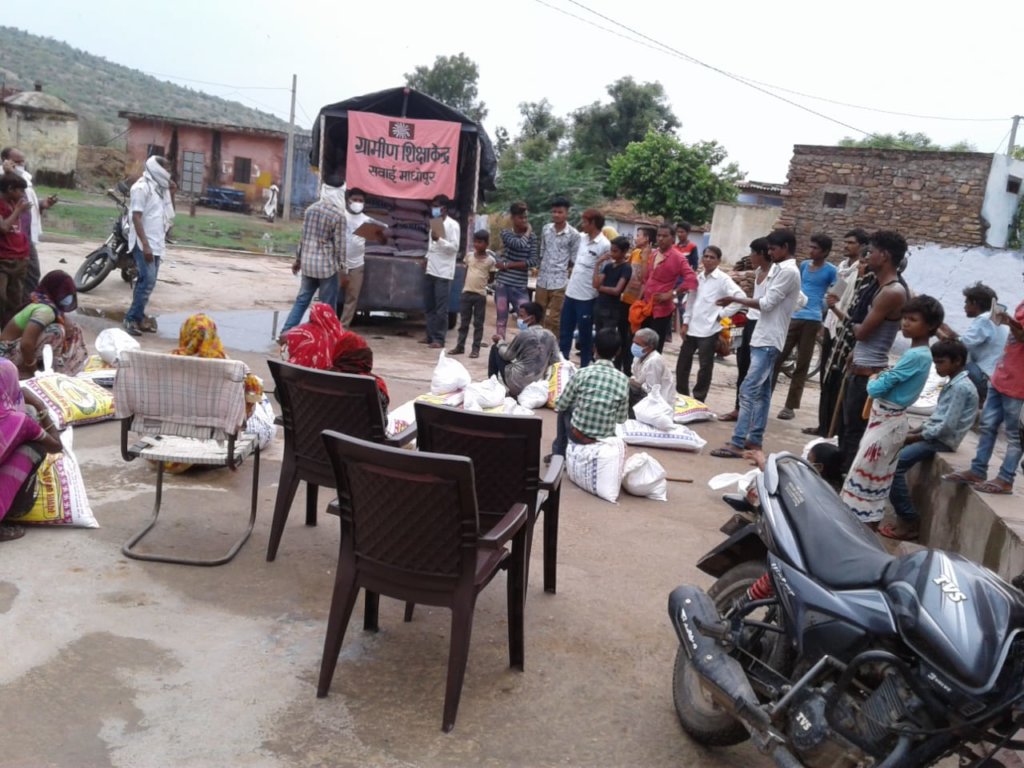
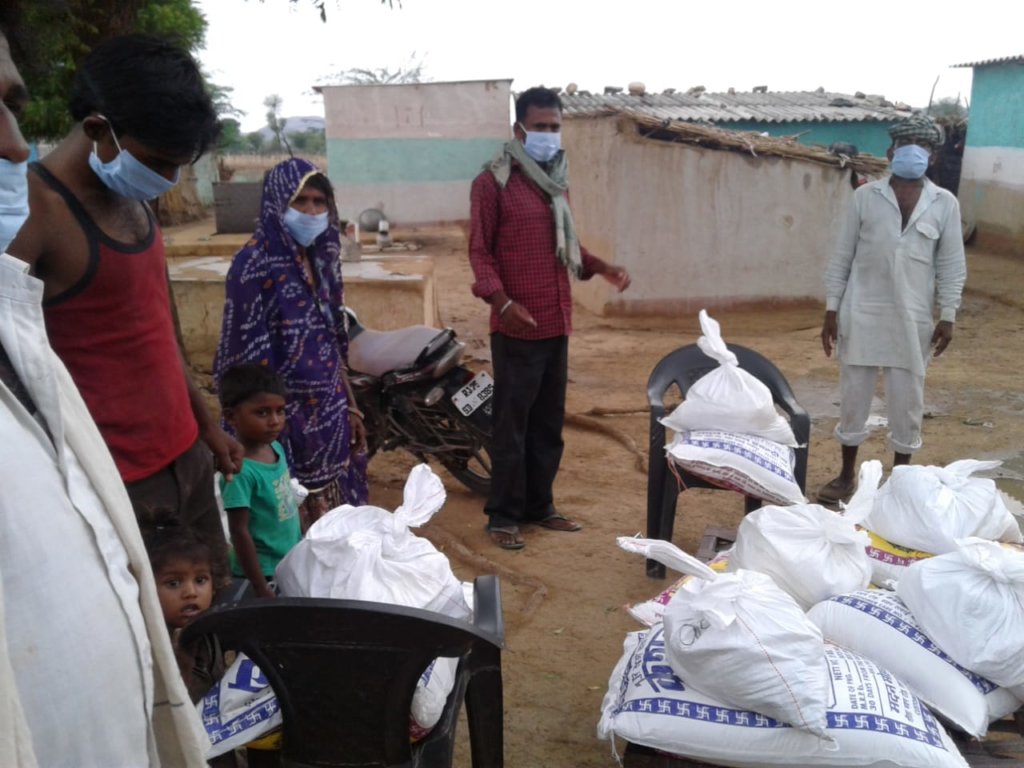
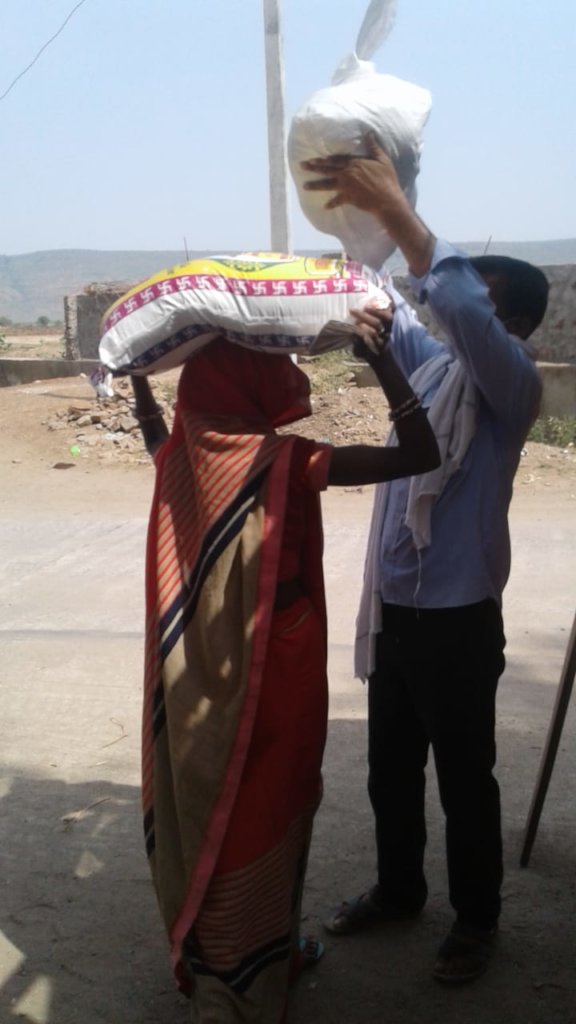
Ration kits were distributed to over 1700 families across 21 villages according to a survey of vulnerable communities conducted by our team. These ration kits were distributed in two phases in the month of May and June. The volunteers also followed all the precautionary and safety measures to be taken. The organization will continue to reach out for support to help the community in these dire times including the other 800 families that were identified to need immediate aid.
As there are various myths related to COVID which is negatively affecting the communities especially the vulnerable ones, we are also working to raise awareness around COVID and providing correct information to the communities regarding basic health, hygiene and sanitation
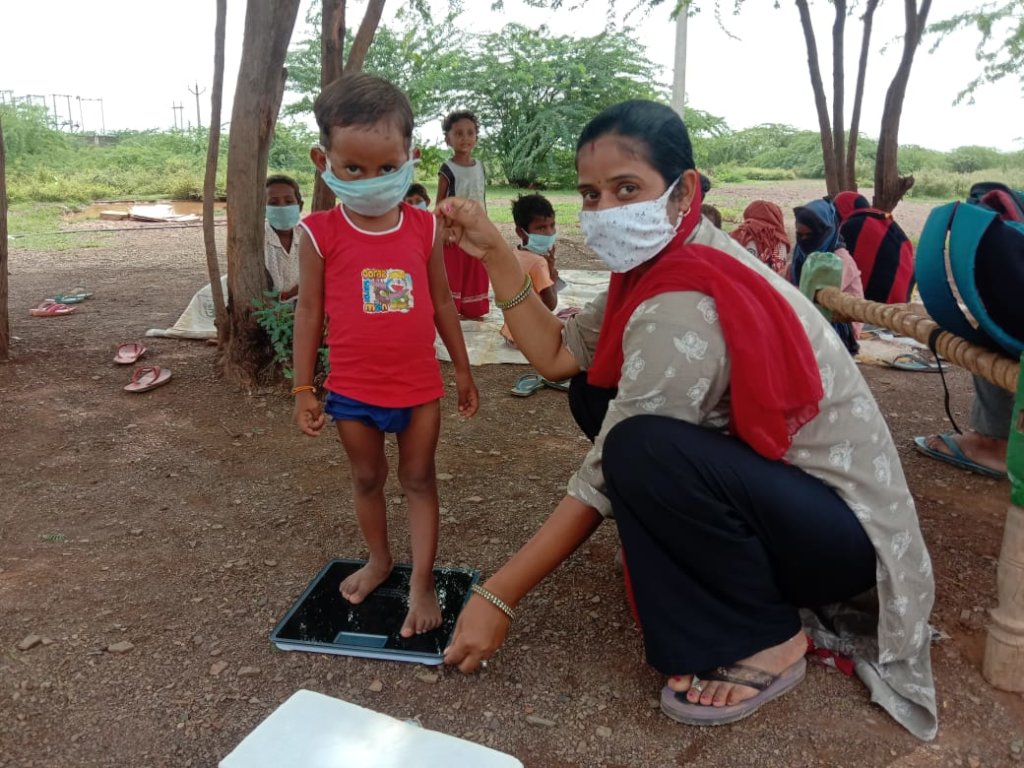
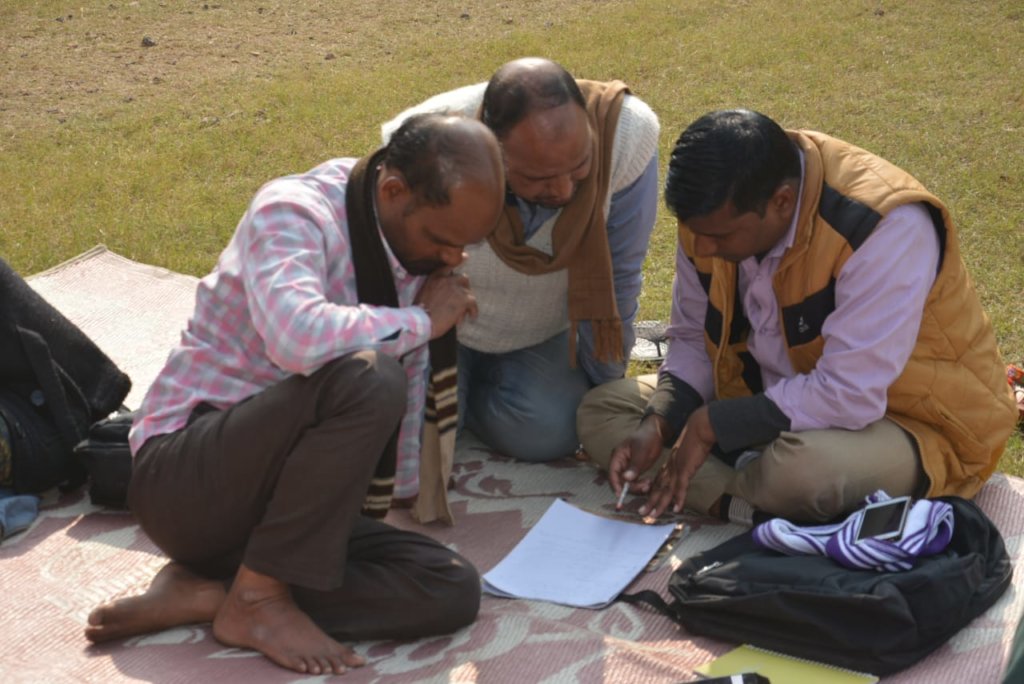
We also conducted a sample survey of the community to determine the current condition of the community.
Note: This is an ongoing research but we would like to share some of the findings of the survey through this report.
Research Methodology: Our population for the research is the identified households for humanitarian aid. Out of the population size of 998, our sample size was 226. The Stratified Convenient sampling was done to identify the households to be surveyed in each of the village communities. Each family can range from 1 to 12 members and the result showed that the average number of family members was 5.
Occupation:
The main occupation of the community was determined by 213 respondents of the sample survey.
The main occupation of the communities in the district of Sawai Madhopur (According to the sample survey conducted):
Other occupation includes:
- Labour - 66.2 %
- Farming - 0.9 %
- Kabbadi - 7.4 %
- Black Smith - 12.5 %
- Other - 13 %
Other occupations include: Making Bamboo baskets, Vegetable vendors, Selling Khadi, Making Glass articles, Pension, Begging, Watch Vendor
Even after the lockdown was relaxed 93.4% members of the community were unemployed.
Note: 31% of the respondents are daily wage workers. On an average 1 to 2 members of each family has an occupation. 8 out of 213 individuals have a job during the lockdown even though 65% of the respondents (213) have a MGNREGA Job card.
Salary:
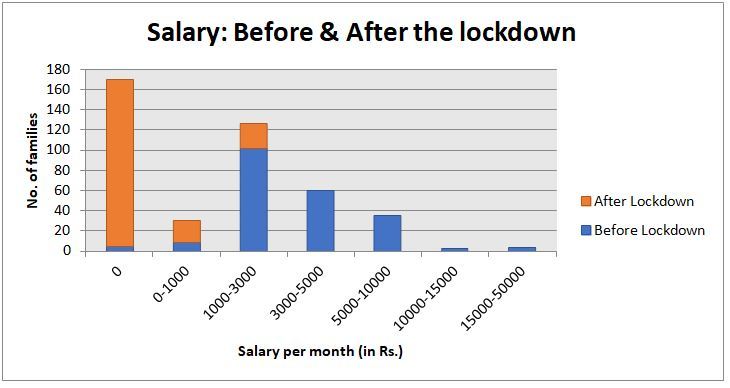
With no main occupation, the communities have no money or savings to provide for their families. The Graph below is determined by the data of 213 respondents. (78% have no income at all after the lockdown began)
These are a few stories and struggles of community members that we were able to reach out to:
No way other than walking
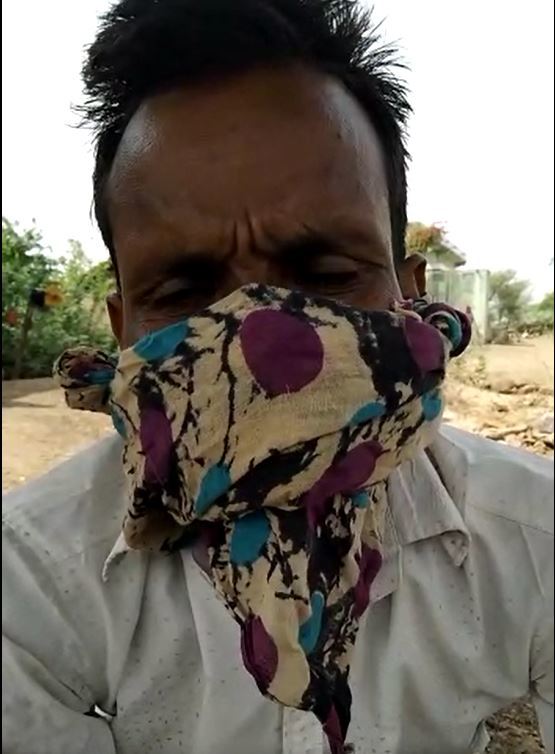
Latoor ji is from the Pawandi village in Khandar Sawai Madhopur and used to work as a labourer in Jaipur.
"Once the lockdown began work stopped and I had to come home. As there was no other way, I walked home and used all my money on coming back. Once I got here I realized that there was no work I could get here either. We do not have food and we do not have a job. We are cornered from all 4 sides. We haven't gotten help from any other source other than the ration kits we got from GSK and we are thankful for the help. We will be able to manage food for the next month at least."
The music has stopped playing
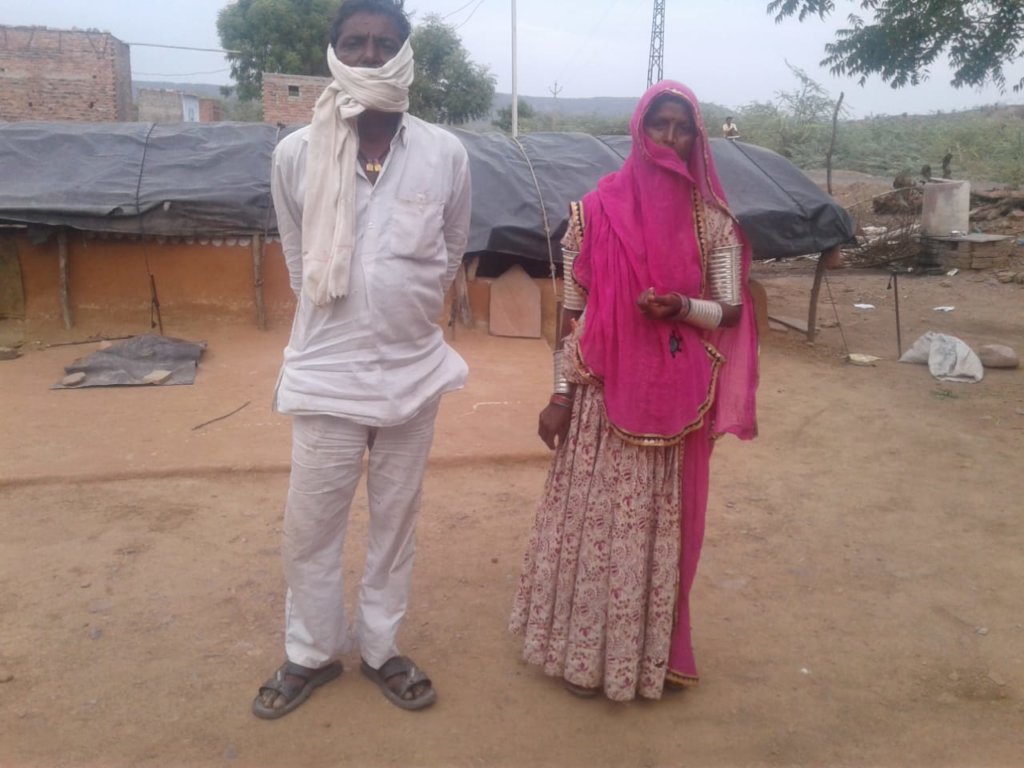
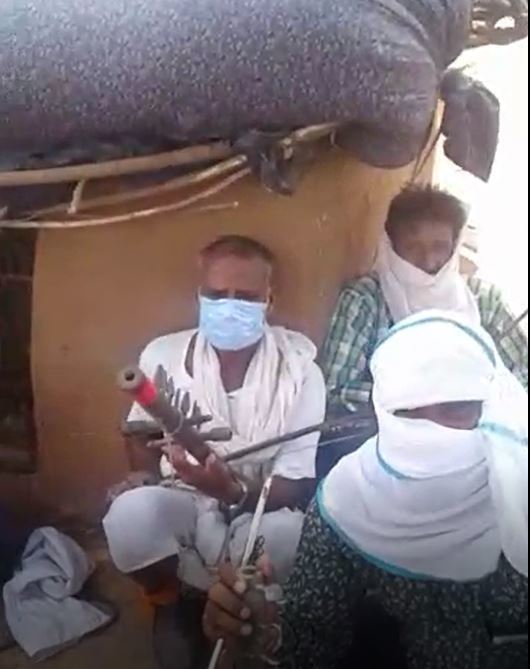
Small groups from the Raikheda (Bhopa) community are street performers (Sarangi Vaad) and have been drastically affected due to the lockdown.
"We are a community that has very little land and depend on street performances (playing the Sarangi) in villages to make a livelihood and food. We earn our daily wages through these performances. After the lockdown began we have not been able to step into the community. The villagers say "You cannot come into the village; it is people like you who spread the virus." We do not even have money to buy our own salt. It has been a hard time and the Government has not helped us other than providing some Dal and oil. We just pray for the pandemic to stop so that we can survive." The Bhopa community faces new discrimination and struggles in the coming time. The community was relieved to have gotten ration kits from GSK and hope for the pandemic to end.
Work with DNT communities
Gramin Shiksha Kendra is looking forward to design a suitable intervention with the 5 identified and most vulnerable communities based in Sawai Madhopur. These communties are -
- Bhopa
- Kanjar
- Gadiya Lauhar
- Bawariya
- Mogiya
Simultaneously, we intend to provide support to the remaining 800 households which we identified. We are currently making efforts to raise funds to attain this goal. We are also working closely with the district administration to ensure that the food requirements of these households are met through PDS and other existing government schemes.
Assessment- The challenge of English.
English is a language that is a work in progress and so are the teachers in learning the language. As the lockdown continued in May the teachers continued their capacity building, which was hard considering the current condition of the pandemic. A subject-wise strategic plan was shared with the teachers. The plan for English comprised resources to be read and shared online with the group. The plan was designed to incorporate the gaps in their learning and aspirations of English teachers and to enhance the teachers reading, writing and comprehension of a passage, grammatical understanding, self-expression and knowledge on the National Policy of education.
With the capacity building, two sets of assessment paper for primary and upper primary teachers were prepared. These were shared with the teachers and the range of performance was recorded between 76% to 92%.
"As Kim Collins says it is important to strive for continuous improvement instead of perfection."
Plans for the unforeseen future
There is uncertainty about the form that education and social norms will take in the coming time. Even with the uncertainty and difficulties in predicting the future our team put their minds together to come up with an action plan to continue our work at the school, community and the education system. The approach was determined through multiple discussions on zoom calls. We have succeeded in writing approach papers for the following:
- Operations
- Health, Hygiene and Sanitation
- Curriculum
- Pedagogy
- Content Creation
- Inclusive Education
- Engagement with the community
- STEAM Laboratory and our work with the government schools.
The approach paper is based on the possibility of the schools being closed and reopened. We have also started executing a few of the plans that were decided including
- Whats app groups created with students to share lesson plans and videos.
- Community visits to understand the conditions of the students (learning levels) and parents.
- Cleaning of schools and maintenance of school facilities.
- Creating Lesson Plans and sharing it with students.
- Creating awareness of the pandemic and precautionary measures to be taken by the community.
We are planning to improve the approach of education for the students of Uday Community School.
The current pandemic has shaken the core of every sector. We at Gramin Shiksha Kendra are concerned about the massive effect that this will have in the education sector with the secondary effects of the pandemic including:
- High dropout rates,
- Possible increase in child labour to meet the needs of the family
- Gender inequality to meet the dire needs of the family
- The decline in learning levels of students
- The decline in the quality of education provided
This will take the education system in the country backwards by many years.
To tackle with the issue of the pandemic we are working with the community and students to ensure that there is an understanding on the importance of education for them in the long run through meetings with parents, students and SMC members. We ensure to keep the students engaged even during a shutdown of schools through virtual platforms and check their progress through conversations with parents.
We are going to strive to provide education for our children in Sawai Madhopur and try to help the community in their immediate needs in this crisis. As the country is still in the shackles of the pandemic we will not let it be the reason for education to stop. We wish and hope that you and your family are safe and healthy in the worrying conditions of the pandemic.
Stay Safe
Thank You
Sincerely
Team: Gramin Shiksha Kendra
![Capacity building in times of COVID-19]()
Capacity building in times of COVID-19
![Capacity building in times of COVID-19]()
Capacity building in times of COVID-19
![Covid-19 Relief (Ration kits provided)]()
Covid-19 Relief (Ration kits provided)
![Covid-19 relief (Ration Kit)]()
Covid-19 relief (Ration Kit)
![Covid-19 Relief (Ration Kit)]()
Covid-19 Relief (Ration Kit)
![Community Survey]()
Community Survey
![Visits to the homes of students]()
Visits to the homes of students
![Salary comparison: Before and after the lockdown]()
Salary comparison: Before and after the lockdown
![Latoor ji: No way other than walking]()
Latoor ji: No way other than walking
![Bhopa : Sarangi performers lost their livelihood]()
Bhopa : Sarangi performers lost their livelihood
Links:
![Share on Twitter]()
![Share on Facebook]()