![]()
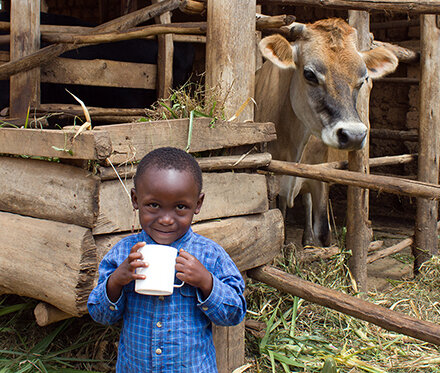
When you give the gift of a cow, or seeds for crops, you can change a family’s life. In one impoverished community in rural communities in Uganda, CICO - Uganda donors have become like celebrities for all of the generous gifts of hope — especially cows — that they have given to so many families over the years. The greatest gift is often not the gift itself — but what it inspires in the hearts of those who receive it.
Our Response
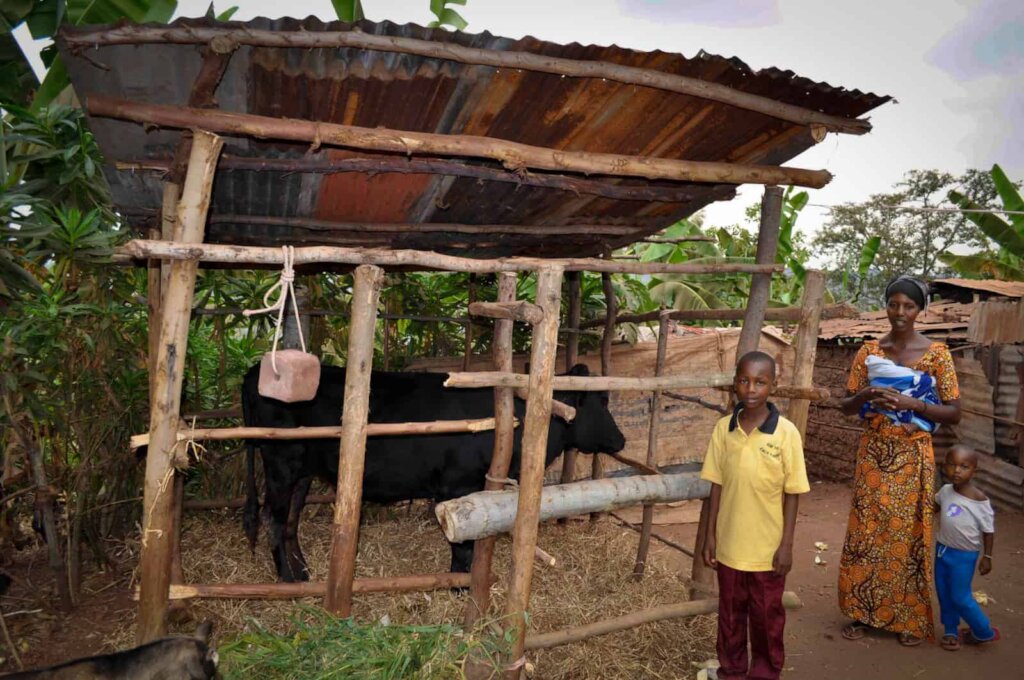
With your support, 26 families living in poverty in the jurisdiction we serve received a cow. Families living in extreme poverty were selected from across four villages. These families had the land needed to raise livestock but did not yet own any animals. Each family participated by building a cowshed to house their new cow. Our local partners helped train each family on modern ways of animal farming and showed them how to use cow rearing to improve their living conditions.
Local field officers made partnerships with government veterinary officials to ensure that the cows gifted to families met the standards provided by the local leadership. Before each family received their gift, veterinary officials thoroughly examined the cows to confirm they were healthy and pregnant.
After the cows were gifted to their new families, the pass-on practice of kuziturirana was immediately implemented. That is, when some of the distributed cows gave birth, one calf was given to the next selected Compassion participant that missed the first opportunity to participate. This pass-on practice ensured that this intervention is used to bless many more families.
In partnership with local leadership, follow-ups on the families and their gifted cows have taken place. Cow rearing has been a great success for the participating families. Out of the original 26 cows, more than two-thirds gave birth to healthy calves and the others are still gestating. A few are being followed up by veterinary officers to determine the cause of conception delays. When the calves turned 12 months old they were given to new families and to families that had lost their cows during birth.
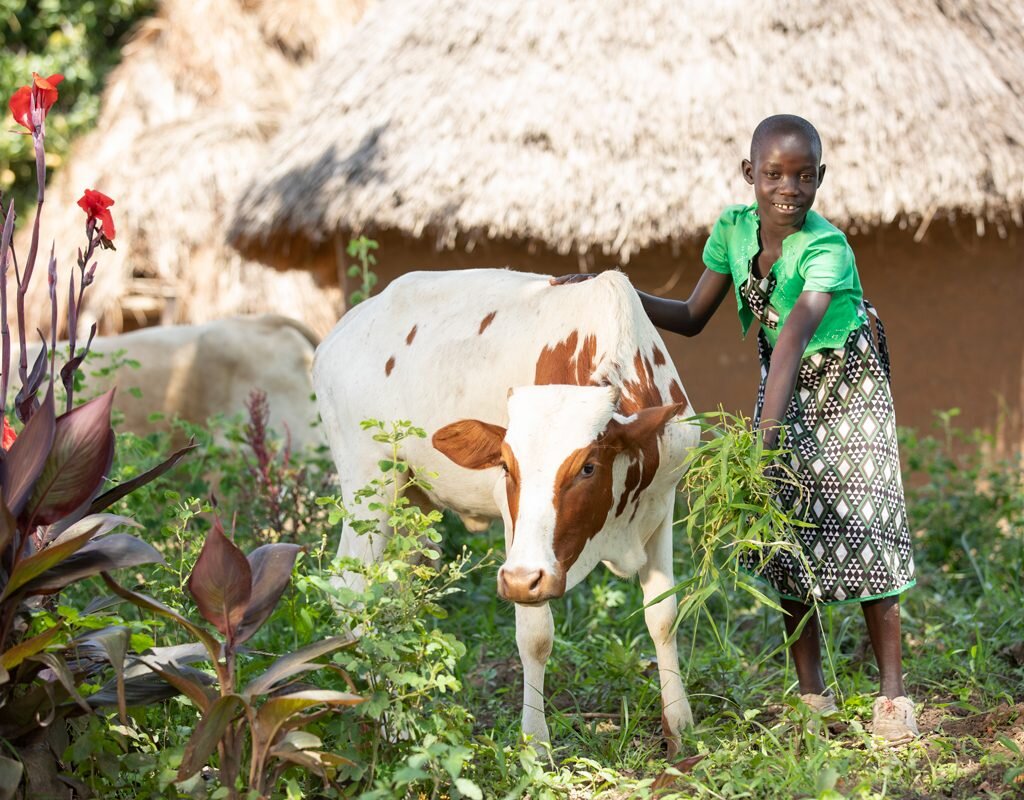
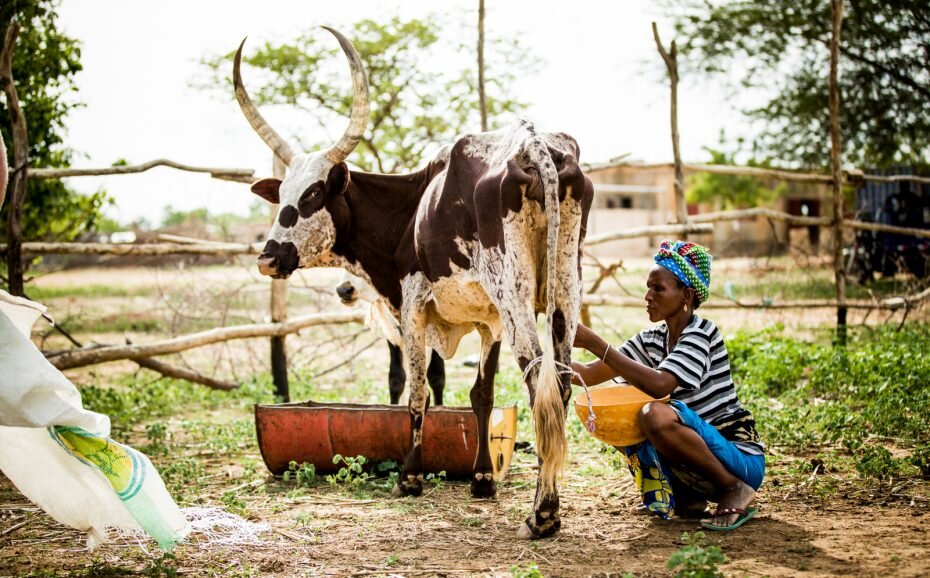
During the initial cow-rearing training phase, veterinary officials worked with entire families to empower each member to participate in cow rearing. Together with their caregivers, children happily participate in taking the cows out for grazing, fetching water for the cows to drink and cleaning cowsheds. Thanks to your support, children and families learned important agricultural skills, gained access to fresh milk and now have a source of stable income.
Activities
Fertilizer: Families dedicated time to collecting and stocking cow manure for future use. Some of the manure is sold to community members and some is used to fertilize their own crops.
Bountiful harvests: Adding organic manure to fields and crops has improved soil quality and increased crop production. Many families have experienced a bountiful harvest of maize, beans, sorghum and bananas.
Gifting ceremonies: Calves were gifted to participants who missed out on the first round of cow distribution and to two primary families whose cows had died while giving birth. Church leadership and local authorities officiated the pass-on ceremony.
An important gift: Cow keeping is a practice deeply rooted in the culture of rural communities. Getting a cow is a life-changing event that can help families break the cycle of poverty.
Your Gift Provides...
• Cows for 26 families in rural communities (one cow per family)
• Training for caregivers on modern animal-rearing techniques
• Animal feed
• Cow-barn construction
• Professional consultation and labour
• Follow-up and reporting
![Share on Twitter]()
![Share on Facebook]()