By Kerri Thomson | Manager, Justice and Legislative Affairs
Hi there,
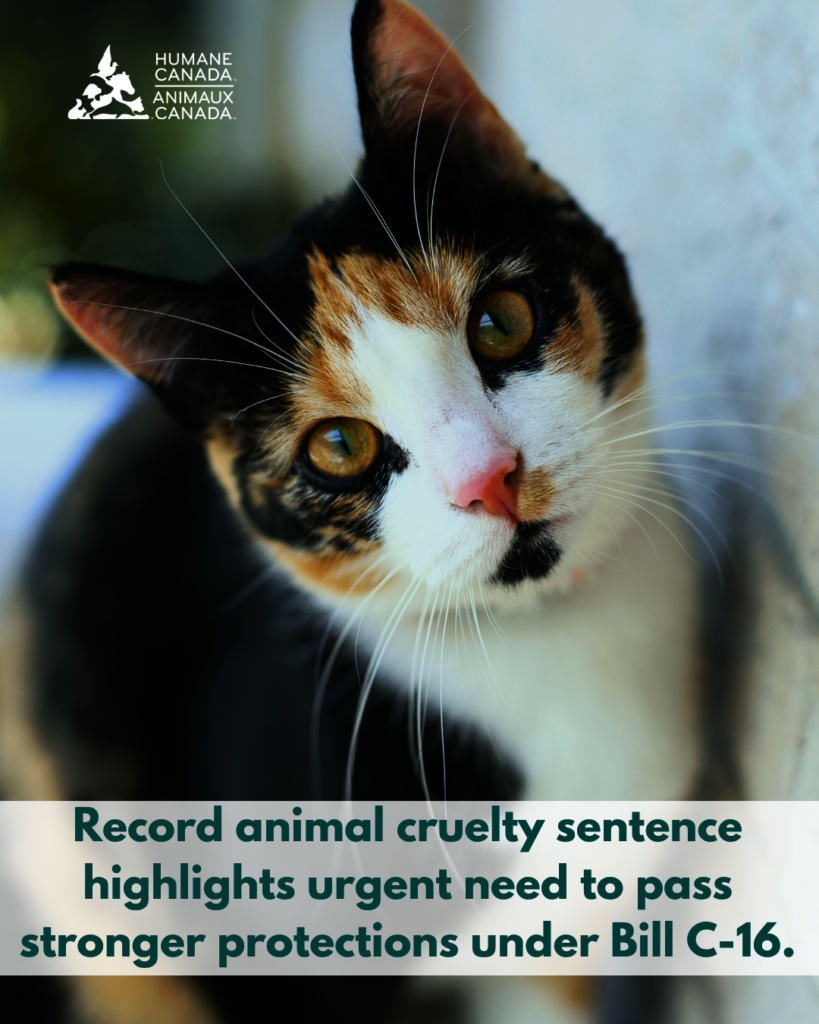
We are so happy to share with you that in June, Bill C-16, the Protecting Victims Act, has received Royal Assent.
This bill criminalizes the distribution of animal sexual abuse images, material that has been used to groom, manipulate, and exploit vulnerable individuals, including children and youth. It also expands protections for people whose animals are harmed or threatened as a form of coercive control, a tactic widely used in intimate partner violence and criminal harassment.
For years, Humane Canada has worked alongside our members and supporters to raise awareness of the link between animal abuse and human violence. Now, Bill C-16 will strengthen protections for animals harmed or threatened as part of family violence and criminalize the distribution of animal sexual abuse material.
This victory belongs to supporters like you. Thank you for speaking up. Your support helped make this change possible. We could not be more grateful.
This win is worth celebrating, but there is still more work ahead.
Online harms bill introduced in Parliament, falls short in animal protection
On June 10th, Bill C-34, the Safe Social Media Act, was introduced in the House of Commons. Bill C-34 aims to tackle harmful online content, but it still does not explicitly include animal harm. Experience tells us that when animal abuse is left out of legislation, it can be overlooked in practice.
This bill comes at a time when the need for regulating harmful content online has never been more necessary. Humane Canada’s latest research, Beyond Promising Practices: Examining Root Causes of Online Radicalization, highlights animal abuse as a warning sign in the online radicalization of youth, with violent online spaces using cruelty to normalize harm.
Some of the key findings are that 80% of survey respondents reported that rhetoric from boys and young men has become more violent and aggressive over the past five years. However, it is not only boys: 73% of respondents indicated that girls and young women are also exhibiting violent behaviour online. This research points to the rising use of animal abuse content in online misogyny, nihilism, and extreme violence in digital spaces that is often intensified by algorithms that push users toward more harmful material.
Humane Canada will continue pushing forward to include animals in policies. Every contribution helps Humane Canada influence public policy, advance animal welfare, and create lasting change for animals.
Thank you for your continued support.
Links:
By Kerri Thomson | Manager, Justice and Legislative Affairs
By Melissa Devlin | Manager, Annual Donor Relations & Engagement
Project reports on GlobalGiving are posted directly to globalgiving.org by Project Leaders as they are completed, generally every 3-4 months. To protect the integrity of these documents, GlobalGiving does not alter them; therefore you may find some language or formatting issues.
If you donate to this project or have donated to this project, you can receive an email when this project posts a report. You can also subscribe for reports without donating.



Support this important cause by creating a personalized fundraising page.
Start a Fundraiser