By Tulio Davila and Campbell Plowden | Project leaders
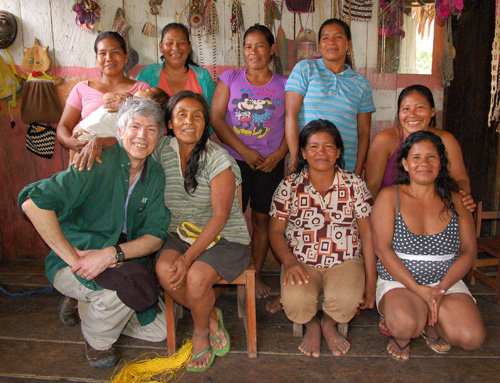
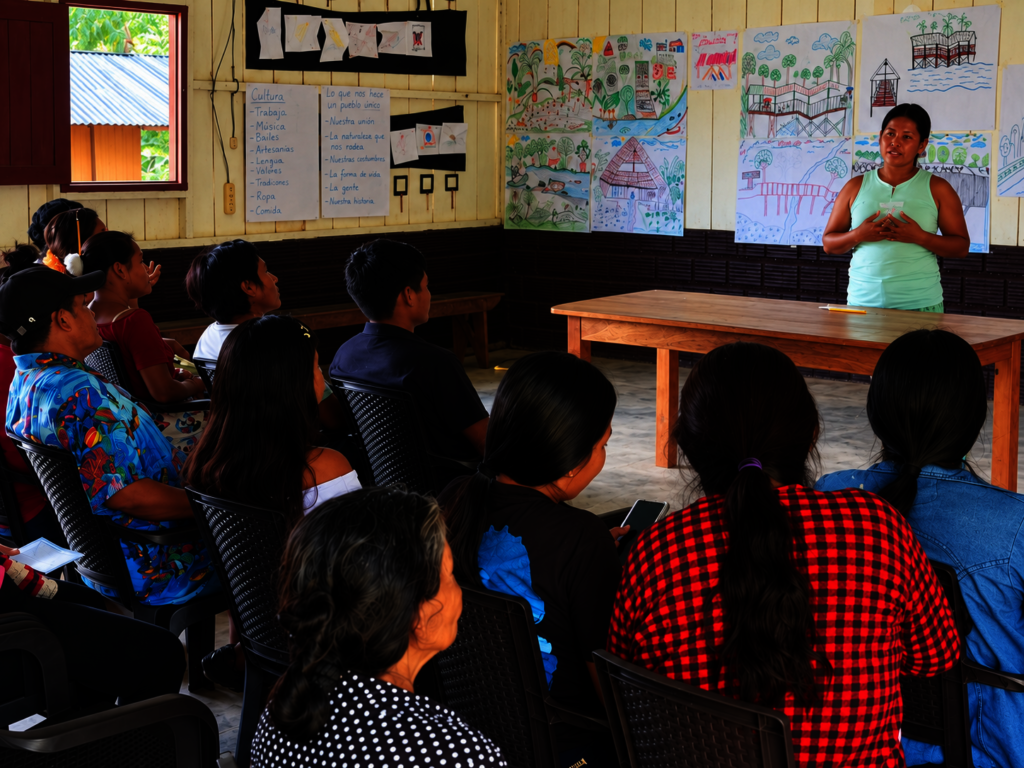
From August 3 to 5, we held a workshop in the Huitoto community of Pucaurquillo that was quite different from the activities we usually organize with our artisan partners.
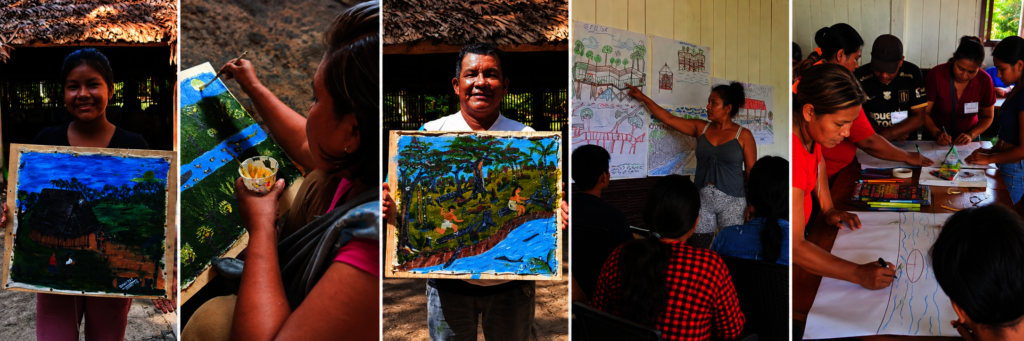
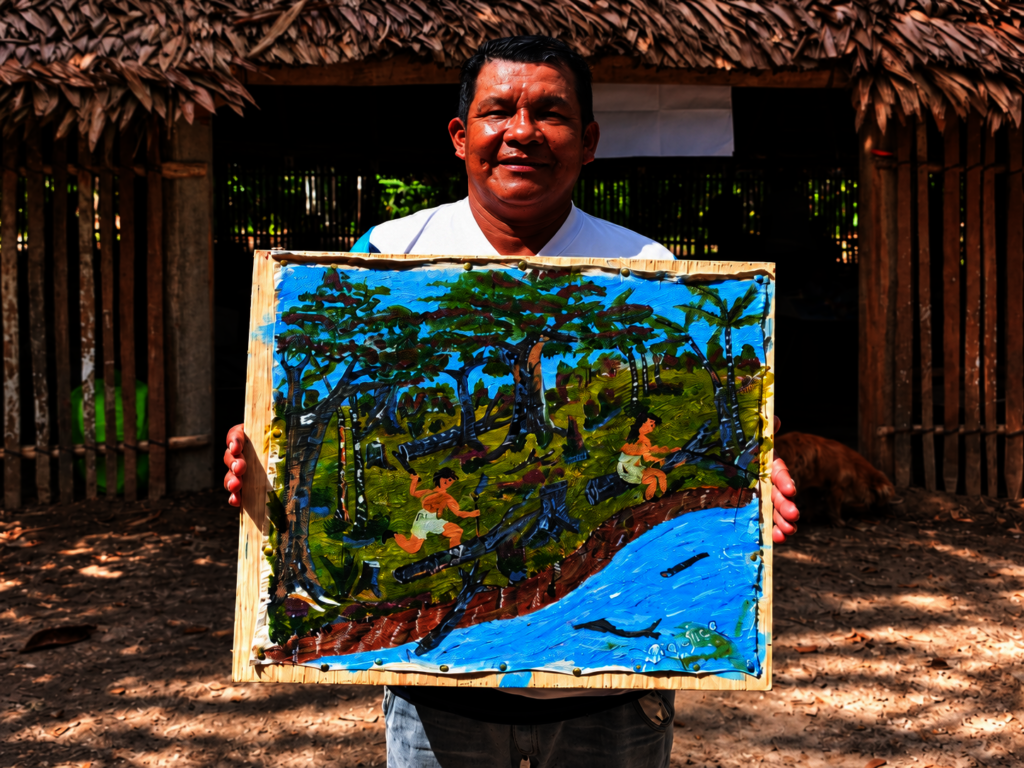
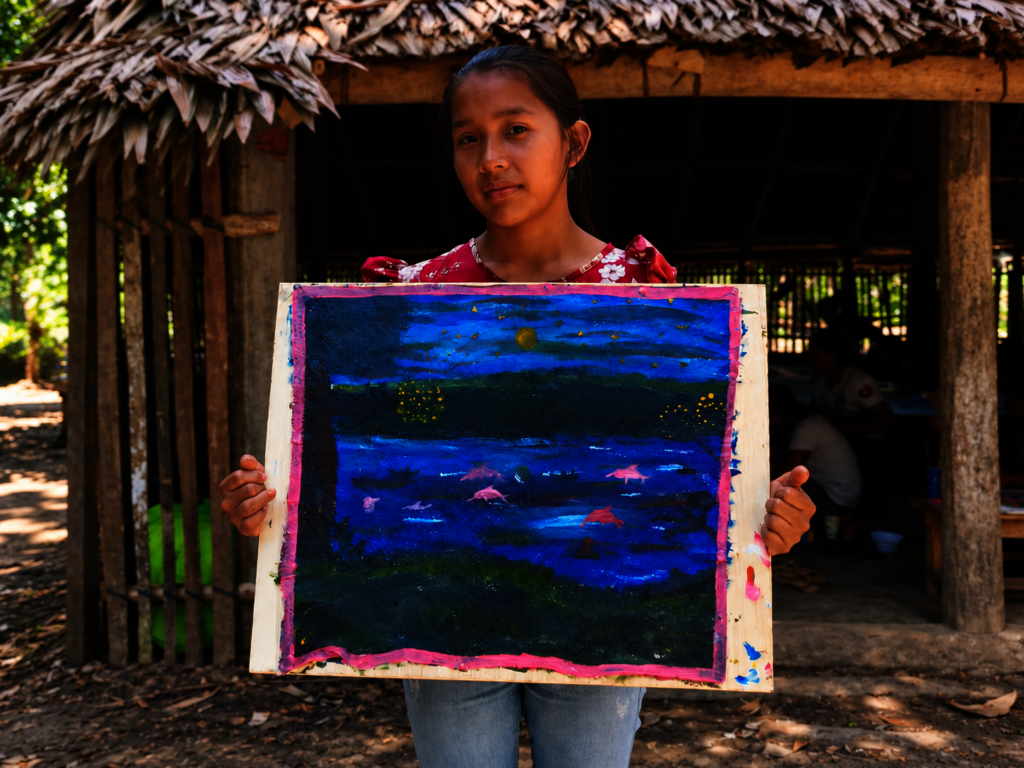
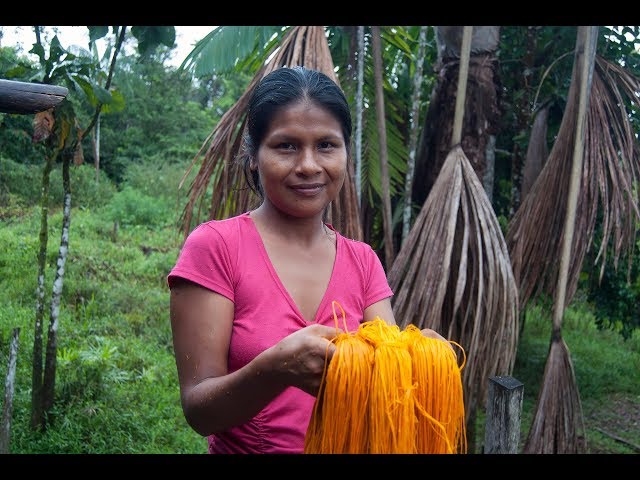
This time, we did not bring chambira palm fiber or new weaving designs. We brought pencils, paints, and an invitation: to tell stories through art.
The workshop was supported by the Creative Action Institute (CAI), whose role went beyond providing funding. During the planning process, we held several virtual meetings to review activities, share progress, and receive suggestions. This collaboration helped us shape the workshop around its goals and strengthen the approach we ultimately used in the field.
Nineteen participants from the Huitoto and Bora communities of Pucaurquillo, Estirón del Cuzco, San José de Piri, and Betania came together for three days to talk about their experiences, their communities, and the changes they consider important in their lives.
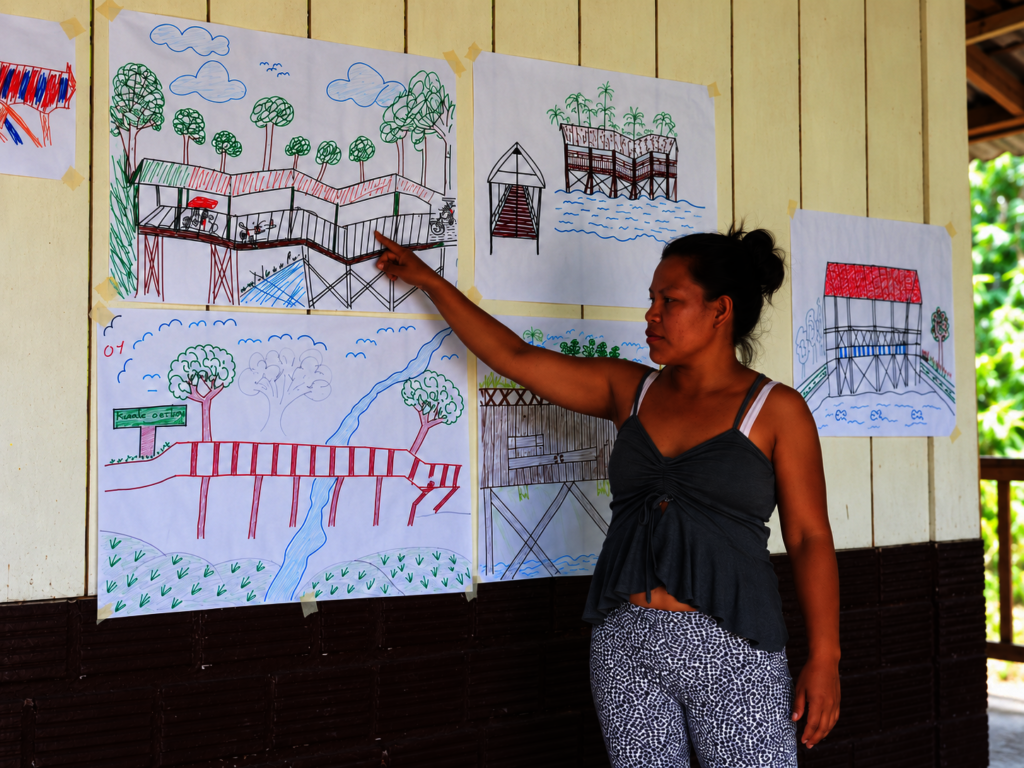
The workshop was designed to strengthen the voices and creative confidence of our artisan partners by helping them express their experiences through visual art. Participants explored themes closely connected to their daily lives: culture, community, territory, the forest, handicrafts, and livelihoods.
This work complements Amazon Ecology’s broader mission. We partner with traditional communities to help families build sustainable livelihoods while strengthening their communities and conserving the forests and natural resources on which their lives depend. Supporting people’s ability to tell their own stories, reflect on their cultural identity, and share their knowledge is another important part of that process.
We were fortunate to have the guidance of Darwin, a local Bora artist whose work has been exhibited in Peru and internationally, including exhibitions in Spain, Ireland, and Norway. Having an accomplished artist from the same region lead the creative process gave participants an example of how Amazonian experiences and perspectives can be expressed through art and shared with audiences far beyond their communities.
The workshop contributed to our goals in several interconnected ways.
Culturally, participants used painting to recover and represent memories, knowledge, and Amazonian identity in new ways. These forms of creative expression can complement traditional skills such as weaving by helping artisans communicate the stories, places, plants, animals, and experiences that give their work meaning.
At the community level, the workshop brought together people from several communities and created a space for them to talk, listen to one another, and reflect collectively on challenges and possible solutions. Strengthening these relationships and people’s confidence in expressing their ideas helps build the community capacity that is essential for creating lasting improvements in livelihoods and well-being.
The workshop also reinforced connections between community life and conservation. Participants reflected on the forest, biodiversity, and natural materials such as chambira palm and llanchama tree bark. These resources are woven into both cultural traditions and local livelihoods. Protecting them and harvesting them responsibly are therefore not separate conservation goals, but part of sustaining community life for future generations.
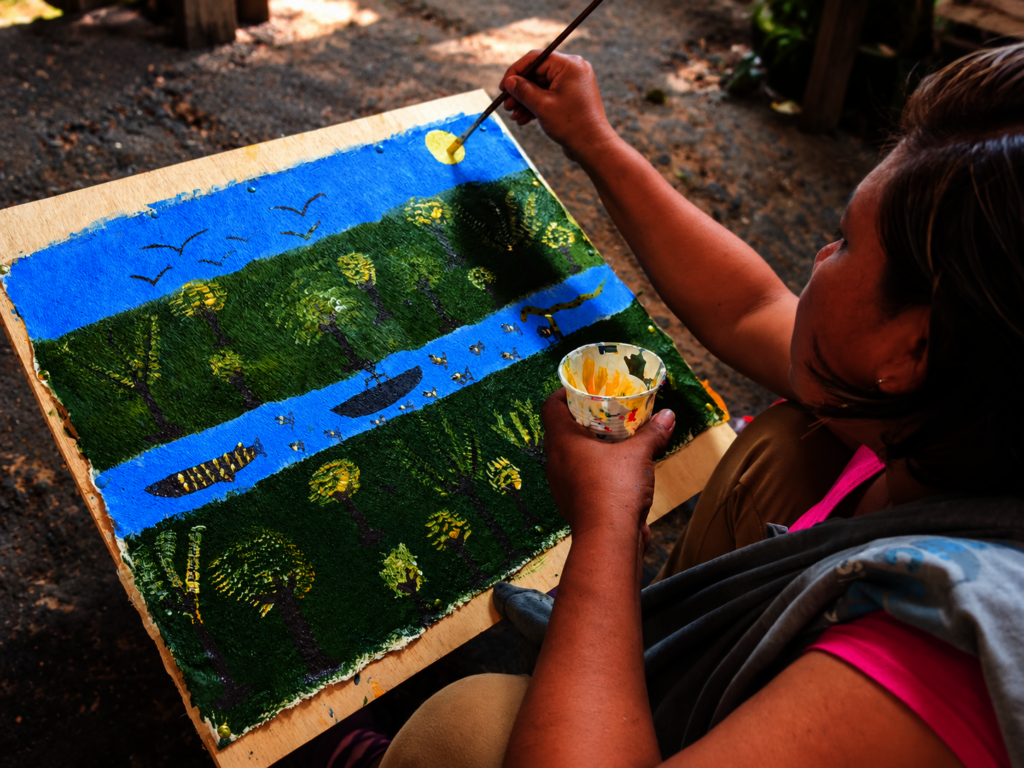
For many participants, painting was a completely new experience. Armando, from Betania, said that he had stopped drawing many years ago and initially knew very little about painting. During the workshop, he learned how to mix colors and began rediscovering an ability he thought he had lost.
“It is sad that many of us stopped drawing, but we can show that we are still capable of doing it. I knew nothing about painting, but now I have learned how colors are made and combined.”
Armando also expressed his hope that similar activities could reach more young people in the communities. His comment highlighted another important aspect of the workshop: creating opportunities for cultural knowledge and creativity to be shared across generations.
For Milda, from Pucaurquillo Huitoto, returning to painting had a personal meaning. She remembered painting when she was young, but many years had passed since then.
“I feel happy because I finally learned how to make a painting. I realize that I am a persistent person. When I set myself a challenge, I can keep trying as many times as necessary until I succeed.”
At the end of the workshop, she even set aside a small amount of paint so she could continue practicing on her own.
Luis also appreciated the opportunity to learn from Darwin, an artist from the same river basin whom he already knew through social media and through his experiences exhibiting his work abroad.
“I learned how to mix colors and prepare the materials needed to make a painting. We are leaving happy because we can see the beautiful results in our paintings.”
Perhaps one participant’s comment best captured what made these three days different from other workshops:
“This time I have to express my thoughts through painting. It is something different and beautiful, and that gives it another kind of value.”
That was exactly what we hoped to achieve.
Art was not simply the finished image on a sheet of paper or canvas. It became a tool for conversation, memory, confidence, and the expression of ideas that can sometimes be difficult to communicate through words alone.
These abilities are also relevant to our long-term work with artisans. Sustainable livelihoods depend on more than producing beautiful crafts. They are strengthened when artisans can communicate the cultural knowledge, personal experiences, and connections to the forest that lie behind what they create.
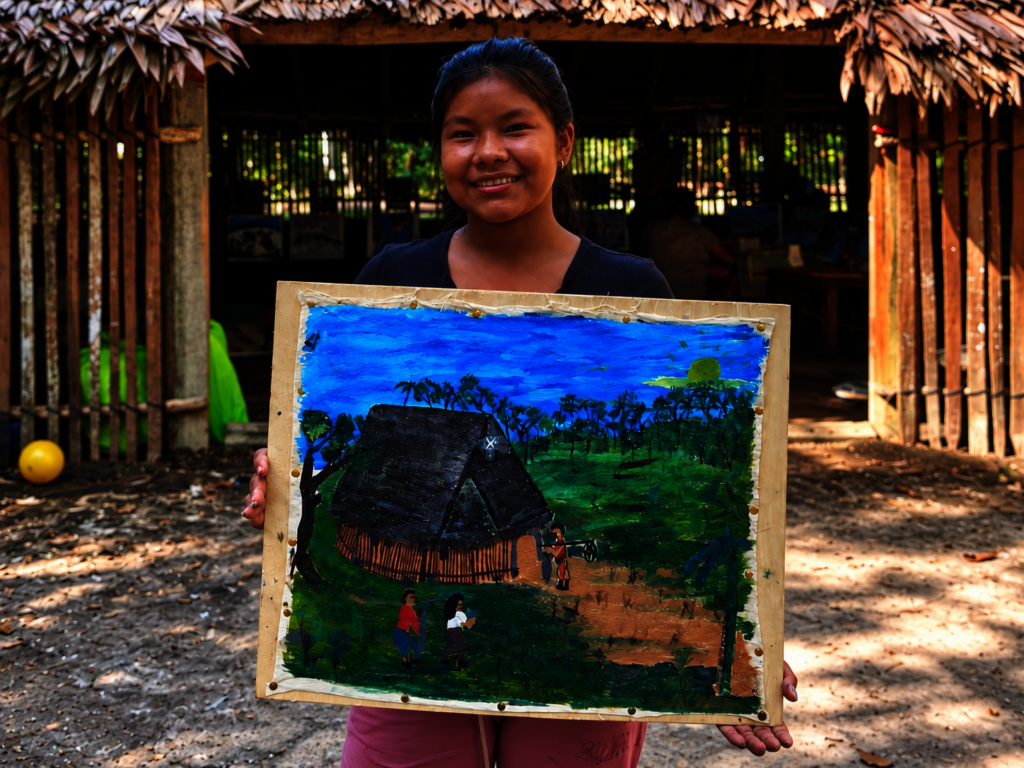
We finished the three days with completed paintings, new skills, stronger connections among participants, and enthusiasm for continuing the experience.
Preserving and strengthening Amazonian culture does not mean only maintaining the techniques people already know. It also means creating new spaces where people can express who they are, what they remember, what they value, and how they see the world around them.
For Amazon Ecology, these voices are part of the same larger effort: helping people create sustainable livelihoods, strengthen their communities, and care for the forests that sustain them.
This time, they told their stories with color.
We are deeply grateful to the Creative Action Institute for making this workshop possible. We are also grateful to all of you who have supported Amazon Ecology through GlobalGiving over the years. Your contributions sustain the relationships, fieldwork, training, coordination, and long-term presence that allow opportunities like this to grow. Your support helps us continue partnering with Amazonian communities to strengthen livelihoods, culture, community well-being, and forest conservation. Thank you for being part of this work.
Links:
Project reports on GlobalGiving are posted directly to globalgiving.org by Project Leaders as they are completed, generally every 3-4 months. To protect the integrity of these documents, GlobalGiving does not alter them; therefore you may find some language or formatting issues.
If you donate to this project or have donated to this project, you can receive an email when this project posts a report. You can also subscribe for reports without donating.



Support this important cause by creating a personalized fundraising page.
Start a Fundraiser