By Sarah Anzicek | Grant Writer/Development Coordinator
Credit card debt, accounts in collection and regular use of "payday loans" or other predatory lending companies is a big problem for many of the women that WEN serves. A great majority of WEN clients try to "keep up" by making small payments here and there to keep themselves afloat or just to keep the heat or water turned on in their homes. They know that their financial problems are beyond the scope of cutting expenses here and there, but don't have the knowledge or tools to get themselves out of their never-ending cycle of debt. Many women get to the point that their minimum payments on credit cards are only covering late payment fees, or are purely interest. Staying in this cycle all but ensures that their ability to get out of debt slips further away each month, and that the balance they owe will never decrease. Long-term unemployment and underemployment exacerbate already critical financial situations by fostering a reliance on credit cards and predatory lending. Increasing debt makes it difficult to emerge from the cycle of poverty even after finding employment, if the worker's paychecks must be directed toward loan repayments with high interest rates. Teaching financial literacy helps individuals move away from living paycheck to paycheck and toward developing a long-term plan for financial stability.
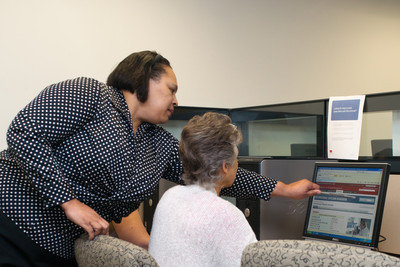
While WEN's programs have always included an element of financial literacy, the hiring of a full-time Financial Coach and addition of Financial Coaching and Credit Building to WEN's curriculum was a major development in our efforts to support all areas of clients' financial growth. WEN is now able to provide measurable, long-term support for clients as they overcome financial challenges. The Financial Coach meets individually with each client to determine financial goals and define an individualized game plan for clients to reduce their debt, build assets, and establish or repair their credit. WEN's program offerings are uniquely structured to meet the varying needs and skill levels of women in all stages of un- and under-employment. And, by regularly meeting with the Financial Coach, the clients learn how to transform their financial behaviors and shift their money management priorities. One of the great advantages to the Financial Coaching program is that behavioral shifts are often immediate, once clients are given the knowledge and tools. Therefore, the connection between action and effect (reward) reinforces the client's dedication to budgeting behaviors and debt management.
By Sarah Anzicek, AICP | Grant Writer/Development Coordinator
By Sophie Klein | Grant Writer/Development Coordinator
Project reports on GlobalGiving are posted directly to globalgiving.org by Project Leaders as they are completed, generally every 3-4 months. To protect the integrity of these documents, GlobalGiving does not alter them; therefore you may find some language or formatting issues.
If you donate to this project or have donated to this project, you can receive an email when this project posts a report. You can also subscribe for reports without donating.