By Robert Rutherford | Resource Development Officer
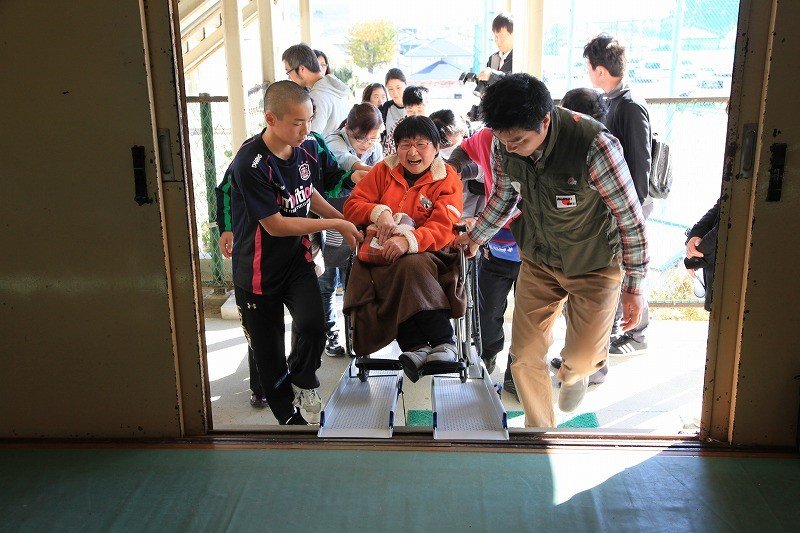
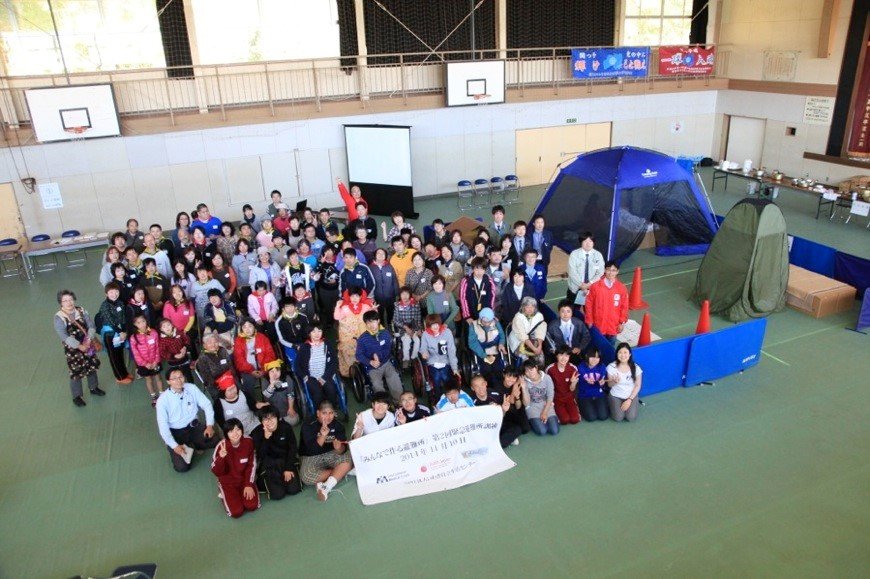
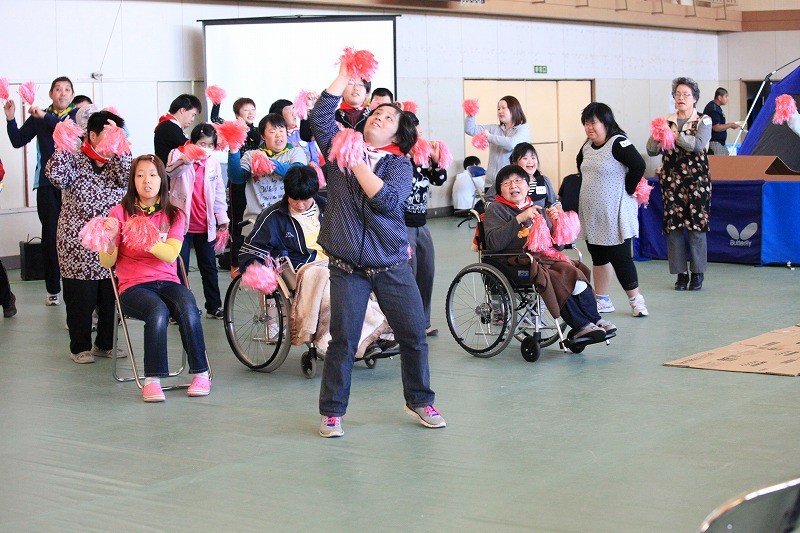
On November 10, 2014, International Medical Corps and the Association for Aid and Relief Japan (AAR Japan), in partnership with local Persons with Disabilities (PWD) supporting organization Iwaki Jiritsu Seikatsu Center (IJSC), conducted its second emergency shelter simulation targeting the needs of PWDs. Over 100 people took part in this exercise, including 42 PWDs, 27 caregivers, and 11 junior high school students. The majority of PWDs participating this time had physical (wheelchair-bound), psychological, and/or mental impairments. The event took place again in the gymnasium of Iwaki City’s Nakoso Second Junior High School, the typical location for an emergency evacuation center in times of natural disaster in Japan.
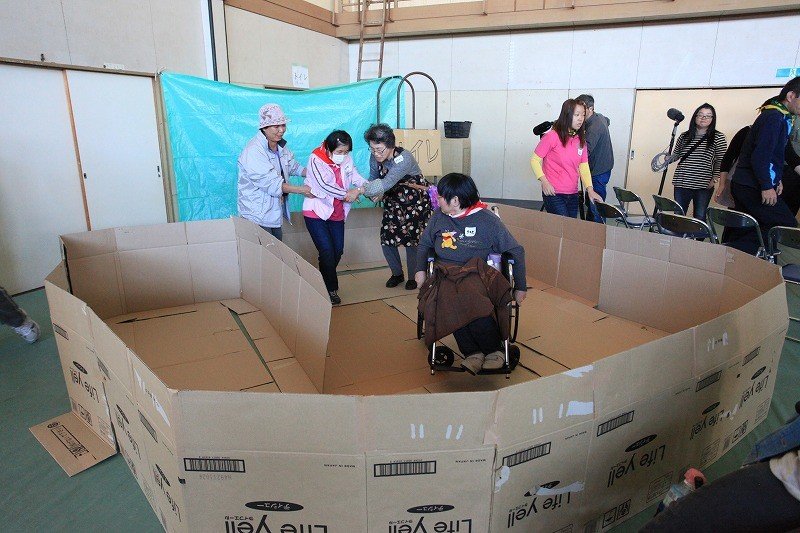
After welcoming everyone to the event, a 5 minute DVD summary of the last simulation exercise was shown to the participants. They were then briefed on the lessons learned and suggestions given by the participants the last time. Yoshiyuki Komatsu from IJSC demonstrated how the lessons learned last time were incorporated into the mock emergency shelter set up in the middle of the gymnasium, such as putting in tactile paving to assist the visually impaired to navigate the space, making sure aisles were wide enough to accommodate wheelchair users, and reserving living spaces near exits for the physically impaired. Participants were encouraged to explore the mockup during their free time and to give their feedback as well as other improvements that they felt should be made.
Similarly to the last emergency shelter simulation exercise we conducted in July, the participants were then split into 4 groups consisting of PWDs, caregivers, students and members of the general public. Each group took turns participating in activities at 4 “checkpoints.” Each checkpoint had a designated facilitator to give a short interactive lecture on the topic and to encourage the participants to think about the issue at hand and come up with solutions to identified obstacles. One junior high school student was appointed as note-taker for each group to record the participants’ comments and the important points made at each checkpoint.
Checkpoint 1: “Communicating” – Caregivers and other participants played the role of registration desk officials while PWDs practiced conveying essential information about themselves and their needs at a mock registration desk.
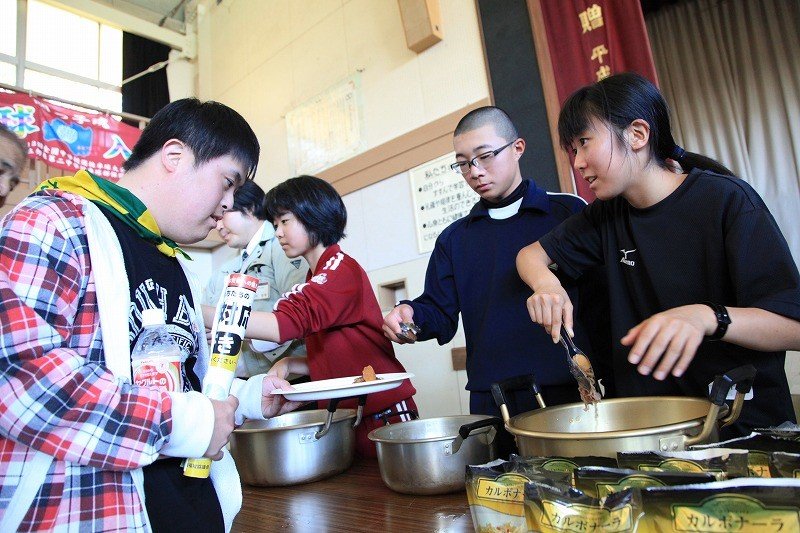
Checkpoint 2: “Emergency Rations: What Should We Eat?” – The facilitator showed the participants all the different kinds of emergency food we would all be having for lunch and explained how each item was being prepared by the volunteers. Additionally, he explained that emergency rations didn’t need to be these specially packaged foods with a 3 to 5 year shelf-life; emergency rations can just as easily be canned and dried goods with a shorter shelf life, eaten during normal times and restocked. It was stressed that those who have food allergies or other nutritional constraints needed to make sure to store foods that fit their needs and to be aware of the ingredients in the foods they are served at emergency shelters.
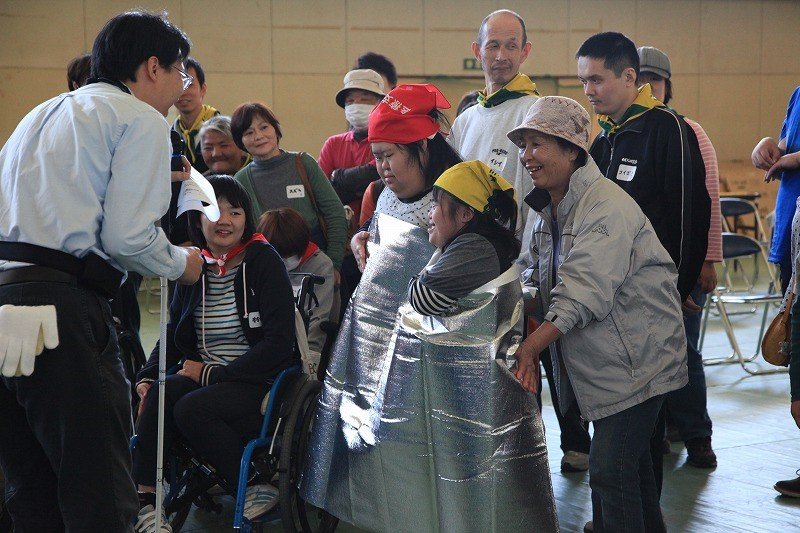
Checkpoint 3: “Handy Emergency Goods” – PWDs and their caregivers were given a short lecture about things around the house that come in handy in times of disaster, including flashlights, leather gloves, and towels. The facilitator also demonstrated the sound of a 3000hz whistle, which is the audio frequency most recommended by experts because of its ability to be heard over long distances by most people. Every participant received a similar whistle at the end of the day.
Checkpoint 4: “Taking Care of Our Health during a Disaster” – The facilitator stressed the importance of having a go-bag containing enough medication to last at least 3 days and of carrying around a copy of the list of medications one needs. As it is likely that symptoms can be aggravated by the stress of disasters, it was also stressed that it is crucial to talk with one’s doctor and caretakers and plan how to handle such situations. Once at an emergency shelter, one should not hesitate to tell those in charge of one’s needs (e.g., having to use the toilet, being unable to sit on the floor, being cold or thirsty, etc.) and to ask for assistance.
After the checkpoint exercise, the participants enjoyed a buffet-style lunch consisting of various kinds of emergency rations.
In the afternoon, the participants took part in three activities:
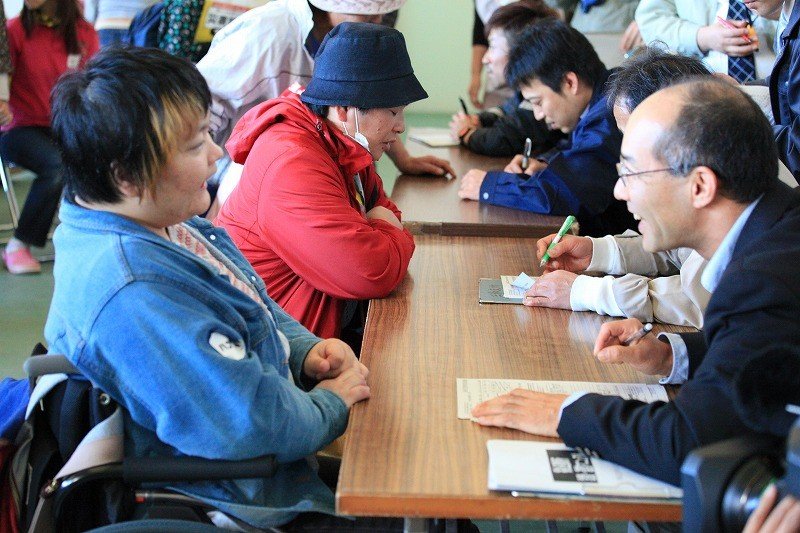
Registering at a Welfare Shelter: PWDs assisted staff members from Iwaki City Hall to pilot a questionnaire designed for the registration of PWDs at welfare shelters in times of emergency. Welfare shelters in Japan are shelters that accommodate to the needs of those with physical/medical/other needs that cannot be met at a traditional emergency shelter. The staff members commented that they greatly appreciated the honest feedback given to them by the PWDs and that they would work to improve the questionnaire to make it easier for PWDs to convey their needs.
Making My Own Space: This activity was particularly popular during the last simulation exercise so we incorporated it into this program as well. PWDs created their own sleeping/living spaces in the gymnasium using material such as cardboard and duct tape. Caretakers and volunteers assisted the PWDs with cutting and arranging the material to suit their needs.
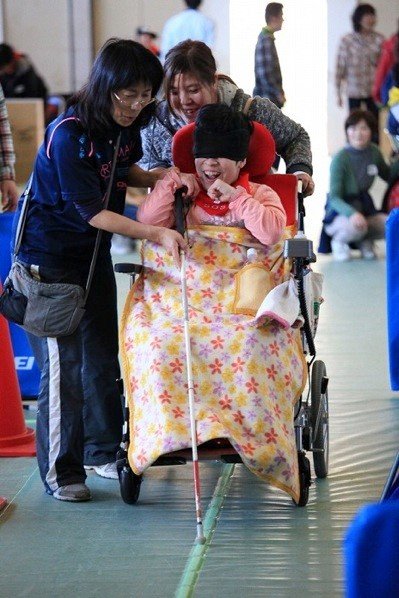
Navigating while Blindfolded: Participants used blindfolds and walking sticks to experience what it is like to be visually-impaired. With the help of a seeing navigator, each participant was encouraged to walk around the gymnasium and within the shelter mock-up.
After the afternoon activities, all the participants came together to share their experiences of the day. The student note-takers took turns summarizing the comments made by their group and what they had collectively learned. Finally, some of the PWDs gave their feedback on the event. All in all, the participants expressed satisfaction with the day’s event. One participant commented that she wished they could have had more participants with other disabilities so there would be even more diversity and they could all learn how to support each other.
This event drew much local media attention as the only emergency shelter simulation of its kind (i.e., focusing on the needs of PWDs). Staff members from Iwaki City’s Social Welfare Council also came to observe the program and commented that they hoped to use this event as a model for future simulation activities throughout the city and perhaps even throughout Fukushima Prefecture.
Project reports on GlobalGiving are posted directly to globalgiving.org by Project Leaders as they are completed, generally every 3-4 months. To protect the integrity of these documents, GlobalGiving does not alter them; therefore you may find some language or formatting issues.
If you donate to this project or have donated to this project, you can receive an email when this project posts a report. You can also subscribe for reports without donating.