By Jason Graber | Resource Development Officer
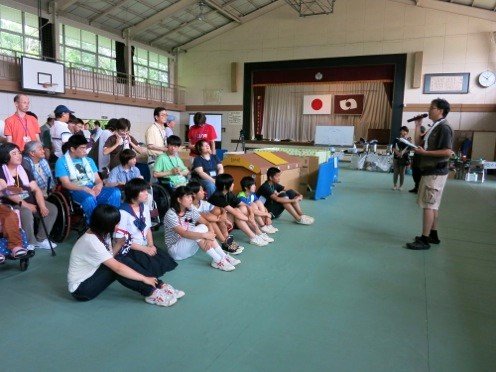
On July 26, 2014, International Medical Corps and AAR Japan, in partnership with the local PWD-support organization Iwaki Jiritsu Seikatsu Center, conducted an emergency shelter simulation focused on the needs of PWDs, the first exercise of its kind in Japan. Over 70 people took part in this exercise, including 21 PWDs (11 visually-impaired, 9 physically disabled, and 1 hearing-impaired), 20 caregivers, and 11 junior high and high school students. The event took place in the gymnasium of Iwaki City’s Nakoso Second Junior High School, as school gymnasiums are the typical venue for an emergency evacuation shelter in Japan.
The day was divided into morning and afternoon sessions. The morning session, themed “Discovery,” split the PWDs, their caregivers, and non-PWDs into 4 groups and had them take turns participating in separate activities at 4 “checkpoints”. Each group had a “navigator” to explain the rules of each activity and to encourage the PWDs to take the lead in identifying problems and brainstorming solutions.
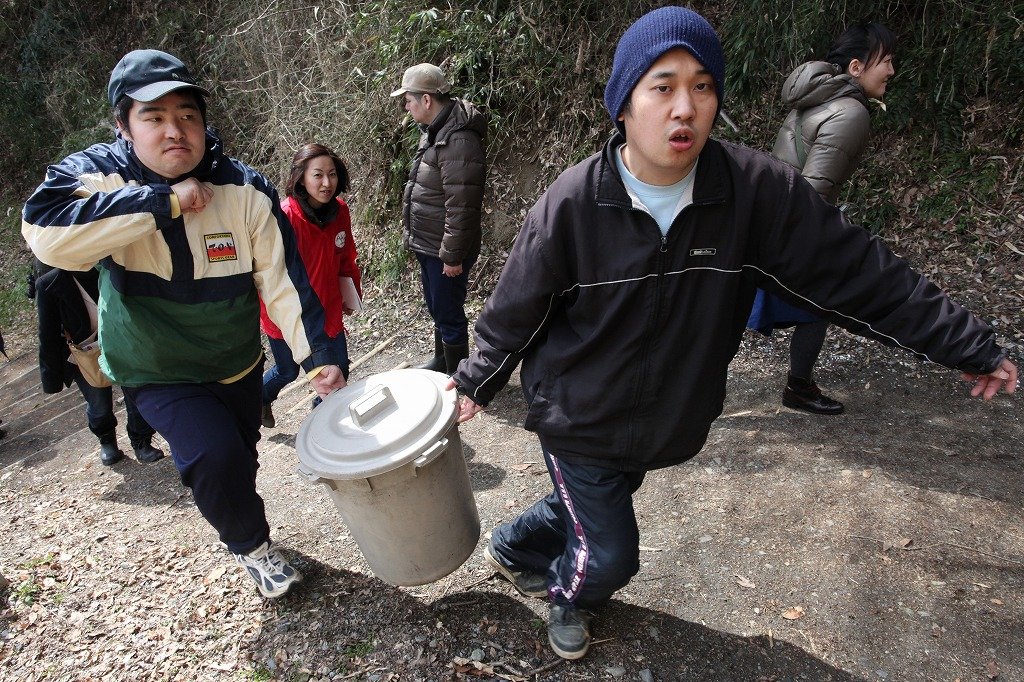
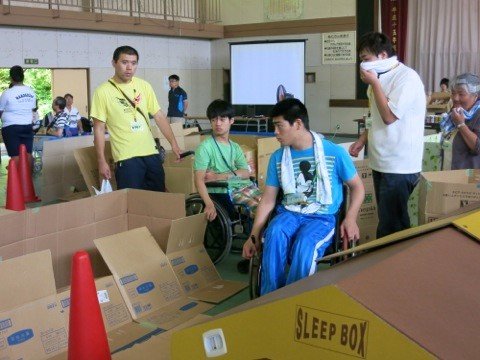
Checkpoint 1: “Barriers” – finding the various obstacles in a typical emergency shelter: People with different disabilities often experience obstacles in different ways. The participants explored the gymnasium and listed all the different barriers they found. They also discussed the various obstacles they faced in order to reach the gymnasium, such as navigating an extremely steep staircase and having to walk on slippery gravel. Those in wheelchairs had to be carried up the stairs by four people.
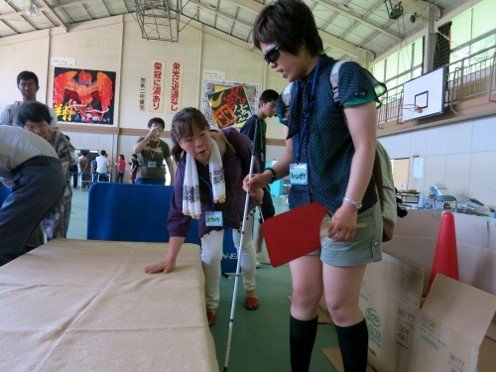
Checkpoint 2: “My Own Space”: A small-scale cardboard mockup of a “typical” emergency shelter was created in the center of the gymnasium, complete with narrow pathways, cardboard separations, etc. PWD participants were encouraged to explore the space and think about which spot in the gymnasium would be the best place to set up their living space. Individuals with visual impairments chose spaces near walls so that they could use them to feel their way as they walked around the gym, while individuals in wheelchairs tended to choose spaces near exits and toilets.
Checkpoint 3: “Items Available and Unavailable”: This exercise challenged participants to think about what necessary items they need depending on their particular type of disability, and check whether they could fulfill that need in the shelter. A selection of various objects and materials were then placed on a table in front of the participants, and they were encouraged to be creative in thinking how they would use different items to suit their needs.
Checkpoint 4: “Communicating”: PWDs were asked to think about what kind of assistance they would need (e.g., medication, specific assistance, dietary restrictions, etc.) and to practice conveying vital information at a mock registration desk. Additionally, participants wrote notes to check the status of loved ones, and taped them to a message board, which was a form of communication commonly used during the Tohoku disaster.
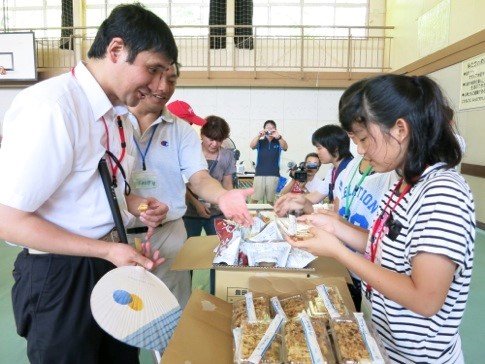
After the morning session, all the participants enjoyed a simple lunch consisting of “alpha-rice”, which is instant rice that can be made with either hot or cold water and often stored as emergency rations in places designated as emergency evacuation shelters. The participants commented that the rice tasted better than they expected.
In the afternoon, three additional activities were held:
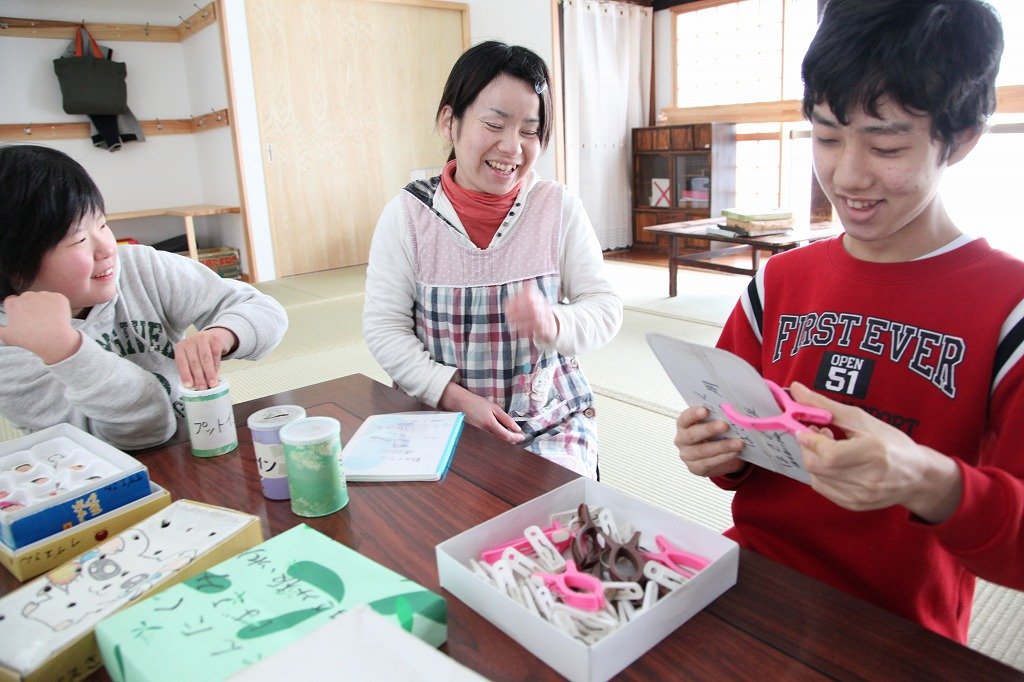
Creating an “SOS Card”: All participants created their own SOS cards with their vital information, including emergency contact numbers, the names of their medication, allergies, illness or handicap, prosthetics, needed medical equipment, etc.
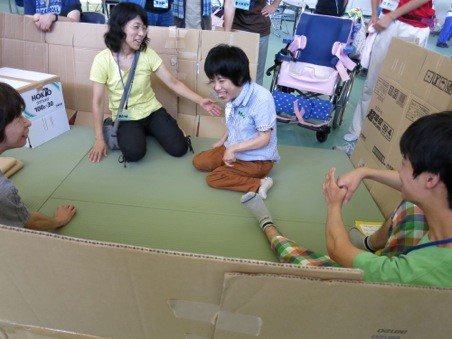
Making My Own Space: PWDs created their own “living quarters” in the gymnasium using various material available, such as gym mats, chairs, cardboard, etc. Other participants assisted the PWDs with using duct tape, cutters and scissors.
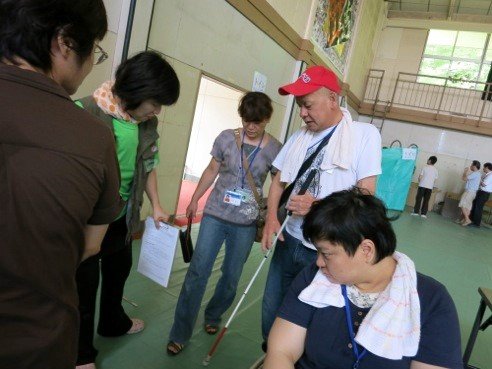
Supporting the Visually-Impaired: Mr. Wataru Murai, president of the Iwaki Social Welfare Association for the Blind, taught non-visually-impaired participants some pointers on how to guide visually-impaired individuals. A 30-foot obstacle course was also set up so that participants could use a blindfold and walking stick to experience a little of what it is like to be visually-impaired. In turn, visually-impaired participants borrowed the wheelchairs of those with physical disabilities and experienced what it is like to not be able to walk on their own.
At the end of the session, a final discussion was held where all participants could share their thoughts and lessons learned from the day’s activities. The lessons learned during this exercise will be utilized in the second emergency shelter simulation for PWDs that will be conducted in early October, 2014.
Project reports on GlobalGiving are posted directly to globalgiving.org by Project Leaders as they are completed, generally every 3-4 months. To protect the integrity of these documents, GlobalGiving does not alter them; therefore you may find some language or formatting issues.
If you donate to this project or have donated to this project, you can receive an email when this project posts a report. You can also subscribe for reports without donating.