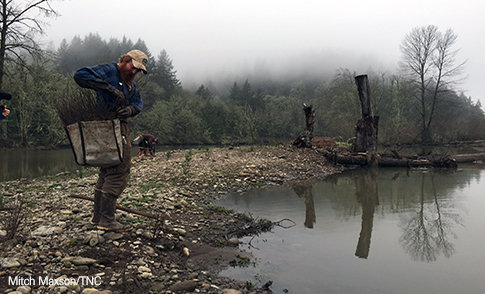
Since the 1850s, Oregon's Willamette River has been disconnected from its backwaters and side channels, which are critical connections that help keep drinking water clean, aid in flood control and provide habitat for native fish, including the threatened Chinook salmon. The Nature Conservancy in Oregon is reconnecting these historic side channels and restoring floodplain forests and grasslands-all with the hope of creating a healthy river that benefits the nature and people connected to it.
The Willamette River and its tributaries once supported robust populations of Chinook salmon and winter steelhead, as well as resident fish species such as cutthroat, redband and Oregon chub. However, the river has been transformed over the last two centuries, resulting in a widespread loss of floodplain and off-channel habitat and significantly harming native species, several of which are now listed under the Endangered Species Act.
Restoring the floodplain at the confluence of the Coast and Middle Forks of the Willamette River will provide a significant increase in the amount of floodplain and off-channel habitat and improve water quality conditions that will benefit fish populations and humans. Lessons learned from the project will be applied to other sites to help advance floodplain restoration and conservation locally and across the nation.
Over the next five years, the Conservancy will restore 630 acres of floodplain habitat, plant 240,000 trees and shrubs and restore 3.5 miles of side channel habitat. This restoration is critical, as it helps keep drinking water clean, aid in flood control and provide habitat for native fish, including the threatened Chinook salmon.