By Fiona Beckerlegge | Executive Director
Kyaninga Child Development Center is a non-governmental organisation which focuses on the rehabilitation of young children with disabilities from zero years to 18 years. This is done through a multi-disciplinary approach of different professionals, including occupational therapists, physiotherapists, speech and language therapists, orthopaedic officers and nutritionists. It also works with partners who provide other diverse services that make the whole rehabilitation holistic in nature. This is done in several districts in western Uganda, covering nearly 1,000 km2. Currently, children in Kyenjojo and Kamwenge Districts have a higher need for orthopaedic interventions that need constant attention and reviews to get long-term results. These districts do not have any active government services for orthopaedics in the district health facilities, putting financial strain on families to access distant clinics.
At the end of 2023, Richard, one of KCDC's orthopaedic officers, decided to take an innovative approach to increase access and support to families in these districts and conducted home visits and follow-up visits for 14 orthopaedic clients in the Kyenjojo district over 3 days. He found that some children had relapsed, and others needed further intervention. All their challenges were addressed, others managed, and the following children were reached, their challenges identified, and management plans drawn.
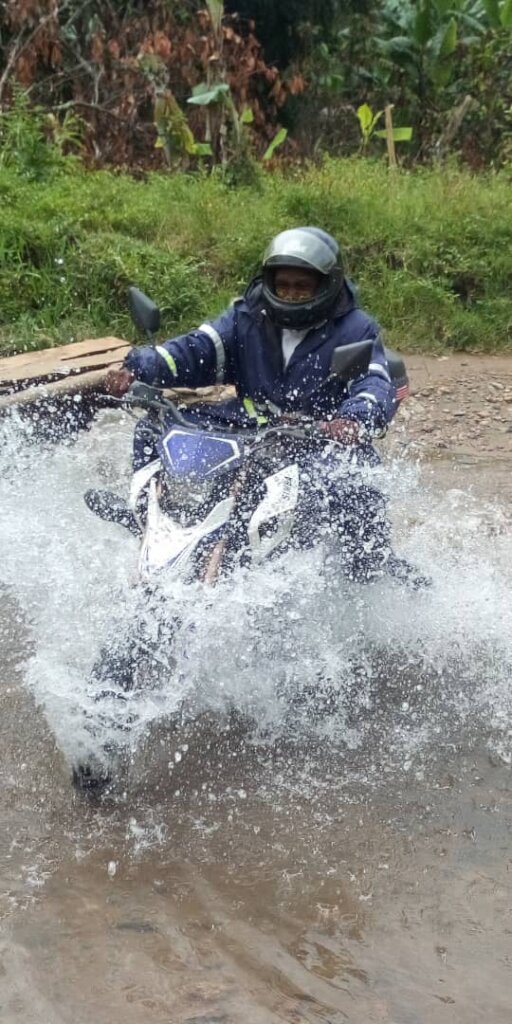
Richard faced many challenges in providing these services but persevered to ensure that all children were visited. Heavy rains each day made travelling by motorbike difficult and some roads impassable. Families had moved to different villages and were, therefore, difficult to locate, and many didn’t have phone access either, so he was unable to call and get new addresses. He worked with the local community health workers to help him find all but 3 families.
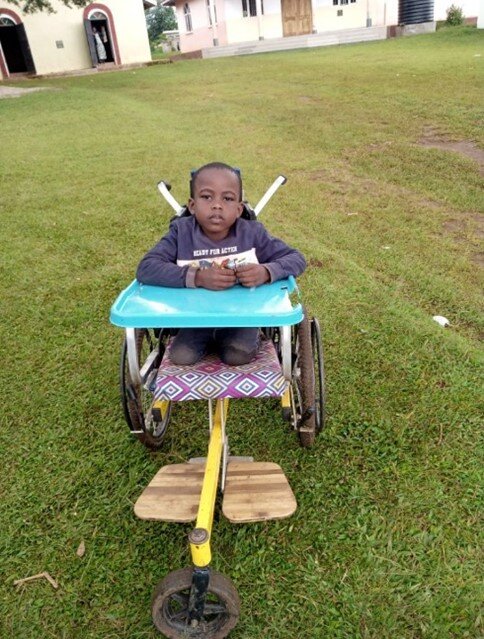
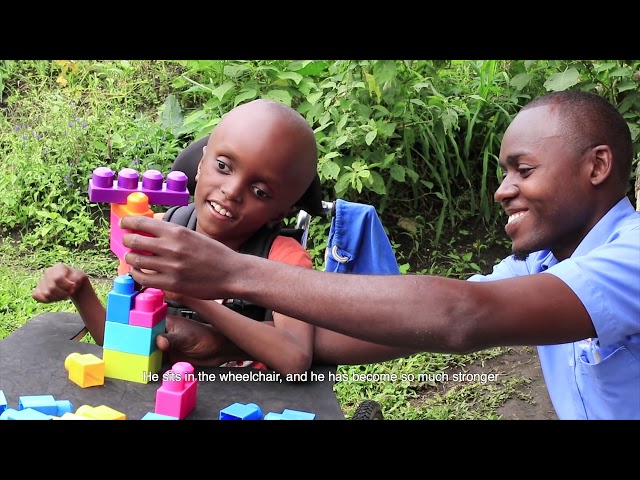
One of the families who benefitted from Richard’s innovative thinking was 5-year-old Nicholas. He was born with spina bifida and a lower limb deformity.
What is spina bifida?
Spina bifida occurs when a baby's spine and spinal cord do not develop properly in the womb, causing a gap in the spine. Spina bifida is a type of neural tube defect. The neural tube is the structure that eventually develops into the baby's brain and spinal cord. Depending on the severity, children can be paralysed below the level of the gap, including affecting the bladder and bowel. This can affect their ability to sit, stand and walk.
What is the main cause of spina bifida?
Spina bifida is caused by poor maternal nutrition. Not having enough folic acid during pregnancy is one of the most important factors that can increase your chances of having a child with spina bifida. Folic acid (also known as vitamin B9) occurs naturally in some foods, such as broccoli, peas and brown rice. These are not common foods in rural Uganda, and without antenatal care and folic acid supplements, many children are at risk.
Nicholas uses a wheelchair for mobility but is facing challenges with toileting as he has to crawl to the latrine as there is not enough space for the wheelchair. He is also being rejected by his friends due to his incontinence, not being able to keep up with their play and the dirt from being on the ground much of the time. Nicholas also feels pain when he sits on the chair without a cushion, which limits where he can go if there isn’t space for his wheelchair.
Richard met with his class teacher and concluded that he would benefit from his parents and the school caretakers receiving training in continence management techniques to aid the child in keeping dry. He also needs crawling pads for his knees to help him access the latrine in a clean way. The latrine was assessed for wheelchair access, but this is not possible, and we will need to source funds to build a wheelchair-accessible toilet that he can use as he ages.
Richard intends to return to Kyenjojo district to follow up with Nicholas and his other clients who are unable to travel to KCDCs offices or partner health centres in the next few weeks.
We are grateful for Richard’s dedication to his clients to ensure that they receive what they urgently need to increase their functioning and quality of life. We are also grateful to your donations that make the employment of dedicated officers like Richard and the work that he does possible.
Links:
Project reports on GlobalGiving are posted directly to globalgiving.org by Project Leaders as they are completed, generally every 3-4 months. To protect the integrity of these documents, GlobalGiving does not alter them; therefore you may find some language or formatting issues.
If you donate to this project or have donated to this project, you can receive an email when this project posts a report. You can also subscribe for reports without donating.



Support this important cause by creating a personalized fundraising page.
Start a Fundraiser