![Teachers raise hands to commit to protect children]()
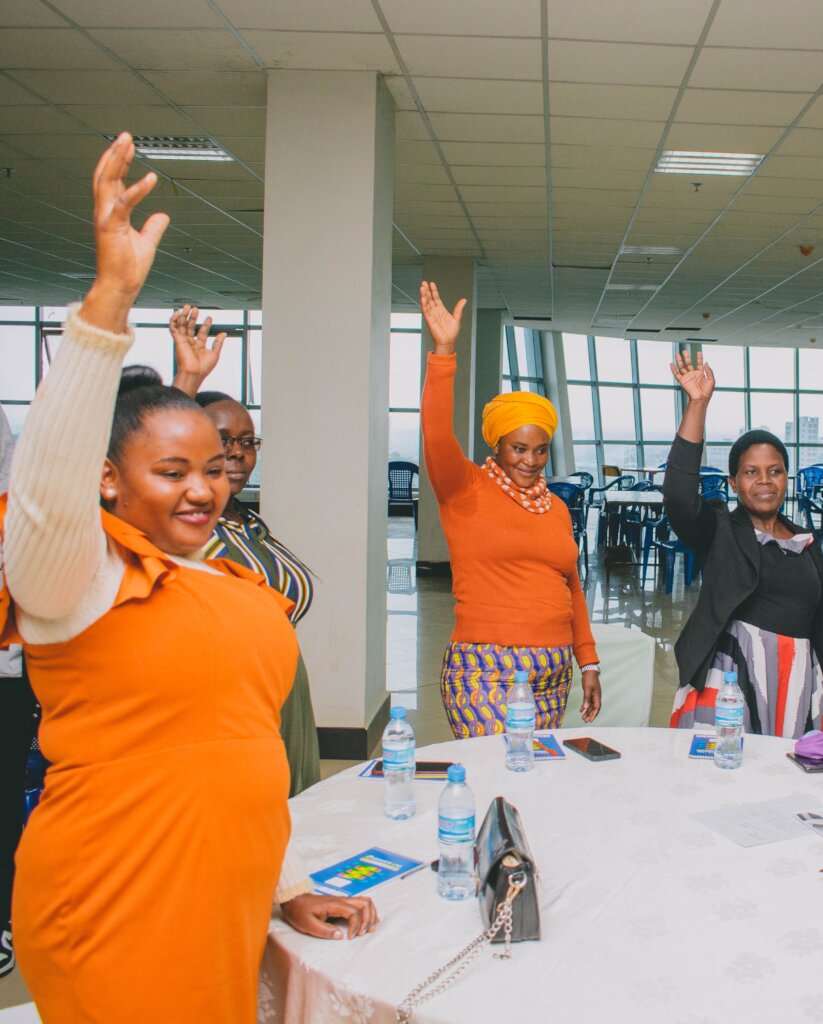
Teachers raise hands to commit to protect children
The project began with weeks of planning from a distance, with a primary focus on adapting an existing child rights curriculum to fit the needs of our target audience and the current status of child rights and protection in Tanzania. We also paid special attention to how to engage female teachers in an intensive training on such a serious topic and help them recognize their power to change the lives of children in their schools and the broader community.
The culmination of the project was a two-day in-person child rights and protection training for grade 1 school teachers in Moshi Municipality, Kilimanjaro, Tanzania. We conducted the training at the NSSF building, adjacent to Moshi Municipal Council office, a venue at the heart of Moshi town that all teachers from the area could access easily.
The training was based on a child rights curriculum developed several years ago by and for Tanzanian professionals working with young children. (Note that Dr. Erickson was a principal writer of that original curriculum and a facilitator of that project, traveling to Tanzania several times from 2008 through 2010.) Included in the updated training for our current project were key principles and specific rights covered by the UN Convention on the Rights of the Child; specific strategies for child protection and abuse prevention; and practical ways teachers can advocate for child rights and abuse prevention in their schools and the larger community. Each training session started at 7:30 AM with breakfast and social networking, and ended at 5PM.
Project Goal
To improve child protection capacity through a child rights training delivered to at least 65 primary school teachers in Moshi, Kilimanjaro, Tanzania
Day 1: The first day of the training, teachers learned about similarities and differences between children’s needs and rights, as well as critical experiences for healthy childhood development in the early years. Next they learned about the UN Convention on the Rights of the Child (UNCRC), basic principles of that international treaty, and various categories of rights included in the treaty. Participants also discussed the extent to which child rights currently are protected in Tanzania, as well as groups of children whose rights most often are violated in Tanzania, including for example children with disabilities and/or female children. Even though Tanzania ratified the UNCRC in 1991, putting the treaty into law and practice is an ongoing process, and teachers have much to contribute.
Day 2: The second day of training began with discussion of a child’s right to be heard, with participants generating ways to give children a voice in things that matter to them, even at very young ages. Throughout the day we also addressed the complicated principle of always considering “the best interest of the child,” as well as situations in which a child’s rights and parents’ rights may be in conflict.
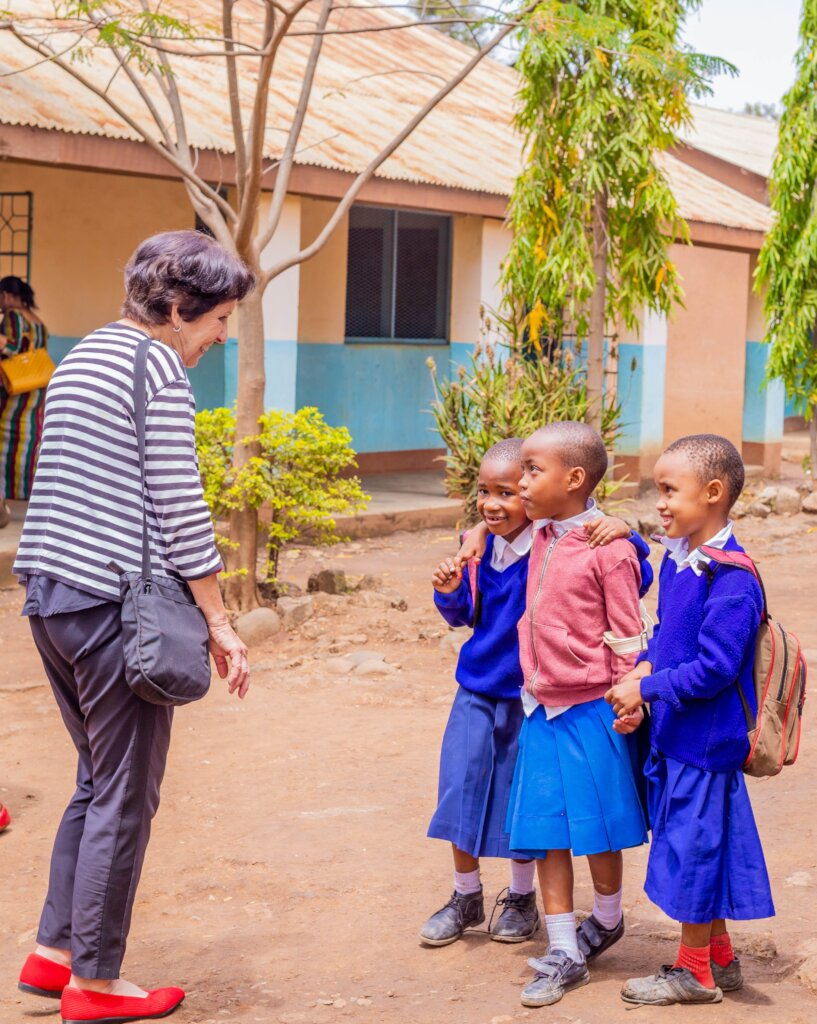
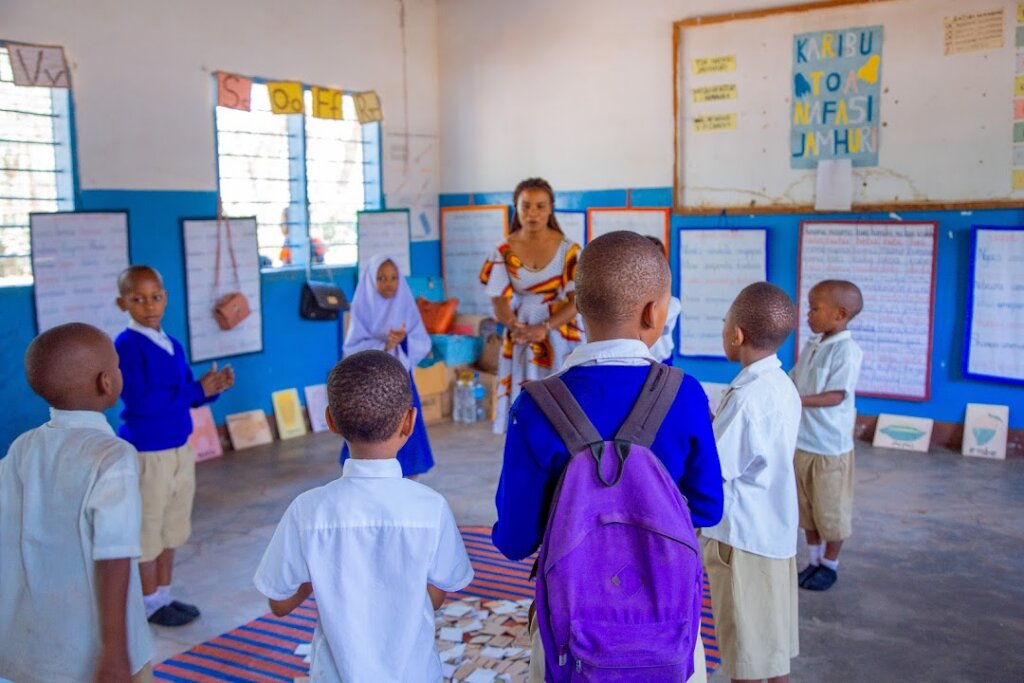
Late that morning of the second day, teachers were divided into two groups and visited two schools, Jamhuri Primary School and Korongoni Primary School, to observe the following:
a) Examples of teachers respecting child rights;
b) Children respecting or advocating for the rights of their peers;
c) Opportunities in classrooms to respect and promote the rights of children.
Observers also were encouraged to reflect on their own practices of respecting and promoting childrights in their classrooms, considering ways they could more effectively create a rights-based classroom environment.
The final two modules of the training curriculum followed immediately after feedback from the school observation and practice session. Module 4 began with a short storytelling session where Marti and Nova briefly talked about their own experiences of sexual abuse as children. Marti’s story emphasized the positive impact of her fifth grade teacher at that difficult time of her life, even though the teacher had no idea how much Marti needed her support. Marti highlighted that every teacher in this training was touching the lives of children in their schools, whether or not they always realized it. She urged participants to think about how they could be the “Mrs. Louise Silver” that her teacher had been to her.
This was followed by a session focused on teachers as both direct practitioners and advocates for young children and children with disabilitiess considering concrete, practical ways teachers can respect and promote a child’s right to protection from violence, to education, to information (provided in an age-appropriate, understandable way) and to play, a primary way children build their cognition, social skills, self-regulation and other crucial qualities and abilities. This session also emphasized the power of teachers to provide support and encouragement to help parents understand their own role in promoting child rights and protection, including helping children learn self-protective behaviors that can reduce their risk of being victimized by adults or older children.
Finally, guided by Module 5 of the child rights curriculum, teachers identified policies relevant to child rights, how these policies promote or breach child rights, and what changes and reforms are needed in terms of protecting child rights more fully. We discussed this within the context of values and strengths drawn from family, community and the broader culture that ensure child protection. We all have a responsibility to be sure that children’s needs are met and their rights are upheld.
Day 3: On day 3, the training facilitators (Nova, Marti and Haika) met for a recap session where we recorded a short video about the training. The video highlights our experiences of the project, from planning through implementation, as well as our perspectives on the effectiveness of the training for the 75 participants.
Methodology
The training had three facilitators: Marti Erickson, U.S participant; Novatus Marandu, Executive Director of Toa Nafasi and Mandela Washington Fellowship Alumnus; and Haika Motta, Toa Nafasi tutor and peer educator. Training methods included short PowerPoint and flipchart presentations; storytelling; role-plays of situations faced by young Tanzanian children and their families; school visits and classroom observations of primary teachers and children; group discussions in both small groups and all together; and individual reflective work.
Impact
We had 75 participants in total, based on attendance sheets. There were 37 grade 1 public primary school teachers from all 37 public primary schools in Moshi, including teachers of 2 schools of children with special needs. There also were 28 Toa Nafasi tutors who support early grade children with learning difficulties in 11 of the 37 schools. Beyond the teachers, we had attendees from other partner NGOs such as Songambele Initiative, Edpowerment, and MVIWAKI (A Network of Farmers Groups in Kilimanjaro). The training was officiated by District Education Officer of Moshi Municipal Council, Mr. Nicholaus Ngonyani, and was also attended by community development officer of the council.
Teacher’s feedback from the trainings was overwhelmingly positive. Teachers reported that they enjoyed the teaching methodology of the training, learned a great deal about child needs and rights, developed practical ways to respect and promote rights in their classrooms, and gained confidence in advocating and promoting child rights in their schools and beyond. Teachers expressed the wish for another day of training and more time to cover topics and material. They also expressed their wish that their fellow teachers take a training like the one we provided.
Impact on Toa Nafasi Foundation, NGO partner
This training helped reach all public primary schools in Moshi Municipal Council, something Toa Nafasi has not been able to do since its inception. Although it did not establish Toa Nafasi organization’s presence in the schools in terms of establishing a safe and inclusive school program and tutor placement, but it went a long way to empower those who are currently serving at the schools to make their schools safe and inclusive through the child rights and protection training. Furthermore, Toa Nafasi tutors now have tools and resources to support not only grade 1 and 2 children with learning difficulties in our 11 partner schools, but also students in all grades, their parents and the larger school community.
Sustainability
In order for the Tanzanian teachers to keep learning and practicing promotion of child rights and protection of children, we are implementing the following programs.
Ongoing Support for Teachers: We are updating our website to include further resources based on our training, as well as chat rooms and online meeting spaces for our teachers to continue to learn and share best practices. To the extent that material is culturally relevant and understandable, we also will link to Mom Enough’s weekly podcasts, TV appearances and free downloadable print materials on child development and parenting. If there is interest and capacity within Toa Nafasi, brief resource material from Mom Enough could be translated into Swahili.
Key Stakeholders Training program: Nova, in cooperation with Marti, is beginning to work with Moshi Municipal Council Education and Community Development officers to create a key stakeholders program that would expand the child rights-based training beyond teachers to other village leaders, law enforcement, the judicial system and parents. The heart of this initiative will be a structured two-day training program similar to that used with the teachers in our initial project. But it will be tailored to the unique needs and strengths of these additional groups, with a goal of empowering both professionals and parents to promote child rights, protect children, and advocate for practices and policies (local and national) that further advance child rights and protection.
Publicity and Public Education about this Project in the U.S; Within days of returning to the U.S., Dr. Erickson launched an outreach effort to inform different stakeholder groups and the general public about the Reciprocal Exchange project in Tanzania, with an emphasis on the importance of child rights throughout the world, the long-term impact of child abuse and neglect, and the pressing need for all people to stand up for child rights and protection. Here are components of this outreach effort already achieved or in process:
9/20/23 Brief presentation about our project to 20 national leaders in the field of early childhood mental health gathered at the University of Minnesota, Minneapolis.
9/21/23 Nova was the featured guest on a Mom Enough podcast hosted by Dr. Erickson and her daughter, Dr. Erin Erickson. The podcast will be posted on 9/25/23 the Mom Enough website, as well as other major podcast distributors. Mom Enough, LLC also will promote the podcast via various social media outlets throughout that week, and the podcast will remain indefinitely on the Mom Enough website for people to listen when and where they wish.
9/23/23 Dr. Erickson will appear live on KARE TV (NBC) to talk about the Reciprocal Exchange project, the importance of bringing child abuse out of the shadows, and the power of teachers to be advocates for child rights and protection. The segment will include several photos of Nova, Marti and participants in the Tanzania training.
Other ongoing media outreach includes; MShale Newsletter for Minnesota’s African communities; College of Education & Human Development News, University of Minnesota; University of Minnesota Alumni News; Southwest Voice, Minneapolis neighborhood newspaper; Star Tribune, Minneapolis Newspaper; Minnesota Association for Children’s Mental Health; National Council on Family Relations
Funding Provided By: • Reciprocal Exchange Grant: Component of the Mandela Washington Fellowship, U.S. Department of State • Dr. Marti Erickson • Toa Nafasi Foundation
![Marti Erickson on a school visit, meets children]()
Marti Erickson on a school visit, meets children
![Share on Twitter]()
![Share on Facebook]()