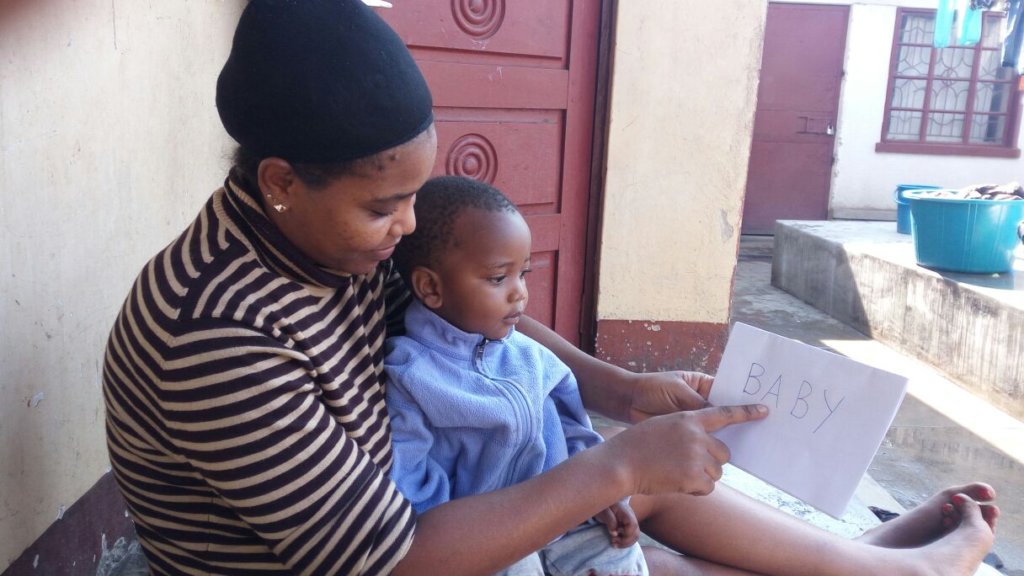
Babies learn the meaning of the spoken word, long before they can speak. And they can learn the meaning of the printed word at the same time. Our current approach to reading is to wait until the child can speak but this does not take advantage of the potential of babies. When parents become responsible for reading as they are now for speaking children will come to school reading and reading disability will be as infrequent as speaking disability.
Reading is an essential skill for success in school and work, but 20% of students have difficulty reading and are called dyslexic. This problem can be traced to the way reading is taught. We wait until the child can speak, teach the alphabet, and put letters and sounds together. This approach has two main disadvantages. It postpones reading for 3 or more years and uses a strategy (phonetic decoding) that is not effective for 20% of students.
The project will start teaching the child the meaning of the printed word (reading) at the same time as the child is learning the meaning of the spoken word. This will be accomplished in small home based groups. Host parents will invite 5 parents and children for a hands on demonstration of the approach using software specifically developed for this project. We will show parents how to teach their babies to read and lay the groundwork for writin
The long term effects of the project will be universal. Parents will be responsible for teaching babies to read and write just as they are now responsible for teaching them to listen and speak. Apps will be developed for babies and will become the "next big thing". Children will come to school reading and writing and the school day will be opened to more content material as opposed to the tools of reading and writing. Dyslexia will virtually disappear.
This project has provided additional documentation in a DOCX file (projdoc.docx).