By Monica Verma | Project Leader
Greetings from Wildlife Trust of India!
Hope you are doing great.
We are back with the updates on our project ‘Help us keep wildlife forever wild’, which you so generously chose to donate for.
Thank you so much for your kind donation and for believing in our work. It is through your support that we are able to work towards our vision of a secure natural heritage of India.
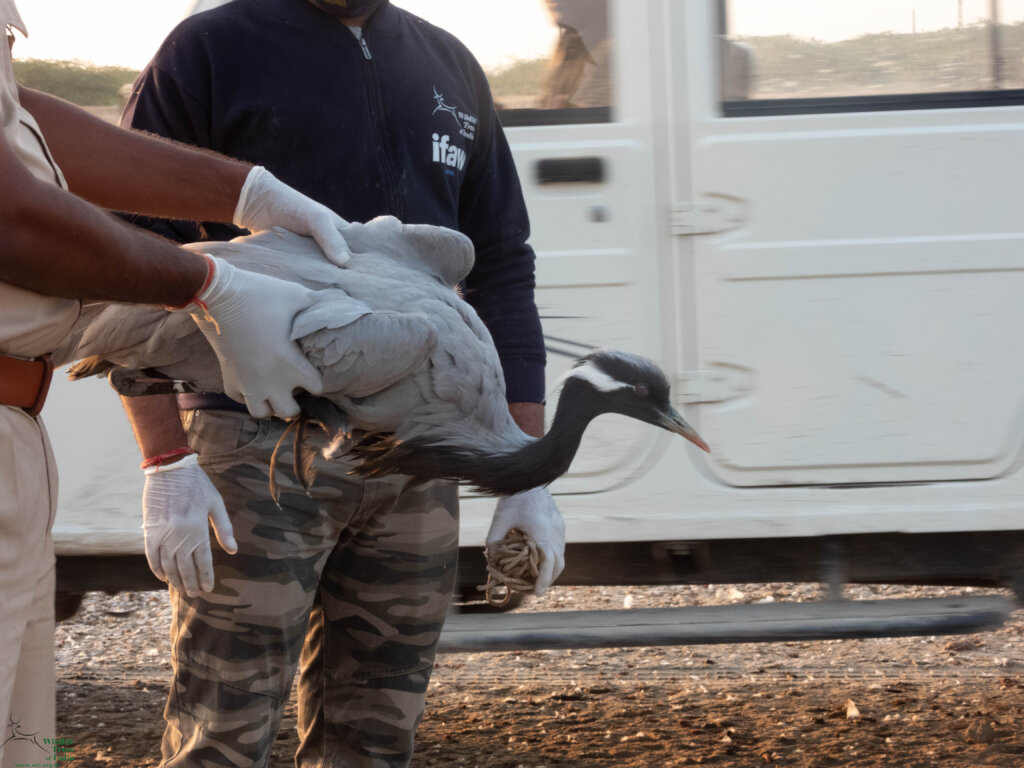
The updates for the project are from Jodhpur in Rajasthan. The month of November, last year, witnessed the deaths of 56 Demoiselle cranes reported from Kaparda, a small village in Jodhpur. Several other individuals were also showing signs of sickness. To address the issue on ground, we sanctioned a Rapid Action Project and were supported by our partner NGO, Raksha and the Rajasthan Forest Department. A team of veterinarians, rescuers, handlers and project coordinators immediately left to work on the rescue, treatment and rehabilitation of affected birds.
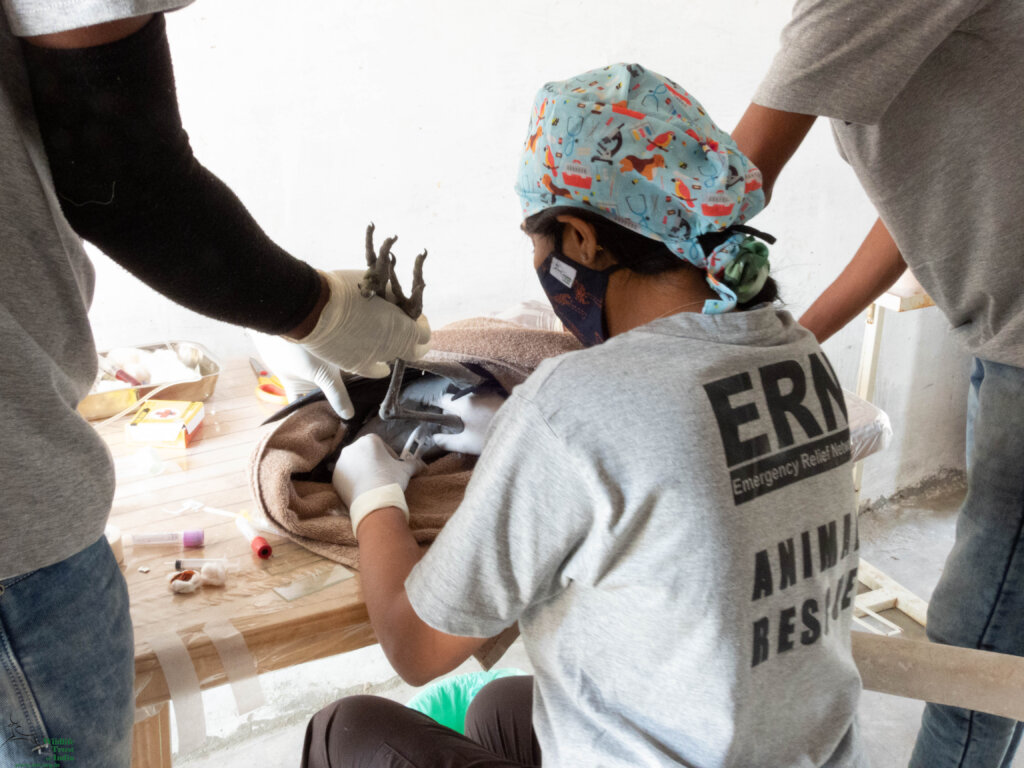
The ailing cranes were rescued from Kaparda, Deoliya Nada and Ramasani villages and brought to the nearby range office at Bilara. This was a makeshift rescue centre set up to treat the affected birds. The cranes were provided with supportive therapy and were tube fed prior to disease diagnosis. Post-mortem examinations of the dead birds were carried out and the samples were sent to laboratories to diagnose the disease.
The tests confirmed Avian Influenza (H5N1), a highly pathogenic disease among birds that is also communicable to humans. Following disease diagnosis, precautionary measures were immediately taken to prevent the spread of infection. An action plan containing protocols to be followed in case of Avian Influenza outbreak in wild avifauna was devised and shared with concerned authorities such as the Divisional Forest Officer Jodhpur as well as the Additional District Magistrate. Treatment of the birds was ceased immediately and all frontline staff dealing with disposal of carcasses were provided with PPE kits.
That’s all for today’s updates. We will soon be back with more. Till then, take care!
Warm regards,
Team WTI
Project reports on GlobalGiving are posted directly to globalgiving.org by Project Leaders as they are completed, generally every 3-4 months. To protect the integrity of these documents, GlobalGiving does not alter them; therefore you may find some language or formatting issues.
If you donate to this project or have donated to this project, you can receive an email when this project posts a report. You can also subscribe for reports without donating.



Support this important cause by creating a personalized fundraising page.
Start a Fundraiser