By Jigdrel Kinley Namgyel | Communications
When the Road Becomes the Story
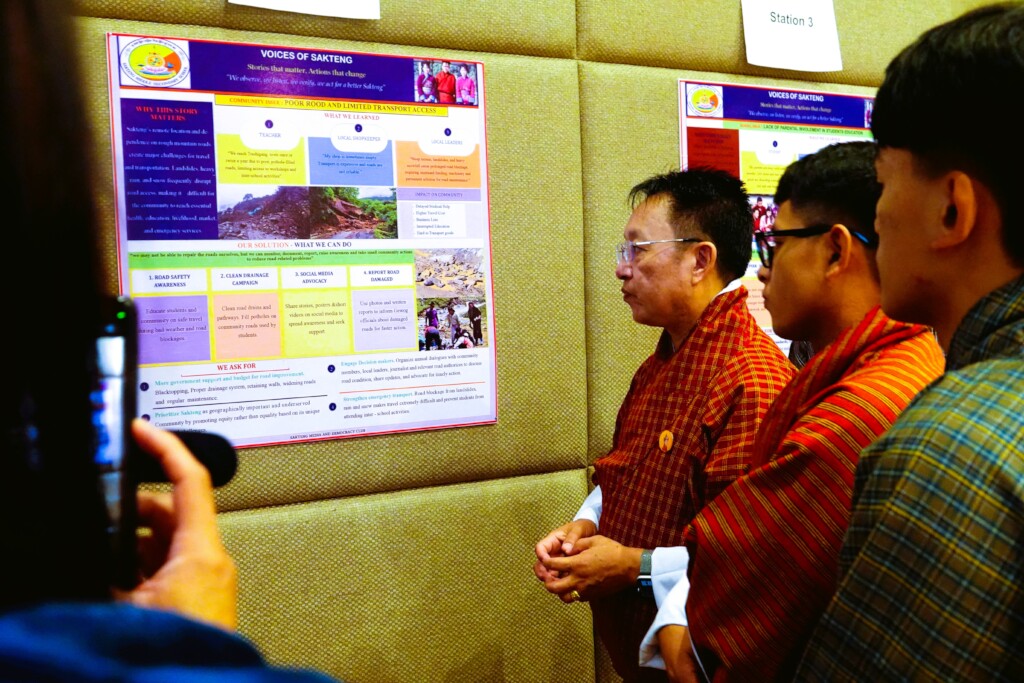
For Sonam Tenzin, a sixteen-year-old Class 9 student from Sakteng, the journey to Thimphu became the story he had come to tell. His school’s citizen journalism project was about roadblocks, and on the way to the capital his delegation ran into one. Bridge maintenance at Rangjung had closed the road, and the students had to take a much longer detour. By the time they reached Trashigang, the fare for their hired Bolero had come to around Nu 8,000, against roughly Nu 6,000 on a normal day. For Sonam, though, the cost of a blocked road has never been only about money. Earlier in the year his school had qualified for a district-level competition. The road closed the day before the team was due to leave, and the slot went to another school. “As students, we miss out on so many opportunities because of roadblocks,” he said.
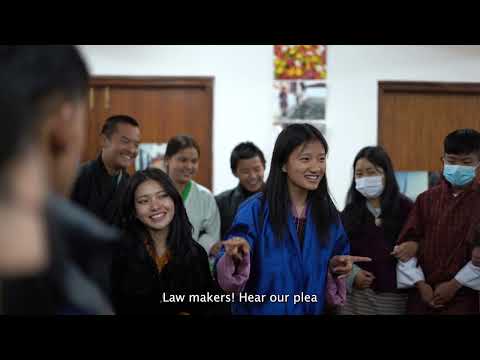
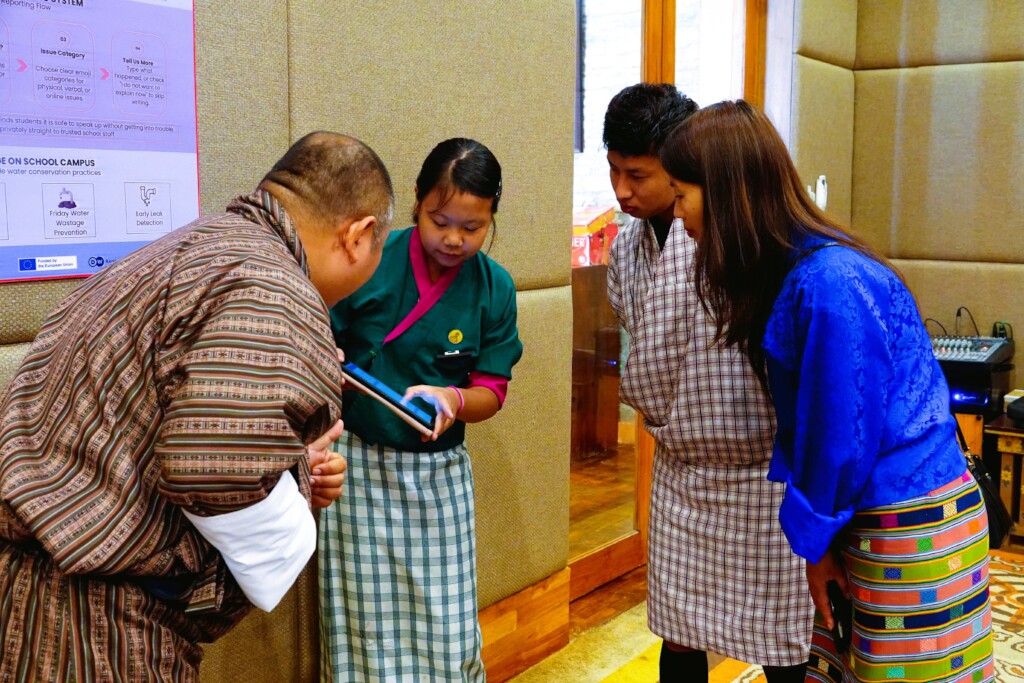
In Samtse, students had been working on a different kind of barrier: the silence around bullying. At Samtse Primary School, they built a Safe Voice reporting system, a four-step portal that gives students a private way to raise concerns. “Students can choose who needs help, whether they are reporting for themselves, for a friend or something they have witnessed. If they do not want to explain what happened, they can simply press the SOS button,” said Richa Chhetri, a student of Samtse Primary School. Five designated members supervise the portal. Since it opened, 37 students have reported cases. Twenty-seven have been resolved and eleven were treated as urgent.
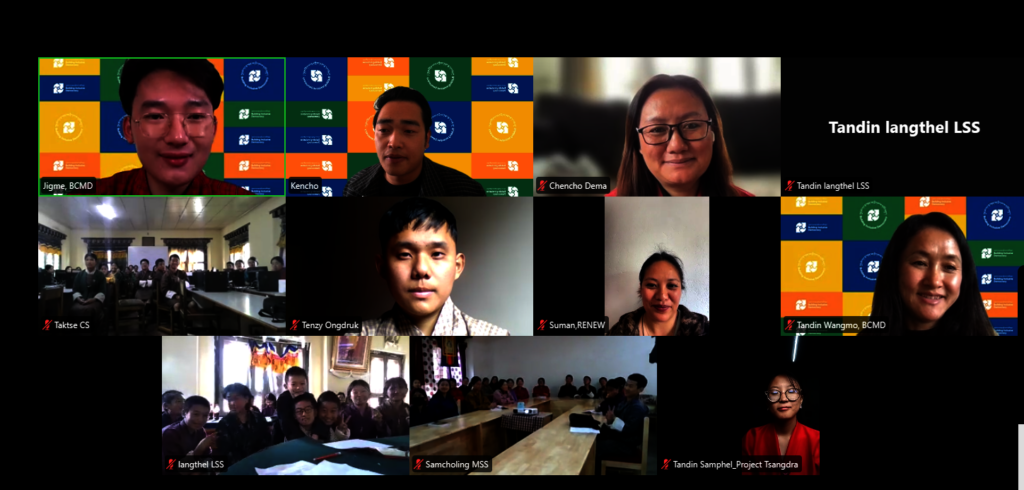
On 11 September, both stories reached the national stage at the September In-Person Showcase at Terma Linca, Thimphu. It was the last step of a journey that began in April, when more than three hundred students from ten Media and Democracy Clubs across Trongsa, Trashigang and Samtse first learnt to spot a story and report it ethically. In May, ten civil society organisations and three journalist mentors helped them move from naming problems to gathering evidence and planning action.
Around forty-five guests came to hear them: Members of the National Council, the Secretary General, GovTech officials, seventeen civil society organisations, BBS, Kuensel and Bhutan Times, UNDP and UNICEF. The Chief Guest was the Honourable Deputy Chairperson of the National Council, a former school principal who had worked with a Media and Democracy Club himself. He told the students he had seen these clubs help quiet students find their voice, question what they saw in their communities and grow in confidence. Democracy, he said, is fundamentally about people: the freedom to ask questions, the courage to speak, the willingness to listen and the responsibility to work for the common good. He reminded them that they are not merely “leaders of tomorrow” but citizens today, and that democracy needs their voices now. He also urged them to remain truthful, fair and responsible in how they tell their stories.
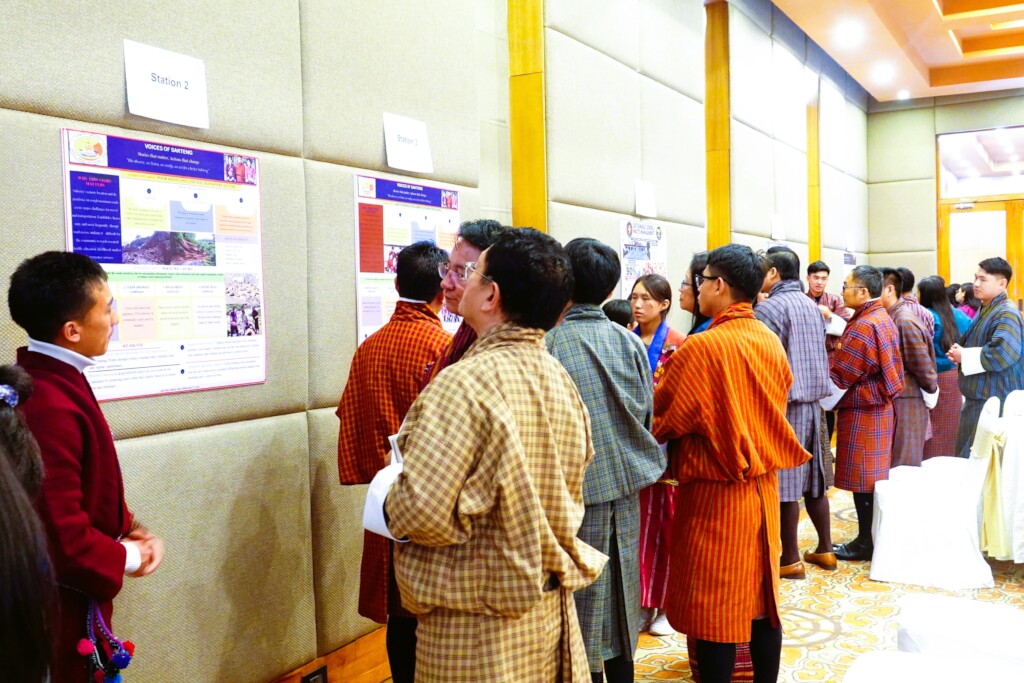
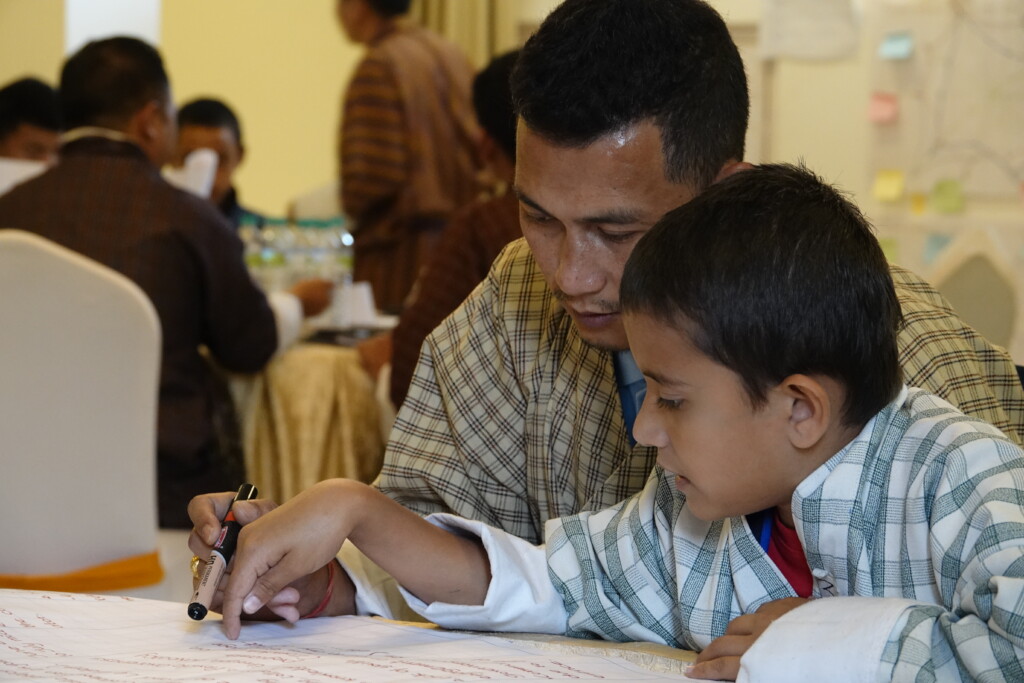
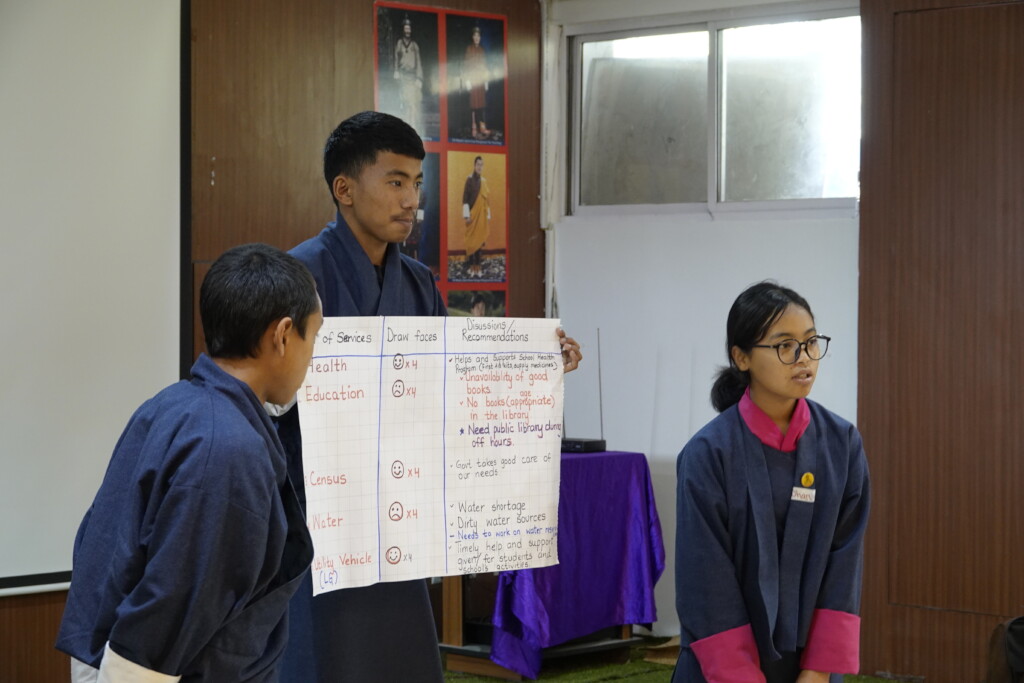
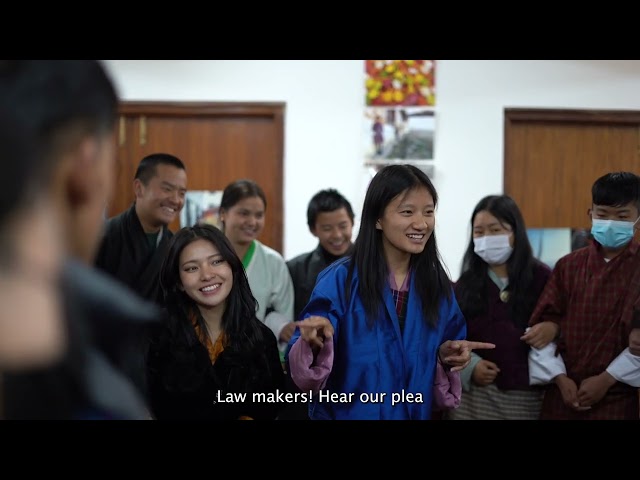
In the Gallery Walk, the students stayed at their stations and the guests moved. For two hours, ten groups of guests rotated through eleven school stations, spending roughly ten minutes at each table. Every station had a poster, a citizen journalism story, an action plan and an open floor for questions. Each team walked its guests through the same four steps: the issue, the evidence behind it, the action students had already taken, and what they needed from the people in front of them. The issues ranged from hostel overcrowding, waste, road safety and digital access to fair pricing and bullying. Guests were asked to listen through their professional lens: to probe, to look for the policy gap or the partnership, and to offer a next step where they could. The students gave the same pitch to every new group and kept the same energy from the first group to the last.
Peljorling Higher Secondary School took up the same issue. Karma Choden, one of its students, said: “We hope to raise awareness among students and help them understand bullying and how it can affect their mental health. Through citizen journalism, we can bring these issues to the media and give students a platform to share their experiences. Instead of keeping our problems to ourselves, citizen journalism has helped us speak up and let others know what students are going through.”
At the close, Sonam was one of two students invited to reflect, alongside Tshering Yangzom Deki from Dorokha. After his journey, BCMD team had not required him to take part. Instead, they gave him the choice, the space and the resources to decide for himself, which the team described as what meaningful youth participation should look like. He chose to speak.
In Sakteng, a blocked road can still mean a missed chance. What has changed is that the young people who live with it now know how to tell that story, with evidence, to the people who can do something about it.
Links:
By Kencho Tshering | Programme/Communications Officer
By KENCHO TSHERING | Programme/Communications Officer
Project reports on GlobalGiving are posted directly to globalgiving.org by Project Leaders as they are completed, generally every 3-4 months. To protect the integrity of these documents, GlobalGiving does not alter them; therefore you may find some language or formatting issues.
If you donate to this project or have donated to this project, you can receive an email when this project posts a report. You can also subscribe for reports without donating.



Support this important cause by creating a personalized fundraising page.
Start a Fundraiser