By Lisa Heydlauff | Director
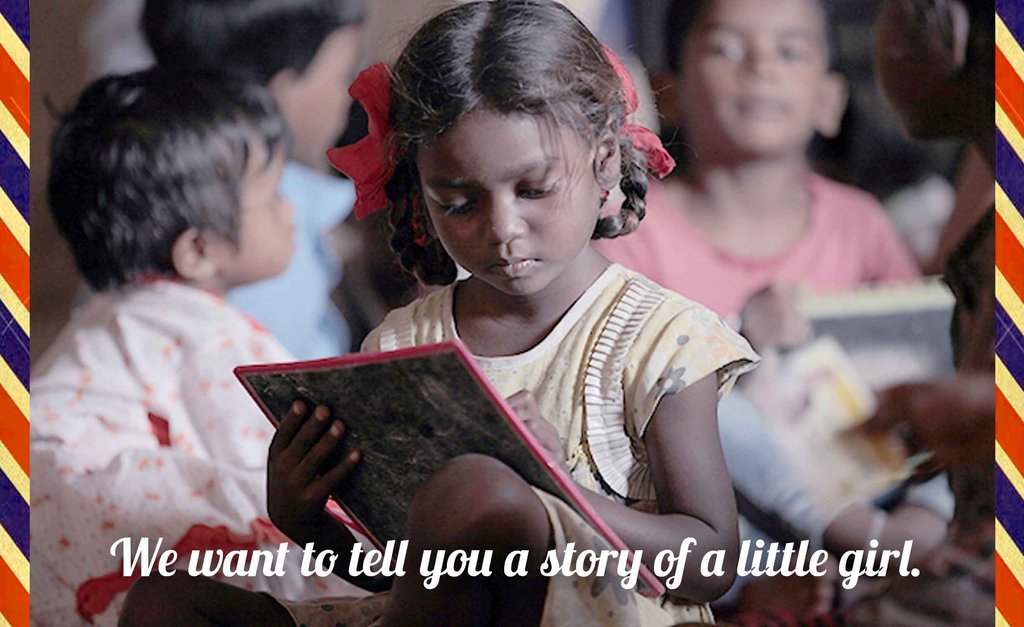
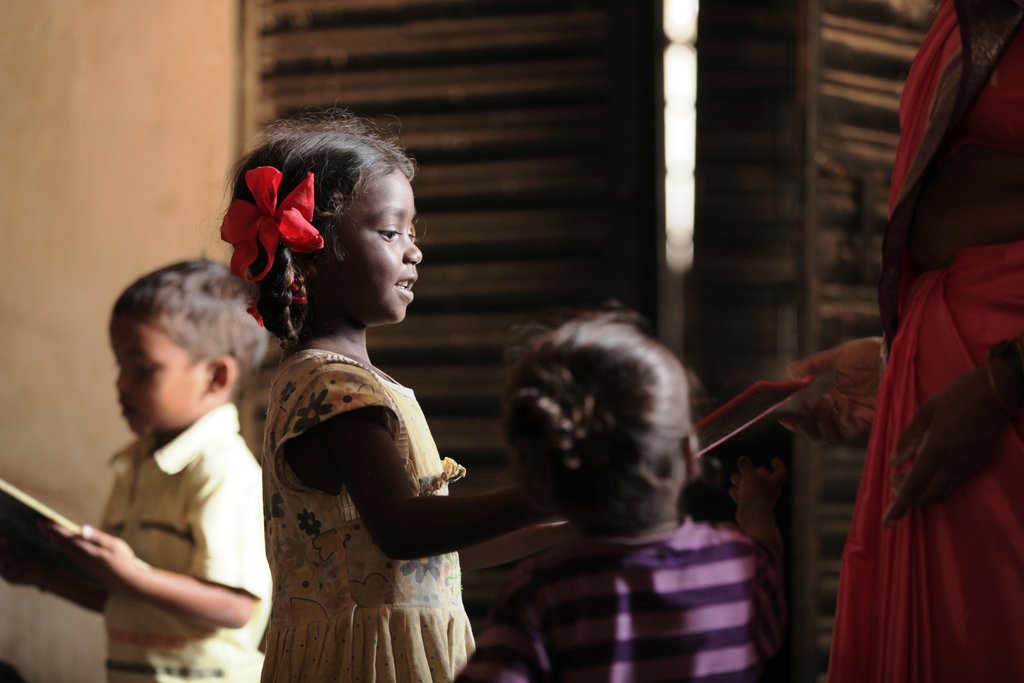
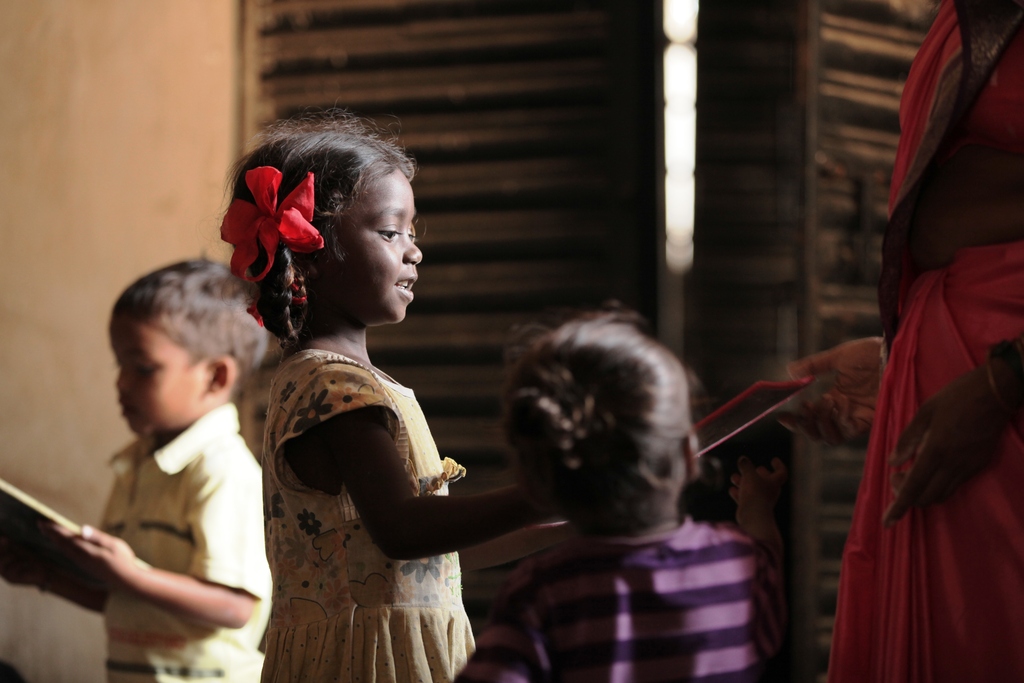
We want to teach 1.2 million children how to read in their own language Children grow up speaking a tribal language at home & their first day of school is in Hindi This means not only is the first day of school scary, but that millions of children in Jharkhand start school behind other kids in the country, leading to high drop out rates, migration and a lifetime of poverty.
We want to change that. We want to teach a generation of children how to read in their own language.
Going to School will design 20+ storycards. They will be written in 9 tribal languages, printed en masse and placed in 38,000 Anganwadi kits. We’ll use radio to tell the stories and mobilise storytellers in villages across the state. So every week, a storyteller will go to the Anganwadi to read a story to start a story revolution for children. Right now children do not learn how to read in pre-schools, we’re about to change that.
What the data says One of the reasons for high dropout rate of children from tribal families in Grade 1 and 2 is because of the language problem. The dropout rate of tribal children at the primary school level in the State is 30% compared to 21% for other students [Selected Educational Statistics of Government of India]. There is empirical evidence to show that children learn better in their home language in primary classes. A good foundation enables children to do well in other languages like Hindi and English. After the initial years of instruction in their own language, children can transit to instruction in Hindi, English or other languages. The Jharkhand state government has granted nine tribal languages the status of second official language: Santhali, Oraon, Mundari, Ho, Kurukh, Sadri, Kortha, Panch Pargania and Kurmali. Along with Urdu, Bengali and Oriya, there are now 12 tribal and regional languages, which have been recognized as second official language in Jharkhand.
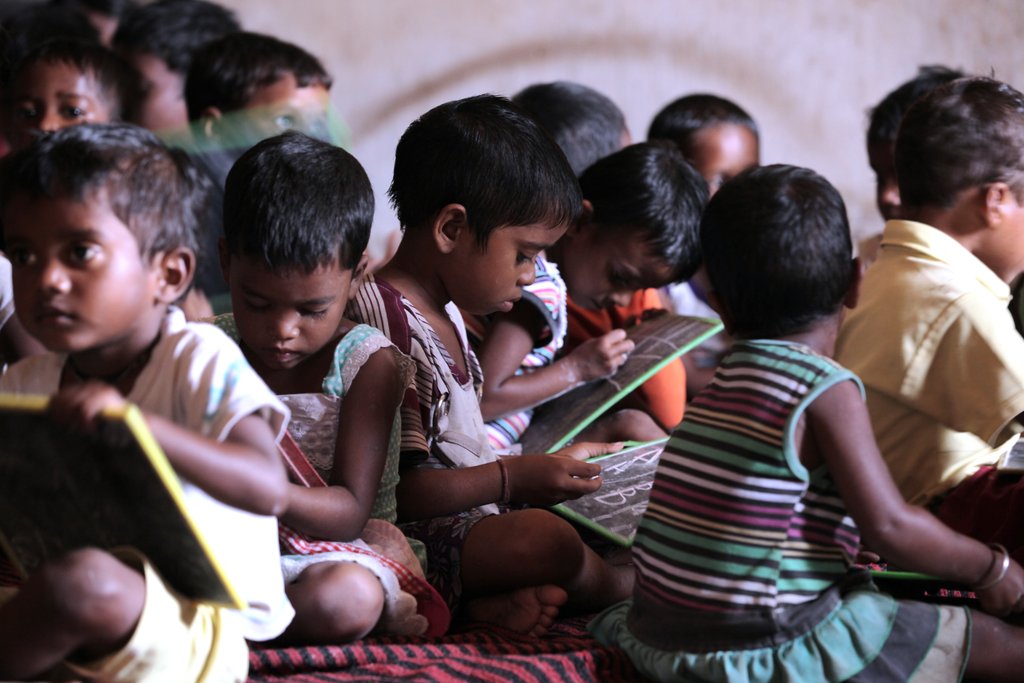
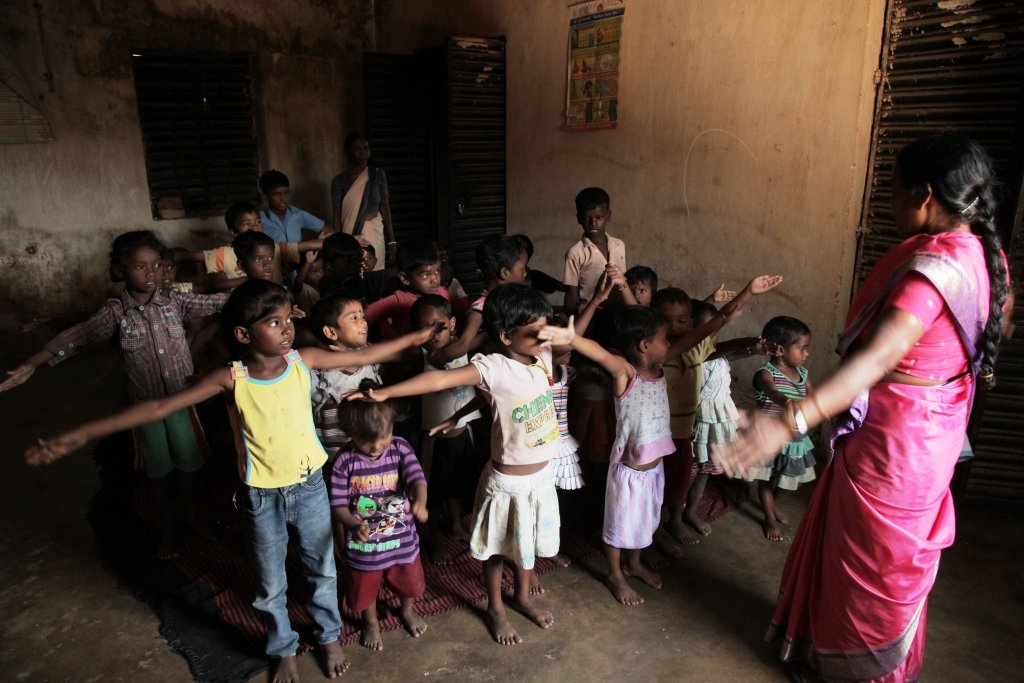
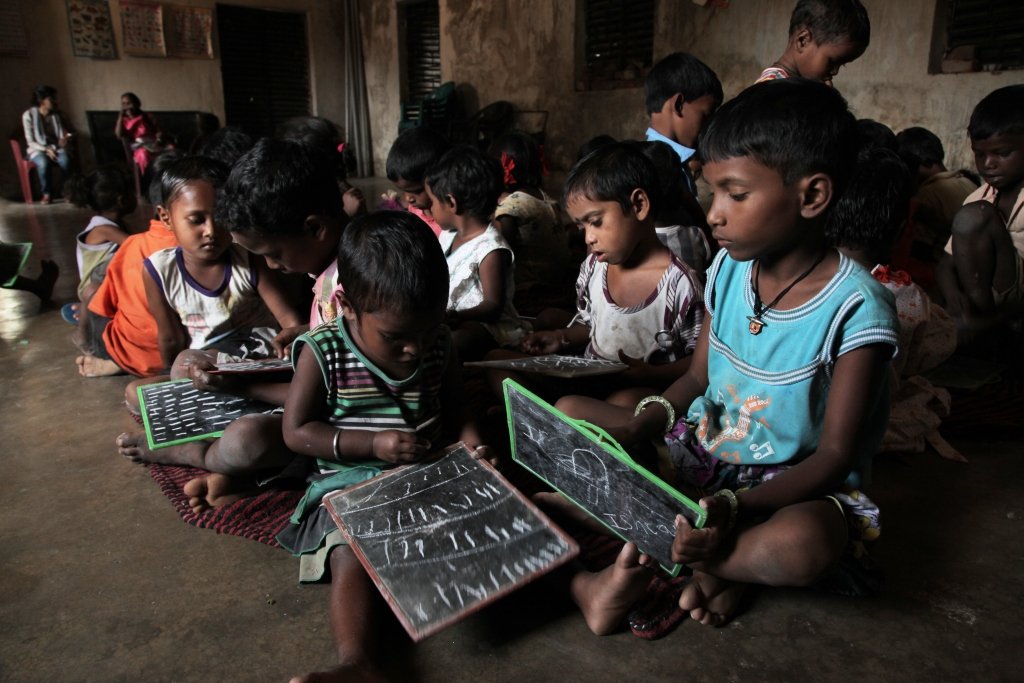
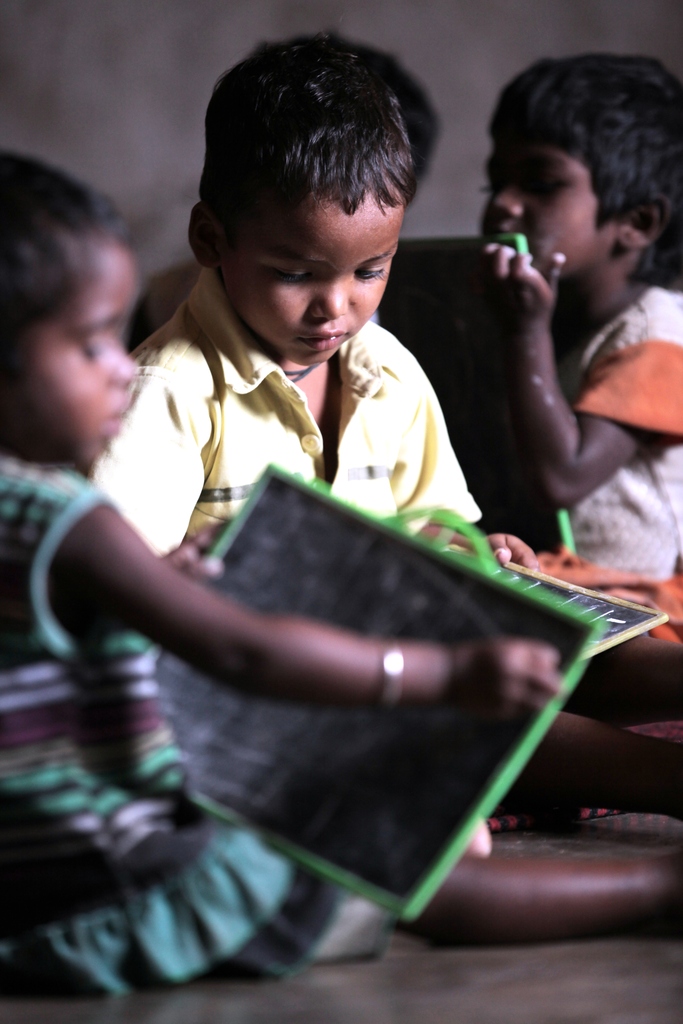
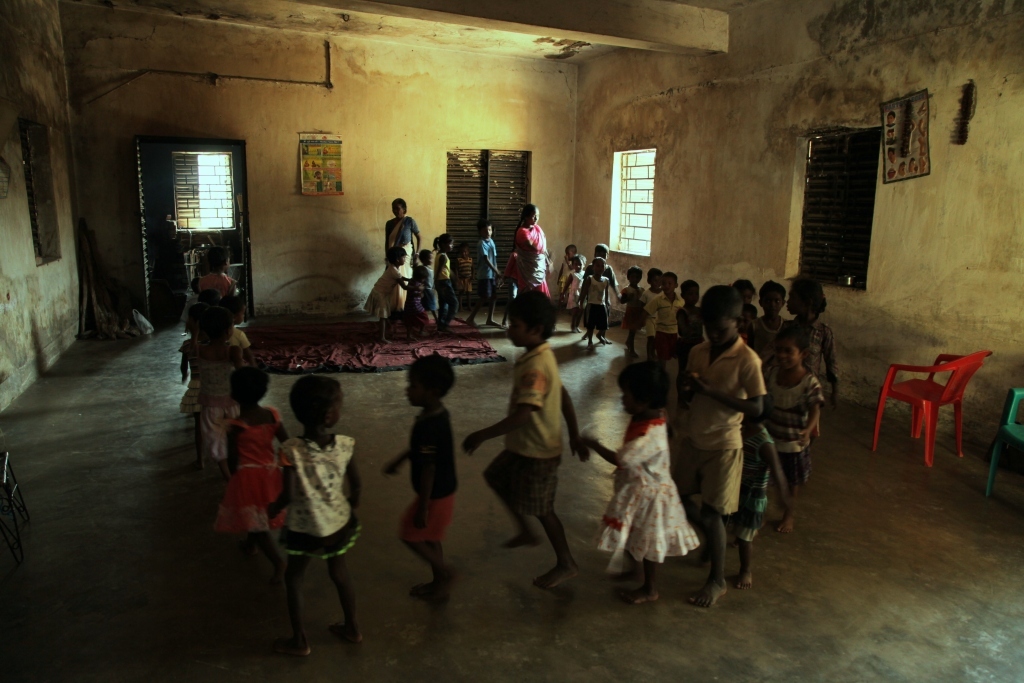
Anganwadis are India’s pre-schools, where children should ideally be learning how to read so they can go to school. Unfortunately, in Jharkhand (and other states across India), this is not yet the case. The Department of Social Welfare, Government of Jharkhand, sees Anganwadis as pre-schools or nursery schools and they’d like to change the way children access these services, to make them ‘mini’ schools.
At the moment, children do not learn how to read in their own language and turn up to school for the first day that is always in another language other than their own: Hindi.
Our storycards will be bi-lingual: a tribal language + Hindi.
1.2 million children will learn how to read for the first time in their own language, building the bridge from local languages to the language of education in Jharkhand: Hindi, and the fundamental right and ability to read.
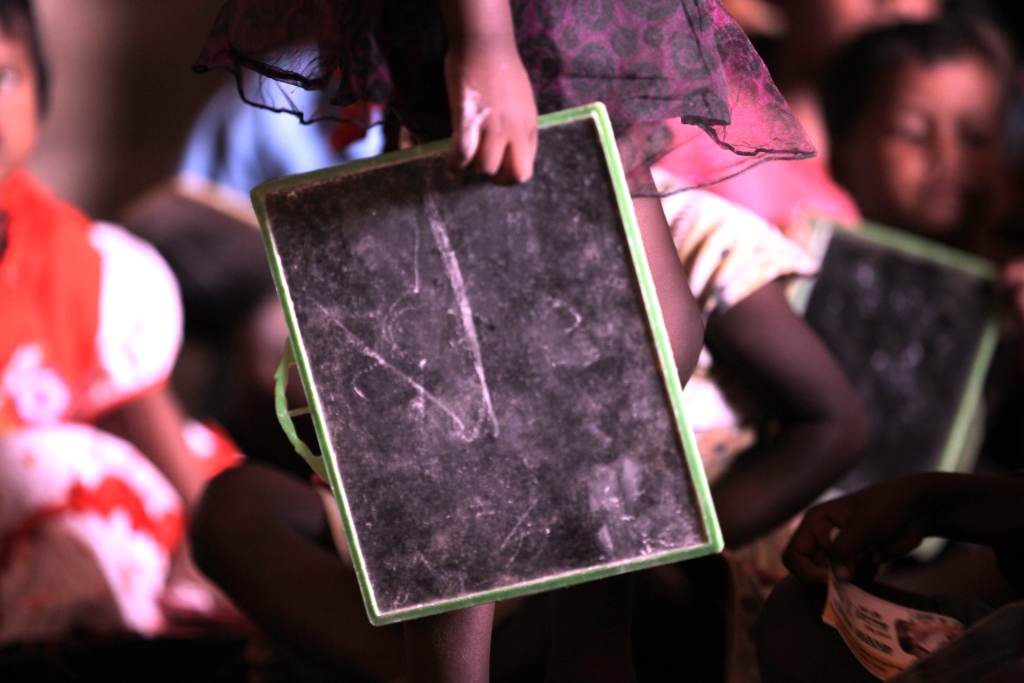
Each story card will have a compelling illustration, an image story on one side - so when the storyteller reads the story children can see the image and a short paragraph story on the back. The paragraph stories in 12 languages will explore founding concepts of language, maths, science, health, forest sustainability, clean water, sustainable farming, grandparents and tribal heritage, ethics, concepts of right and wrong, and values in today’s ever changing world all told though a story.
Our goal is to teach 1.2 million children how to read in their own language, so that their first day at school is full of stories they can read and feel inspired.
Links:
Project reports on GlobalGiving are posted directly to globalgiving.org by Project Leaders as they are completed, generally every 3-4 months. To protect the integrity of these documents, GlobalGiving does not alter them; therefore you may find some language or formatting issues.
If you donate to this project or have donated to this project, you can receive an email when this project posts a report. You can also subscribe for reports without donating.